
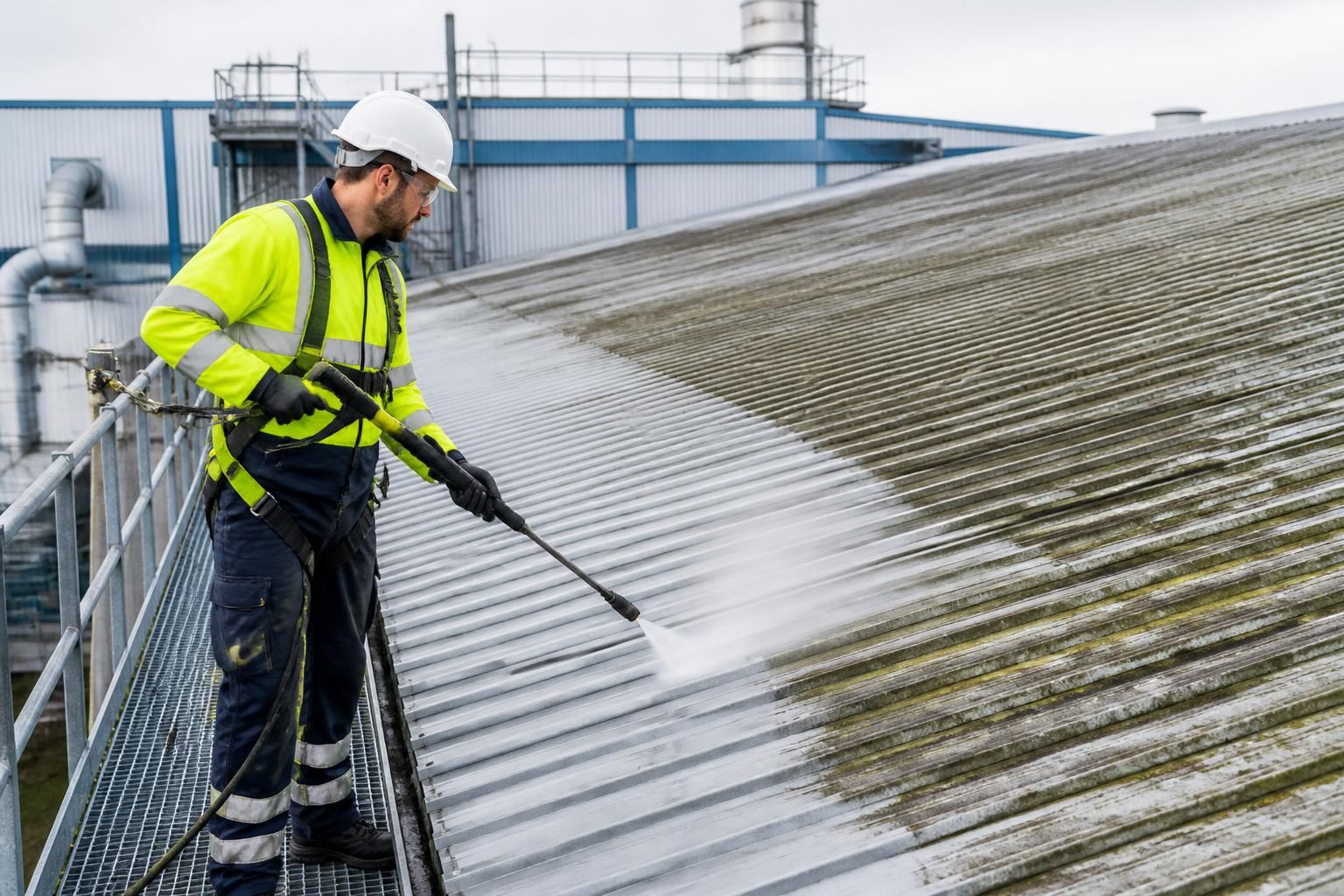
What materials are biocide roof cleaners compatible with?
Biocide roof cleaners are generally compatible with clay and concrete tiles, slate, fibre-cement sheets, coated metal and many other common roofing materials. Compatibility depends on the product formulation, surface condition and manufacturer’s guidance, so professional assessment is recommended before treatment, particularly for aged, porous, painted or delicate materials.
Biocide roof cleaners are generally compatible with clay tiles, concrete tiles, natural slate, fibre-cement roofing, coated metal and some other non-porous roof surfaces. Compatibility is determined by the active ingredients, concentration, application method and condition of the roof, so the product manufacturer’s instructions should always be followed. A professional assessment is particularly important for aged, fragile, painted, porous or previously treated materials.
Biocides are designed to control organic growth such as moss, algae, lichen and mould without relying solely on aggressive mechanical action. This makes them suitable for many roofs where pressure washing could dislodge tiles, remove surface finishes or force water beneath laps and joints. However, a cleaner that is suitable for one roofing material is not automatically suitable for every roof. The surface, surrounding areas and method of application all need to be considered together.
Clay and concrete tiles
Most purpose-formulated roof biocides can be used on clay and concrete tiles, including interlocking and plain tile profiles, provided the tiles are structurally sound. Concrete is often porous and can retain moisture and organic contamination, while older clay tiles may have weathered surfaces or existing surface treatments. A biocide can help control remaining spores and reduce regrowth after loose growth has been removed.
Care is needed where tiles are cracked, loose, friable or badly delaminated. Treatment will not repair defective roofing, and excessive rinsing or poorly controlled application can move debris into gutters or disturb vulnerable areas. Glazed, coloured or factory-finished tiles should be checked against the product guidance before work begins, as some chemicals may affect a surface coating or alter its appearance.
Natural slate
Natural slate is commonly compatible with suitable biocide treatments, but it requires a cautious approach. Slate can become brittle with age, and its fixings or supporting battens may be in poor condition even when the roof appears largely intact. Chemical treatment is often preferable to harsh pressure washing because it reduces the risk of damaging the slate surface or breaking tiles.
Before application, the roof should be checked for delamination, cracked slates, slipped sections and failing mortar or flashings. The biocide must be approved for slate, and any nearby leadwork, copper, zinc or other metal components should be protected in accordance with the manufacturer’s instructions.
Fibre-cement sheets
Fibre-cement roofing can often be treated with a compatible biocide, particularly where moss, algae or surface mould has developed in damp or shaded areas. The main concern is the age and condition of the sheets. Older fibre-cement products may be fragile, and some historic sheets may contain asbestos. They must not be disturbed, brushed aggressively or pressure washed if asbestos is suspected.
A suitable treatment should be applied using a controlled, low-impact method, with access planned to avoid loading the sheets. A material assessment is essential before cleaning older industrial, agricultural or commercial roofs.
Coated and uncoated metal roofing
Some biocides are suitable for coated steel, aluminium and other metal roofing, but compatibility depends heavily on the coating and chemical formulation. Painted, plastisol-coated, powder-coated and polymer-coated surfaces can react differently to cleaning products. An unsuitable chemical may cause staining, dulling, loss of gloss or premature deterioration of the finish.
Metal roofs should be assessed for corrosion, exposed fasteners, failed sealants and damaged coating before treatment. Run-off must also be controlled, particularly where the roof drains towards other metals, planted areas or watercourses. A small test area can confirm whether the treatment affects the coating before wider application.
Roof membranes and flat roofing
Single-ply membranes, modified bitumen, asphalt and other flat-roof systems may be compatible with selected biocides, but they should never be treated as interchangeable. The membrane manufacturer’s cleaning recommendations take priority. Solvent-containing products, strong alkaline cleaners or incompatible surfactants may soften, stain or degrade certain waterproofing layers.
Particular attention should be given to seams, penetrations, edge details, insulation systems and drainage outlets. Standing water and concentrated chemical residues can create problems even where the main membrane is resistant. Application should therefore be controlled and followed by appropriate rinsing or weathering, where the product instructions require it.
Materials requiring additional caution
- Painted, powder-coated or otherwise finished surfaces, because the coating may be more sensitive than the underlying material.
- Old or porous tiles and slate, where chemical residue can be retained and fragile surfaces may be damaged by cleaning pressure.
- Thatch, timber shingles and other organic roofing materials, which require specialist advice and may not be suitable for standard roof biocides.
- Roofing containing suspected asbestos, which requires material identification and controlled work by appropriately qualified specialists.
- Lead, copper, zinc, stainless steel and other flashings or fixings, because run-off can cause staining or chemical reactions.
- Solar panels, roof lights, glazing, rubber seals and painted plant or equipment, which may need masking, isolation or separate cleaning instructions.
How compatibility is checked
A responsible assessment starts by identifying the roofing material, its finish and its condition. The cleaner’s label and technical information should then be checked for approved uses, dilution requirements, contact time, restrictions and precautions for adjacent materials. Where the information is unclear, the product supplier or roofing system manufacturer should be consulted rather than relying on a general-purpose treatment.
A controlled test patch is useful on unfamiliar or sensitive surfaces. It should be placed in an inconspicuous area and checked for colour change, whitening, residue, coating damage or other reaction after the recommended dwell period. Testing does not replace a full risk assessment, but it can identify compatibility issues before they affect a larger roof area.
Compatibility also covers the surrounding property, not just the roof itself. Gutters, rainwater goods, cladding, glazing, vehicles, hard landscaping, planted areas and drainage systems may all be exposed to spray or run-off. Appropriate protection, collection and rinsing arrangements should be established before treatment starts.
Biocide treatment is not a substitute for repairing the roof or removing heavy deposits safely. Loose moss and debris may need to be cleared using a method appropriate to the material, while the biocide is used to address residual spores and organic contamination. The finished roof should be inspected for damaged tiles, blocked outlets and areas requiring remedial work.
For commercial and industrial properties, recording the roof construction, coating type, test results, products used and run-off controls provides a useful maintenance record. It also helps ensure that future treatments remain consistent with the roofing system and any manufacturer’s requirements.
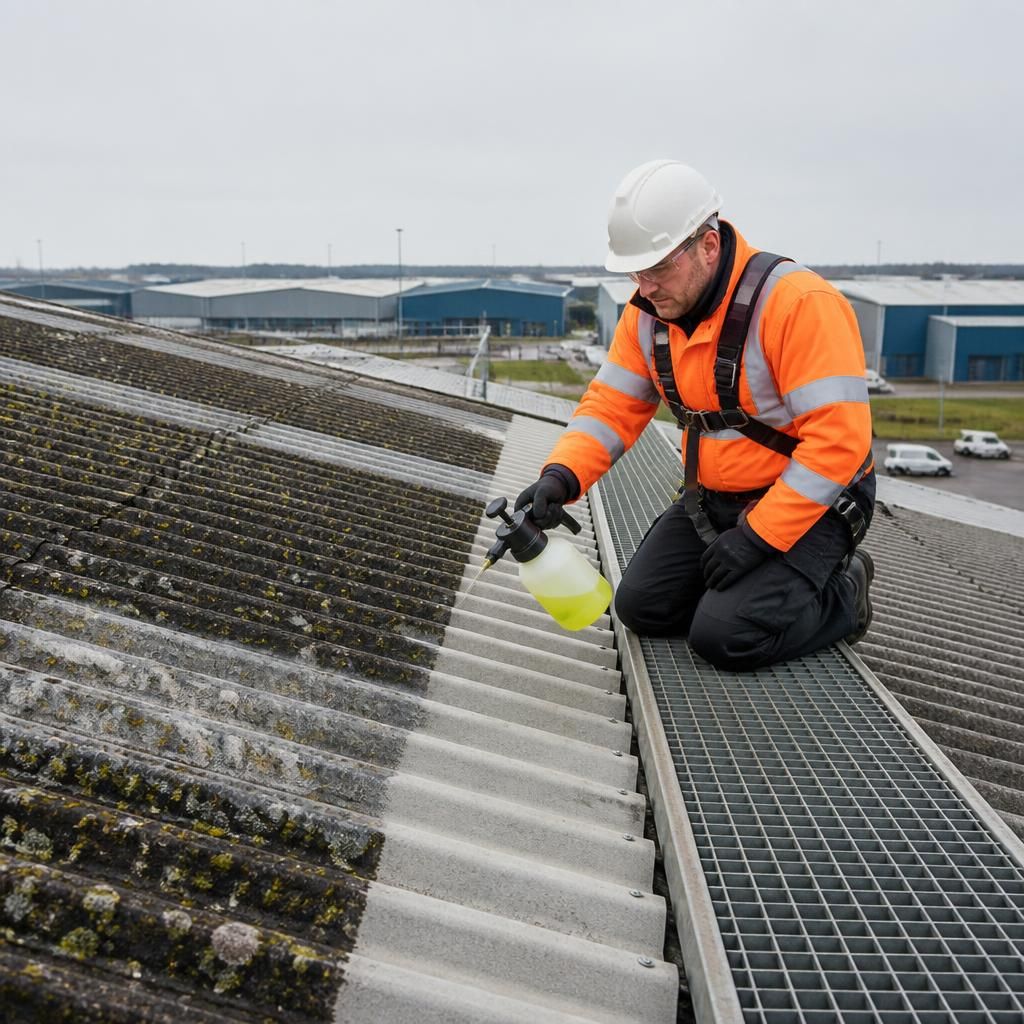
Biocide roof cleaners are compatible with many tiles, slate, fibre-cement sheets and coated metal roofs, but compatibility must be confirmed for the specific surface and product. Check the manufacturer’s instructions and carry out a small test patch in an inconspicuous area before wider application.
The test should be checked for staining, whitening, residue or coating damage after the recommended contact time. Surrounding materials, including glazing, gutters, flashings, paint finishes and planted areas, also need protection from spray and run-off.