
What are the key safety protocols to consider when using biocide roof cleaners on different materials?
Key safety protocols for using biocide roof cleaners include checking the product is suitable for the roofing material, following the manufacturer’s dilution and application instructions, and controlling runoff, overspray and access risks. Tiles, slate and metal may require different pre-testing, protection and rinsing procedures to prevent staining, corrosion, surface damage or harm to people, plants and drainage systems.
Safe use of biocide roof cleaners depends on the product, the roof material, the surrounding environment and the method of access. Before work starts, confirm that the biocide is approved and suitable for the intended surface, review the manufacturer’s safety data sheet and label, assess the risks under COSHH, and establish controls for people, property, plants and drainage. A small test area should be treated first so that compatibility, dwell time, colour change and runoff can be checked before full application.
Read the product information before planning the work. The label and safety data sheet provide the required dilution, application rate, contact time, storage conditions, first-aid measures and disposal instructions. Do not assume that a product suitable for concrete tiles is suitable for slate, coated metal or painted surfaces. Never mix a biocide with detergents, acids, bleach or other chemicals unless the manufacturer specifically permits it. Mixing can create hazardous reactions, reduce performance or produce residues that damage the roof.
A site-specific risk assessment and COSHH assessment should cover chemical exposure, work at height, fragile roof areas, weather, electrical equipment, public access, nearby watercourses and possible contamination of rainwater systems. Operatives should know the product’s hazards and emergency procedures before handling it. Keep the container labelled, upright and secure, and use the original packaging or an approved labelled container. Do not decant chemicals into unmarked bottles.
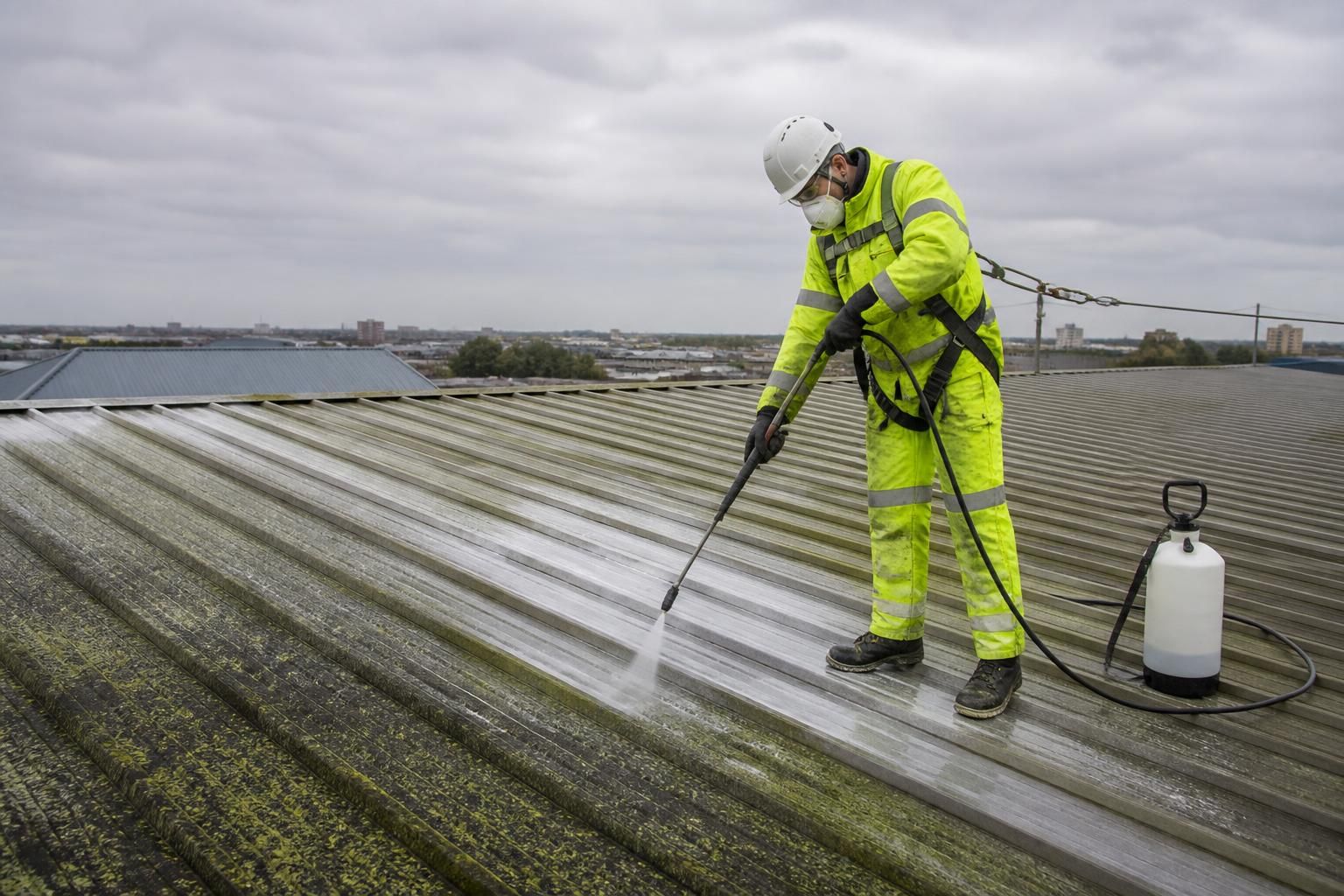
Control access and work at height. Biocide application must not be treated as a substitute for safe roof access. Use suitable edge protection, scaffolding, roof ladders, access platforms or other equipment identified by the risk assessment. Fragile areas, rooflights and unsupported sheets should be identified before anyone approaches the roof. Where practical, apply the product from a suitable position without walking directly on the roof covering. Establish an exclusion zone below the work area and prevent members of the public, building occupants and other contractors from entering it.
Do not work in conditions that make chemical control or footing unreliable. High winds can carry spray onto people, vehicles, glazing and plants; rain can dilute the treatment and increase contaminated runoff; frost can affect surfaces and access; and strong sunlight or high temperatures can alter drying and contact time. Suspend the work if weather conditions prevent controlled application or create an unacceptable risk.
Use appropriate personal protective equipment. The safety data sheet and risk assessment should determine the required gloves, eye or face protection, protective clothing and footwear. Chemical-resistant gloves should be selected for the product rather than assumed from general workwear. Eye protection is particularly important during mixing, transfer and spraying. Respiratory protection may be required for certain products or application methods, but it must be properly selected, fitted, maintained and supported by an appropriate respiratory protection programme. PPE should be checked, cleaned or disposed of as instructed, and contaminated clothing should not be taken into occupied areas.
Mixing should take place in a controlled, well-ventilated area away from drains, watercourses, food, public routes and unprotected surfaces. Add and dilute the product exactly as instructed, using suitable measuring equipment. Avoid creating spray mist, and never eat, drink or smoke while handling the chemical. Wash hands and exposed skin after the work, even if gloves have been worn.
Protect the building and its surroundings. Before application, identify downpipes, gutters, gullies, air intakes, doors, windows, rendered walls, painted surfaces, vehicles, plant beds and water features. Isolate or shield rainwater collection systems where the treatment could enter them. Use suitable temporary protection and controlled collection methods rather than allowing chemical-laden liquid to run freely from the roof. Protection must not obstruct safe access, create trip hazards or trap chemical against a vulnerable surface.
Runoff and overspray should be kept to the minimum necessary. Do not allow biocide, wash water or contaminated residue to enter surface-water drains, ponds, streams or other watercourses. Confirm the drainage arrangements before work begins and follow the product instructions and local requirements for collection, containment and disposal. If accidental release occurs, stop the source, keep people away, prevent entry to drains and follow the product’s spill procedure. Significant releases may require notification to the relevant authorities or drainage operator.
Clay and concrete tiles require controlled testing and application. Check whether the tiles are bare, painted, sealed, coated or already weathered, as the finish can affect chemical compatibility and appearance. Test an inconspicuous area for bleaching, patching, colour change, residue and movement of the surface coating. Avoid aggressive pressure washing unless the roof assessment and product system specifically support it; high pressure can remove the tile finish, force water beneath laps or damage pointing and bedding.
Apply the biocide evenly at the specified dilution and avoid flooding the roof or directing spray beneath tile laps, ridge units, flashings and abutments. Protect mortar, leadwork, painted trims and adjacent masonry where the product may cause staining or deterioration. Any rinsing should follow the manufacturer’s instructions. In some systems, treatment is intended to remain on the surface and work gradually, whereas others require controlled rinsing. Do not rinse automatically or leave chemical residue without confirming the correct procedure.
Slate needs particular care because it can be brittle and absorbent. Identify whether the roof uses natural slate, fibre-cement slate or a coated manufactured product, since these materials are not interchangeable. Avoid unnecessary foot traffic, mechanical agitation and high-pressure cleaning. A test patch should check for darkening, lightening, friability, delamination, surface deposits and staining from adjacent metalwork or fixings.
Use a low-impact application method that does not disturb slates or drive liquid beneath them. Take care around exposed edges, nail holes, laps, valleys and flashing details. Do not use a product unless the manufacturer confirms compatibility with the specific slate type and any coating present. If the slates are already cracked, delaminating or unstable, cleaning may increase the risk of breakage and a roof inspection should precede treatment.
Metal roofs require corrosion and coating controls. Determine whether the roof is galvanised, aluminium, stainless steel, painted, plastisol-coated, powder-coated or otherwise treated. Some biocides or residues may attack metal, affect protective coatings or accelerate corrosion at cut edges, fasteners, joints and damaged areas. Confirm compatibility with both the metal and its coating, then carry out a test application that is allowed to dry and is inspected for dulling, blistering, colour change and corrosion.
Prevent the solution from pooling in laps, gutters, fixings and damaged coating areas. Avoid abrasive cleaning and uncontrolled high-pressure spray, which can expose the substrate or drive water into joints. Protect dissimilar metals and nearby materials where chemical contact could contribute to staining or galvanic corrosion. Rinse only where specified, using a controlled flow that is collected or directed away from vulnerable areas and drainage systems.
Coated, painted and specialist roof surfaces need written confirmation. Membranes, liquid-applied systems, solar-reflective coatings, insulated panels and other proprietary finishes may have conditions that are not obvious from visual inspection. Check the roof system documentation or obtain confirmation from the coating or roofing manufacturer before treatment. Do not rely solely on a general statement that a biocide is suitable for roofs. A product may be chemically compatible with the substrate but still invalidate a coating warranty if the application method, concentration or rinsing process is unsuitable.
Solar panels, roof-mounted equipment, ventilation openings and electrical installations should be isolated or protected in accordance with the relevant manufacturer’s instructions. Do not spray directly onto electrical components or allow liquid to enter cable routes, inverters or ventilation systems. Any protection used around equipment must not cause overheating or interfere with its operation.
Manage biological and public-health risks as well as chemical risks. Moss, algae and other growth can conceal loose tiles, fragile surfaces and blocked gutters. Removing growth may release debris, spores and contaminated material, so avoid dry brushing or uncontrolled blowing where it could affect occupied buildings or public areas. Keep doors and windows closed where overspray or mist could enter, and notify occupants about the work and any temporary restrictions.
After application, inspect the roof and surrounding ground for residue, displaced materials, blocked outlets and unintended staining. Remove temporary protection carefully so that collected liquid is not released suddenly. Clean equipment in a controlled location, not over a drain or watercourse, and store or dispose of remaining product and contaminated materials in accordance with the safety data sheet and applicable waste requirements.
Record the product used, batch or label information where required, dilution, application method, weather conditions, test results, areas treated, incidents and waste arrangements. These records help demonstrate that the work was controlled and provide useful information for future maintenance. If the roof material is uncertain, the surface is fragile, drainage cannot be controlled or the product instructions are unclear, postpone treatment and obtain competent technical advice rather than proceeding on assumption.
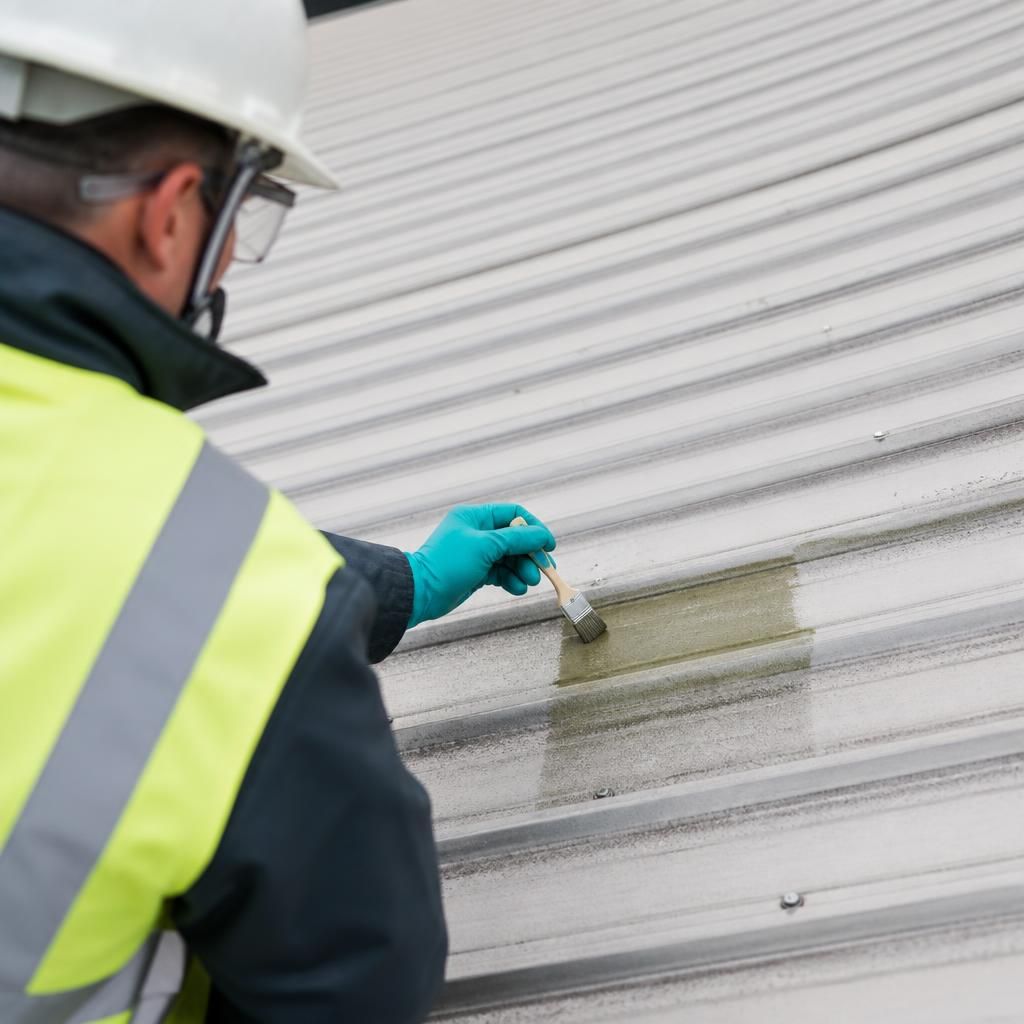
A small test patch is an essential safety check before applying a biocide roof cleaner across the full roof. It confirms that the product, dilution and application method are suitable for the specific material and coating, while revealing possible staining, colour change, corrosion, delamination or residue.
Test an inconspicuous area and allow it to remain for the manufacturer’s recommended contact and drying period before assessing the result. On slate, check for brittleness, darkening and surface separation; on clay or concrete tiles, look for coating damage and patchy appearance; on metal, inspect for dulling, blistering and corrosion around fixings or cut edges. If the material or coating is uncertain, stop and obtain confirmation from the product or roof-system manufacturer rather than proceeding on assumption.
Discuss Safe Biocide Roof Cleaning for Your Property
Arrange a professional assessment before using a biocide roof cleaner so the roofing material, coating, access requirements and runoff controls can be checked safely. Contact Encanto Exterior Cleaning to discuss a controlled treatment plan for your property.