
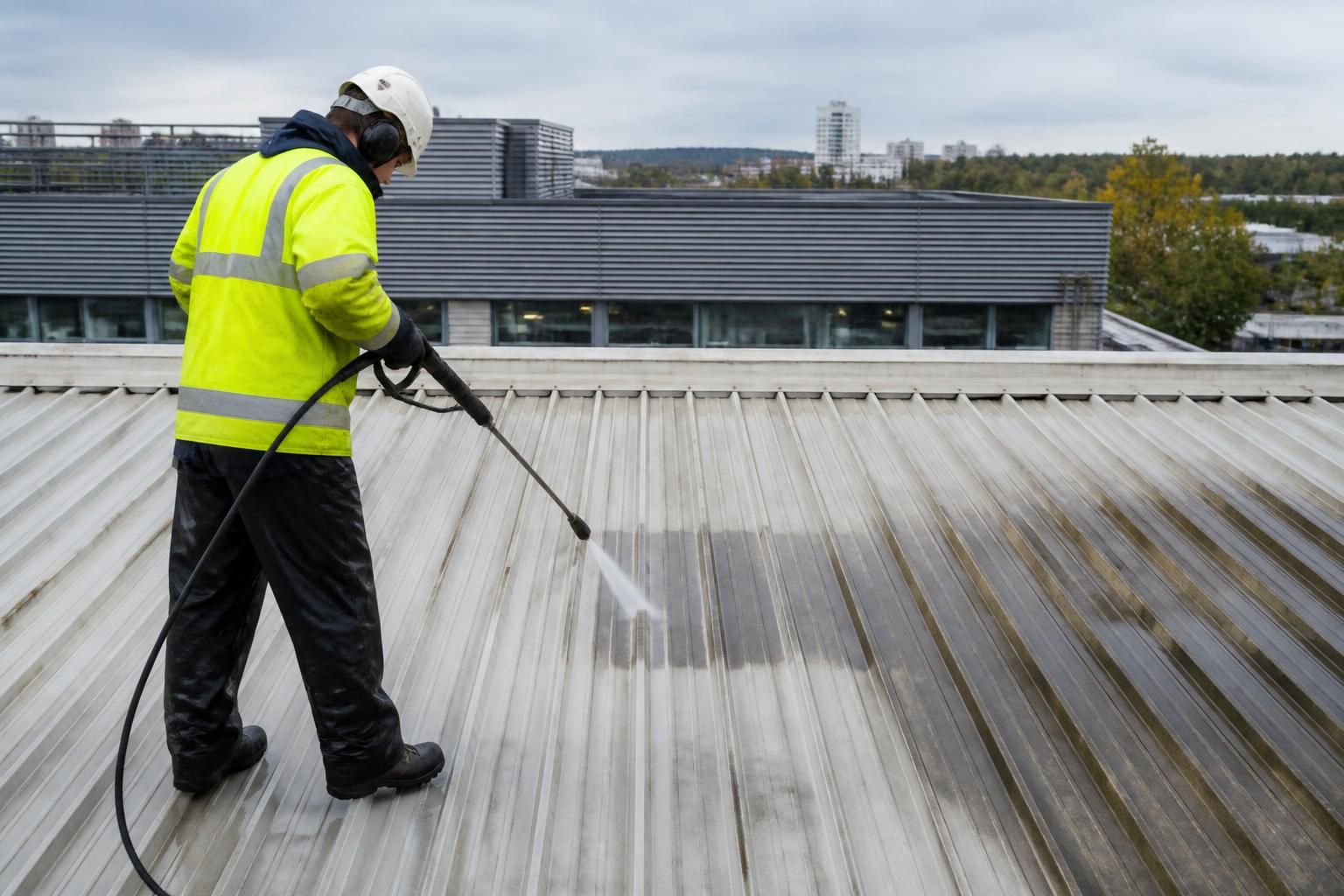
What are the key factors in selecting a biocide roof cleaner?
Select a biocide roof cleaner by assessing its effectiveness against the specific moss, algae or mould present, compatibility with the roof material, environmental and surface-safety requirements, application method, and the contractor’s experience. The product should also provide suitable residual protection against regrowth without causing damage to roof coverings, coatings, fixings or surrounding surfaces.
The right biocide roof cleaner is selected by matching its active ingredients and intended use to the type of organic growth, roof material, environmental conditions and planned application method. It should remove or suppress moss, algae, mould or lichen without damaging the roof covering, coatings, fixings, gutters or surrounding surfaces, and should provide an appropriate level of residual protection against regrowth. Product selection should be based on the manufacturer’s instructions, safety data and the condition of the roof rather than on strength alone.
1. Identify the type of organic growth
Different growths may respond differently to a biocidal treatment. Green algae, black staining, moss and lichen have different structures and attachment patterns, while mould may be present on shaded or persistently damp areas. A product described generally as an “algae remover” may not be suitable for heavier moss or lichen contamination. The assessment should establish whether the roof needs a treatment-only approach, controlled removal followed by treatment, or a combination of cleaning and biocidal application.
Heavy moss should not normally be expected to disappear immediately after treatment. Biocide can weaken and kill organic growth, but dead material may still need to weather away or be removed using a suitable method. Selecting a product that reflects the actual condition of the roof helps avoid excessive agitation, unnecessary repeat applications and damage caused by unsuitable cleaning techniques.
2. Check compatibility with the roof material
Compatibility is one of the most important selection criteria. Roof coverings may include concrete or clay tiles, slate, metal, coated steel, fibre cement, membranes and other specialist materials. The product must be approved or recommended for the relevant surface, with particular attention paid to painted, powder-coated, polymeric or waterproofed finishes.
A suitable product should not soften coatings, alter the appearance of the roof, corrode metal components, weaken sealants or affect waterproofing. Compatibility also extends to ridge tiles, flashings, fixings, solar equipment, rooflights, cladding, rendered walls and painted surfaces that may receive overspray or runoff. Where the manufacturer’s information does not clearly cover the material, obtain technical advice and complete a small, inconspicuous test area before wider application.
3. Assess the required effectiveness and residual action
Look for evidence that the product is intended to control the relevant organisms and is suitable for the proposed roof surface. A cleaner that produces a rapid visible change is not necessarily the best option for long-term control. Some formulations are designed primarily for immediate cleaning, whereas others leave a residual effect that helps slow the return of moss, algae and mould.
Residual protection depends on more than the product itself. Shade, moisture, tree cover, airborne contamination, roof orientation, drainage and the condition of the surface all influence how quickly organic growth returns. Claims about ongoing protection should therefore be considered alongside the manufacturer’s instructions and the site conditions. A sound maintenance plan is usually more reliable than treating the roof only after heavy regrowth has developed.
4. Consider the application method
The product must suit the way it will be applied. Low-pressure application may be appropriate where the roof covering or coating could be damaged by aggressive washing, but it still requires even coverage and adequate contact time. Other products may be intended for controlled application followed by rinsing or mechanical removal. The label should specify dilution, application conditions, contact time, rinsing requirements and any restrictions on use.
Application also depends on access and roof geometry. Valleys, porous surfaces, vertical sections and areas beneath obstructions can be difficult to cover consistently. A professional assessment should consider whether the product can be applied without excessive overspray, whether runoff can be controlled and whether the roof can be inspected safely before and after treatment.
5. Review surface and environmental safety
Biocides are designed to control living organisms, so they must be handled as controlled chemicals rather than ordinary detergents. Select a product with clear instructions for protecting vegetation, watercourses, drainage systems, animals, vehicles and adjacent properties. The risk is influenced by the active ingredient, concentration, weather, roof pitch and the amount of runoff generated during application.
Runoff should be managed so that treated liquid does not enter surface water, soil beds or drainage systems where this is prohibited. Downpipes may need to be isolated or controlled, and nearby plants, parked vehicles and vulnerable surfaces may require suitable protection. Application should be postponed when rain, strong wind or other conditions could cause uncontrolled spread or premature dilution.
Check that the product is legally authorised or otherwise permitted for the intended use in the relevant UK jurisdiction, and review the current label and safety data sheet. The label is the controlling source for use restrictions, protective equipment, storage and disposal requirements. Environmental suitability should not be judged solely by terms such as “eco-friendly”; the complete formulation, application rate and runoff controls matter.
6. Check the impact on the whole roof system
Roof cleaning should not be assessed by looking only at the main covering. The chosen treatment must also be suitable around gutters, membranes, leadwork, sealants, roof windows, ventilation components and solar panels. Some materials may tolerate the treatment itself but be vulnerable to concentrated runoff or repeated exposure.
Inspect for existing defects before selecting the product. Broken tiles, open joints, failed coatings, exposed insulation or damaged membranes may allow liquid to enter the building or roof structure. Biocide treatment is not a substitute for roof repairs, and cleaning should be modified or deferred where the roof cannot safely receive water or chemical treatment.
7. Evaluate the product information
Reliable product documentation should identify the intended uses, target organisms, compatible surfaces, dilution instructions, contact time, application equipment, storage conditions, first-aid measures and disposal requirements. It should also explain whether the product needs rinsing, whether it can be used near drainage or vegetation, and what precautions apply during and after treatment.
Be cautious when a product is supplied without clear technical information or when instructions rely on vague descriptions such as “industrial strength”. A more concentrated formulation is not automatically more effective or safer. Correct application and surface compatibility are more important than choosing the strongest available chemical.
8. Consider the contractor’s experience
Product selection and application are closely connected. A contractor should be able to explain why a particular treatment is suitable for the roof, how the surface will be tested, how runoff will be controlled and what will happen to loosened or dead growth. They should also have suitable access equipment, roof-cleaning procedures and chemical handling controls.
For commercial and industrial premises, ask for the proposed method statement, risk assessment and relevant control measures. The plan should address working at height, access, weather, exclusion zones, protection of occupants and the public, chemical exposure, emergency arrangements and waste or wastewater management. Competent application reduces the risk of uneven treatment, overspray, surface damage and avoidable environmental contamination.
9. Match the treatment to the maintenance objective
If the objective is to restore appearance before a property inspection, the method may need to combine controlled physical removal with a biocidal treatment. If the objective is to reduce recurring growth on a sound roof, a lower-impact application with planned inspections may be more appropriate. Buildings surrounded by trees or exposed to persistent shade may need more regular monitoring than open, well-drained roofs.
In practice, the best choice balances effectiveness, material compatibility, safety, environmental controls, application requirements and whole-life maintenance. A site-specific assessment should confirm the growth present, inspect the roof and adjacent surfaces, verify the product documentation, and set out how the treatment will be applied and monitored. This approach provides more dependable protection than selecting a biocide solely by its advertised cleaning power.
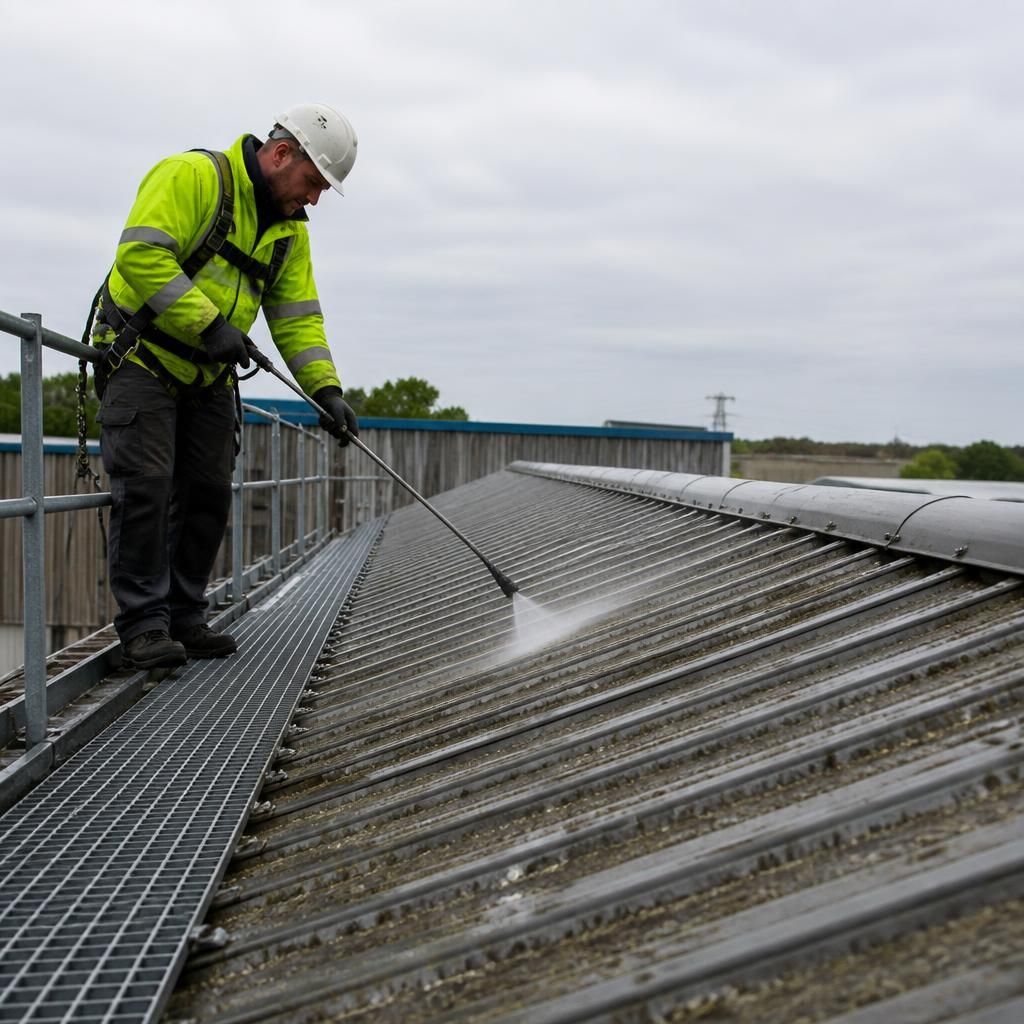
Roof material compatibility is a key factor when selecting a biocide roof cleaner. The treatment must be suitable for the specific covering and its associated components, including tiles, slate, coatings, fixings, membranes, gutters and rooflights.
Check the manufacturer’s instructions and safety data before application. Where compatibility is unclear, a small test area should be assessed first. This helps identify potential changes to colour, coatings, sealants or metalwork before the treatment is used across the roof. Overspray and runoff must also be controlled to protect walls, plants, vehicles and drainage systems.