
What are the environmental implications of using biocide roof cleaners, and are there eco-friendly options available?
Biocide roof cleaners can affect aquatic life, soil and surrounding vegetation if they are over-applied or allowed to enter drains and watercourses, so correct dilution, controlled application and responsible runoff management are essential. Lower-impact options include steam cleaning, targeted low-pressure washing and biodegradable, carefully selected treatments, although the most suitable method depends on the roof material and type of organic growth.
Biocide roof cleaners can have environmental implications when active chemicals, contaminated runoff or excess spray reach drains, watercourses, soil or nearby vegetation. Their impact depends on the active ingredient, concentration, application method, weather conditions, roof location and how the rinse water is managed. They are not automatically environmentally harmful, but they must be selected and applied as controlled treatments rather than used as a substitute for careful cleaning practice.
Biocides work by killing or suppressing organic growth such as algae, moss, mould and lichen. This can reduce the need for aggressive pressure washing and may extend the time between maintenance visits. However, the same biological activity that makes a treatment effective against roof growth can affect non-target organisms if the product is over-applied or allowed to enter the wider environment.
Key environmental risks include:
- Aquatic life: Some biocidal ingredients are harmful to fish, invertebrates, algae and other aquatic organisms. Runoff entering surface-water drains, streams, ponds or rivers can therefore create a significant risk, particularly where treatment is followed by rainfall.
- Soil and vegetation: Concentrated solution or contaminated runoff can damage lawns, planted areas, hedges and trees. Sensitive vegetation may be affected by direct overspray, splashback or repeated exposure around roof edges and downpipes.
- Drainage systems: Water from roof cleaning can carry active chemicals, dead organic matter and accumulated dirt into drainage systems. Surface-water drains commonly discharge to the environment without treatment, so they should not be treated like foul-water connections.
- Air and spray drift: Fine droplets can move beyond the working area in windy conditions. This increases the likelihood of contact with vegetation, neighbouring property, people and animals.
- Unnecessary chemical loading: Applying a stronger solution, a larger volume or more frequent treatment than the roof requires increases environmental exposure without necessarily improving the result.
The environmental profile of a product should be assessed from its current label, safety data sheet and product information rather than from terms such as “green”, “natural” or “eco-friendly” alone. Biodegradability is relevant, but it does not mean that a product is harmless immediately after application. A biodegradable substance may still be damaging at a high concentration or before it has broken down. The label should be checked for use restrictions, hazard statements, environmental warnings, dilution instructions, storage requirements and disposal guidance.
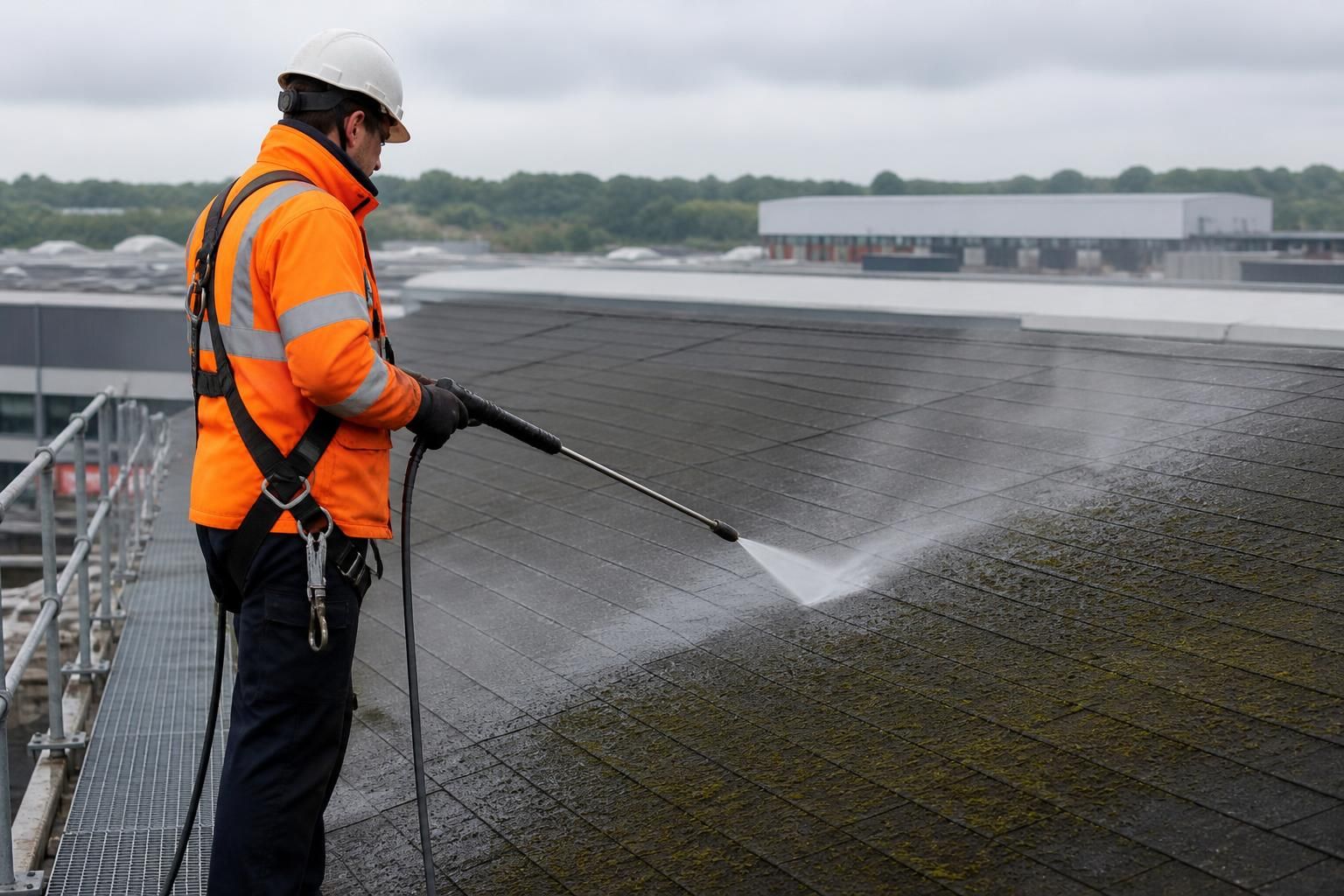
Lower-impact options are available, but the right choice depends on the roof. Steam cleaning uses heat and controlled water flow to remove or weaken organic growth, reducing reliance on chemical treatment. It can be suitable for some robust surfaces when carried out with appropriate equipment and care, although heat, moisture and access requirements still need to be assessed. Targeted low-pressure washing can remove loose growth while limiting surface damage and water consumption compared with uncontrolled high-pressure cleaning. It may not, however, remove established growth from every roof or prevent rapid regrowth on its own.
Other options include manual removal, localised treatment rather than blanket application, and carefully selected products with a lower environmental hazard profile. These methods are not universally suitable. For example, physical removal can disturb fragile tiles, while a supposedly mild treatment may still be unsuitable near a pond, sensitive planting or a surface-water drain. The least-impact method is normally the one that achieves the required standard with the lowest practical combination of chemical use, water use, pressure, heat and repeat visits.
Responsible application should include the following controls:
- Inspect the roof, surrounding ground, drainage layout, adjacent planting and nearby water features before choosing a method.
- Identify the roof material and confirm that the product is compatible with it. Avoid using a generic treatment without checking the manufacturer’s instructions.
- Use the lowest effective concentration and application volume specified for the level and type of organic growth. Do not mix products unless the manufacturer expressly permits it.
- Plan work for suitable weather. Avoid application when rain is forecast, when strong wind could cause drift, or when runoff cannot be controlled.
- Protect or isolate vulnerable vegetation, water features, rainwater harvesting equipment and relevant drainage points where practical.
- Apply the solution accurately to the intended roof area, keeping spray off neighbouring surfaces and preventing avoidable overspray.
- Control, collect, divert or otherwise manage contaminated runoff in accordance with the product instructions and applicable site requirements. Never allow chemical wash water to enter a watercourse.
- Store, transport and dispose of unused product, containers, absorbent materials and contaminated waste responsibly. Products should remain in their labelled containers and must not be poured into drains or onto land.
- Inspect the completed work and surrounding area for signs of runoff, plant damage or residue, taking corrective action promptly if a release occurs.
On commercial and industrial premises, environmental controls should be included in the method statement and risk assessment. The site team should know which drainage points carry surface water, who is responsible for isolating them, how a spill will be contained and what emergency information is available. Product handling also needs to follow the relevant control measures, including the requirements identified under COSHH where applicable. Work near public areas, occupied buildings, food-handling premises or sensitive sites may require additional controls.
A roof does not necessarily need a biocide simply because moss or algae is present. In some cases, removing loose growth and improving the underlying cause, such as persistent shade, blocked gutters or poor drainage, may reduce the need for repeat chemical treatment. Where a biocide is appropriate, precise spot treatment can be preferable to applying it across unaffected areas. Maintenance records can help identify whether a treatment is solving a recurring problem or merely adding unnecessary chemical use at short intervals.
Steam cleaning, low-pressure cleaning and biodegradable treatments should therefore be viewed as possible lower-impact approaches rather than universal replacements for biocide cleaning. Roof pitch, surface condition, access, drainage, weather, the type of growth and the required finish all affect the environmental and practical outcome. A professional assessment should balance removal effectiveness with protection of the building, workers, the public and the surrounding environment.
For sites across Birmingham, the West Midlands and the wider UK, the safest approach is to specify the cleaning objective first, then select the least intrusive suitable method. Where a biocide is necessary, controlled dilution, precise application, suitable weather and properly managed runoff can substantially reduce environmental risk. Where those controls cannot be achieved, a non-chemical or more localised cleaning method should be considered instead.
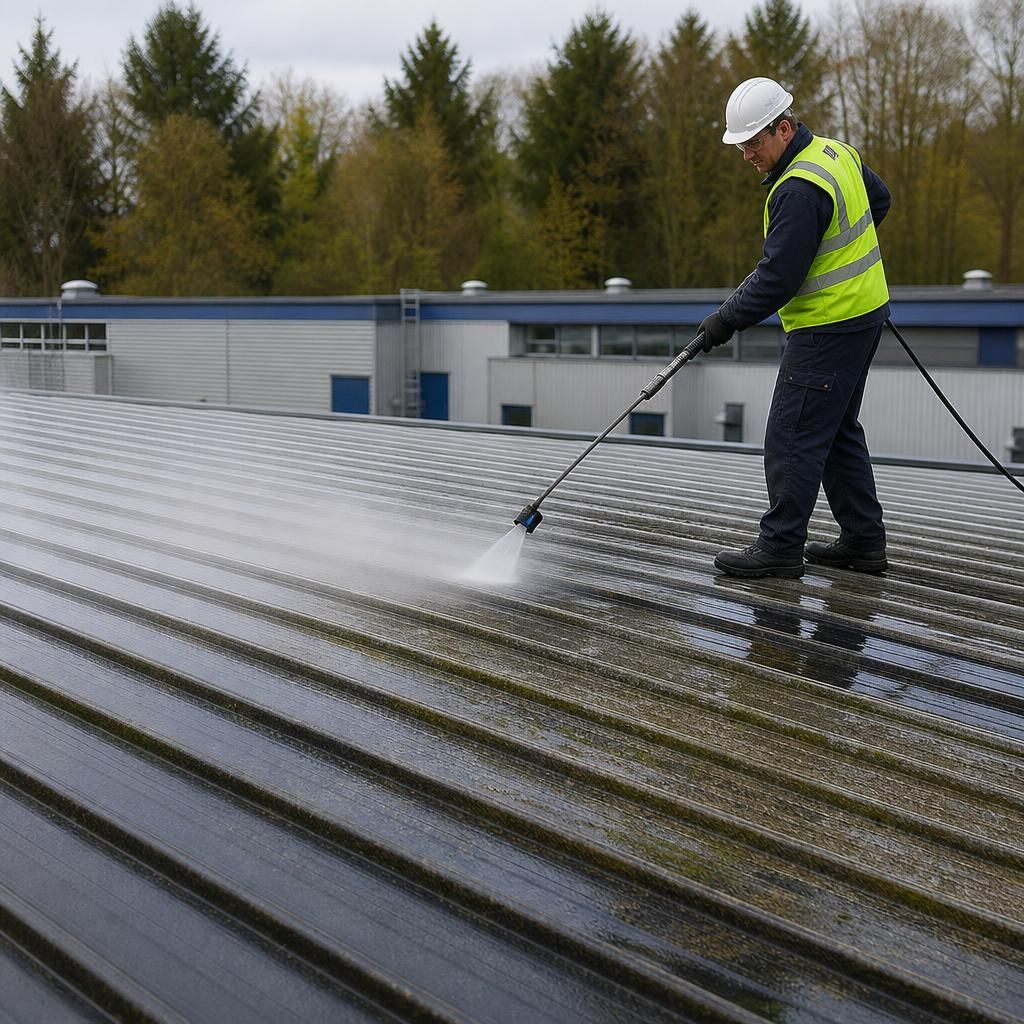
Eco-friendly roof cleaning means reducing chemical, water and runoff impacts while still removing the organic growth effectively. Lower-impact options can include steam cleaning, targeted low-pressure washing, manual removal and carefully selected biodegradable treatments, but none is automatically suitable for every roof.
The best method depends on the roof material, condition, growth type, surrounding drainage and nearby vegetation or water features. Where a biocide is necessary, applying the lowest effective concentration to affected areas, avoiding windy or rainy conditions and controlling runoff can reduce environmental exposure. Product claims such as “natural” or “green” should always be checked against the current label and safety data sheet, as biodegradable products may still harm aquatic life or plants when concentrated.