
What are the application methods for biocide roof cleaners?
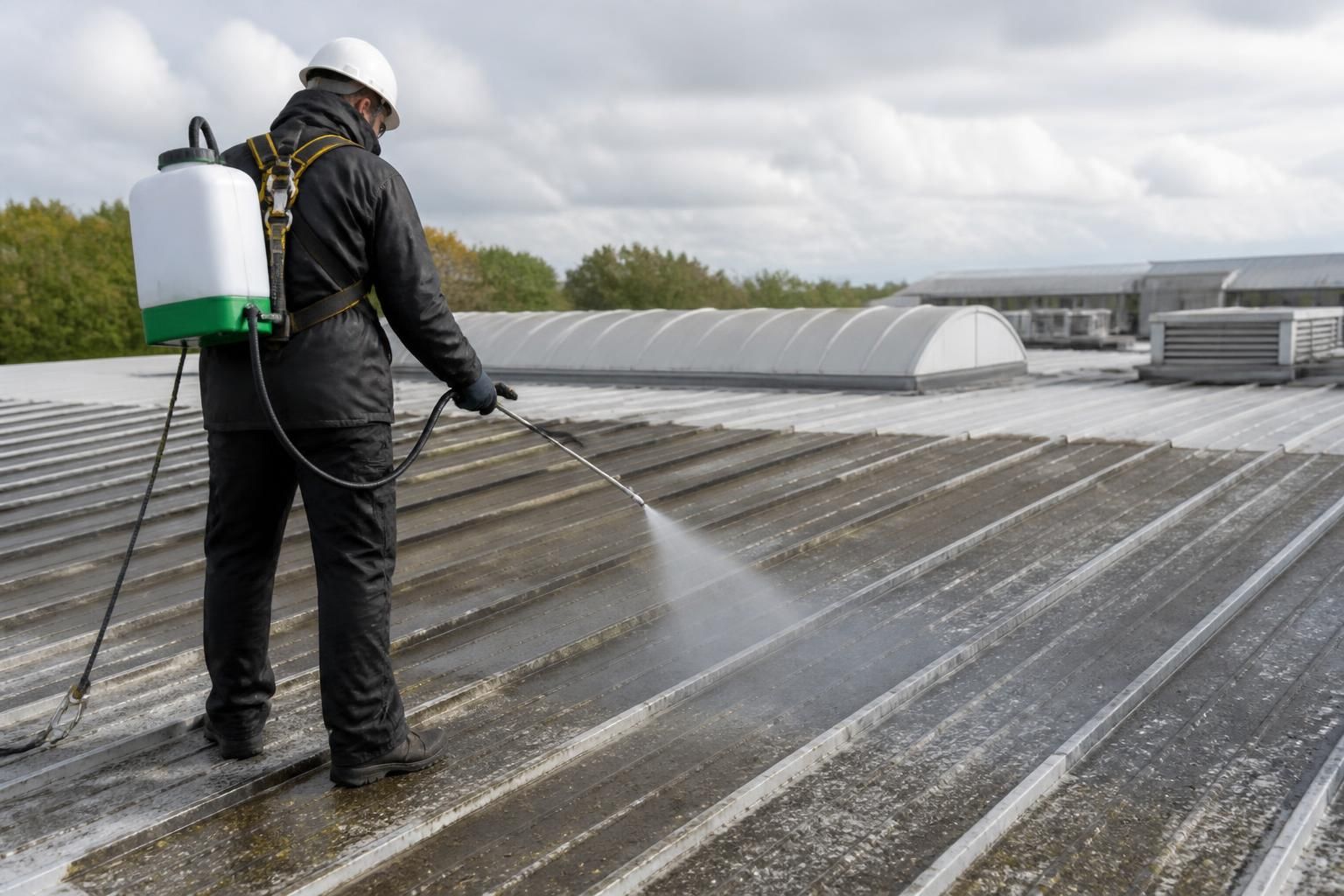
Biocide roof cleaners are typically applied evenly to a dry roof using a low-pressure pump sprayer, soft-wash system or suitable telescopic applicator, rather than high-pressure washing. The solution is left for the specified dwell time to break down moss, algae and lichen, with any rinsing or natural weathering carried out in line with the product instructions and roof material.
Biocide roof cleaners are usually applied as an even, low-pressure treatment using a pump sprayer, soft-wash system or suitable telescopic applicator. The solution is applied to a dry roof, allowed to remain for the product’s specified dwell time, and then either rinsed or left to weather naturally, depending on the manufacturer’s instructions and the roofing material. High-pressure washing is generally avoided because it can damage roof surfaces, force water beneath tiles and spread contaminated runoff.
The correct application method depends on the roof profile, the extent of organic growth, the substrate, site access and the biocide product selected. Before work starts, the roof should be inspected for fragile, slipped or damaged materials, exposed fixings, defective flashing, blocked gutters and areas where water could enter the building. Biocide treatment is not a substitute for repairing roof defects.
Low-pressure spray application
A low-pressure pump sprayer is suitable for many accessible pitched and flat roofs. It delivers a controlled application without the mechanical force associated with pressure washing. The operator works methodically across the roof, applying enough solution to wet the affected surfaces without creating excessive run-off.
- Use the dilution and application rate stated on the product label or technical data sheet.
- Apply to a dry, preferably settled surface unless the product instructions specify otherwise.
- Work in manageable sections so that the solution is not allowed to dry prematurely where a stated dwell time is required.
- Overlap adjoining passes to reduce untreated strips, particularly around tile edges, ridges and areas of heavier growth.
- Avoid spraying into roof vents, openings, electrical equipment or areas where the solution could enter the building.
Low-pressure application is often preferred for commercial premises because it offers good control around roof details and can be adapted to different access arrangements. It still requires careful management of overspray, runoff and wind drift.
Soft-wash system application
A soft-wash system uses a low-pressure pump and dedicated delivery equipment to apply a diluted biocidal solution over larger or more complex areas. It may be used from a suitable access platform, from the roof where safe access has been established, or with equipment operated from ground level.
The system should be set up to produce a controlled spray rather than a forceful jet. Nozzle selection, pump pressure and the distance from the surface affect coverage and runoff. An experienced operator adjusts these factors for the roof material, slope and level of contamination. Heavier moss may need a separate mechanical removal process or follow-up treatment; increasing pressure is not an appropriate way to compensate for poor coverage or unsuitable preparation.
Telescopic and extended-reach applicators
Telescopic poles and extended-reach sprayers can apply treatment to areas that are difficult or unsafe to reach directly. They are useful for high roof sections, canopies, sheltered elevations and sections above occupied areas, provided the operator can maintain accurate control of the spray pattern.
These applicators may require more careful checking of coverage because distance, wind and roof geometry can make it harder to see whether the surface has been fully wetted. A visual inspection from several positions, together with targeted reapplication where necessary, helps prevent missed areas. Extended-reach equipment does not remove the need for a proper access assessment.
Preparation before application
Preparation should remove loose debris and identify any heavy build-up that could prevent the solution reaching the roof surface. Loose moss may be carefully removed using methods appropriate to the roof, but aggressive scraping or brushing can disturb tiles, coatings and protective finishes. Gutters, downpipes and drainage routes should be assessed and protected where necessary, as detached organic matter and treatment residue can otherwise obstruct drainage.
Nearby walls, glazing, vehicles, plants, water features, air-intake points and sensitive equipment should be protected from overspray. The work area should be controlled so that people, animals and unauthorised personnel cannot enter while the product is being handled or while treated surfaces remain wet.
Weather conditions are also important. Strong wind can carry spray beyond the intended area, while rain may dilute or wash away the treatment before it has worked. Very hot, rapidly drying conditions can make even coverage and dwell-time control more difficult. Application should therefore follow the product instructions and be postponed when conditions prevent safe, controlled treatment.
Dwell time and post-application treatment
After application, the biocide needs sufficient contact time to act on moss, algae, mould and lichen. The required dwell time varies between products and surfaces, so it should not be guessed or shortened. Some treatments are designed to be left on the roof to break down organic growth through weathering. Others require rinsing after the specified period.
Where rinsing is required, it should be carried out at controlled, low pressure with suitable collection or runoff controls. Rinsing should not turn into high-pressure cleaning. Where natural weathering is specified, visible improvement may occur progressively as dead growth loosens and rainfall removes residue. Thick or established moss may therefore require a later inspection and, if appropriate, a further treatment rather than immediate forceful removal.
Spot treatment and repeat application
Spot treatment can be appropriate for isolated algae, moss or lichen on otherwise clean roof areas. It reduces unnecessary product use and limits the treated zone, but the surrounding surface should still be checked because organic growth often extends beyond what is immediately visible.
Repeat applications are planned according to the level of regrowth, exposure, shading, moisture and the product’s instructions. A maintenance visit may involve inspection, removal of loose debris, targeted biocide application and checks to gutters and drainage. Applying more product than specified does not necessarily improve the result and can increase runoff and the risk of damage to surrounding materials.
Safety and environmental controls
Biocides must be handled as chemical products, even when applied at low pressure. The operator should follow the label, safety data sheet and site risk assessment, using the required personal protective equipment and observing the stated storage, mixing and disposal requirements. Products should never be mixed unless the manufacturer expressly permits it.
Runoff must be controlled so that concentrated solution and contaminated organic matter do not enter surface-water drains, watercourses, ponds or unprotected planting areas. Any collection, diversion or neutralisation measures must be suitable for the product being used and for the site drainage arrangement. These controls are particularly important on large commercial roofs, where a broad application can generate substantial runoff.
The most appropriate method is therefore the one that provides complete, controlled coverage at low pressure while protecting the roof, building, surrounding property and drainage system. Product instructions, roof-material compatibility and a site-specific access and runoff assessment should always take priority over a standardised application routine.
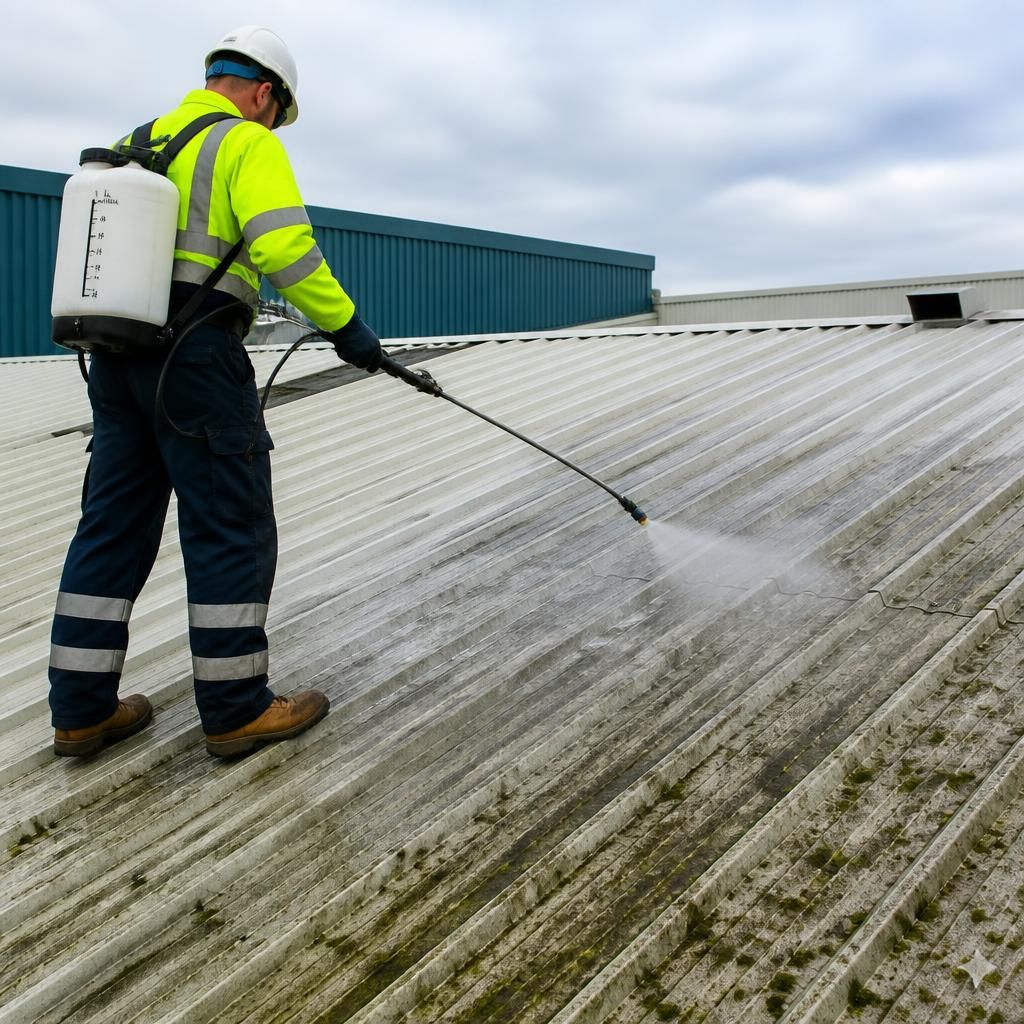
Low-pressure application is usually the preferred method for biocide roof cleaners. A pump sprayer, soft-wash system or telescopic applicator can distribute the solution across the roof without the force associated with pressure washing. The surface should be wetted evenly, including tile edges, ridges and areas of heavier organic growth, while avoiding excessive run-off.
The treatment must then remain on the roof for the dwell time stated by the manufacturer. Depending on the product and roofing material, it may be rinsed using controlled low pressure or left to weather naturally. Applying additional product or increasing pressure will not necessarily improve the result and may increase the risk of damage, overspray and contaminated runoff.