
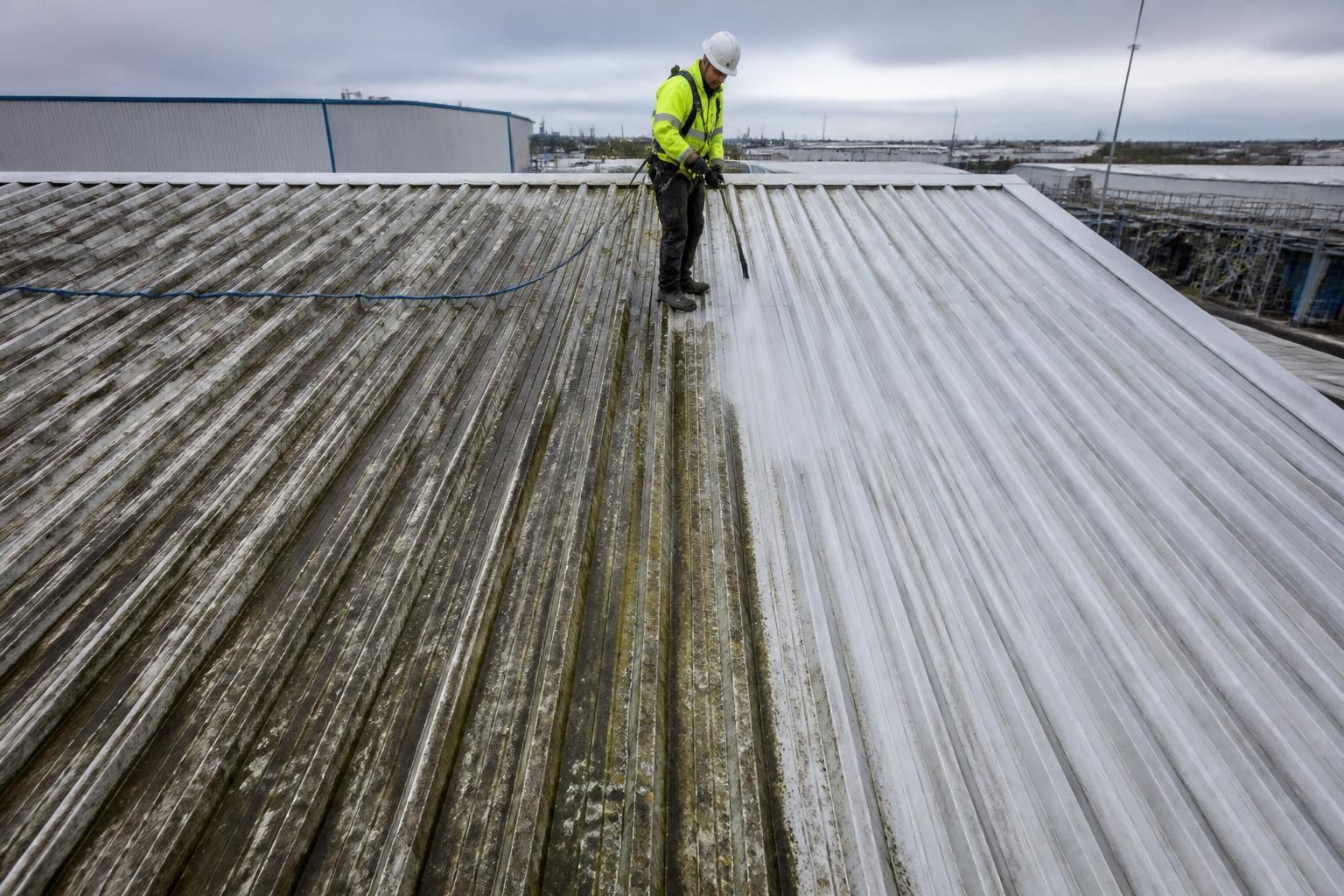
How do biocide roof cleaners differ in their effectiveness against various types of organic growth, such as mould, moss, and algae?
Biocide roof cleaners affect organic growth in different ways: they generally break down algae and mould effectively, while moss often requires longer dwell time and may need gentle mechanical removal after treatment. The best result depends on the product formulation, the type and maturity of the growth, the roof material, and correct application conditions.
Biocide roof cleaners do not affect every type of organic growth in the same way. They are usually most immediately effective against surface algae and mould, while established moss is slower to die back and often requires a longer treatment period followed by careful removal of the dead material. Results depend on the active ingredients, concentration, dwell time, weather, roof material, and the age and density of the growth.
Algae
Algae commonly appears as green, blue-green or black staining on tiles, slates and other roof surfaces. Because it is usually a relatively thin surface growth, a suitable biocide can penetrate and disrupt it effectively. The colour may not disappear immediately: the treatment kills or weakens the algae, while rainfall, natural weathering and, where appropriate, gentle rinsing remove the remaining residue.
Some algae leave persistent dark staining even after they are no longer active. A further application may be considered where staining is extensive, but applying more product is not always the correct solution. The roof must first be assessed to establish whether the marks are living growth, embedded dirt, weathering or permanent discolouration.
Mould
Mould is a fungal growth that can form on shaded, damp roof areas and may appear as black, brown, grey or green patches. Biocidal products can be effective because they target the living fungal growth and its surface spores. However, mould in porous materials or heavily soiled areas may be less responsive to a single treatment, particularly where dirt prevents the solution from reaching the roof surface.
Pre-cleaning may be needed where deposits are thick, but this has to be matched to the roof construction. Excessive pressure can remove surface coatings, damage pointing or force water beneath tiles. A controlled application with sufficient dwell time is generally preferable to aggressive pressure washing. Mould can also return if persistent dampness, poor ventilation, overhanging vegetation or heavy shading is not addressed.
Moss
Moss is more substantial than algae or mould. It grows in clumps and can retain moisture, lift at tile edges and trap soil and organic debris. A biocide can kill the moss, but it will not necessarily detach an established mat immediately. The treatment may cause the moss to dry, loosen and decay over time, after which it can be removed using a method suitable for the roof.
Where moss is thick, physical removal is often required before or after treatment. This should be carried out carefully, using appropriate access equipment and tools rather than force that could crack tiles or disturb roof coverings. Biocide treatment is valuable because it deals with residual growth and microscopic contamination that manual removal alone may leave behind, but it should not be presented as an instant substitute for removing heavy moss deposits.
Lichen and mixed growth
Lichen combines fungal and algal characteristics and can attach firmly to tile and slate surfaces. It is often more resistant to rapid removal than a light algae film. Biocides may weaken lichen gradually, but complete visual clearance can take time and may require repeat assessment or gentle mechanical work. Mixed growth, such as moss overlying algae or lichen, can also prevent the treatment from contacting every layer evenly.
For this reason, the visible condition of the roof is important when selecting the treatment approach. A light film may respond to a carefully applied product alone, whereas mature, layered growth needs a planned sequence of treatment, controlled removal and follow-up inspection.
Why the same product can produce different results
- Formulation: different biocides use different active ingredients and may be designed for cleaning, residual protection or both. Their performance must be checked against the intended type of growth and the roof material.
- Growth maturity: new surface staining is generally easier to treat than thick, established moss, lichen or growth embedded in porous surfaces.
- Surface condition: dirt, soot, scale and loose organic matter can shield growth from the solution and reduce contact with the roof.
- Dwell time: the product needs to remain in contact with the growth for the period specified by the manufacturer. Allowing it to dry too quickly or washing it away too soon can reduce its effectiveness.
- Weather: rain immediately after application can dilute or remove the treatment, while strong sun, wind or high temperatures can cause uneven drying. Cool, stable conditions are often easier to manage, subject to the product instructions.
- Application quality: even coverage is essential. Missed areas, sheltered tile laps and dense moss clumps may remain untreated and become visible after the rest of the roof has cleared.
- Roof construction: clay, concrete, slate, coated metal and other coverings have different tolerances. The cleaning method must account for fragility, porosity, coatings, fixings, pointing and the risk of water entering beneath the covering.
How effectiveness is assessed
Effectiveness should be judged by more than the immediate appearance of the roof. A successful treatment reduces or kills the active growth, allows residue to clear safely, avoids damage to the covering and limits early regrowth. A roof may look marked for some time after treatment even though the biological growth is no longer active.
Follow-up checks are particularly useful on roofs with heavy moss, persistent shade or a history of recurring algae. If green or dark growth continues to spread, the cause may be incomplete coverage, unsuitable application conditions, insufficient contact time or an ongoing moisture problem rather than failure of biocidal treatment itself.
Practical approach for different growth types
- Inspect the roof to identify whether the main issue is algae, mould, moss, lichen, dirt or a combination.
- Confirm that the selected product is suitable for the roof material and intended use.
- Remove loose debris and manage heavy moss where necessary, without damaging the roof covering.
- Apply the biocide evenly in accordance with the manufacturer’s instructions, taking account of weather and dwell time.
- Allow dead or weakened growth to break down naturally where that is appropriate, or remove it using a controlled method agreed for the roof.
- Inspect the finished surface and identify any areas requiring further treatment or monitoring.
In practical terms, algae and mould usually show the clearest response to a correctly applied biocide, whereas moss and lichen need more patience and may require mechanical assistance. The most reliable treatment is therefore selected according to the growth present rather than applied as a single universal solution. Product instructions, safe working procedures and the condition of the roof should always take priority over attempting to achieve immediate cosmetic results.
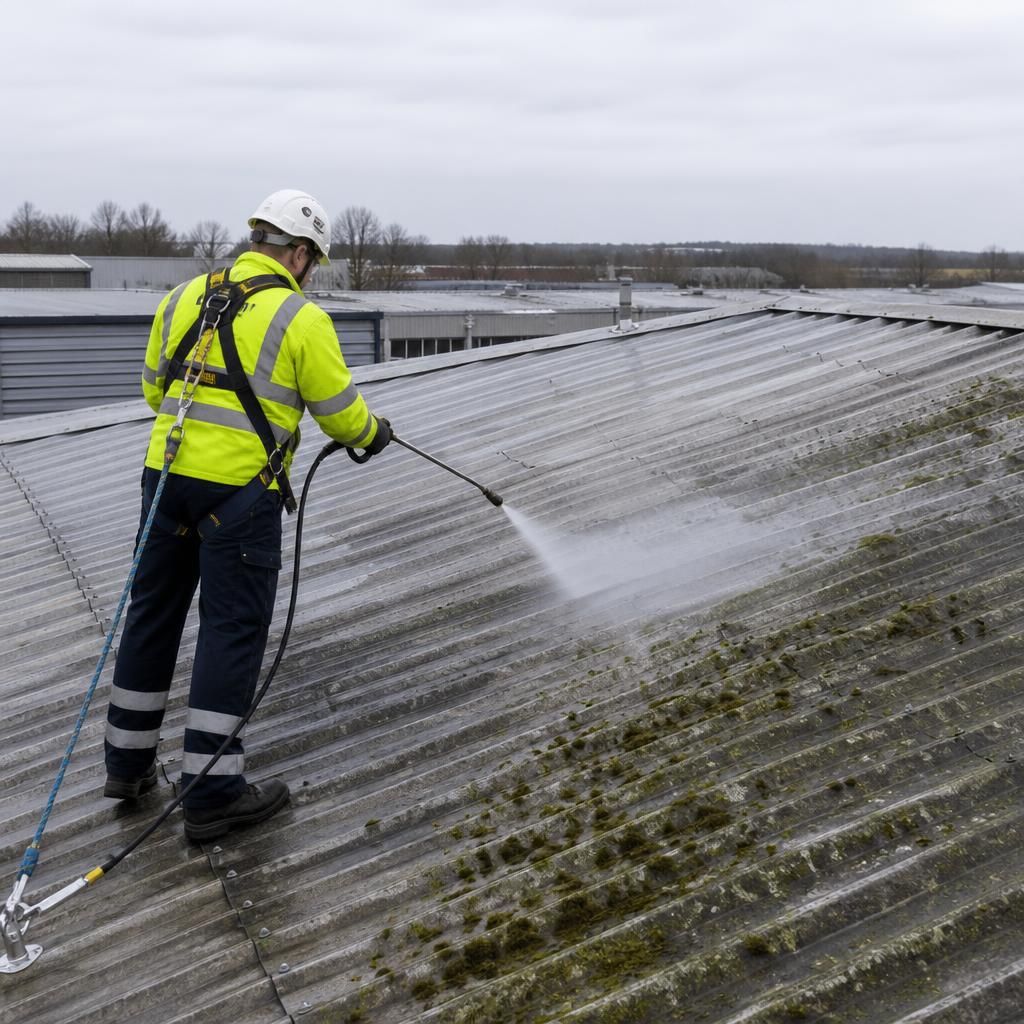
Biocide roof cleaners usually act faster on thin algae and mould films than on established moss. Algae and mould grow across the surface, allowing the treatment to contact the active growth directly. Moss forms thicker, moisture-retaining clumps, so treatment may kill it without removing the visible mat immediately.
Where moss is dense, it may need careful removal before or after biocide application, using a method suitable for the roof covering. The treatment then helps address residual spores and growth in areas that manual cleaning may miss. Lichen and mixed growth can also take longer to weaken, making dwell time, even coverage and follow-up inspection important.