
What safety precautions should be considered during roof biocide treatment to protect both workers and building occupants?
Roof biocide treatment should be planned through a site-specific risk assessment and COSHH assessment, with trained operatives using suitable access equipment, fall protection, chemical-resistant PPE and the product’s safety data sheet. Protect building occupants by controlling access, isolating vulnerable areas, preventing spray drift and contaminated runoff, notifying relevant parties, and stopping work in unsuitable weather conditions.
Safe roof biocide treatment requires a site-specific risk assessment, COSHH assessment and method statement before work begins. Trained operatives should use suitable access and fall-protection systems, chemical-resistant personal protective equipment (PPE), and the product manufacturer’s safety data sheet and application instructions. Building occupants and other site users must be protected through controlled access, clear communication, spray-drift prevention, runoff management and appropriate exclusion zones.
Assess the roof, site and product before starting. The assessment should consider roof condition, pitch, fragile surfaces, rooflights, access points, nearby electrical equipment, occupied areas, drainage routes, watercourses, vegetation and neighbouring premises. It should also identify the hazards associated with the selected biocide, including harmful contact with skin or eyes, inhalation of mist, accidental ingestion, environmental release and reactions caused by mixing incompatible substances. The product label and safety data sheet should be available to the work team, with COSHH controls reflecting the actual product and application method.
Operatives should be competent to carry out roof cleaning and chemical handling, including the safe use of ladders, scaffolds, mobile access equipment, edge protection and harness systems where required. A rescue plan is essential wherever a fall-arrest harness is used; a harness alone does not prevent a fall and must be connected to a suitable, inspected anchorage. Access equipment should be positioned on stable ground, used within its limitations and kept clear of vehicle routes, doors and public areas.
Control work at height. Roof access should be avoided where the treatment can be completed safely from ground level or from suitable access equipment. Where access is necessary, workers should use designated walkways or spreader boards on fragile surfaces, maintain appropriate edge protection and avoid stepping on rooflights or unsupported sheets. Wet roofs, moss-covered surfaces and chemical residues can be particularly slippery, so operatives should maintain three points of contact where practicable and keep equipment arranged to prevent trips.
Before work starts, inspect the roof and access equipment for defects and confirm that weather conditions are suitable. High winds can affect workers, hoses, ladders, mobile platforms and spray application. Rain can increase slip risks, dilute the treatment or cause uncontrolled runoff, while extreme temperatures can affect the product and worker safety. Work should be postponed if conditions prevent controlled application, create a fall hazard or increase the likelihood of spray drift.
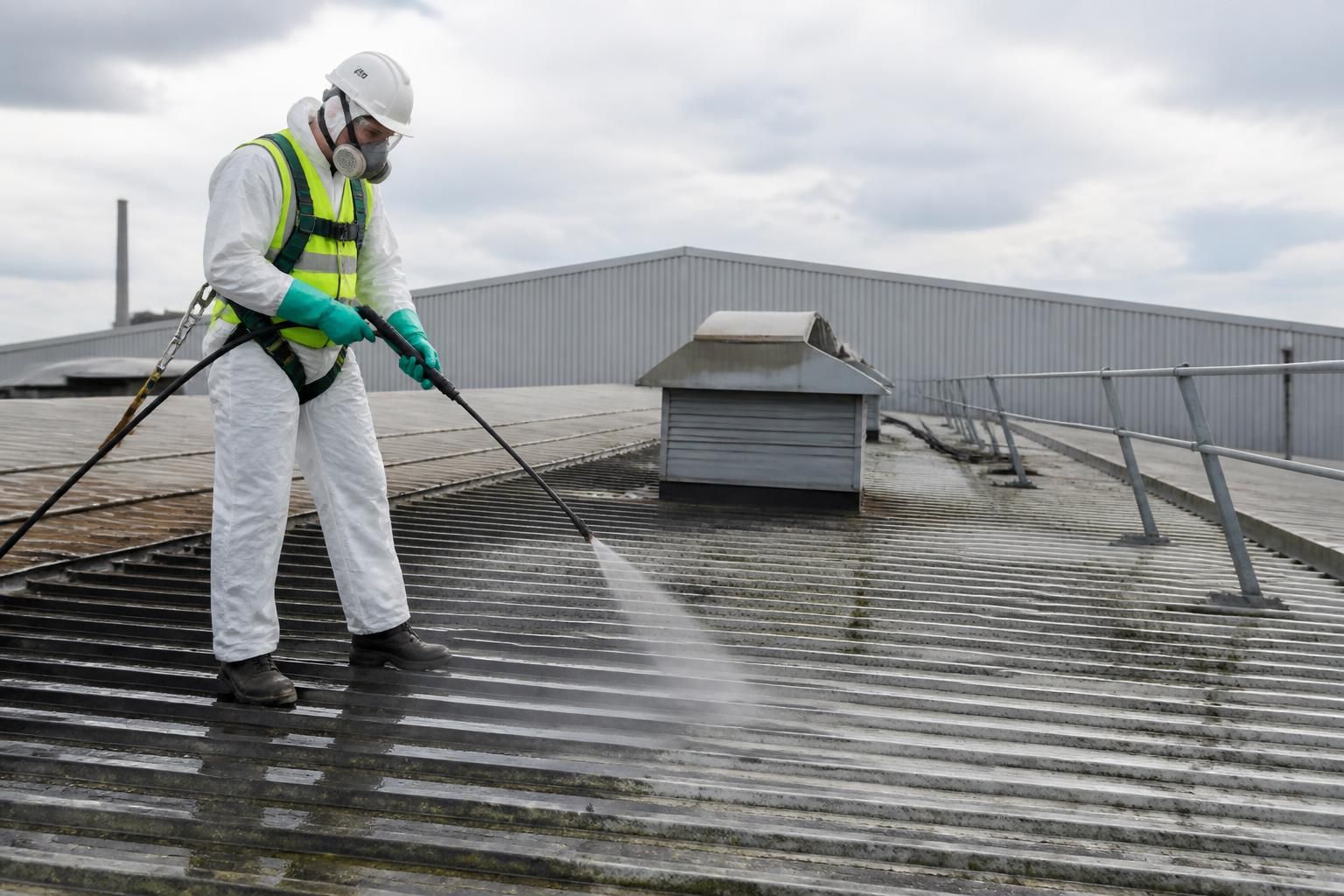
Use PPE selected for the chemical and task. This may include chemical-resistant gloves, protective footwear with suitable slip resistance, coveralls, eye or face protection and respiratory protection where the risk assessment and product information require it. PPE must be compatible with the biocide, correctly fitted, maintained and replaced when contaminated or damaged. Workers should avoid touching their face, eating, drinking or smoking while handling the product, and should wash their hands and exposed skin after the task. Contaminated clothing should be removed safely and laundered or disposed of in accordance with the product instructions.
Respiratory protection should not be treated as a substitute for controlling spray or mist at source. Application methods should be selected to minimise airborne droplets, and the appropriate respirator, filters, face-fit testing and maintenance arrangements should be established where respiratory protection is required. Eye protection is especially important during mixing, decanting, spraying and work above head height.
Control mixing, storage and handling. Biocide should be stored in its original, clearly labelled container in a secure, ventilated area away from food, animal feed, incompatible chemicals and unauthorised access. Operatives should measure and dilute it only as instructed, use suitable containers and never mix products unless the manufacturer specifically permits this. Spill kits, clean water for initial decontamination and suitable first-aid arrangements should be available close to the work area. Empty containers and chemical residues should be handled and disposed of through the correct waste arrangements rather than poured into drains or watercourses.
Building occupants should be informed before treatment begins. The notification should explain the planned work, affected areas, expected duration, access restrictions and any actions occupants must take, such as closing windows, keeping people away from the roof perimeter and temporarily relocating outdoor activities. Sensitive occupants, visitors, contractors and members of the public may need additional controls, particularly around schools, healthcare premises, residential buildings and food-related operations.
Establish a clearly marked exclusion zone below and around the work area. Keep occupants, visitors and vehicles away from falling objects, wet surfaces, hoses, access equipment and treated areas. Doors, windows, air-intake points, ventilation systems and outdoor seating may need to be closed, covered or isolated while spraying takes place. Do not allow people to re-enter until the risk assessment confirms that the area is safe, surfaces are suitably dry and any required ventilation or cleaning has been completed.
Prevent spray drift and uncontrolled discharge. Use low-drift application techniques, suitable nozzles and controlled pressure where appropriate, rather than creating a fine mist that can travel beyond the roof. Operatives should monitor wind direction and nearby properties throughout the application. Protect or temporarily isolate vulnerable drains, downpipes and collection points when this can be done safely, and use containment measures to prevent contaminated solution entering surface-water drainage, soil, ponds or watercourses. Any required collection, neutralisation or disposal procedure should follow the product instructions and the site’s environmental controls.
Where the roof drains into areas used by occupants, runoff should be managed before treatment starts. This may involve diverting discharge, using temporary containment, collecting contaminated water or scheduling work so that drainage can be controlled. The correct approach depends on the roof construction, treatment product, drainage system and local environmental risks. A treatment should be stopped if runoff cannot be contained or if spray is reaching areas outside the agreed control zone.
Good housekeeping reduces secondary risks. Keep hoses, leads, containers and tools routed away from walkways and emergency exits. Deal promptly with spills using the planned procedure, prevent contaminated footwear from transferring product into occupied areas and place warning signs at access points and below the work area. Do not leave open containers, equipment or treated surfaces unattended where children, pets, staff or members of the public could reach them.
The site team should have clear emergency arrangements for chemical splashes, inhalation, accidental ingestion, falls, spillages and exposure of occupants. First-aid facilities and clean water should be accessible, and the product label and safety data sheet should be available to inform medical advice. If a person is exposed, follow the product-specific first-aid instructions and seek medical assistance when indicated. Record and report incidents, near misses and uncontrolled releases so that the method can be reviewed before work continues.
On completion, inspect the roof, access routes and surrounding ground for residue, damaged materials, unsecured equipment and signs of unintended discharge. Remove barriers only when the area is safe and communicate any ongoing restrictions to the building manager. The completion record should note the product used, application method, areas treated, weather conditions, controls applied, waste or runoff arrangements, incidents and any follow-up inspection required. This documentation provides evidence that the treatment was planned and carried out in accordance with the risk assessment, COSHH requirements, product instructions and applicable site procedures.
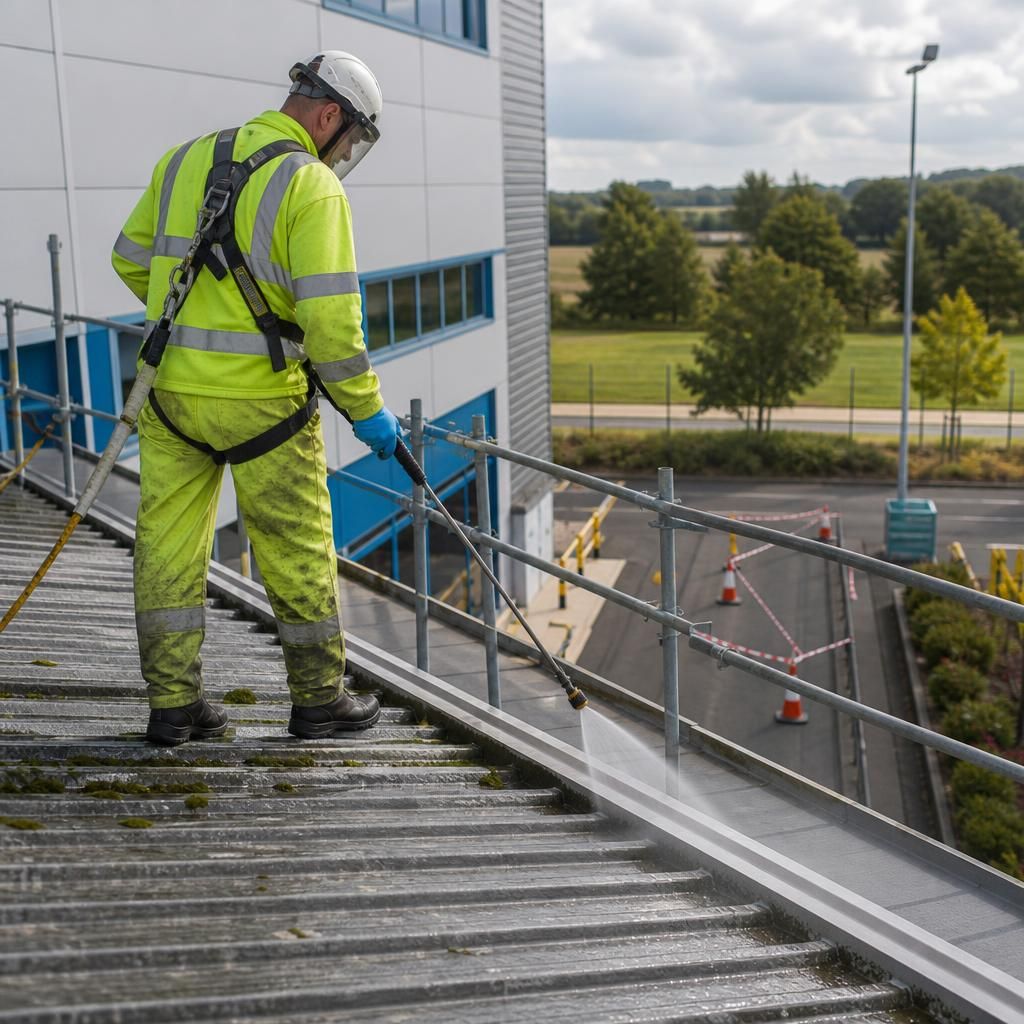
Protecting building occupants during roof biocide treatment requires a controlled exclusion zone that separates people from spray, runoff, wet surfaces, falling materials and access equipment. The zone should cover the area beneath and around the work, including entrances, walkways, outdoor seating, car parks and vehicle routes where relevant.
Before application begins, notify the building manager and affected occupants about the work area, access restrictions and expected duration. Close or isolate windows, doors, ventilation intakes and outdoor activities where spray drift or contaminated runoff could present a risk. Use clear warning signs and physical barriers, rather than relying on verbal instructions alone.
Operatives should select low-drift application methods, monitor wind direction and stop work if spray cannot be kept within the agreed control area. Runoff must also be managed so that treated solution does not enter occupied areas, soil, surface-water drains or nearby watercourses. The exclusion zone should remain in place until the roof perimeter and surrounding surfaces have been inspected and confirmed safe for normal use.