
What factors should be considered when selecting a roof biocide treatment?
When selecting a roof biocide treatment, consider the roof material and condition, the type and extent of moss, algae or lichen growth, the treatment’s effectiveness and environmental impact, and the safest application method. The product should be compatible with the roof and surrounding surfaces, applied under suitable weather conditions, and handled by trained professionals where access or chemical risks are present.
Selecting a roof biocide treatment means matching the product and application method to the roof material, its condition, the type of biological growth present and the surrounding environment. The most suitable treatment should control the moss, algae or lichen without damaging the covering, contaminating drainage systems or creating unnecessary risks for workers, occupants, plants and neighbouring surfaces.
Roof material and construction
The roof covering is one of the first factors to assess. Concrete and clay tiles, slate, coated metal, asbestos-containing materials and membrane systems can all respond differently to chemical treatment. A product suitable for one surface may stain another, affect a protective coating or enter joints and laps where it could cause problems.
The roof design also matters. Consider the pitch, drainage routes, valleys, flashings, rooflights, solar panels, plant equipment and any areas where treatment could collect. A survey should identify whether the roof is suitable for soft cleaning and biocide application, rather than assuming that the same product can be used across every part of a building.
Condition of the roof
Biocide treatment is not a substitute for roof repairs. Cracked or loose tiles, failed pointing, defective flashing, blocked outlets and deteriorated coatings should be recorded before work starts. Cleaning or applying a treatment to a fragile roof can worsen existing defects, particularly if workers, equipment or excessive water are introduced.
Where the covering is weathered or porous, the treatment may behave differently from its use on a sound, relatively non-absorbent surface. The specification should therefore account for the roof’s age, surface condition and previous cleaning or coating treatments. A small test area can help confirm appearance, compatibility and the likely application rate before wider work proceeds.
Type and extent of biological growth
Identify whether the main issue is moss, algae, lichen or a combination of growths. These organisms attach to surfaces in different ways, so the product and dwell time should be selected for the contamination present. Thick moss may require careful physical removal before treatment, while staining caused by algae may need a different approach from established lichen.
The extent of growth is equally important. Localised contamination may be treated selectively, whereas widespread growth on a large commercial roof requires a consistent application plan and controls for overspray and runoff. The objective should be agreed in advance: immediate visual improvement, suppression of regrowth, preparation for another roof treatment, or a planned maintenance programme.
Product suitability and effectiveness
Review the product’s technical information, instructions for use and safety data rather than selecting a treatment solely on its advertised strength. Check that it is intended for the relevant roof surface and biological growth, and that the proposed dilution, contact time and rinsing requirements can be followed on that site.
Effectiveness depends on more than the chemical itself. Surface porosity, shading, moisture, contamination levels and the ability to keep the treatment in contact with the growth all influence the result. Some treatments work progressively, meaning that dead or weakened growth may weather away over time rather than disappearing immediately. This should be explained when agreeing the expected outcome.
Environmental impact and runoff control
A responsible selection considers where the treatment and wash water will go. Check nearby drains, watercourses, planted areas, ponds, grassed land, neighbouring properties and vehicle or pedestrian routes before work begins. The method should prevent uncontrolled discharge and minimise drift onto sensitive surfaces.
Use the least hazardous effective product and application method for the conditions, following the manufacturer’s instructions and relevant UK requirements. Environmental considerations include the active ingredients, required concentration, persistence, storage, disposal and the controls needed during application. A biodegradable claim alone does not remove the need to manage runoff correctly.
Plants and landscaping may need to be protected, dampened or isolated, depending on the product instructions. Gutters and downpipes may also require temporary protection or controlled flushing where this is permitted by the treatment specification. The site plan should define how residues, containers and contaminated materials will be handled.
Weather and timing
Weather conditions affect both safety and performance. Rain shortly after application can dilute or wash away the treatment, while strong wind increases the risk of spray drift. Very hot, dry conditions can cause the product to dry before it has had sufficient contact time, and freezing conditions can affect application and surface safety.
Choose a work window that allows the roof to be safely accessed and the treatment to remain effective for the required period. Forecasts should be checked before mobilisation and conditions monitored throughout the work. If the weather no longer meets the product or site requirements, postponing the application is preferable to compromising the result or increasing environmental risk.
Application method and access
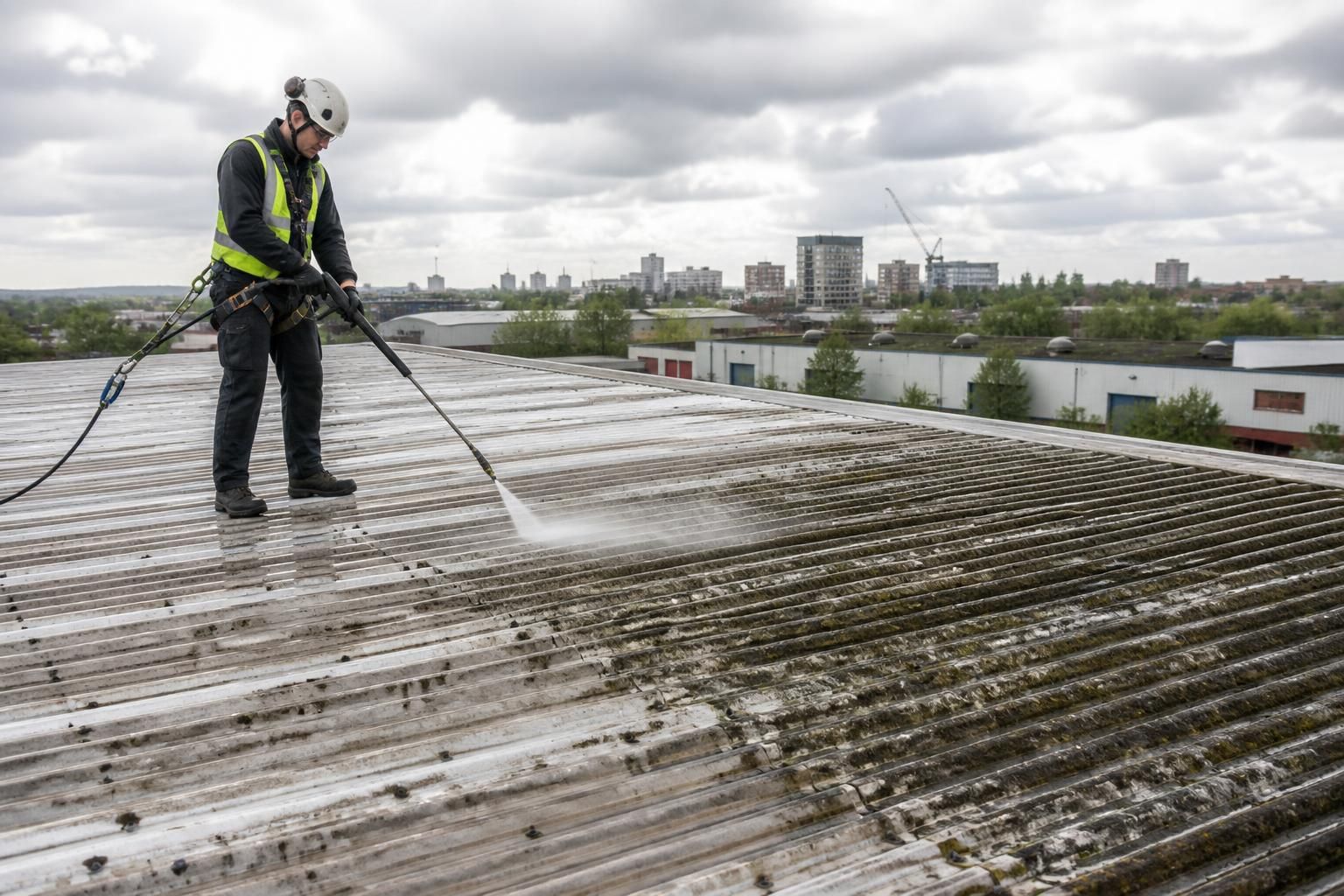
The treatment method should reflect the roof’s size, pitch, height, accessibility and sensitivity. Low-pressure spraying may be suitable where controlled coverage is possible, while lance application, telescopic equipment or other access systems may be needed on larger or more complex premises. High-pressure application can force water beneath tiles, damage finishes and spread contaminated water, so pressure should be controlled and justified by the roof condition.
Access arrangements are particularly important on commercial and industrial sites. The assessment should cover fragile areas, edge protection, fall risks, overhead obstructions, public access, traffic, tenant operations and the need to isolate parts of the building. The safest chemical treatment is still unsuitable if it cannot be applied without exposing people or the building to unacceptable risks.
Worker and occupant safety
Consider the product’s hazard classification, exposure controls, personal protective equipment, storage and emergency arrangements. A competent contractor should review the safety data sheet, complete the relevant risk assessments and method statements, and comply with the Control of Substances Hazardous to Health requirements where applicable.
Building occupants, visitors and other contractors may need to be kept away from the work area. Windows, air intakes, entrances, ventilation equipment and external plant should be considered when planning the application. Clear communication is needed where a treatment could create temporary odour, restricted access or wet and slippery surfaces.
Compatibility with surrounding materials
Biocide can affect more than the roof covering. Check its compatibility with render, brickwork, painted façades, powder-coated metal, glazing, rubber seals, plastics, vehicles and external signage. Sensitive surfaces should be protected and, where appropriate, tested before full application.
Particular care is needed around rainwater goods and façade features because residues can create streaking or discolouration. A controlled test area, followed by inspection after the recommended contact period, provides useful evidence before the treatment is extended across the roof.
Legal, site and operational requirements
For commercial premises, selection should also account for site rules, environmental permits or discharge restrictions where relevant, asbestos information, tenant requirements and the building’s planned use. Product labels and UK regulatory requirements must be followed, including any restrictions on professional use, application, storage and disposal.
Where the roof is part of a larger planned maintenance programme, record the product used, areas treated, weather conditions, defects observed and any follow-up recommendations. This creates a useful maintenance history and helps determine whether later treatment, repairs or a different cleaning approach is needed.
Whole-life value and maintenance
The lowest initial treatment cost is not necessarily the most suitable choice. Compare the expected performance, preparation required, access equipment, protection of surrounding areas, likely need for repeat visits and the consequences of roof damage or uncontrolled runoff. A treatment that is appropriate for the roof and supported by a realistic maintenance plan is generally more useful than an aggressive product selected for immediate visual change.
For most commercial roofs, the final decision should follow a site survey rather than a product-only assessment. The specification should confirm the roof type and condition, target growth, product compatibility, environmental controls, weather requirements, access arrangements, safety measures and the expected timescale for visible results. Where there is uncertainty, a controlled test area and advice from a competent exterior cleaning contractor can reduce the risk of damage and help establish the most practical treatment plan.
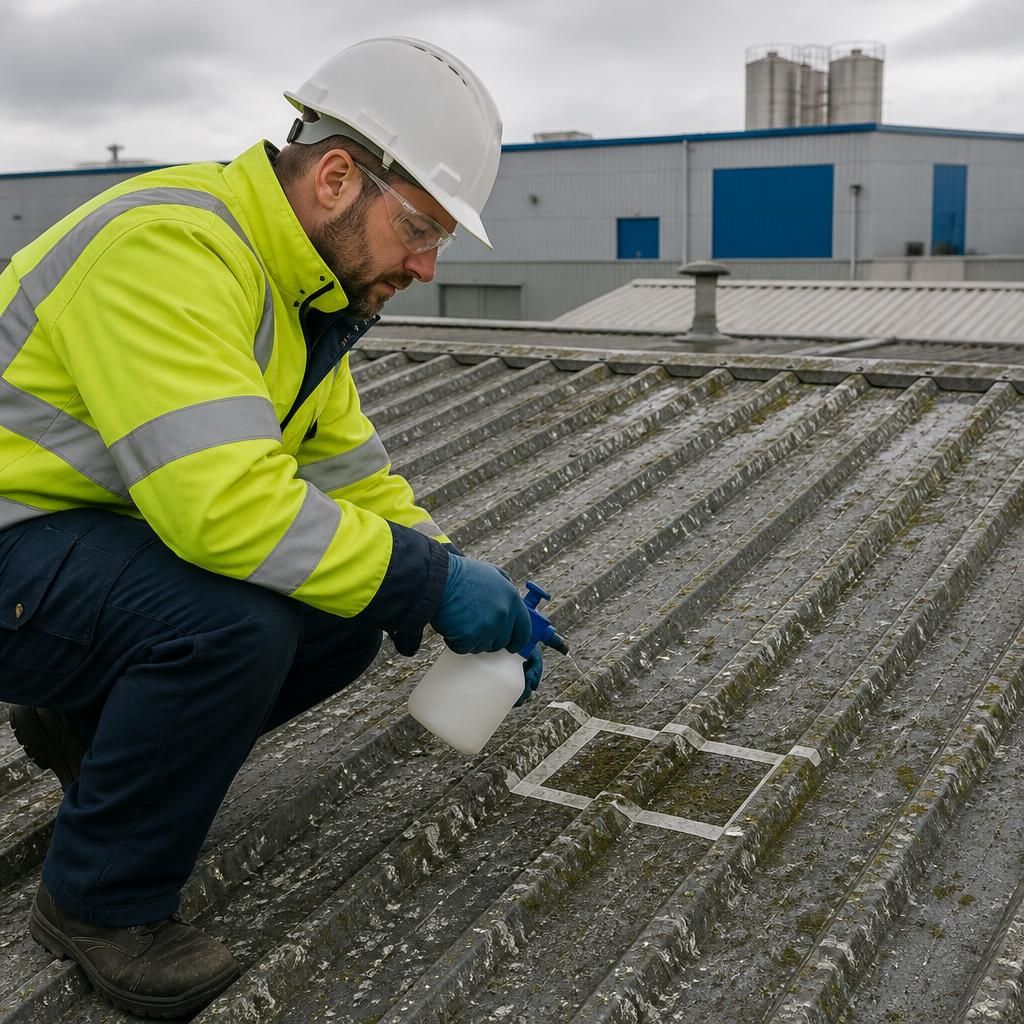
Roof biocide selection should begin with compatibility testing, not simply the severity of the moss, algae or lichen. The treatment must be suitable for the roof covering and must not damage coatings, seals, flashings, rainwater goods or nearby façade materials.
A competent contractor should inspect the roof, review the product instructions and apply the proposed treatment to a small, discreet area first. This test helps confirm the appearance, dwell time, coverage and reaction of the surface before work continues. It is particularly important on aged, porous, coated or previously treated roofs, where the result may differ from the manufacturer’s general guidance.
The test area should also be checked for runoff and overspray risks around gutters, glazing, vehicles, planting and pedestrian routes. If the product cannot be controlled safely on the building, an alternative treatment or application method may be more appropriate.