
What factors should be considered when selecting a roof biocide treatment method for my specific type of roof?
Selecting a roof biocide treatment method depends on the roof material and condition, the type and severity of moss, algae or lichen growth, safe access, drainage arrangements and environmental considerations. A suitable method must provide effective coverage without damaging the surface or allowing treated run-off to affect surrounding areas.
The right roof biocide treatment method is determined by the roof covering, its condition, the type and extent of biological growth, and the safest way to control application and run-off. A method that is suitable for concrete tiles may be inappropriate for fragile slate, coated metal or an ageing membrane. The assessment should therefore identify the roof material and construction before deciding whether to use spray application, manual treatment, low-pressure cleaning, steam cleaning or a combination of methods.
Roof material and surface finish
- Concrete and clay tiles: These can usually accept carefully controlled biocide application, but pressure must be limited where tiles are weathered, porous or have damaged finishes. Clay tiles may be more fragile and should be assessed individually.
- Natural slate: Slate can split, delaminate or become loose, particularly when old or already damaged. Avoid methods that rely on aggressive pressure, and check the condition of the slates, fixings, flashings and mortar before treatment.
- Coated or painted metal: The treatment must be compatible with the coating and should not undermine paint, protective finishes or sealants. Abrasive cleaning and excessive pressure can expose the underlying metal and increase corrosion risk.
- Roof membranes and synthetic coverings: Single-ply membranes, GRP, felt and other specialist systems require confirmation from the manufacturer or a competent roofing professional. Some chemicals, solvents or mechanical methods can affect flexibility, adhesion or waterproofing.
- Thatch, leadwork and specialist roof features: These materials need a separate professional assessment. Biocide treatment should not be selected without considering the covering, adjacent details and any manufacturer or conservation requirements.
The surface finish is also important. A roof with loose granules, friable mortar, failing sealant or a deteriorating coating may need repair or replacement advice before cleaning. Biocide cannot restore a damaged waterproofing system.
Condition, age and existing defects
Inspect the roof for cracked or slipped tiles, open laps, defective ridge and verge mortar, blocked valleys, damaged flashings, exposed underlay and areas of ponding. Biological growth can conceal defects, while cleaning can dislodge already-loose materials. Where the roof is unsafe or structurally unsound, treatment should not proceed until the relevant repairs and access arrangements have been addressed.
The roof pitch and construction also affect the choice. Steep, uneven or complex roofs may require a different application technique from a low-pitched roof, particularly where water could collect behind abutments or beneath overlapping coverings.
Type and severity of biological growth
Moss, algae, lichen and general organic staining do not behave in the same way. Moss may form thick cushions that retain moisture and need controlled removal alongside treatment. Lichen can adhere tightly to the surface and may require longer contact time and repeated maintenance rather than forceful cleaning. Algae and staining may respond well to a carefully applied biocide, provided the product is suitable for the roof and surrounding environment.
Consider how widely the growth is distributed, whether roots or trapped debris are present, and whether the problem is limited to shaded sections or affects the whole roof. Localised growth may be treated selectively, while extensive coverage may require a planned application that avoids missed areas and uneven results.
Choosing the application and cleaning method
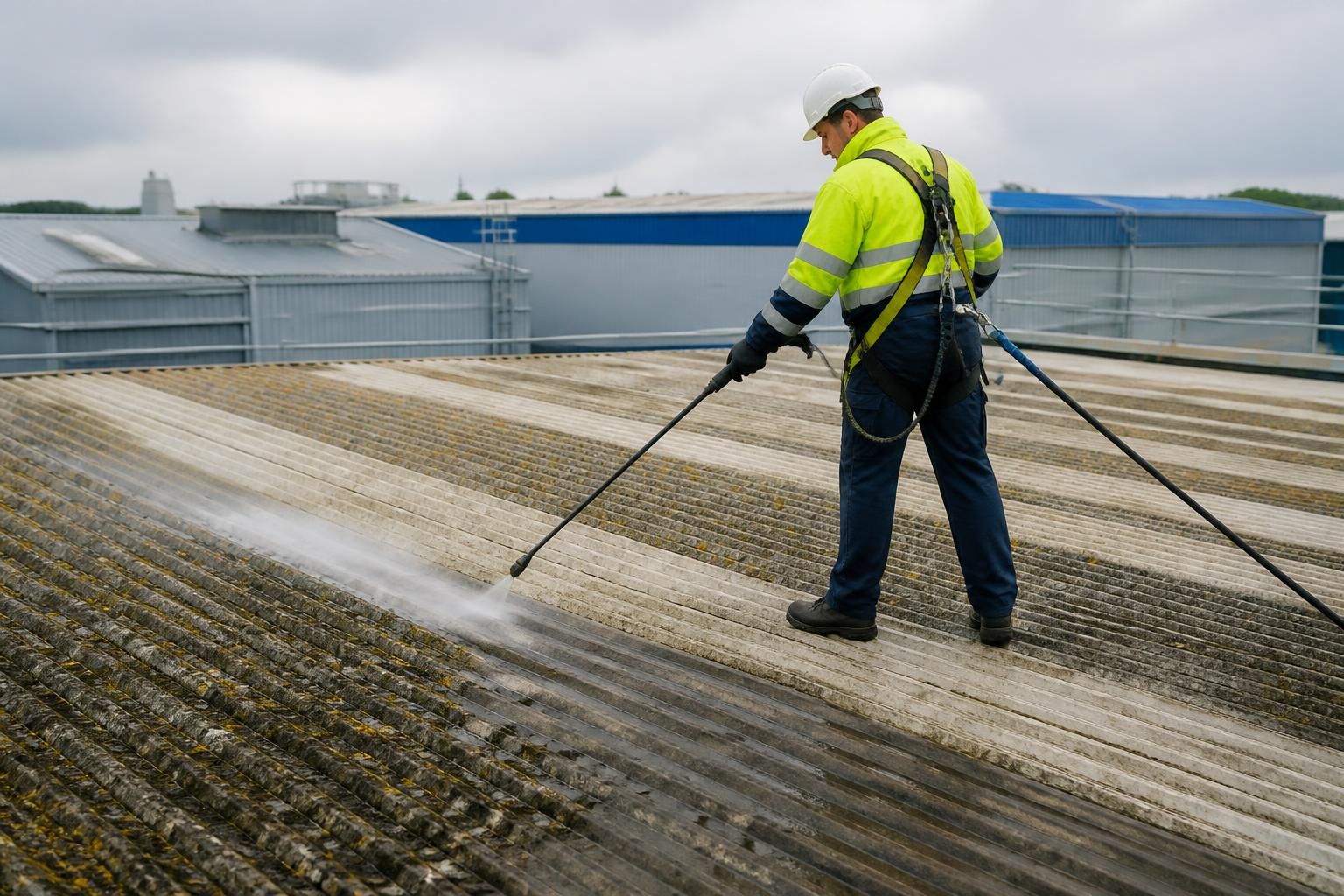
Spray application can provide even coverage across accessible roof areas, but it requires control of wind, overspray and run-off. Manual application may be preferable around delicate details, narrow sections or sensitive adjacent surfaces. Low-pressure rinsing or cleaning can help remove dead growth where the roof covering can safely tolerate it, but high pressure is not automatically a better option and may drive water beneath tiles or damage protective finishes.
Steam cleaning may be appropriate where a controlled, low-chemical or supplementary approach is required, subject to the roof material and the operator’s assessment. It can be combined with biocide application when physical removal is needed first and residual spores or organic contamination require further treatment. The sequence should be selected according to the roof covering rather than applied as a standard process.
A biocide should be applied in accordance with its product label, safety data and any roof-covering guidance. The required dilution, contact time and need for rinsing vary between products. Applying a stronger solution or using more pressure does not necessarily improve the result and can increase risks to the roof, people, vegetation and drainage system.
Access and worker safety
Safe access is a deciding factor, not an afterthought. The assessment should cover roof pitch, fragile areas, skylights, overhead services, ladder positions, edge protection and the suitability of any scaffold, tower, MEWP or other access equipment. Workers should not walk on coverings that may crack or fail simply to achieve better coverage.
Application equipment must also be suitable for the site. Hoses, spray wands and access platforms should be positioned so that they do not damage gutters, flashings or roof edges. Appropriate personal protective equipment, COSHH controls, emergency arrangements and exclusion zones are required, particularly where occupants, visitors or other contractors may be present.
Drainage, run-off and nearby surfaces
Roof drainage should be traced before treatment. Gutters, outlets, downpipes, soakaways and surface-water systems may receive treated liquid, detached moss and sediment. The method should include measures to capture, divert or control run-off where required and prevent contamination of soil, watercourses, neighbouring property and public areas.
Protect or monitor sensitive surfaces below the roof, including painted façades, render, timber, vehicles, glazing, paving, planted areas and rainwater harvesting systems. The location of downpipes and the weather at the time of work can affect how quickly solution moves across the site. Any environmental controls should form part of the method statement rather than being improvised during application.
Weather and timing
Biocide application normally requires suitable, stable weather so that the solution remains on the surface for the intended contact period. Rain soon after application can dilute or wash away the treatment, while strong wind increases overspray and makes accurate application difficult. Very hot or rapidly drying conditions may also reduce contact time.
Shaded and damp roofs often support recurring growth, so the treatment date should be considered alongside the roof’s drying conditions, seasonal weather, nearby vegetation and the building’s use. Work may need to be postponed when conditions make safe access, controlled application or effective treatment unlikely.
Environmental and building-use considerations
Selection should account for the surrounding environment, including gardens, ponds, watercourses, wildlife areas, edible crops and neighbouring properties. The product, application rate and run-off controls must be appropriate for these conditions. On occupied or publicly accessible premises, plan the work to control access, odour, spray drift and contact with treated surfaces.
Where the building has rainwater harvesting, treatment should be coordinated with the system so that contaminated roof water is not collected or used. Listed buildings, conservation areas, leasehold properties and sites with strict environmental controls may also require additional approval or specialist advice.
Maintenance requirements and expected result
Decide whether the objective is to remove visible growth, slow regrowth, protect a vulnerable covering or establish a planned maintenance programme. Biocide treatment is not always an immediate cosmetic clean: dead moss and lichen may weather away gradually, and heavily established growth may need careful physical removal before or after treatment.
For roofs with recurring shade, overhanging trees or persistent moisture, the most suitable option may be an initial treatment followed by inspections and planned maintenance. Keeping gutters clear, correcting drainage issues and reducing avoidable shading can support the treatment and help prevent rapid return of growth.
Before work begins, the method should be recorded in a site-specific risk assessment and method statement, including the roof material, defects, product suitability, application technique, weather limits, access equipment, run-off controls and post-treatment inspection. This approach ensures that effectiveness is considered alongside preservation of the roof, protection of the building and safe working practices.
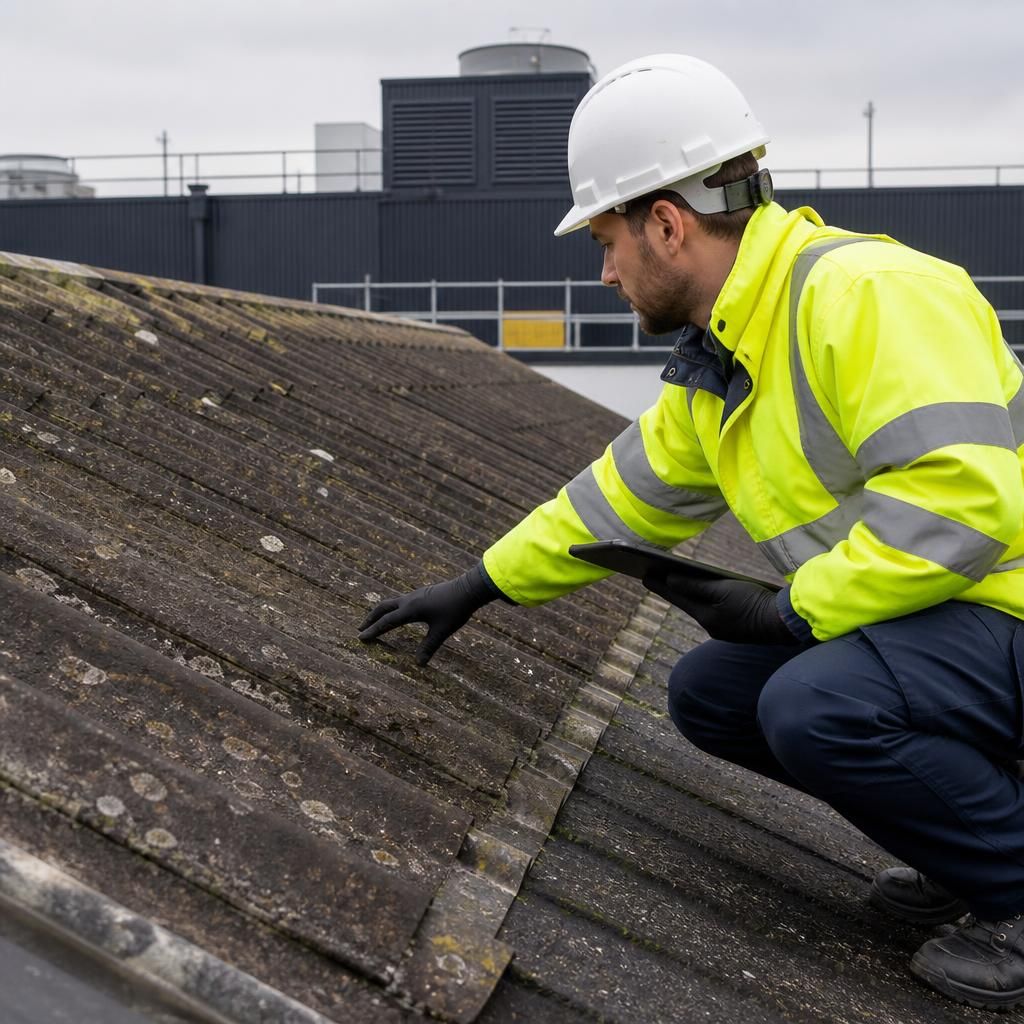
Roof material compatibility is the first consideration when selecting a biocide treatment method. Concrete tiles may tolerate carefully controlled application, whereas aged slate, coated metal, roof membranes and specialist coverings can be damaged by unsuitable chemicals, excessive pressure or abrasive cleaning.
The roof should be inspected for cracking, loose fixings, failing coatings, exposed underlay and defective sealants before treatment begins. The chosen product and application technique must be compatible with the covering and any manufacturer’s guidance. Where the surface is fragile or deteriorating, gentle manual application may be safer than spraying or pressure washing, and repairs may need to be completed before biological growth is treated.