
What are the long-term benefits of combining steam cleaning with biocide application for roof maintenance?
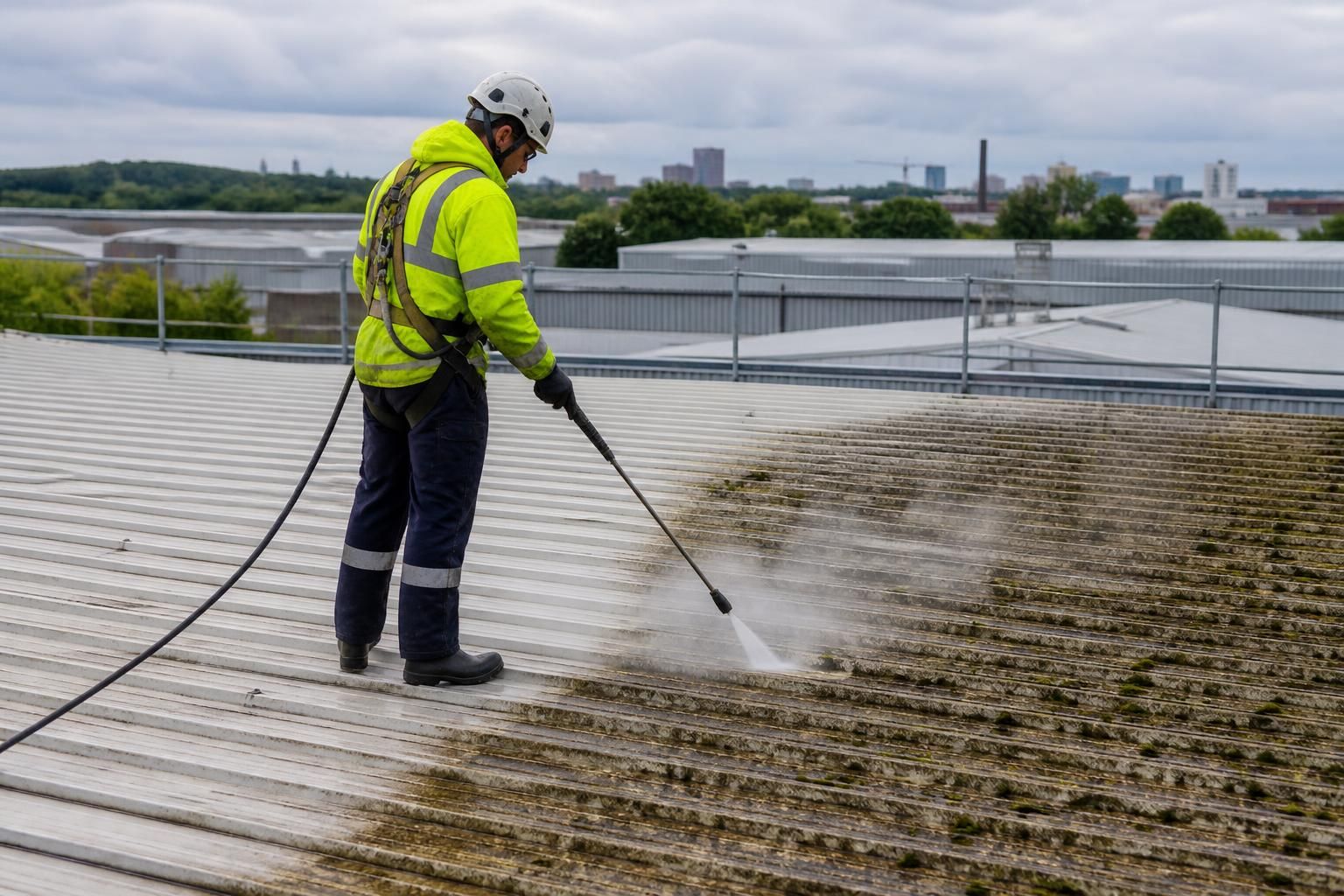
Combining steam cleaning with biocide application removes existing moss, algae and lichen while helping to suppress regrowth, keeping commercial roofs cleaner for longer. This can reduce maintenance demands, protect roof surfaces from moisture-related deterioration and support safer, more professional-looking premises when the treatment is selected and applied correctly.
Combining steam cleaning with biocide application provides a two-stage roof maintenance treatment: steam cleaning removes established moss, algae, lichen, dirt and organic residues, while the biocide treats remaining biological contamination and helps suppress regrowth. Used with a suitable roof assessment and application method, this combination can keep commercial roofs cleaner for longer, reduce the frequency of disruptive maintenance and help protect roof materials from moisture-related deterioration.
Steam cleaning removes the conditions that support growth. Moss and lichen can hold moisture against roof surfaces, trap dirt and obstruct drainage channels, outlets and gutters. Steam cleaning uses heated water to loosen and remove this contamination from the roof covering and associated areas. It can be particularly useful where organic growth is established or where a surface needs to be visibly cleaned before a treatment is applied.
The cleaning stage also exposes the actual condition of the roof. Once growth and surface deposits have been removed, it is easier to identify cracked or displaced tiles, damaged pointing, failed sealants, corroded fixings, blocked drainage routes and areas of water retention. These findings can be recorded for repair or monitoring rather than being concealed beneath moss or staining.
Biocide application addresses residual and microscopic contamination. Cleaning may remove visible growth without eliminating every spore, root-like attachment or contaminant within surface pores and joints. Applying an appropriate biocide after cleaning helps deal with this residual biological activity. The treatment is not a substitute for physical cleaning where heavy growth is present, but it can extend the period before visible regrowth becomes established again.
This complementary action is the principal long-term benefit. Steam cleaning provides the immediate removal, while the biocide provides ongoing control after the roof has been cleaned. The result is generally more durable than relying on steam cleaning alone, particularly on porous or textured roof materials where biological contamination can remain below the surface.
The combination can help reduce moisture-related wear. Persistent moss and lichen increase the time that parts of a roof remain damp. Their growth can contribute to surface staining, blocked drainage and the gradual breakdown of some materials, particularly where freeze-thaw conditions, standing water or existing defects are present. Removing the growth and controlling its return helps the roof shed water more effectively and reduces prolonged contact between organic matter and the roof covering.
This does not repair an ageing or defective roof. A biocide cannot restore damaged tiles, replace failed membranes or correct inadequate falls and drainage. Any defects identified during the cleaning process should be assessed separately, and the roof should not be treated as sound simply because it looks clean.
Maintenance becomes easier to plan. A clean, treated roof is easier to inspect during planned maintenance visits. New growth, blocked outlets, damaged coverings and staining can be identified earlier, before they develop into more disruptive issues. Instead of waiting for heavy moss or lichen to return, a property manager can use inspection findings and the roof’s exposure to decide when a further treatment or localised clean is appropriate.
Regular inspection is still necessary because treatment life varies with the roof material, shading, nearby trees, moisture levels, weather exposure, pollution and the condition of surrounding drainage. Biocide application suppresses regrowth; it does not create a permanent barrier or guarantee that growth will not return.
The roof can retain a more consistent professional appearance. On commercial, industrial and public buildings, roof staining and visible organic growth can affect the appearance of the wider premises. Removing the existing contamination and controlling regrowth helps maintain a cleaner appearance for longer. This can be relevant where a site is viewed by customers, tenants, staff, contractors or members of the public, and where the roof forms part of a wider façade and grounds maintenance programme.
The method must be matched to the roof and the surrounding site. Steam cleaning is not automatically suitable for every roof. Before work begins, the roof covering, age, condition, construction, access arrangements and drainage should be assessed. Excessive pressure, heat or concentrated cleaning can damage fragile tiles, coatings, membranes, sealants or flashings. Steam should therefore be used in a controlled manner, with suitable equipment and operator experience, rather than as a standard setting for every surface.
The biocide must also be compatible with the roof material and the intended application method. Factors such as dwell time, dilution, weather conditions, runoff control and nearby vegetation or watercourses affect both performance and environmental protection. Where possible, application should follow the product instructions and a site-specific method statement, with measures in place to prevent uncontrolled discharge into drains or sensitive areas.
A staged treatment is usually more effective than applying biocide to a heavily overgrown roof. On a roof with thick moss or lichen, the physical growth can prevent the treatment from reaching the underlying surface. Removing the bulk of the contamination first allows the biocide to contact more of the affected area and makes subsequent monitoring more reliable. However, the cleaning process should be adjusted where growth is anchoring to weak or damaged materials, as aggressive removal may cause more harm than the contamination itself.
For occupied commercial premises, the combined approach can also support safer site management. Removing moss from walking routes, access areas and drainage points may reduce slip risks associated with wet organic deposits, although roof work remains a specialist activity requiring controlled access and appropriate protection. Occupants, visitors and other contractors should be kept clear of work areas, and precautions should account for overspray, runoff, falling debris and contact with treated surfaces.
Long-term results depend on the whole maintenance process, not only on the products used. A suitable programme should include:
- an inspection of the roof covering, drainage, access requirements and nearby sensitive areas;
- careful removal of established moss, algae, lichen and surface deposits;
- application of a compatible biocide at the correct concentration and under suitable weather conditions;
- inspection of defects that become visible after cleaning;
- responsible management of runoff, waste material and equipment wash-down;
- photographic or written records of treated areas and identified defects; and
- planned follow-up inspections based on the roof’s condition and exposure.
In summary, steam cleaning and biocide application work best as complementary stages rather than alternative treatments. Steam cleaning delivers the immediate removal of contamination and improves visibility during inspection; biocide application helps control what remains and delays renewed biological growth. Together, they can support cleaner drainage, more manageable inspections, better appearance and improved protection of roof surfaces, provided the treatment is technically appropriate, environmentally controlled and followed by planned maintenance.
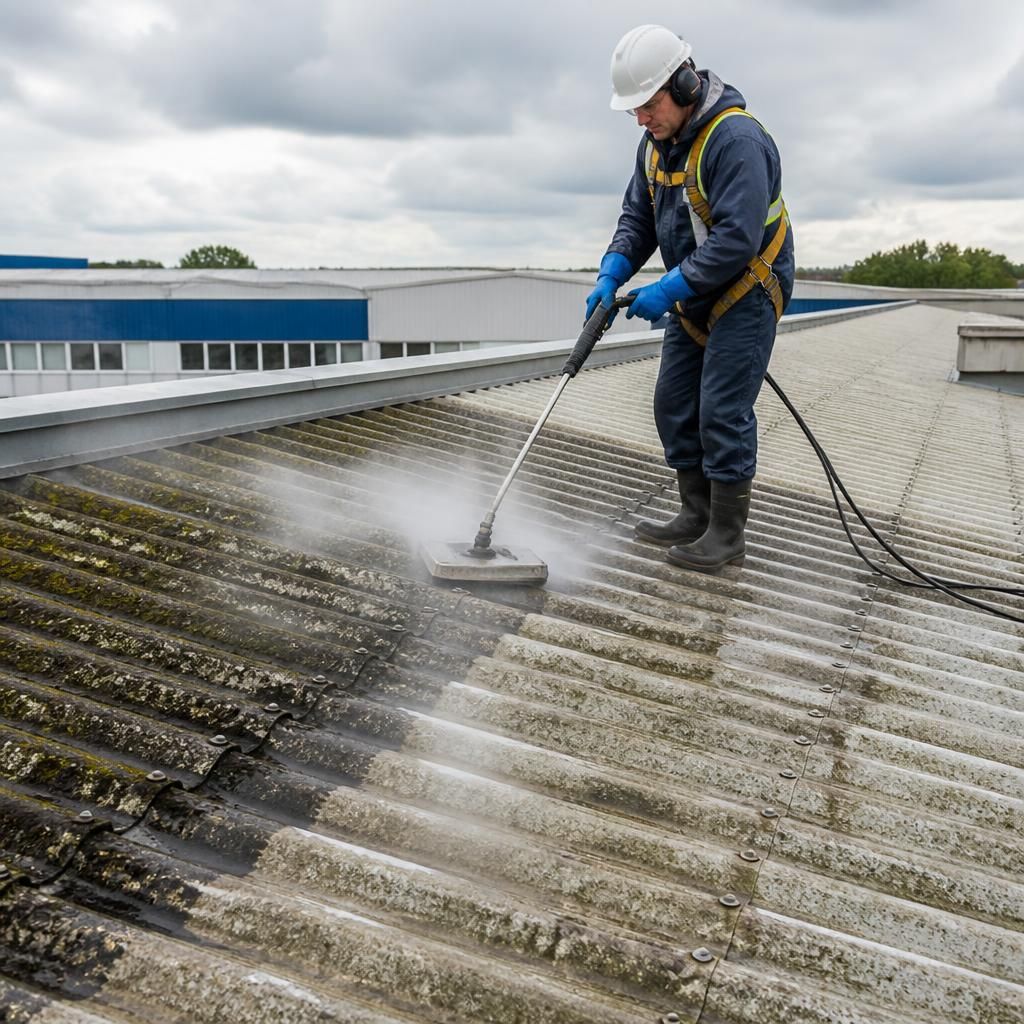
Combining steam cleaning with biocide application gives commercial roofs both immediate and longer-term protection: steam removes established moss, algae and lichen, while the biocide helps control residual growth and delay regrowth.
This staged approach also makes defects, blocked drainage and damaged roof coverings easier to identify after cleaning. It does not provide a permanent barrier or repair structural problems, so follow-up inspections remain essential.
Arrange a Roof Maintenance Assessment
Arrange a roof maintenance assessment to review the condition of your roof, identify existing biological growth and defects, and determine whether steam cleaning and biocide application are suitable. We can recommend a practical treatment and inspection plan for your site.