
What are the different methods for applying biocides to roofs?
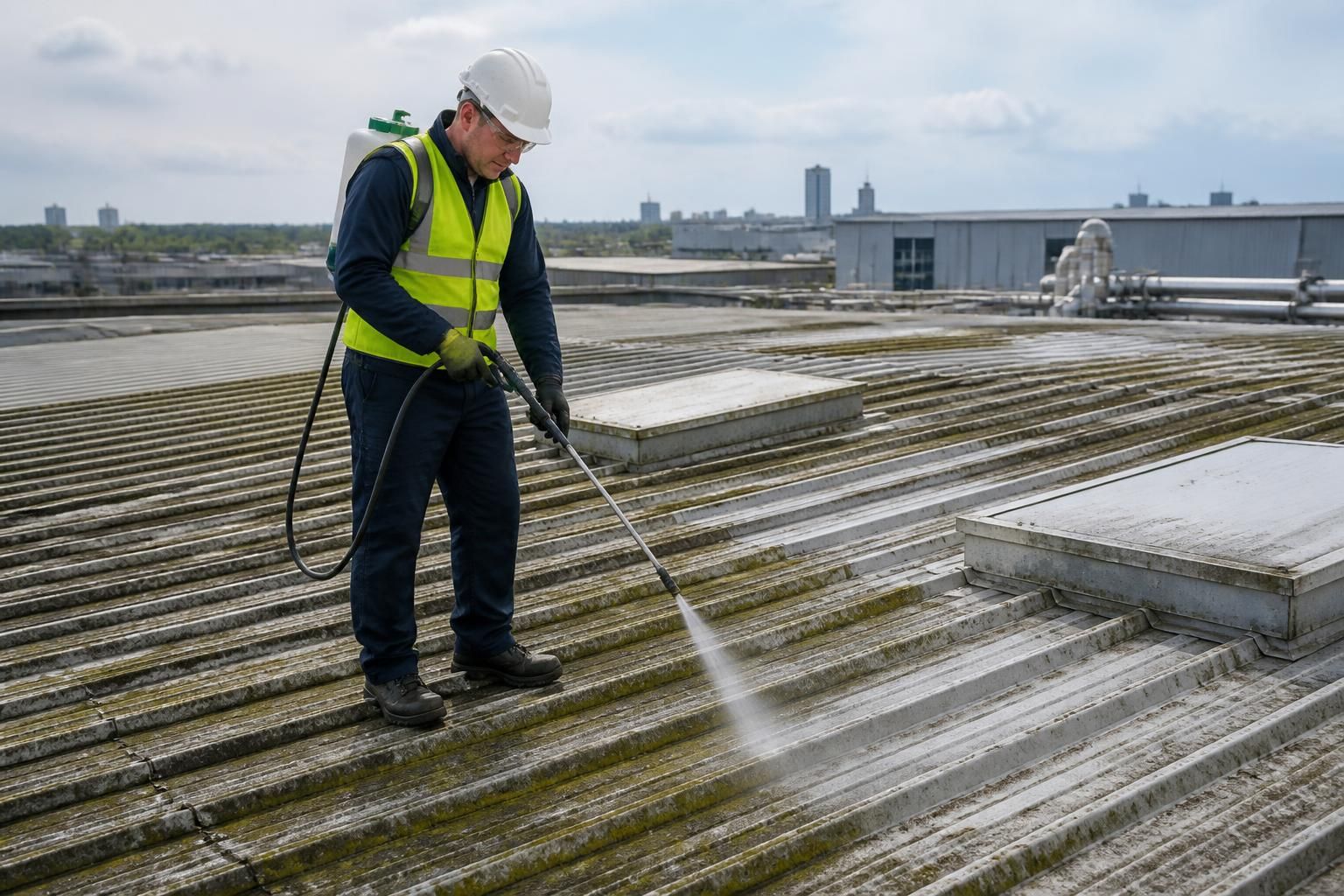
Biocides can be applied to roofs using low-pressure spraying, backpack or lance application, foam treatments, or specialist methods selected for the roof material and level of moss, algae or lichen. The treatment is applied evenly to the affected surfaces, allowing the biocide to work over time without relying on aggressive pressure washing that could damage tiles or protective coatings.
Biocides are applied to roofs mainly by controlled low-pressure spraying, using a backpack sprayer or lance, with foam and specialist application methods used where the roof material, access conditions or level of biological growth requires them. The aim is to wet the affected moss, algae and lichen evenly while avoiding the excessive pressure that can dislodge tiles, drive water beneath overlaps or damage coatings.
Low-pressure spraying
Low-pressure spraying is the most commonly used method for roof biocide treatment. A diluted treatment solution is applied across the roof surface using suitable spraying equipment, allowing the product to contact moss, algae, lichen and other organic growth. The operator works methodically across manageable sections to reduce missed areas, overspray and unnecessary run-off.
Application pressure should be sufficient to produce an even spray without becoming equivalent to pressure washing. The treatment is normally left to work for the period specified by the product manufacturer. Depending on the product and the agreed specification, dead growth may weather away naturally or be removed during a separate, carefully controlled cleaning stage. A roof should not automatically be pressure washed after treatment, as the correct approach depends on its construction, condition and surface finish.
Backpack sprayers and hand-held lances
Backpack sprayers and hand-held lances provide greater control than larger spray systems. They are useful for smaller roof areas, detailed sections, awkward elevations and properties where access for plant or hoses is restricted. The operator can adjust the application pattern and work around roof fixtures, skylights, solar panels, vents and vulnerable edges.
This method also helps with targeted treatment. Areas with concentrated lichen or moss can receive additional attention without unnecessarily saturating unaffected surfaces. Care is still required to maintain consistent coverage and prevent the solution from drifting towards windows, painted surfaces, planted areas, watercourses or neighbouring property.
Foam application
Foam application uses a suitable foaming system to place the biocide onto the roof in a visible, adherent layer. Foam can help the operator see where the treatment has been applied and may increase contact time on sloping or relatively smooth surfaces. It can be useful where rapid run-off would make a conventional liquid spray difficult to control.
Foam is not automatically more effective than a correctly applied liquid treatment. Its suitability depends on the product, roof material, degree of contamination, weather conditions and the ability to manage run-off. It must be applied in accordance with the product instructions, with particular attention to ventilation openings, rainwater systems and surfaces below the roofline.
Targeted or spot application
Targeted application treats specific areas rather than the entire roof. It may be appropriate where biological growth is limited to shaded roof pitches, valleys, parapets, north-facing elevations or isolated patches. This can reduce chemical use and limit unnecessary exposure of clean roof surfaces.
Spot treatment is less suitable where growth is widespread or where spores and staining are present across the whole roof. In those circumstances, treating only the most visible patches may leave untreated contamination that quickly becomes noticeable again. A site assessment is needed to decide whether localised or full-surface application is appropriate.
Application alongside steam cleaning
On some roofs, biocide application is combined with low-pressure or specialist steam cleaning. Steam can help remove established moss, lichen and surface staining under controlled conditions, while the biocide is used to address remaining organic contamination and help manage regrowth. This is a different process from relying on high-pressure washing to strip the roof surface.
The order of work depends on the roof and the treatment specification. A biocide may be applied before cleaning to weaken growth, after cleaning to treat remaining spores and residues, or as part of a planned maintenance programme. The chosen sequence should account for the roof covering, existing damage, drainage arrangements and the manufacturer’s instructions.
Application through specialist access equipment
Where roof access is difficult or unsafe, treatment may be applied from suitable access equipment, such as mobile elevated work platforms, scaffold or other controlled systems. The equipment does not change the treatment itself, but it can improve the operator’s reach, stability and ability to maintain an even application.
Access planning is particularly important on commercial and industrial buildings, where roofs may be extensive, fragile, steep or close to occupied areas. A competent contractor should consider edge protection, fragile surfaces, weather conditions, exclusion zones, overspray control and safe handling of treatment chemicals before work begins.
Factors that determine the correct method
- Roof material: concrete tiles, clay tiles, slate, metal cladding and membrane systems have different tolerances and cleaning requirements.
- Roof condition: cracked, loose, weathered or porous coverings may require a gentler application and additional inspection before treatment.
- Roof pitch and layout: steep slopes, valleys, ridges and complex details affect coverage and run-off control.
- Level and type of growth: light algae staining may need a different approach from deep moss, lichen or established organic deposits.
- Surrounding areas: glazing, vehicles, landscaping, drainage outlets and neighbouring surfaces must be protected from drift and run-off.
- Weather conditions: rain, strong wind, frost and excessive heat can affect contact time, coverage and environmental control.
- Product instructions: dilution, application method, dwell time, rinsing requirements and surface compatibility must be followed exactly.
Before applying a biocide, the roof should be inspected and the treatment area clearly defined. Drainage routes, downpipes and sensitive surfaces should be considered, and any necessary protection or collection measures put in place. The operator should use the product’s safety data and control-of-substances requirements, together with appropriate personal protective equipment and access procedures.
In practice, the best method is the one that provides complete, controlled coverage without damaging the roof or allowing avoidable chemical run-off. For a commercial or industrial property, the application method should be recorded as part of the maintenance specification, including the roof areas treated, the product requirements, weather conditions, access arrangements and any follow-up cleaning or inspection needed.
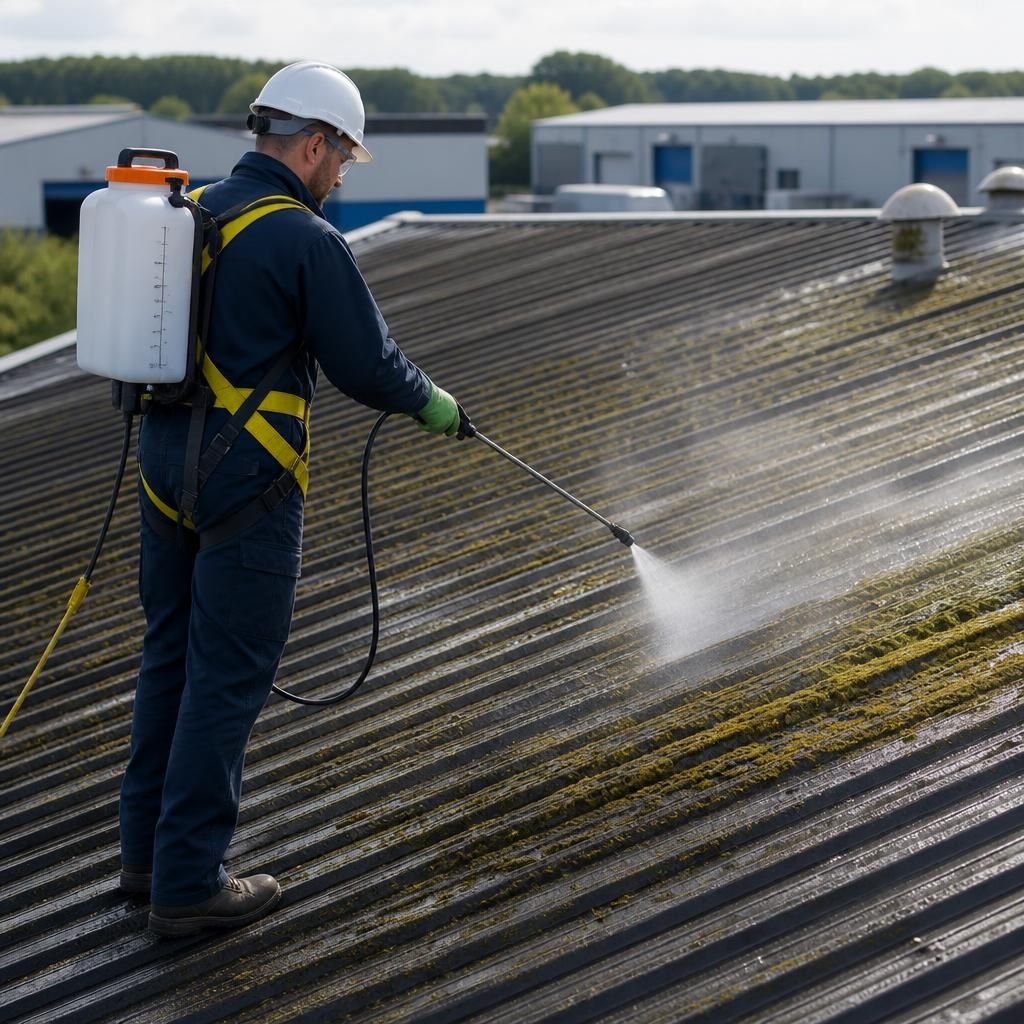
Low-pressure spraying is the standard method for applying roof biocides because it provides controlled, even coverage without the force associated with pressure washing. The solution is applied to moss, algae and lichen so it can remain in contact with the growth and work over time, rather than being used to strip the roof surface.
Backpack sprayers and hand-held lances allow the operator to adjust coverage around ridges, valleys, roof fixtures and vulnerable edges. The correct method still depends on the roof material, pitch, condition and surrounding surfaces. Glazing, rainwater systems, landscaping and vehicles should be protected from spray drift and run-off, while the product’s dilution, dwell time and safety instructions must be followed.
Arrange a Roof Biocide Treatment Assessment
Arrange a roof biocide treatment assessment to identify the most suitable application method for your roof, its condition and the surrounding site. We can advise on access, surface protection, treatment requirements and any follow-up cleaning or maintenance needed.