
What are the benefits of using biocide treatments on roofs?
Biocide treatments help control moss, algae, lichen and other organic growth on roofs, improving appearance while reducing moisture retention and surface deterioration. Applied correctly, they can extend the service life of roofing materials, reduce maintenance requirements and support safer, more effective roof cleaning.
Biocide treatments control moss, algae, lichen and other organic growth on roof surfaces. Used after, or as part of, a suitable roof-cleaning programme, they help limit regrowth, reduce moisture retention and protect roofing materials from the effects of persistent biological contamination.
They can extend the serviceable life of the roof. Moss and lichen can retain water against tiles, slates, membranes and other roof materials. Their growth may also work into joints, laps and surface irregularities, while lichen can attach firmly to porous materials. By controlling this growth, a biocide treatment helps reduce the conditions that contribute to surface deterioration, frost-related damage and blocked drainage channels. It does not repair defective roofing, but it can help preserve sound materials when applied correctly.
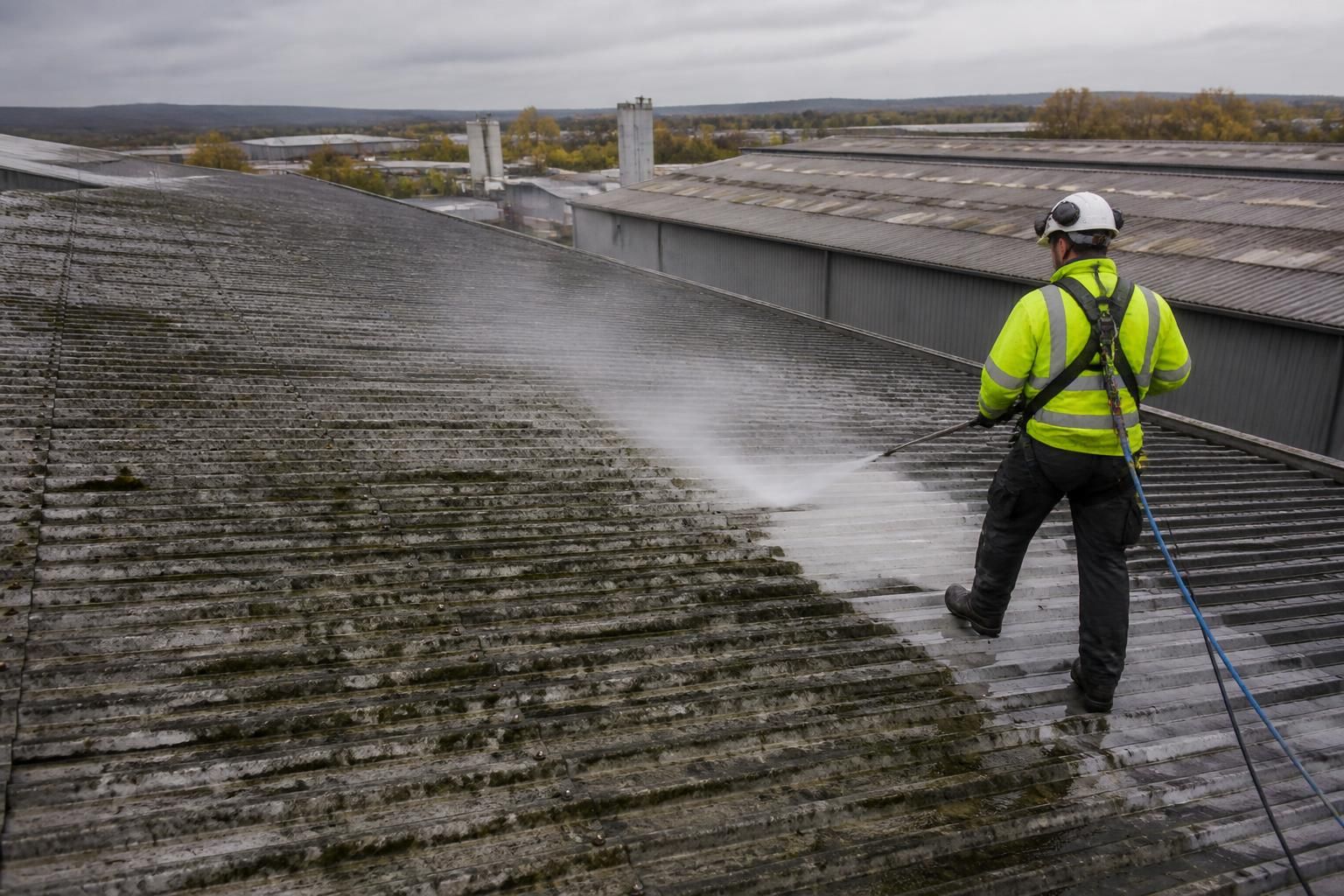
Biocides improve the effectiveness of roof cleaning. Physical cleaning removes existing contamination, but small organic residues and spores can remain on the surface. A suitable treatment can act on this residual growth and help slow its return. This is particularly useful on large commercial roofs, where complete manual removal is time-consuming and repeated intensive cleaning may place unnecessary stress on the roof covering.
Biocide application is not an instant substitute for cleaning. Depending on the product, roof material, temperature and extent of contamination, moss and lichen may die back gradually rather than disappear immediately. Dead growth may need to weather away naturally or be removed during a controlled follow-up visit. The treatment must therefore be selected and applied as part of a planned process rather than treated as a one-off cosmetic solution.
Reduced moisture retention can support better roof performance. Thick moss and algae growth can hold water on the surface and restrict the free flow of rainwater towards gutters and outlets. Removing or controlling this growth helps the roof shed water more effectively and makes it easier to identify defects such as damaged tiles, failed pointing, open laps or blocked drainage. Biocide treatment cannot make a leaking roof watertight, so any defects found during cleaning should be assessed and repaired separately.
Treatments can reduce future maintenance requirements. A roof that is repeatedly affected by organic growth may require more frequent cleaning, drainage clearance and inspection. Controlling the underlying biological contamination can lengthen the interval between more intensive cleaning visits. This may reduce access requirements, disruption to occupants and the need for aggressive mechanical methods. The appropriate maintenance interval still depends on factors such as surrounding vegetation, roof orientation, shading, pollution, local weather and the type and condition of the roof.
They can improve the appearance of commercial premises. Organic growth often creates dark staining, green deposits and uneven colouring across roof coverings. Treatment, combined with an appropriate cleaning method, can restore a more consistent appearance and help maintain the presentation of offices, retail premises, industrial units, managed estates and public buildings. Appearance should be considered alongside the roof’s condition; cleaning should not be specified solely for visual reasons if the method could damage an ageing or fragile covering.
Biocides can support safer roof and building maintenance. Removing moss and algae helps reduce slippery contamination on accessible roof areas and can make inspection routes, walkways and drainage zones easier to manage. However, treated or contaminated surfaces may remain hazardous during and after application. Work should be planned using suitable access equipment, exclusion zones and personal protective equipment, with occupants and other contractors kept clear of the work area.
They may allow a less aggressive cleaning approach. Once a suitable treatment has weakened or controlled organic growth, it may be possible to use soft washing, low-pressure rinsing or steam cleaning rather than high-pressure cleaning. This can help reduce the risk of dislodging tiles, driving water beneath laps, removing protective finishes or damaging pointing and membranes. The method must still be matched to the roof material and its condition; a biocide does not make an unsuitable pressure-washing method safe.
Other practical benefits include:
- helping keep gutters, valleys and outlets clearer by reducing loose moss and organic debris;
- making roof inspections easier by limiting surface contamination;
- supporting a planned preventative maintenance schedule;
- reducing the likelihood of repeated emergency cleaning caused by rapid organic regrowth; and
- helping preserve the appearance and condition of associated façades, gutters and external areas where roof debris can collect.
The benefits depend on correct product selection and application. The treatment should be appropriate for the roof covering, the level and type of contamination, nearby vegetation, drainage arrangements and the building’s use. Application should follow the product instructions, relevant risk assessments and site controls, including measures to prevent uncontrolled runoff into drains, watercourses, planted areas or neighbouring property. Particular care is needed around sensitive materials, rainwater harvesting systems, ponds, wildlife and occupied premises.
Weather also affects results. Rain shortly after application can dilute or remove the product, while very cold, excessively hot or windy conditions can reduce contact time and increase the risk of drift. A suitable treatment window should allow the product to remain on the intended surface for the required period without creating avoidable environmental or safety risks.
For commercial and industrial properties, the most reliable approach is usually to combine an initial roof assessment with appropriate cleaning, biocide application and scheduled inspections. The roof should be checked for fragile areas, defects, access limitations and drainage issues before work begins. Following treatment, records should note the areas treated, the product used, any restrictions and recommendations for future maintenance.
In summary, roof biocide treatments help control organic growth, reduce moisture-related deterioration, improve the results of cleaning and potentially extend the maintenance cycle. They are most effective when used as part of a properly specified roof-care plan, rather than as a standalone replacement for inspection, repairs or safe cleaning.
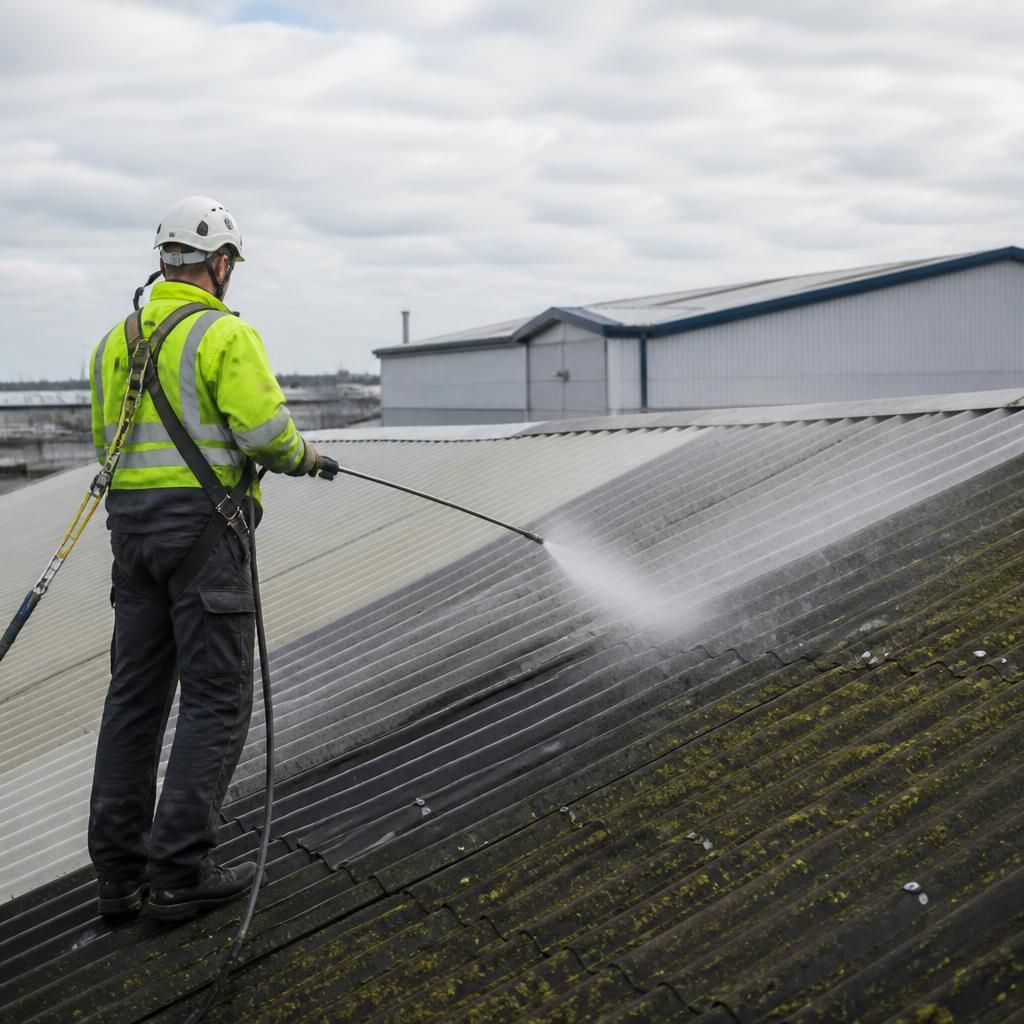
Biocide treatments help extend the serviceable life of sound roofing materials by controlling moss, algae and lichen that retain moisture against the surface. This reduces the conditions that can contribute to frost damage, surface deterioration and blocked drainage, although treatment will not repair existing leaks or defective roofing.
By limiting organic regrowth after cleaning, a suitable biocide can also lengthen the interval between intensive maintenance visits. This may reduce the need for aggressive mechanical cleaning and make future inspections easier, provided the product and application method are appropriate for the roof covering and site conditions.
Arrange a Roof Biocide Treatment Assessment
Arrange a roof biocide treatment assessment to confirm the condition of the roof, identify organic growth and select a suitable treatment and application method. We can also advise on cleaning, access, drainage protection and future maintenance requirements.