
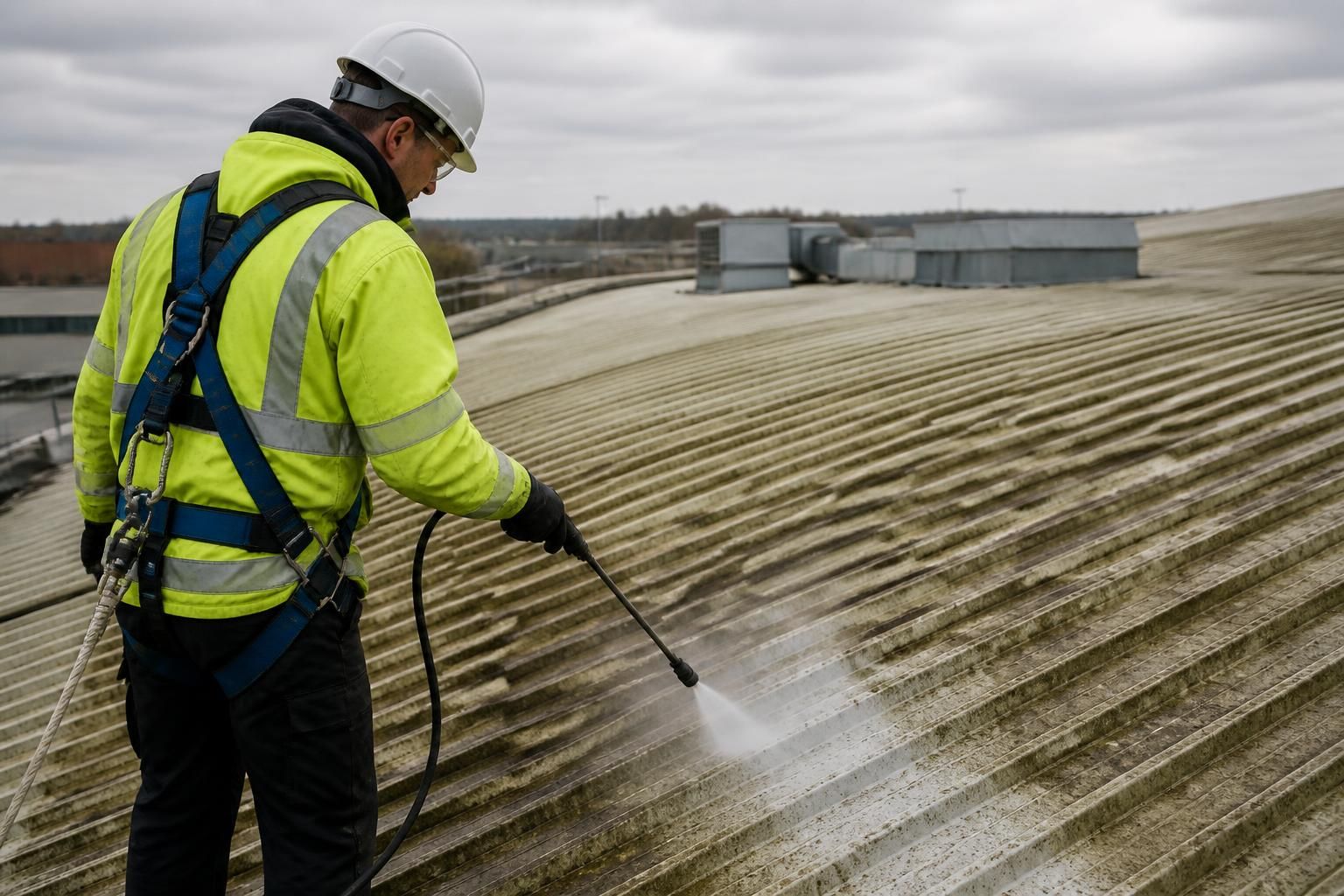
How often should roof biocide treatments be applied?
Roof biocide treatments do not follow a fixed timetable: the roof should be inspected at least annually and retreated when moss, algae or lichen begins to return. The appropriate interval depends on the roof material, surrounding vegetation, shade, moisture levels, weather exposure and the biocide manufacturer’s guidance, so a site-specific maintenance schedule is preferable to routine reapplication.
Roof biocide treatments should be reapplied when inspection shows that moss, algae or lichen is returning, rather than according to a fixed universal timetable. For many roofs, an annual inspection is a sensible minimum, with treatment scheduled according to the roof material, its exposure and the manufacturer’s instructions. A roof in a shaded, damp or tree-lined location may need attention more frequently than a roof exposed to sunlight and good airflow.
Biocide is a preventative and corrective treatment, but it is not a permanent barrier against organic growth. Rain, airborne spores, leaf debris and persistent moisture gradually reduce its effectiveness. The treatment may continue working after application, particularly against established moss and lichen, but visible growth should be monitored rather than left until it becomes extensive.
- Inspect at least annually: Check roof slopes, valleys, edges, gutters and shaded areas for returning growth, staining or debris.
- Retreat when growth begins to return: Early signs are easier to manage than thick moss or deeply rooted lichen, which may require additional cleaning before a further biocide application.
- Follow the product guidance: The permitted reapplication interval, dilution, coverage and contact time vary between products. Reapplication should never exceed the manufacturer’s recommendations.
- Review the schedule after each visit: The condition of the roof and the rate of regrowth provide more useful information than applying treatment automatically at set intervals.
Several site conditions affect how long a treatment remains effective. North-facing and permanently shaded slopes tend to stay damp for longer, while overhanging trees can deposit organic matter and restrict drying. Poor ventilation, nearby woodland, coastal exposure and roof areas that receive little direct sunlight can also increase the likelihood of regrowth. Roofs with adequate drainage and regular removal of leaves and debris may remain cleaner for longer.
The roof material is also relevant. Concrete and clay tiles, slate, metal roofing and coated systems have different surface characteristics and may require different products, preparation methods and application rates. A treatment suitable for one surface may be inappropriate for another, particularly where coatings, sealants, delicate finishes or rainwater collection systems are present. The roof should therefore be assessed before any repeat application, rather than treating all materials in the same way.
For commercial and industrial premises, the inspection and treatment cycle should be incorporated into the wider planned maintenance programme. Roofs can be reviewed alongside gutters, façades, cladding and other external areas, with additional checks after periods of prolonged wet weather, nearby construction or heavy leaf fall. Where access is complex or the roof forms part of a larger managed site, documented inspections help identify recurring problem areas and prevent unnecessary treatment of sections that remain clear.
Reapplication is not always the correct next step. If moss has formed a substantial layer, lichen is firmly established, or deposits are blocking drainage, the roof may first require controlled removal using a method appropriate to its construction. Biocide can then be applied to address remaining organic contamination and help limit regrowth. Repeatedly applying biocide over heavy deposits is unlikely to provide the same result as proper preparation and may increase the risk of runoff or ineffective coverage.
Treatments should be carried out only in suitable conditions and in accordance with the product instructions. Rain immediately after application can dilute or wash away the treatment, while strong wind can affect application accuracy and increase the risk of drift. Workers should also protect adjoining surfaces, plants, watercourses, occupants and the public through suitable planning, access controls and runoff management.
In practice, the most reliable approach is an annual professional inspection followed by treatment when the roof shows a genuine need. The interval can then be adjusted for the site’s shade, moisture, vegetation, roof material and previous treatment performance. This condition-based approach provides ongoing protection while avoiding premature or excessive reapplication.
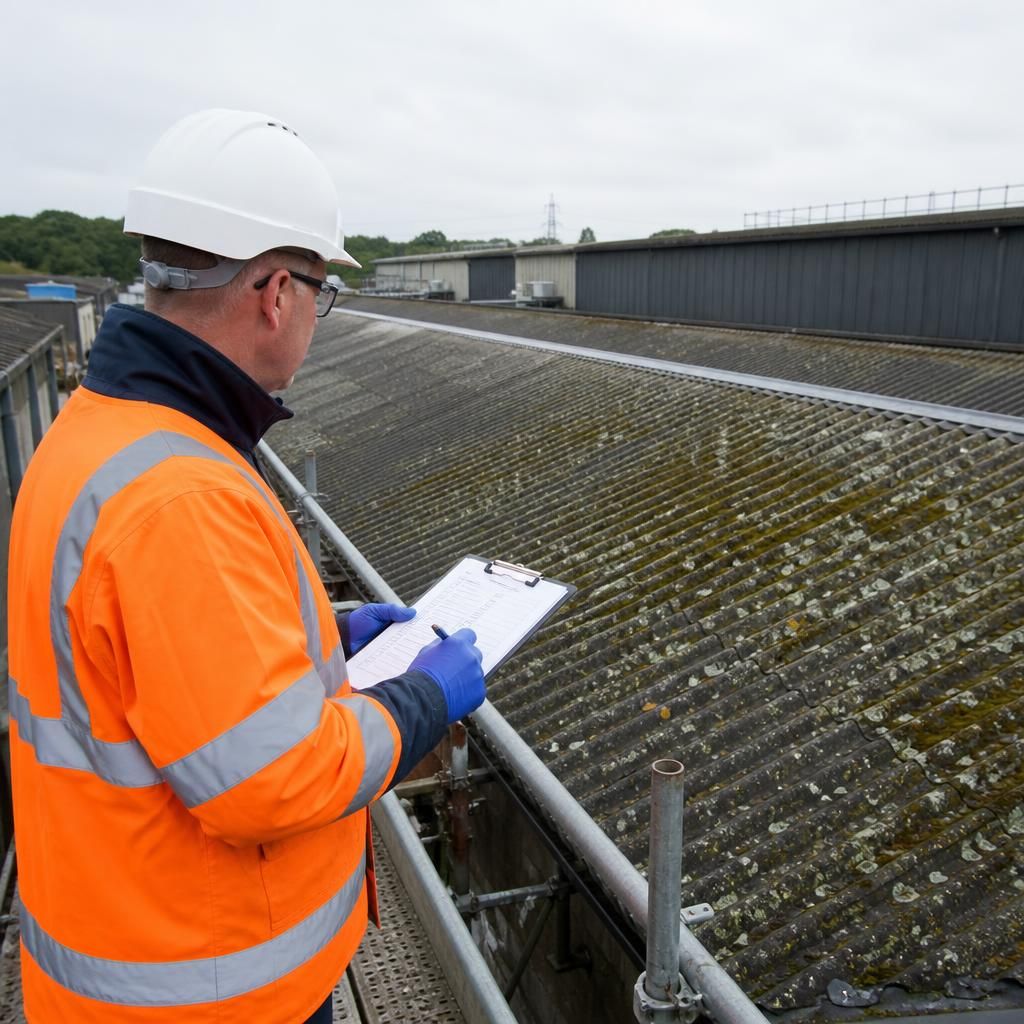
Roof biocide treatments should be reviewed at least annually, but reapplication should be based on the roof’s condition rather than an automatic timetable. Check shaded slopes, valleys, edges and areas beneath overhanging trees for returning moss, algae, lichen or staining. If growth is reappearing, early treatment is generally more effective than allowing thick deposits to develop.
The suitable interval depends on factors including roof material, moisture, airflow, surrounding vegetation and previous treatment performance. Always follow the product manufacturer’s guidance on reapplication, dilution and coverage. Where substantial moss or lichen has returned, controlled removal may be needed before applying further biocide.