
How does the timing of biocide application affect its effectiveness in removing moss and lichen from roofs?
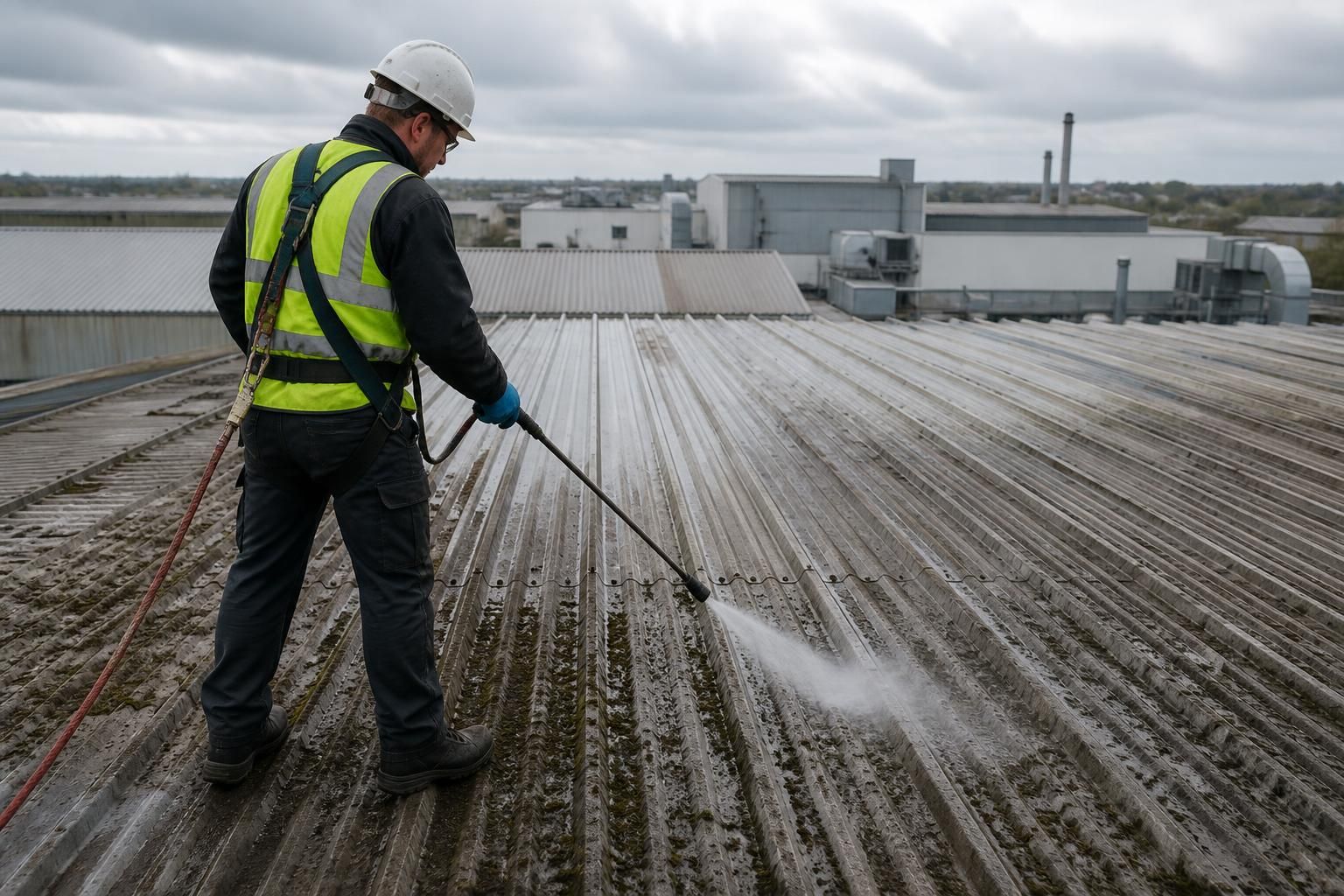
Biocide is most effective when applied to a clean, dry roof during mild, settled weather, allowing the solution to remain on the surface for its required contact time without rain diluting or washing it away. Correct timing supports gradual moss and lichen dieback, while application during frost, heavy rain or excessive heat can reduce coverage, absorption and long-term results.
The timing of biocide application has a direct effect on how well it controls moss, lichen and other organic growth on a roof. The most effective application is normally made to a clean, dry surface during mild, settled weather, when the solution can remain evenly distributed for its required contact time without being diluted by rain, affected by frost or dried too quickly by excessive heat.
Biocide treatments are not usually an instant cleaning process. They work by penetrating and weakening organic growth, after which moss and lichen gradually die back and can be removed by natural weathering or carefully planned follow-up cleaning. Applying the treatment at the right time helps ensure that enough active solution reaches the growth and remains in contact with it long enough to work.
Surface condition is important
A roof should generally be free from loose debris, heavy soil and standing water before treatment. Where moss has formed a thick layer, removing the bulk of the growth first may allow the biocide to reach the roof surface and remaining roots or spores more effectively. The correct sequence depends on the product, roof material and agreed cleaning method. In some cases, a biocide is applied after manual or steam cleaning; in others, it is used to treat existing growth before a later maintenance clean.
Application immediately after heavy rain is usually unsuitable because saturated tiles, slates or cladding can dilute the treatment and prevent consistent coverage. A dry surface gives the solution a better opportunity to remain in place. However, the roof should not be so dry and hot that the product evaporates before it has been properly distributed or absorbed.
Weather conditions that affect results
- Rain: Rain soon after application can dilute or wash the treatment from the roof before the required contact time has been achieved. A suitable dry-weather window should be checked using the product instructions and current forecast, rather than relying on a short period of sunshine.
- Frost and low temperatures: Frost can freeze moisture on the roof, interfere with coverage and reduce the performance of some formulations. Treatment should be postponed when frost is present or expected to affect the application period.
- Excessive heat and strong sunlight: Hot surfaces can cause rapid drying, which may leave patchy coverage and reduce the time available for the solution to work. Shaded elevations may remain suitable while exposed areas do not, so the application plan may need to be adjusted.
- Wind: Strong or gusting wind can cause spray drift, uneven application and potential exposure risks. It can also carry solution towards windows, vehicles, neighbouring property or planted areas.
- Persistent damp conditions: Dampness from fog, condensation or prolonged cloud may affect the way the product spreads and remains on the surface. Damp weather is not automatically unsuitable, but the roof and treatment must be assessed against the product requirements.
Seasonal timing
There is no single season that is suitable for every roof or biocide product. Spring and autumn can provide useful mild conditions, but they may also bring frequent rain, heavy dew and fluctuating temperatures. Summer may offer longer dry periods, although heat and strong sunlight can shorten the working time of the solution. Winter applications are more restricted because of frost, low temperatures, shorter daylight hours and unstable weather.
The best approach is to select a reliable weather window rather than booking solely by calendar season. The forecast should be reviewed for the period before, during and after application. The roof may also need to be checked on the day, as local conditions can differ between exposed elevations and sheltered sections.
Timing in relation to moss and lichen growth
Biocide can be applied when moss and lichen are visible, provided the roof is suitable for treatment and the product is approved for the intended use. Thick, mature growth may require preparation because dense layers can prevent the solution from reaching the surface beneath. Lichen can be particularly firmly attached, so visible improvement may take longer than with loose moss. Attempting to remove it aggressively before the treatment has weakened it may increase the risk of disturbing tiles or damaging the roof surface.
The treatment should be allowed to work for the period specified by the manufacturer. Washing it off too soon, carrying out high-pressure cleaning immediately afterwards or allowing rain to interfere with the process can reduce its effectiveness. Conversely, leaving dead growth in place indefinitely may allow debris to accumulate in gutters and valleys, so follow-up inspection and maintenance should be planned.
Timing after cleaning
Where steam cleaning or another controlled cleaning method has been used, biocide is often applied once the surface has been cleaned sufficiently and is ready to receive the treatment. The timing must allow the roof to drain and, where required, dry without leaving the biocide to run off. Applying it to a surface covered in loosened debris can result in uneven coverage, while waiting too long after cleaning may allow fresh contamination or organic particles to settle.
For some maintenance programmes, the most suitable method is to treat residual organic contamination after the main clean and then inspect the roof at a later visit. This can help identify areas that need additional attention without subjecting the roof to unnecessary mechanical disturbance.
Practical planning considerations
- Check the product label and safety data for the required conditions, dilution, contact time and any restrictions on application.
- Inspect the roof material, pitch, drainage routes and nearby surfaces before choosing the application date.
- Allow sufficient time for the treatment to remain undisturbed and for runoff to be managed safely.
- Protect or move vulnerable items such as vehicles, outdoor furniture, rainwater collection equipment and sensitive planting.
- Coordinate roof access, exclusion zones and any required access equipment with the weather window.
- Plan a follow-up inspection to assess dieback, remaining staining, gutter debris and any areas requiring further treatment.
Correct timing cannot compensate for an unsuitable product, poor preparation or incomplete coverage, but it is a major part of achieving consistent results. A roof biocide application should therefore be scheduled around surface condition, product instructions, weather stability, safe access and the intended follow-up work. When these factors are considered together, moss and lichen are more likely to be weakened effectively, with less risk of premature wash-off, patchy treatment or avoidable damage to the roof.
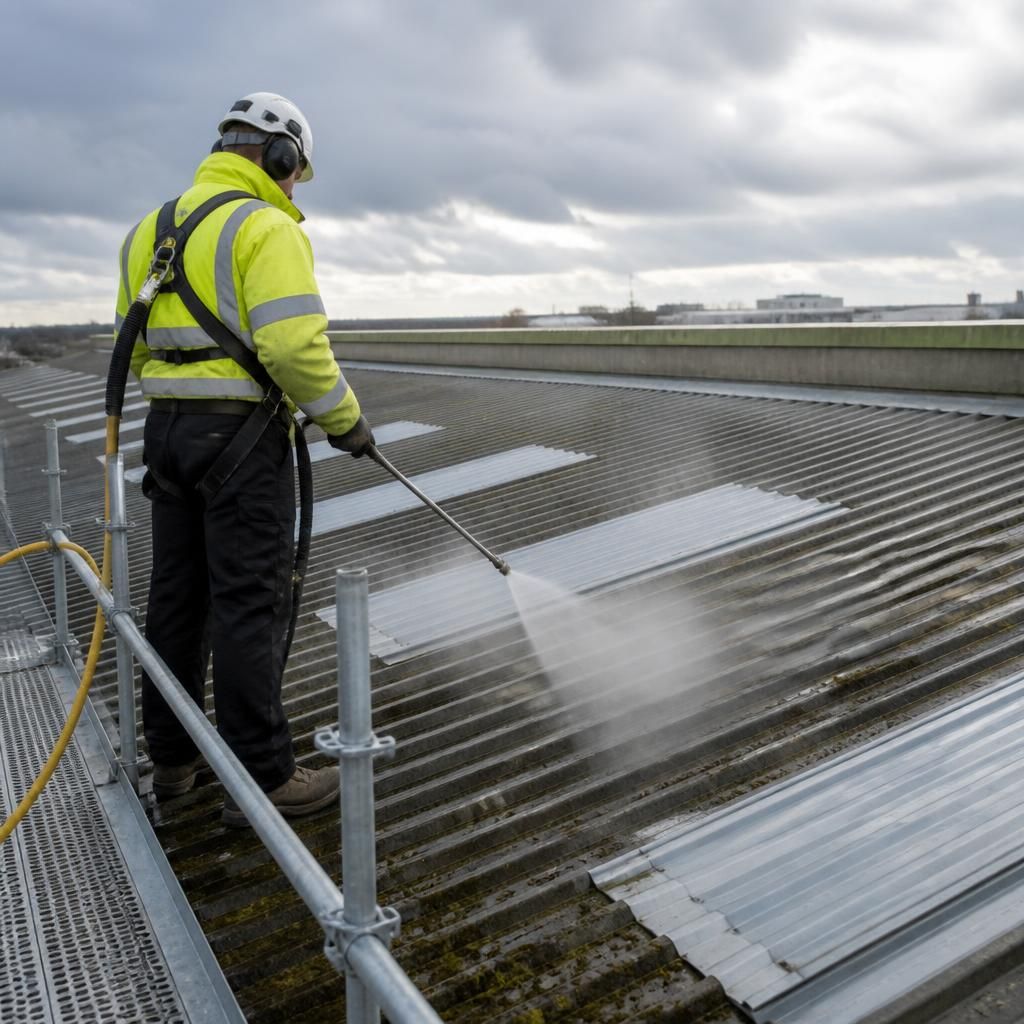
The most effective time to apply roof biocide is during a mild, settled period when the surface is clean and dry, and rain is not expected during the product’s required contact time. This allows the treatment to remain evenly distributed across moss and lichen instead of being diluted or washed away before it has taken effect.
Application should be postponed if the roof is frosted, saturated after heavy rain, exposed to strong winds or hot sunlight that could cause rapid drying. Checking the roof and forecast on the day helps ensure consistent coverage, safe runoff control and more reliable moss and lichen dieback.