
How can I ensure the roof biocide treatment is environmentally friendly without compromising effectiveness?
Choose a roof biocide approved for the intended surface and use it strictly according to the manufacturer’s instructions, applying only the necessary amount to affected areas. Effectiveness is maintained through correct dilution, suitable weather conditions, controlled application and measures that prevent overspray or contaminated runoff from reaching drains, soil or watercourses.
An environmentally responsible roof biocide treatment uses an approved product at the lowest effective application rate, applied only to affected surfaces and under conditions that prevent drift and contaminated runoff. Effectiveness depends less on using a stronger solution than on selecting a product suitable for the roof, following the label precisely, preparing the surface correctly and allowing sufficient contact time.
Before treatment, check the product documentation and confirm that it is authorised for the intended use in Great Britain. The label and safety data sheet should identify the permitted application, dilution, target organisms, compatible surfaces, handling requirements and environmental precautions. Terms such as “eco-friendly” or “biodegradable” should not be accepted on their own as evidence of suitability. A product can break down over time and still be harmful if it is incorrectly diluted, discharged into a drain or allowed to enter a watercourse.
- Match the product to the roof: confirm compatibility with the roof covering, coatings, membranes, gutters, sealants and nearby materials. A treatment intended for one surface may stain, corrode or weaken another.
- Use the correct dilution: measure the product accurately and never increase the concentration to try to speed up results. Over-application increases environmental exposure and may damage the roof without providing better control of moss, algae or lichen.
- Treat only the required areas: targeted application reduces product use and limits contact with unaffected surfaces, planted areas, neighbouring property and rainwater systems.
- Control overspray: use suitable low-drift equipment, keep the application directed at the roof and protect vulnerable areas below. Avoid spraying in conditions where wind could carry droplets beyond the work area.
- Prevent contaminated runoff: inspect drainage routes before work starts and use appropriate temporary protection, collection or diversion measures. Do not allow treatment solution, loosened organic growth or wash water to enter surface-water drains, ponds, streams or soil without confirming that discharge is permitted and safe.
- Protect surrounding areas: cover or isolate plants, ponds, rainwater harvesting equipment, ventilation openings, vehicles and other sensitive items where necessary. Any protection should be removed safely and contaminated coverings dealt with according to the product instructions.
Weather conditions are central to both environmental control and treatment performance. Apply only within the conditions stated by the manufacturer. Dry, settled weather is generally preferable because it reduces spray drift and gives the product time to remain on the surface. Rain soon after application can dilute the treatment, carry residues into drainage systems and reduce its effectiveness. Strong sunlight, high temperatures or freezing conditions may also affect drying and product performance, depending on the formulation.
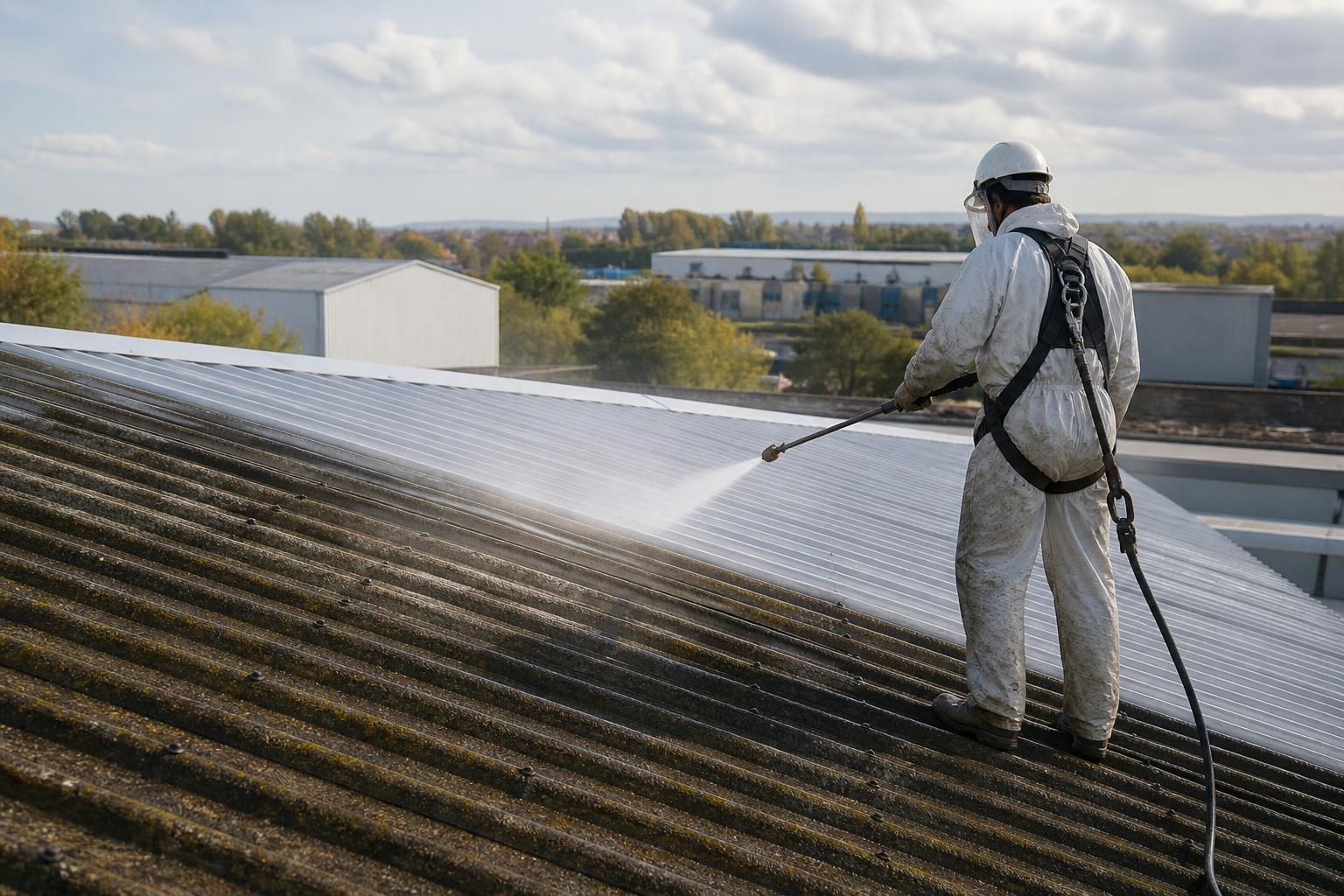
Roof preparation should be proportionate to the condition of the covering. Removing loose moss and heavy deposits before application can expose the surface and help the biocide reach the remaining growth, reducing the temptation to compensate with excessive product. On suitable roofs, controlled steam cleaning or other mechanical methods may remove much of the established growth first, with biocide then used as a targeted follow-up. This approach must be planned carefully so that loosened material and wash water are contained.
Environmental precautions must not undermine worker or occupant safety. The operative should follow the product label and COSHH assessment, use the specified personal protective equipment and prevent access to the treatment area until it is safe. Windows, air intakes and roof-level access points may need to be closed or protected during application. Equipment should be cleaned in a controlled location, with residues and empty containers handled as directed rather than poured into drains.
For larger commercial or industrial premises, request a written method statement before work begins. It should record the selected product, intended dilution, application method, weather limits, drainage controls, protection for sensitive areas, emergency arrangements and waste-handling procedure. A competent contractor should also inspect the roof and surrounding environment for watercourses, ponds, planted areas, occupied spaces and other constraints.
After treatment, inspect the roof and drainage arrangements rather than assuming that all visible growth will disappear immediately. Biocides can take time to affect established moss and lichen, and dead material may need to be removed separately. Follow-up cleaning should use a method that avoids unnecessary chemical use and uncontrolled discharge. Keeping treatment records, including the product batch, application conditions and any site incidents, supports future maintenance planning and helps prevent repeated or excessive applications.
The most sustainable programme is usually preventive rather than reactive: inspect the roof regularly, keep gutters and drainage routes clear, address overhanging vegetation where appropriate and treat early signs of regrowth with a product and method suited to the surface. This maintains control of organic growth while reducing the need for aggressive cleaning, repeat applications and avoidable environmental exposure.
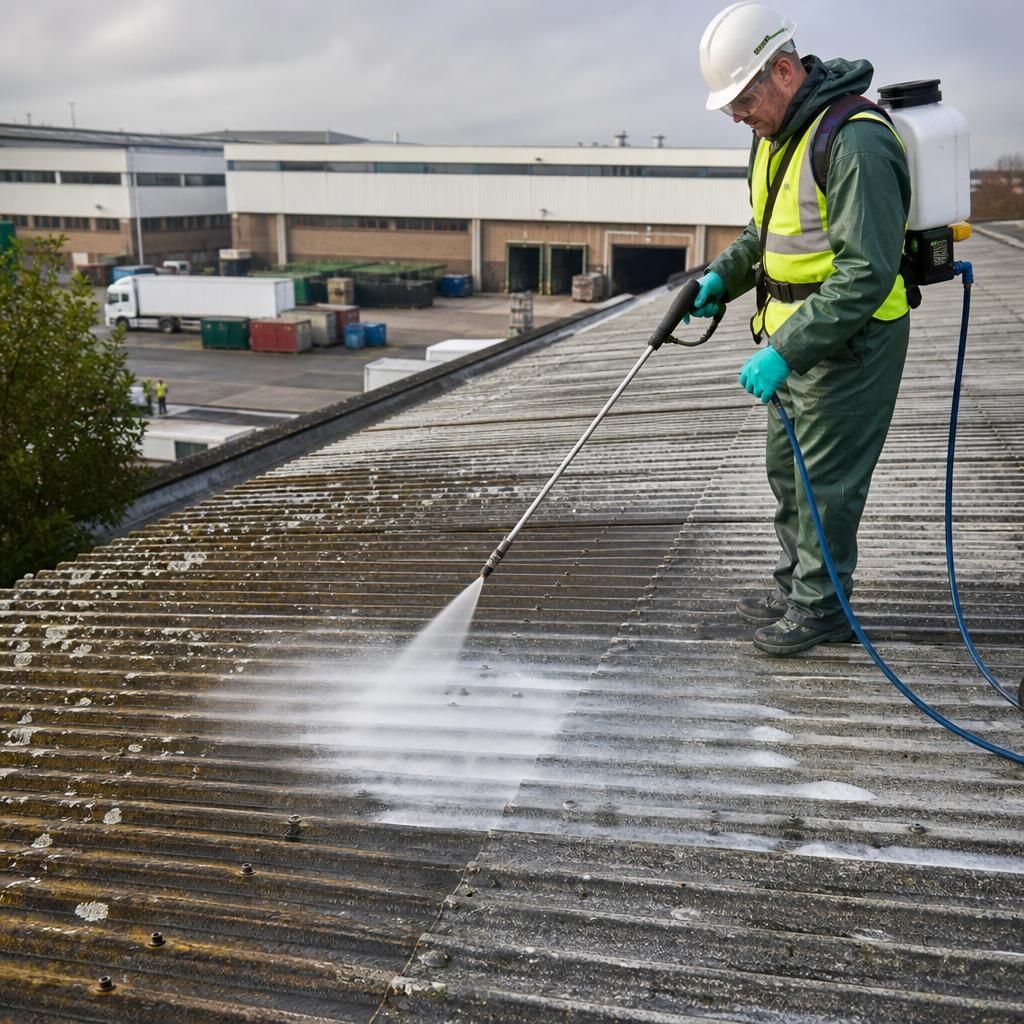
An environmentally friendly roof biocide treatment depends on controlling where the product and contaminated runoff go, not simply on choosing a product described as “eco-friendly”. Before application, identify gutters, surface-water drains, soil, planted areas, ponds and watercourses near the roof. Use suitable protection, diversion or collection measures, and prevent spray drift from reaching sensitive areas.
Apply only the manufacturer’s specified dilution to the affected roof surface, in weather that allows sufficient contact time without rain or strong wind. This maintains effective control of moss, algae and lichen while limiting unnecessary chemical use. Any loosened growth, wash water, equipment residue and empty containers should be handled according to the product instructions and must not be poured into drains or allowed to enter a watercourse.
Request an Environmentally Responsible Roof Biocide Assessment
Request an environmentally responsible roof biocide assessment from Encanto Exterior Cleaning to review the roof surface, surrounding drainage and the most suitable treatment controls. We can provide a clear method statement covering product selection, application, runoff prevention and follow-up maintenance.