
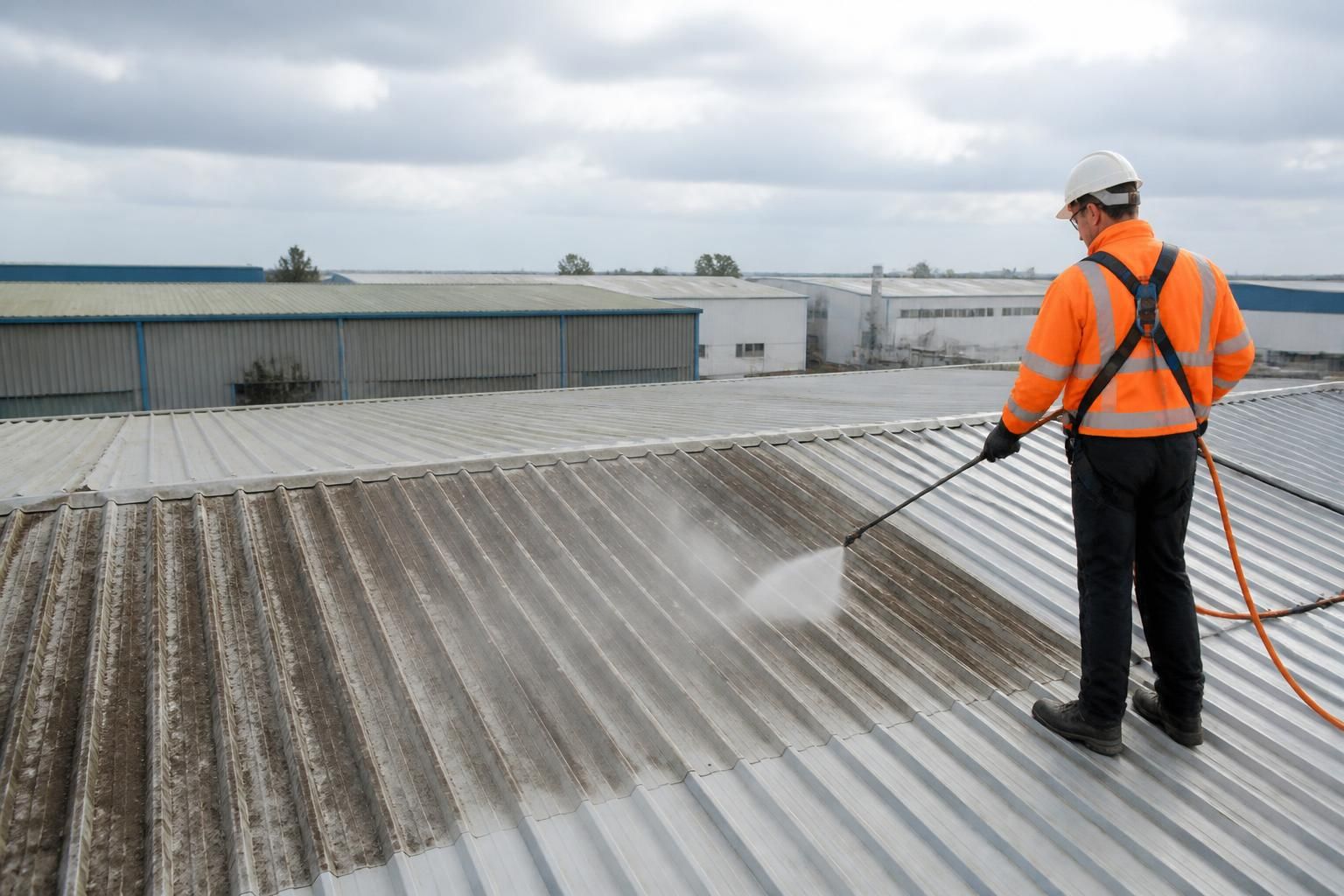
Can roof biocide treatments be applied in all weather conditions?
No. Roof biocide treatments should generally be applied to a dry surface in mild, calm conditions, with sufficient dry weather afterwards for the solution to work; rain, frost, strong winds and extreme heat can reduce effectiveness or create safety risks. The product instructions and roof condition should always be checked before application.
No. Roof biocide treatments should not be applied in every weather condition. In most cases, the roof should be dry, the air temperature should be mild, winds should be light and there should be a suitable period of dry weather after application. The product label and safety data should always take priority, as the acceptable conditions can vary between formulations and roof surfaces.
Weather affects both the performance of the treatment and the safety of the work. A biocide needs to remain on the roof for long enough to contact and penetrate moss, algae, lichen and other organic growth. If conditions cause the solution to run off, evaporate too quickly or become diluted, the treatment may be less effective and may require repeat application.
Rain is usually unsuitable, particularly during or soon after application. Heavy rain can wash the treatment from the roof before it has had time to work. Even light rain may dilute the solution or carry it towards gutters, drains, planting, watercourses and other sensitive areas. Application should therefore be planned around a reliable period of dry weather, while allowing for the specific dwell and drying requirements stated by the product manufacturer.
A roof that is already wet from rain, dew or condensation may also be unsuitable. Some products can be applied to a slightly damp surface, but this should never be assumed. Surface moisture can alter the concentration of the treatment and make it harder to achieve an even application. The roof should be assessed on site, including shaded areas that may remain damp after the rest of the surface has dried.
Frost and freezing conditions are not appropriate for most roof biocide work. Ice can prevent the solution from contacting the surface properly, while freezing can affect the product and increase the risk of slips. Water trapped in porous roof materials can also freeze and expand, potentially worsening existing defects. Work should be postponed until the roof and surrounding access areas are free from frost and conditions are stable.
Strong winds can make application unsafe and reduce control of the treatment. Spray, mist or droplets may drift beyond the intended area, creating risks for people, vehicles, windows, painted surfaces, plants and neighbouring property. Wind can also make ladders, access equipment and work platforms less stable. Even where a product remains chemically effective, it may be unsuitable to apply if the operator cannot control where it is deposited.
Very hot, sunny or dry conditions can also cause problems. Excessive heat may make the solution evaporate before it has properly contacted the growth. Rapid drying can lead to uneven coverage, particularly on exposed roof slopes, while hot surfaces may increase the risk of damage to nearby materials or vegetation from accidental contact. Where possible, application should be scheduled for mild conditions and strong direct sunlight should be avoided if the product instructions require it.
Cold but above-freezing conditions may be acceptable for some products, although low temperatures can slow the treatment process and extend drying times. High humidity, fog and heavy dew can similarly delay drying even when there is no rain. The forecast should therefore be considered alongside the actual condition of the roof rather than relying solely on the air temperature or a general prediction of dry weather.
Before applying a roof biocide, a competent contractor should check:
- whether the roof is dry, sound and free from frost;
- the forecast for rain, wind, temperature and overnight condensation;
- whether the product has a minimum application temperature or a required dry period;
- the likelihood of spray drift or contaminated runoff;
- the condition of gutters, downpipes, roof edges, roof lights and adjacent surfaces;
- safe access conditions, including slip risks and the stability of access equipment; and
- the need to protect people, vehicles, plants, watercourses and drainage systems.
Weather conditions should also be considered when choosing the application method. Low-pressure application can provide controlled coverage, but wind and runoff still need to be managed. Manual application may be suitable for smaller or more sensitive areas, while steam cleaning can sometimes be used where immediate physical removal is required, subject to the roof material, drainage arrangements and safe access. The chosen method should not be used to compensate for weather that is clearly unsuitable.
If conditions deteriorate during the work, application should be paused and the treated area reviewed. An experienced contractor may adjust the work sequence, protect sensitive areas and continue only where the product instructions and site risk assessment allow it. Otherwise, postponing the treatment is the safer and more effective option. Applying a biocide in poor conditions can waste product, increase environmental risks and leave the roof with inconsistent coverage.
For commercial and industrial properties, planning is particularly important because roof access, public areas, vehicle movements and drainage systems may require additional controls. A weather assessment should form part of the method statement and site-specific risk assessment, with suitable arrangements for isolating the work area and managing any runoff.
In practice, the best approach is to schedule roof biocide application during a settled period of mild, dry and relatively calm weather, then confirm the roof is suitable immediately before work begins. Encanto Exterior Cleaning can assess the roof, surrounding risks and forecast conditions before recommending whether treatment should proceed, be adapted or be rescheduled.
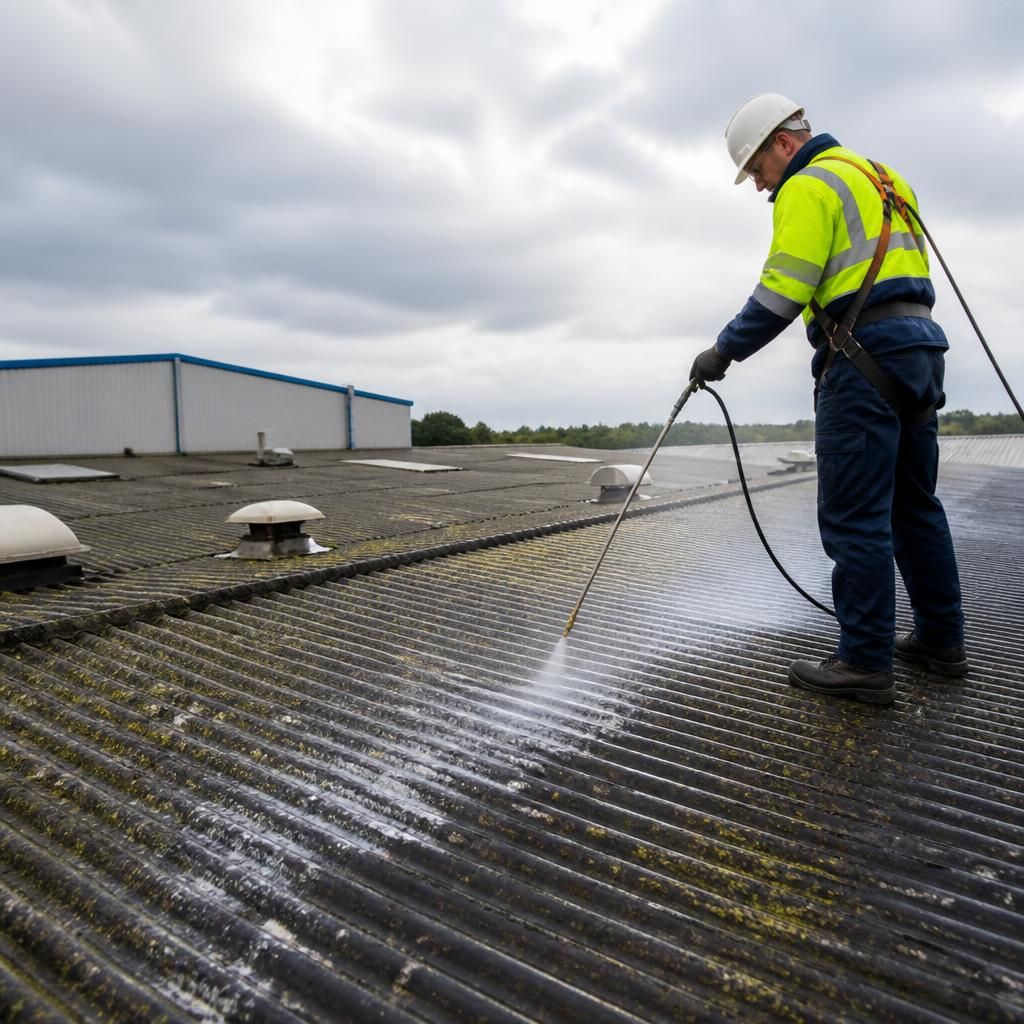
Dry, calm weather is usually essential for roof biocide application. Rain can dilute or wash away the treatment before it has contacted the moss, algae or lichen, while strong wind can cause spray drift and create risks for nearby people, vehicles, plants and drainage systems. The roof should also be free from frost, dew and standing moisture, with a suitable dry period forecast after application. Product instructions and the site-specific risk assessment should always determine whether work can proceed.