
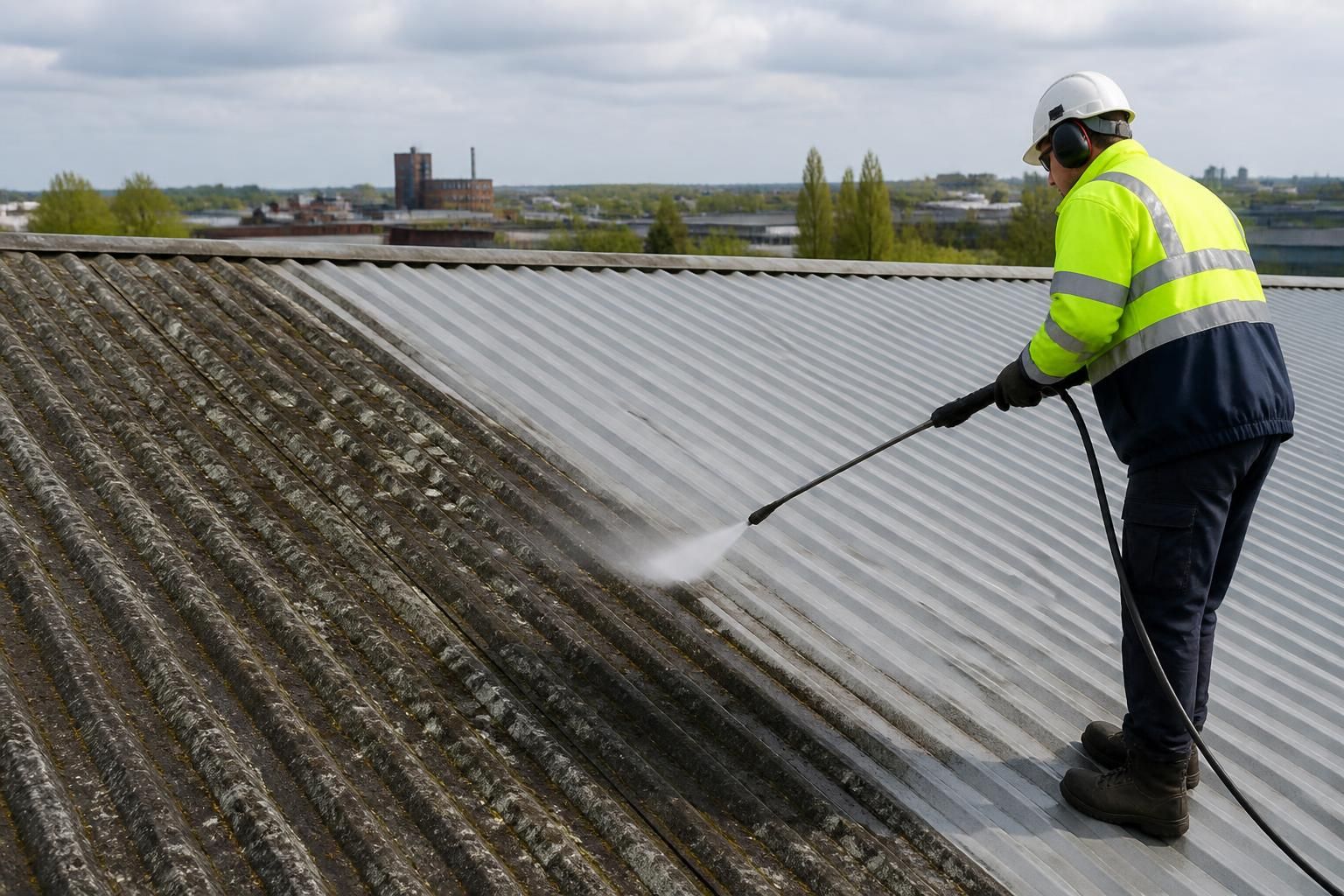
What surfaces are suitable for moss and lichen biocide treatment?
Moss and lichen biocide treatments are generally suitable for roofs, façades, render, brickwork, stone, concrete, paving, cladding and other hard exterior surfaces where biological growth has developed. The treatment must be matched to the surface material and condition, with testing and manufacturer guidance followed to prevent staining, damage or unwanted runoff.
Moss and lichen biocide treatments are generally suitable for hard, weather-resistant exterior surfaces where biological growth has established, including roof coverings, brickwork, stone, concrete, paving, render, façades and some cladding systems. The treatment must be selected for the material, applied at the correct dilution and used in accordance with the product instructions, because a solution suitable for one surface may stain, corrode or damage another.
Biocides are normally used to treat growth at its source rather than simply remove visible marks. They can help kill or suppress moss, lichen, algae and other organic contamination, allowing dead growth to weather away or to be removed using an appropriate low-impact cleaning method. On commercial premises, the condition of the surface, drainage arrangements, access requirements and the risk of runoff must be assessed before treatment begins.
Commonly suitable surfaces include:
- Roof coverings: Concrete and clay tiles, slate and some profiled roofing materials can often be treated, provided they are sound and the product is approved for that material. Moss should not be allowed to accumulate around joints, valleys, gutters or outlets, where it can restrict drainage.
- Brickwork and masonry: External brick, engineering brick and many types of masonry can be treated when the joints and face are structurally sound. More absorbent or historic masonry requires particular care, as aggressive chemicals or excessive wetting may cause staining or deterioration.
- Natural and reconstructed stone: Stone paving, walls, façades and architectural features may be suitable, but limestone, sandstone, marble and other calcareous or delicate materials can react differently to treatment. Product compatibility should be confirmed and a discreet test area completed first.
- Concrete: Concrete slabs, yards, steps, loading areas and other external hardstandings can commonly receive biocide treatment. Any cracks, failed joints or surface defects should be considered because liquid can penetrate damaged areas and may be carried towards drains.
- Paving and block paving: Concrete, clay and some natural-stone paving can be treated for moss, lichen and algae. Jointing sand, sealers and adjacent landscaping must be protected, and the treated area may need further rinsing or mechanical cleaning depending on the condition.
- Render and textured coatings: Rendered façades and external wall coatings may be suitable where the coating is intact. A low-pressure application is usually preferable to avoid eroding the finish, while loose, friable or recently applied coatings should be assessed before any chemical treatment.
- Metal cladding and roofing: Coated steel, aluminium and other metal systems may be treatable, but the solution must be compatible with the coating and substrate. Particular attention is needed around fixings, exposed edges, joints and drainage points, where residues can contribute to corrosion.
- Painted or sealed surfaces: Painted walls, coated façades and sealed paving can sometimes be treated, although the product may affect the finish or reduce its appearance if incompatible. Testing should establish whether the coating changes colour, becomes dull or loses adhesion.
Some surfaces need more than a standard suitability check. Older roofs may have fragile tiles, eroded profiles or loose bedding, making them unsuitable for intensive cleaning even if a biocide itself is compatible. Likewise, a façade may be made from a suitable material but still require a different approach because of failing paint, open joints, water ingress, staining or nearby sensitive finishes.
Surfaces requiring caution include:
- Historic, listed or architecturally significant masonry, where the treatment method may need approval and specialist conservation advice.
- Soft, friable, heavily weathered or highly porous stone, brick and render, which can retain moisture and respond unpredictably to chemical application.
- Unsealed limestone, marble and other reactive stone, particularly where the product contains ingredients that may etch or discolour the surface.
- Painted, powder-coated, resin-bound or otherwise finished surfaces, where compatibility depends on the coating rather than the underlying material alone.
- Membranes, roof coatings, asphalt, rubberised materials and plastics, unless the product manufacturer specifically confirms suitability.
- Glass, glazing seals, rubber, natural timber, planted areas and delicate external fixtures, which should generally be protected from direct contact and overspray.
Biocide treatment is not automatically appropriate for every surface with green or dark staining. The marks may be caused by pollution, rust, tannins, efflorescence, failed coatings or moisture-related defects rather than moss or lichen. Treating the wrong cause can leave the appearance unchanged and may introduce unnecessary chemical exposure. A site inspection helps distinguish biological growth from other deposits and identifies the source of persistent dampness, such as blocked gutters, defective flashing, leaking joints or poor drainage.
A small, representative test area should be completed before full application. The test should cover the actual substrate, coating and level of weathering present, rather than relying on a sample of new or undamaged material. The area can then be checked for colour change, whitening, residue, corrosion, loss of coating, joint damage and the treatment’s effect on the growth. Manufacturer instructions should take priority over general guidance, including requirements for dilution, contact time, rinsing and weather conditions.
Surfaces near watercourses, drainage channels, planted areas, ponds, animal housing or public access require additional planning. Runoff and overspray must be controlled, and drains should not receive contaminated solution unless the relevant arrangements and permissions are in place. Operatives should also consider wind, rain, surface temperature and the likelihood of premature wash-off, as poor conditions can reduce effectiveness and increase the risk of unwanted spread.
In practical terms, roofs, façades, masonry, render, cladding, concrete and paving are often suitable candidates, but suitability is determined by the precise material and its condition, not by appearance alone. For commercial and industrial properties, the correct process is to identify the growth, inspect the substrate, verify product compatibility, test a discreet area and agree controls for people, vehicles, vegetation and drainage before treating the wider surface.
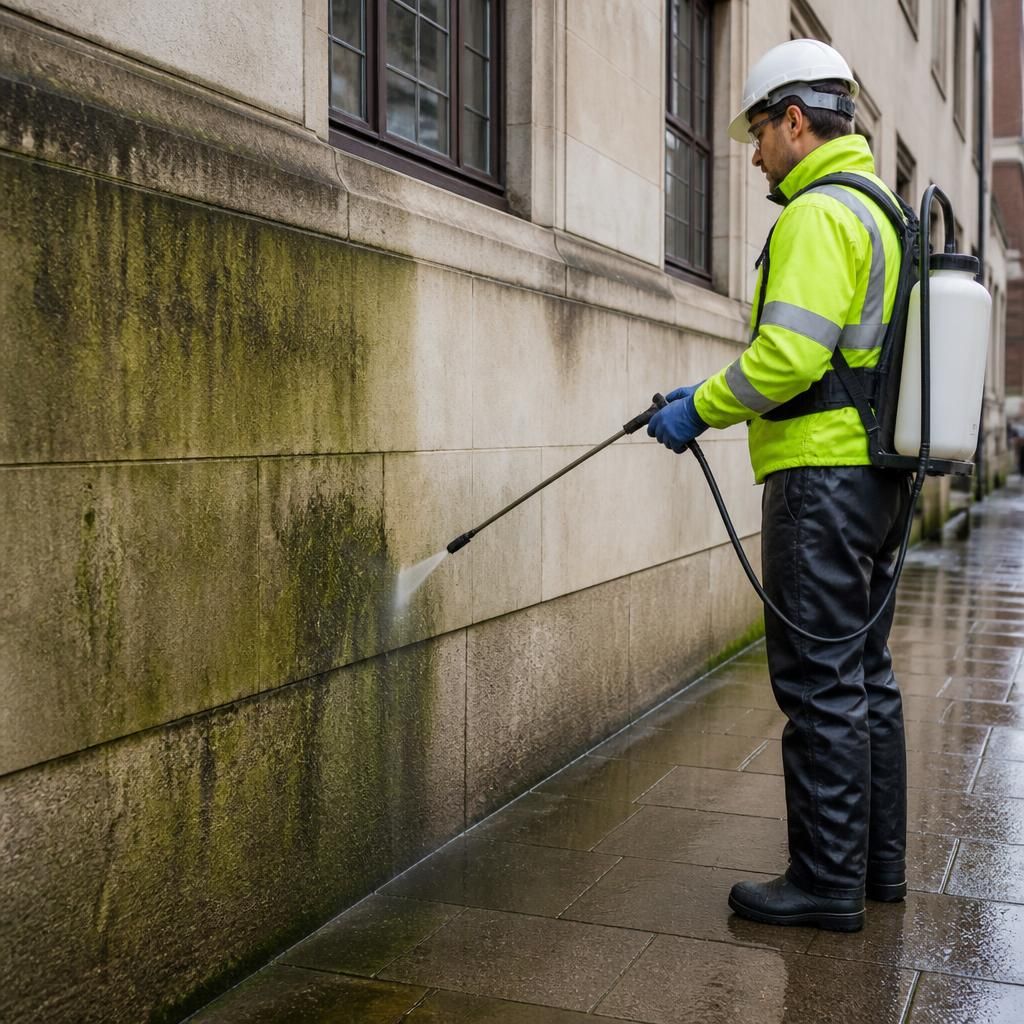
Moss and lichen biocide treatment is suitable for many hard exterior surfaces, but compatibility depends on the precise material, coating and condition. Roof tiles, brickwork, stone, concrete, paving, render and some cladding systems can often be treated when they are sound and weather-resistant.
A discreet test area should always be completed before wider application. This confirms that the biocide will not cause staining, colour change, corrosion, coating failure or damage to vulnerable joints. Historic masonry, porous stone, painted finishes, roof membranes and heavily weathered surfaces require particular care, with the product instructions followed and sensitive areas protected from runoff and overspray.