
What safety precautions should be taken during the application of biocide treatments for moss and lichen?
Before applying moss and lichen biocides, complete a site-specific risk assessment, follow the product label and COSHH requirements, and use the specified PPE, access controls and exclusion zones. Protect people, animals, vehicles, plants and drainage systems from contact or overspray, control runoff, and ensure the treatment is applied only by trained personnel using suitable equipment and weather conditions.
Safety during moss and lichen biocide application depends on controlling exposure to the product, preventing access to the treated area, and stopping spray, residue or contaminated runoff from reaching people, animals, plants, vehicles and drainage systems. Applications should be planned through a site-specific risk assessment and carried out by trained, competent operatives in accordance with the product label, safety data sheet, COSHH assessment and relevant UK legal requirements.
Assess the site before work begins. The assessment should identify the treatment area, access arrangements, working height, nearby occupants, public routes, vulnerable surfaces and possible environmental pathways. Consider roofs, façades, paved areas and other surfaces that may become slippery during preparation or treatment. Check for fragile materials, overhead services, electrical equipment, rooflights, unprotected edges and areas where spray could enter a building.
The assessment should also account for the presence of children, members of the public, employees, contractors, pets, livestock and wildlife. Agree how the area will be isolated, how occupants will be informed and what arrangements are required for deliveries, entrances, car parks and pedestrian routes. For occupied commercial premises, coordinate the work with the site manager and record any restrictions or permit-to-work requirements.
Use only an appropriate, authorised product. The operative should read the current label and safety data sheet before mixing or applying the biocide. These documents specify the permitted use, dilution, application method, required personal protective equipment, storage conditions, first-aid measures and disposal instructions. A product must not be used on a surface, location or application type that is outside its authorised instructions.
Under the Control of Substances Hazardous to Health Regulations, the employer or responsible contractor should complete a suitable COSHH assessment. This should cover the product as supplied, the diluted solution, inhalation and skin or eye contact risks, mixing and application methods, exposure controls, emergency procedures, storage and waste. The assessment should be reviewed if the product, equipment, site conditions or method changes.
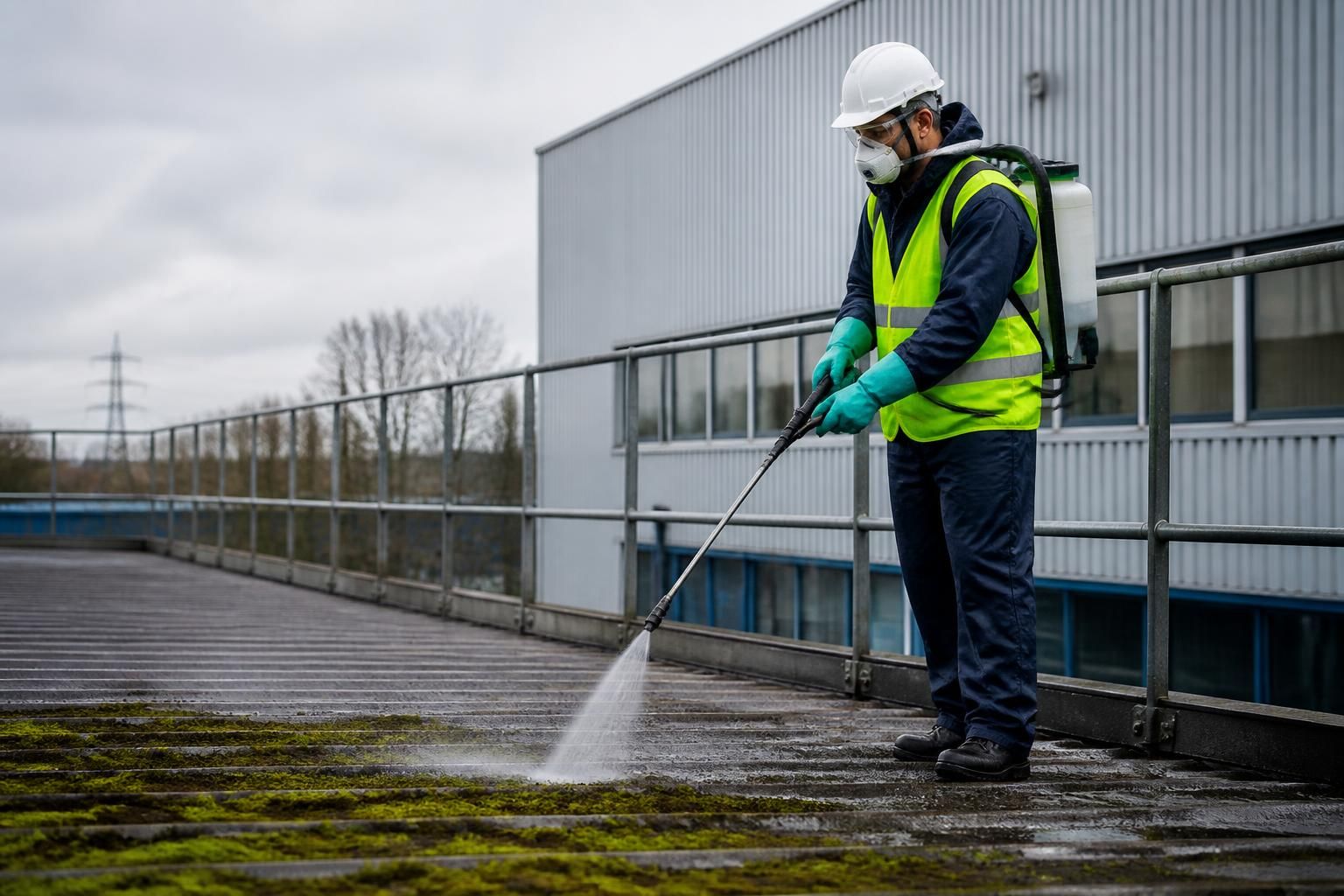
Ensure that operatives are trained and suitably equipped. Training should cover product handling, label requirements, COSHH controls, equipment operation, safe access, spill response, first aid and the protection of people and the environment. Personal protective equipment should be selected from the label and risk assessment rather than used as a substitute for other controls. Depending on the product and task, this may include:
- chemical-resistant gloves suitable for the formulation and intended duration of use;
- coveralls or other protective clothing that prevents contamination of skin and personal clothing;
- protective footwear with suitable grip, particularly where surfaces may be wet or slippery;
- eye or face protection where mixing, decanting or spray drift could cause splashes; and
- respiratory protective equipment where the assessment and product instructions identify an inhalation risk, with the correct filter, fit testing and maintenance arrangements.
Inspect PPE before use and replace contaminated or damaged items in accordance with the manufacturer’s instructions. Wash hands and exposed skin after the task, before eating or drinking, and after removing gloves. Contaminated workwear should be managed so that product residues are not transferred into vehicles, offices or welfare areas.
Control access and prevent accidental exposure. Establish a clearly defined exclusion zone around the application area. Use barriers, warning signs and, where necessary, a banksman or site marshal to prevent people entering while spraying is taking place or while the treated surface remains wet or hazardous. Do not rely on signs alone where the public could approach from another direction. Secure access points, roof access and plant or equipment that could allow unauthorised entry.
Where treatment is taking place near entrances, windows, air intakes or ventilation systems, arrange for them to be closed or protected as required by the risk assessment and product instructions. Notify building occupants about the work, the restricted areas and any required re-entry or reopening conditions. Do not allow people to walk through spray drift or across contaminated surfaces.
Check weather and application conditions. Avoid application in conditions that could carry droplets away from the target surface, including strong or changeable winds. Rain shortly after application can dilute the treatment, increase runoff and reduce control, while excessive heat or rapid drying may affect the product’s performance. Follow the product label for weather limitations and monitor conditions throughout the work rather than relying only on the forecast.
Do not apply if frost, rain, wind, temperature or surface conditions make the task unsafe or likely to cause uncontrolled movement of the solution. On elevated work, suspend operations if weather affects footing, visibility, equipment stability or the ability to control the spray accurately.
Use safe access and application equipment. Select access equipment that is appropriate for the height, surface and duration of the work. Ladders should not be used as a default where a safer platform or other access system is required. Inspect access equipment before use, maintain three points of contact where applicable, and prevent hoses from creating trip hazards. Operatives should never overreach, stand on fragile surfaces or work close to unprotected edges without suitable collective or personal fall protection.
Spray equipment should be checked for leaks, damaged hoses, blocked nozzles and insecure connections before use. Apply at the lowest pressure and with the most controlled spray pattern that achieves the required coverage. Avoid producing unnecessary mist or fine droplets. Keep the lance directed at the target surface and never spray towards people, animals, open windows, air intakes, electrical installations or moving traffic.
Protect drainage systems, soil and vegetation. Before treatment, identify gullies, channels, watercourses, ponds, soakaways and other drainage routes. Prevent the solution from entering these systems unless the product instructions specifically permit it. Use temporary covers, drain protection or controlled collection methods where appropriate, ensuring that covers do not create additional trip or flood risks.
Protect lawns, planted areas, trees, crops and other desirable vegetation from spray and overspray. Do not rinse equipment or wash treated residues into surface water, soil or unapproved drainage. Any runoff, empty containers, absorbent materials and contaminated PPE should be managed in accordance with the product instructions and the site’s waste procedures. If a watercourse, drain or sensitive habitat could be affected, obtain suitable environmental advice before work starts.
Keep animals, vehicles and property away from the treatment. Arrange for pets, livestock and other animals to be removed from the work area and kept away until the product label’s restrictions have been met and surfaces are safe. Cover or relocate vehicles, outdoor furniture, signage, machinery and stored materials where they could be affected by spray or residue. Take particular care with painted finishes, metals, glass, sealants and sensitive cladding, as compatibility and rinsing requirements vary between products and surfaces.
Never mix biocides with other chemicals unless the label expressly permits it. Measure and dilute products accurately in a controlled location, using clean equipment and avoiding improvised containers. Keep products in their original, labelled containers, securely closed and stored away from food, animal feed, unauthorised persons and incompatible substances. Do not leave mixed solution unattended or retain it for later use unless the manufacturer’s instructions allow this.
Have emergency controls in place. A suitable spill kit, clean water for emergency rinsing and first-aid arrangements should be available before mixing or application begins. If the product contacts skin or eyes, follow the safety data sheet and label instructions immediately and obtain medical advice where required. Contaminated clothing should be removed safely. If a spill occurs, stop the source if it is safe to do so, keep people away, prevent entry to drains and contain the material using the specified procedure.
Report and record incidents, near misses, uncontrolled runoff, exposure or damage to property. Do not hose a spill into a drain or watercourse. Where contamination may have reached a drain, soil or surface water, notify the responsible site contact and seek appropriate environmental or emergency advice without delay.
Complete the work safely. Maintain the exclusion zone until the treated area and surrounding surfaces meet the product’s re-entry requirements. Inspect the site for residue, pooled solution, contaminated equipment, damaged vegetation and remaining slip hazards. Remove barriers only when the area is safe for normal use, and provide the client with any relevant aftercare, access or cleaning instructions.
For commercial and industrial premises, retain the risk assessment, COSHH assessment, product information, operative training records, application details, weather observations, site notifications and waste documentation where appropriate. This provides a clear record of how exposure and environmental risks were controlled and supports consistent standards during future moss and lichen treatments.
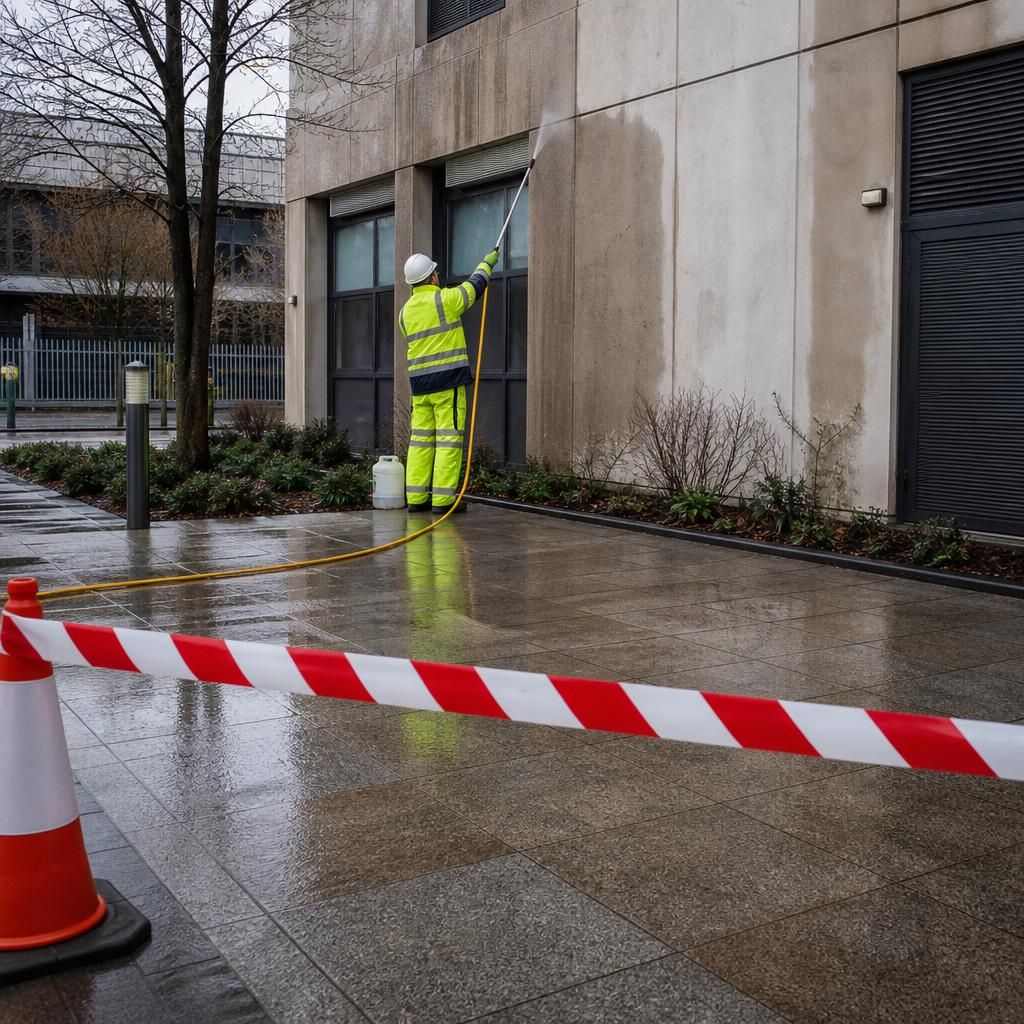
An exclusion zone prevents people, animals and vehicles from entering the area while moss and lichen biocide is being mixed, applied or left to dry. Use barriers and clear warning signs around the treatment area, including access points, paths and areas below elevated work. Where the public or site staff could approach, arrange a responsible person to control access rather than relying on signs alone.
Keep windows, doors and air intakes closed or protected where spray drift could enter a building, and agree re-entry arrangements with the site contact. Maintain the exclusion zone until the product label and risk assessment confirm that the surface is safe to use. Before removing barriers, check for wet residue, pooled solution and remaining slip hazards.