
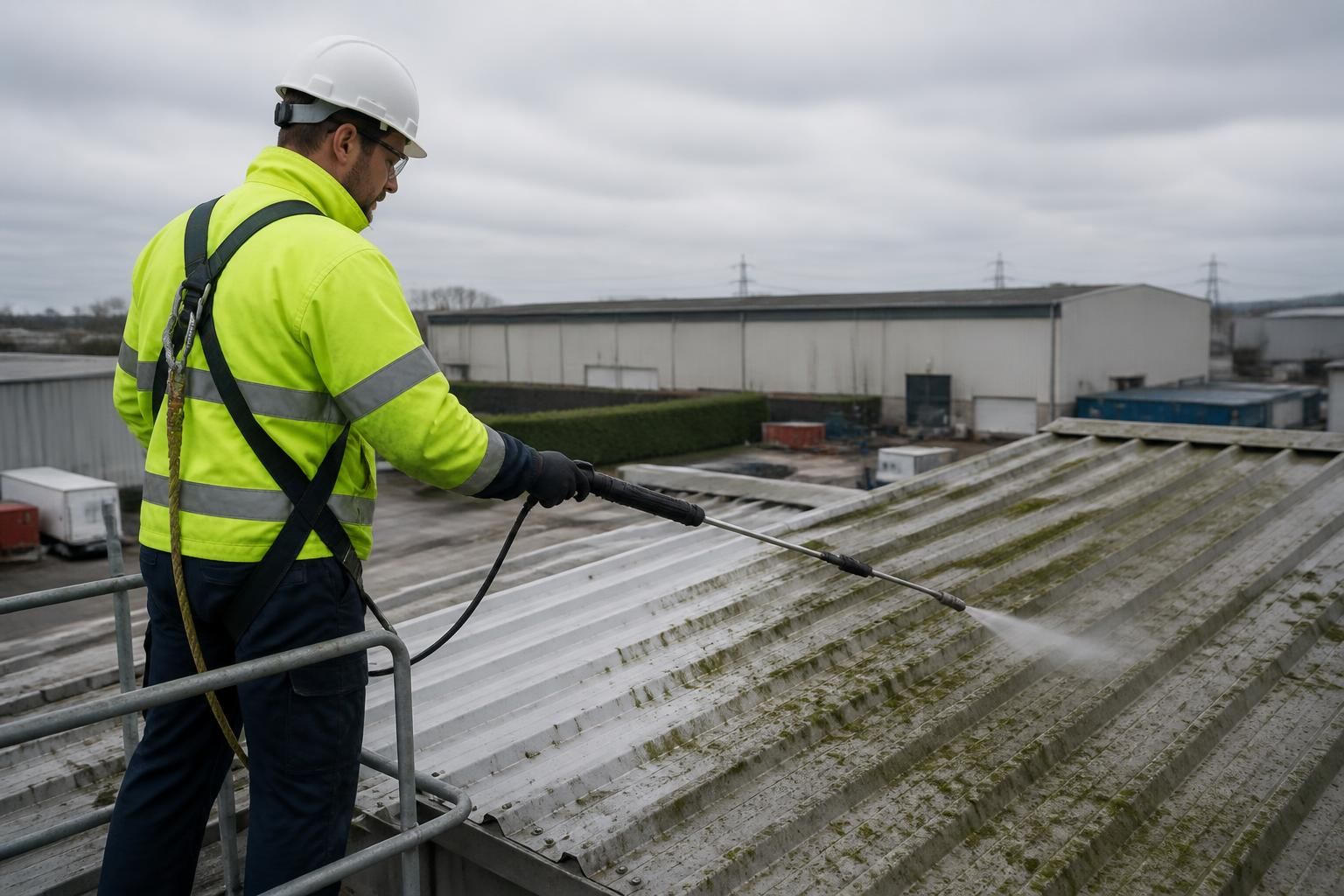
What factors determine the frequency and timing of moss and lichen biocide applications for optimal results? — Application frequency and timing depend on the surface, severity of growth, local weather, moisture levels, surrounding vegetation and the biocide used. Treatments are generally most effective when applied during suitable weather, before heavy regrowth and at intervals set by site conditions and ongoing monitoring.
The frequency and timing of moss and lichen biocide applications depend on the surface type, extent of growth, moisture and shade levels, local weather, surrounding vegetation, and the biocide selected. Applications are usually most effective in suitable, dry conditions, timed before significant regrowth and adjusted through site inspections and ongoing monitoring.
The frequency and timing of moss and lichen biocide applications are determined by the type and condition of the surface, the severity of contamination, moisture and shade levels, local weather, surrounding vegetation, and the product’s instructions. A fixed calendar interval is rarely appropriate for every property. The most reliable approach is to assess the site, apply treatment when conditions support effective coverage and dwell time, then schedule follow-up work according to the rate of regrowth.
Surface type and condition are important starting points. Roof coverings, rendered façades, masonry, paving, cladding and other exterior materials retain moisture differently and have different levels of tolerance for cleaning methods. Porous or weathered surfaces can hold organic growth and moisture within their texture, while smoother surfaces may be easier to keep clear after treatment. Areas with fragile coatings, open joints or existing defects may also require a more controlled application and closer inspection rather than repeated routine treatment.
The amount and maturity of the growth also affect timing. Light surface colonisation may respond to a planned preventative application, whereas dense moss, established lichen or heavily shaded contamination may require preparation, removal of loose growth and a carefully timed biocide treatment. Lichen can be particularly persistent because it attaches firmly to the substrate. Applying further product before the previous treatment has had time to work is unlikely to improve the result and may create unnecessary chemical loading.
Moisture, shade and drainage are among the strongest indicators of likely regrowth. North-facing elevations, areas beneath trees, covered walkways, roof valleys, damp walls and poorly drained paving commonly remain wet for longer. Leaking gutters, blocked outlets, defective flashing, cracked pointing or persistent condensation can also maintain the conditions in which moss and lichen develop. Where these underlying issues are not addressed, applications may need to be repeated more frequently and may still provide only temporary control.
Weather conditions determine whether an application can be made safely and whether the product remains on the target surface long enough to work. Treatments are generally best planned for a dry, settled period with limited risk of immediate rainfall, run-off or overspray. Strong wind can affect application accuracy and increase the risk to nearby people, vehicles, vegetation and drainage systems. Very hot, rapidly drying conditions may also be unsuitable for some products because the treatment can dry before it has achieved adequate coverage or contact time. The product label and site-specific risk assessment should always take priority over a general seasonal preference.
Seasonal planning can improve results, but there is no universally correct month for every property. Applications are often more practical when surfaces are accessible, visible and not saturated by prolonged wet weather. A pre-winter inspection may identify areas requiring attention before damp conditions encourage renewed growth, while a spring inspection can reveal contamination that developed or became visible during the wetter months. On commercial sites, treatment may also be coordinated with planned façade cleaning, roof maintenance, construction work or reduced occupancy to minimise disruption.
The selected biocide affects both the application method and the review period. Products differ in formulation, required dilution, contact time, surface suitability, weather limitations and whether they are intended for removal, residual control or preventative maintenance. They must be used strictly in accordance with the manufacturer’s instructions, including the permitted application rate and any restrictions relating to run-off, watercourses, drainage, vegetation and public access. A stronger application is not automatically a better application; correct product selection, coverage and control of the surrounding area are more important.
For larger commercial and industrial properties, frequency should be based on a documented inspection programme rather than an assumed annual routine. Monitoring can record:
- the location and extent of moss, lichen and associated staining;
- changes in growth on shaded, damp or poorly drained elevations;
- the condition of the surface and any defects contributing to moisture retention;
- the performance of previous treatment and the speed of visible regrowth;
- nearby vegetation, water management and access constraints; and
- weather conditions and any operational restrictions affecting the work.
This information allows treatment to be targeted where it is needed instead of applying biocide across unaffected areas. It also helps distinguish genuine regrowth from residual staining or dead organic material. A surface may look marked after the biological growth has been controlled, so visual appearance should be assessed alongside the treatment objective and the condition of the substrate.
Application timing should also account for the planned follow-up cleaning method. Where loose moss or lichen will be removed after treatment, the biocide may need sufficient time to weaken the growth before rinsing or low-impact cleaning takes place. Mechanical disturbance, pressure washing or steam cleaning carried out too early can reduce contact time and may spread contaminated water or debris. The sequence should therefore be agreed in advance and adjusted to the surface, product and site controls.
Environmental and operational conditions can change the appropriate interval between applications. Tree growth, alterations to drainage, new building works, increased shading, nearby construction dust and changes in site use can all affect contamination rates. Repeated applications should not be used to compensate for a leaking roof, failed drainage or unsuitable cleaning practices. Corrective maintenance and improved water management are often necessary parts of a longer-term moss and lichen control plan.
In practice, the next application is normally triggered by inspection evidence rather than by time alone. Early signs such as renewed green growth, lichen spots, persistent dampness or contamination concentrated in known problem areas may justify targeted treatment. If the surface remains stable and clear, extending the interval can avoid unnecessary work. Each visit should be reviewed against the previous condition, the product used, weather at the time of application and any changes to the site.
For safe and consistent results, the treatment plan should include a site assessment, suitable weather window, approved product and dilution, protection of people and adjacent areas, control of run-off, adequate contact time and a recorded follow-up inspection. This condition-based approach provides more effective long-term control than applying biocide at arbitrary intervals, while keeping the treatment proportionate to the actual risk of moss and lichen returning.
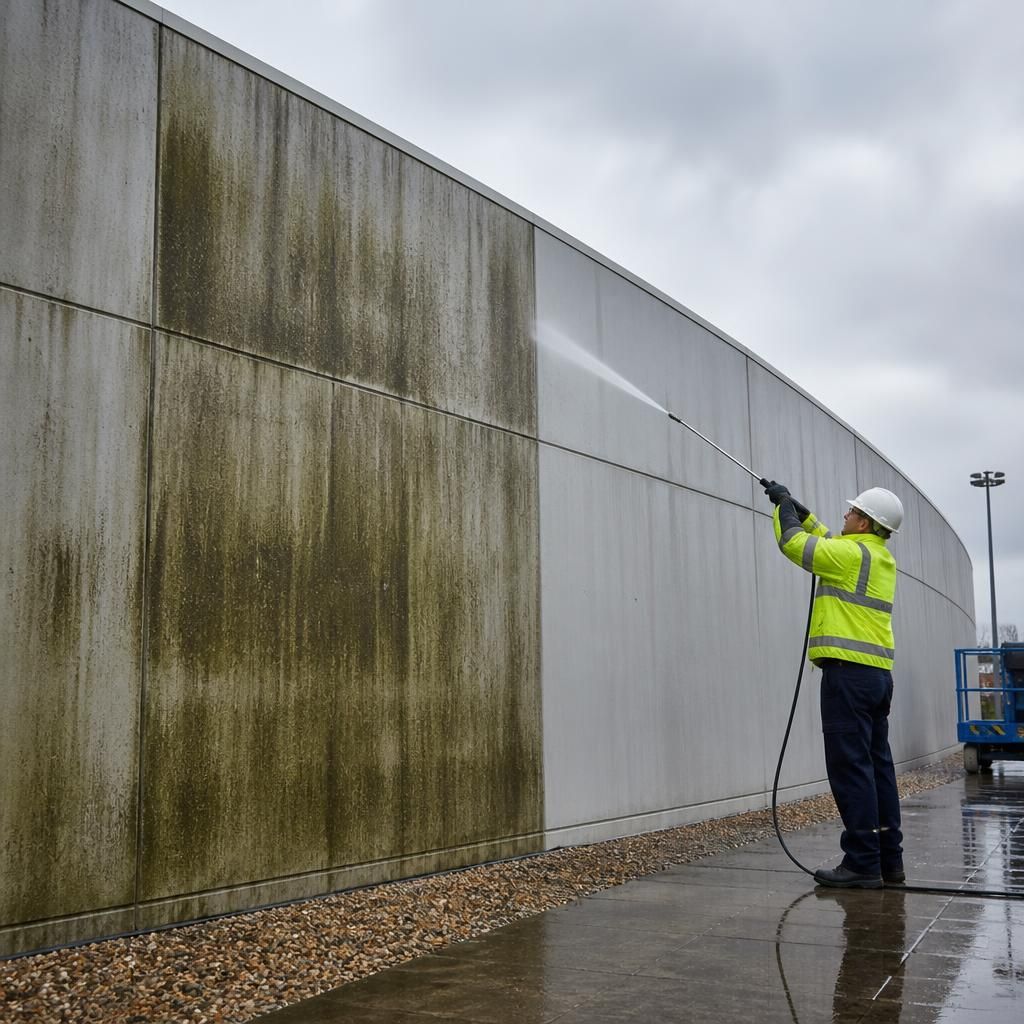
Moss and lichen biocide applications should be scheduled around both site conditions and a suitable weather window. Treatment is generally more effective when the surface is dry, rainfall is unlikely to cause immediate run-off, and wind is low enough to maintain accurate application and protect nearby areas.
Timing should also reflect the condition of the growth. Established moss or firmly attached lichen may need preparation and sufficient contact time before follow-up cleaning, while early regrowth can often be treated selectively. Inspections after application help determine whether the surface remains controlled or whether dampness, shade, drainage defects or vegetation are causing faster return. This condition-based approach avoids unnecessary repeat applications and supports more consistent long-term control.
Plan Your Moss and Lichen Biocide Treatment
Arrange a site assessment with Encanto Exterior Cleaning to identify the right treatment interval for your moss and lichen problem. We can review surface condition, moisture sources, access and weather constraints before recommending a practical application plan.