
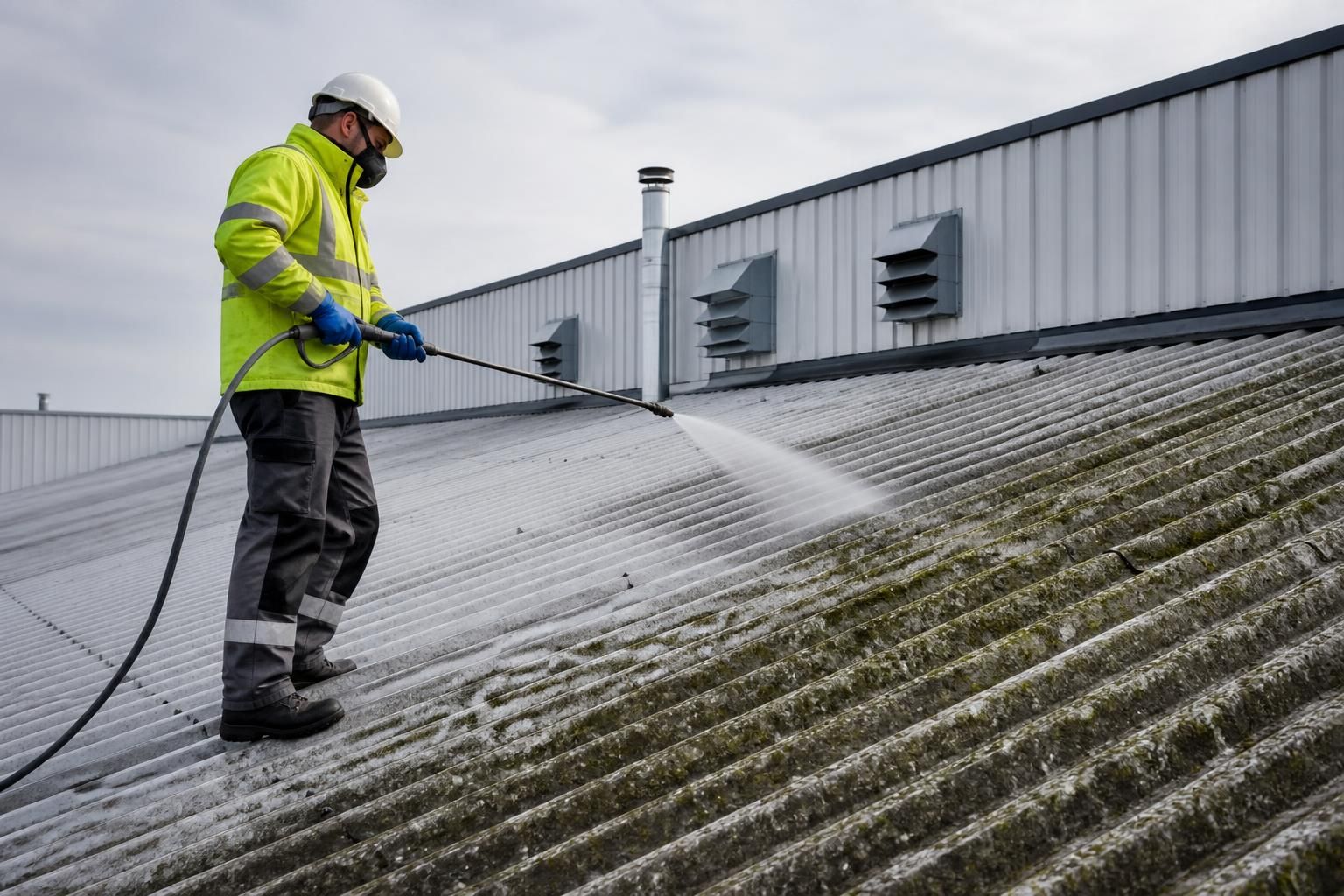
What criteria should be used to select the most effective biocide for specific exterior surfaces affected by moss and lichen? The right biocide should be selected according to the surface material, the type and severity of growth, required dwell time, environmental conditions, and compatibility with surrounding finishes and drainage systems.
Select a biocide according to the exterior surface material, the type and severity of moss or lichen growth, the required dwell time, and compatibility with coatings, finishes, surrounding vegetation and drainage systems. The product should also be authorised for its intended use and suitable for the site’s environmental conditions, with application controlled to avoid damage and achieve effective long-term treatment.
The most effective biocide for moss and lichen is selected by matching the product to the surface, the growth present and the conditions at the site. Selection should consider material compatibility, required contact time, application method, environmental risk, legal authorisation and the level of control required, rather than choosing a product solely because it is described as a strong or fast-acting treatment.
Surface material and condition
Begin by identifying the substrate and its condition. Roof tiles, natural stone, concrete, brickwork, painted surfaces, render, cladding and paving can respond differently to the same treatment. Porous materials may retain moisture and allow biocide to penetrate into surface pores, while smooth or sealed finishes may need an even application and sufficient dwell time to remain effective. Weathered, friable or damaged surfaces require particular care because aggressive cleaning or unsuitable chemicals may worsen surface loss.
The assessment should also identify coatings, sealants, paint systems, pointing, jointing compounds and protective finishes. A product that is suitable for uncoated masonry may not be appropriate for a painted façade or coated metal cladding. Where the manufacturer does not clearly confirm compatibility, a small test area should be treated and inspected before wider application. The test should check for colour change, staining, softening, residue, loss of gloss and any reaction with adjacent materials.
Type and severity of biological growth
Moss, lichen, algae and other organic deposits are not identical. Moss is usually associated with damp, shaded conditions and may form a thicker surface layer. Lichen can adhere tightly to masonry and roofing materials, making it less responsive to rapid surface cleaning. Algae may appear as green, black or slimy staining, particularly where moisture remains on shaded elevations.
The treatment should therefore be capable of addressing the growth identified, at the concentration and contact time stated on its product documentation. Heavy growth may need mechanical removal or controlled soft washing after the biocide has had time to work. Treating a thick layer without considering removal can prevent the solution from reaching the underlying surface and may result in uneven control.
Compatibility with the intended cleaning method
Choose a biocide that suits the planned application process. Low-pressure spraying, soft washing, steam cleaning and other controlled methods place different demands on the product. The formulation must remain effective when applied at the specified dilution and should not require forceful pressure that could damage tiles, pointing, render or coatings.
Contact time is also important. Products that require a longer dwell period may be effective where the site can remain undisturbed, but they may be unsuitable during changing weather, near busy entrances or where runoff must be controlled immediately. The selected treatment should be capable of being applied evenly, kept wet for the required period and removed or rinsed where the instructions require it.
Legal authorisation and product information
Only a product authorised for the relevant use should be selected. The label and technical documentation should confirm the approved application, target organisms, dilution, contact time, personal protective equipment, storage requirements, disposal instructions and restrictions relating to watercourses or drainage. A safety data sheet supports risk assessment, but the product label remains central to lawful use.
For commercial and industrial premises, the choice should also fit the site’s COSHH assessment and method statement. The applicator must understand the hazards of the concentrate and diluted solution, including risks from spray mist, skin or eye contact, inhalation and accidental discharge. Product suitability is not established by effectiveness alone; it must also be practical and safe to control during the proposed work.
Environmental conditions and runoff risk
Weather and site drainage can determine whether a treatment is appropriate on the planned day. Rain shortly after application may dilute the product or carry it into unwanted areas, while strong wind can cause drift onto vehicles, windows, vegetation or neighbouring property. Very hot, dry conditions may cause premature drying before the required contact time has elapsed.
Before selection, identify nearby planted areas, watercourses, ponds, gullies, surface-water drains and sensitive adjoining materials. Runoff should be prevented or managed in accordance with the product instructions and the site’s environmental controls. A lower-risk option may be preferable where containment is difficult, even if a more concentrated treatment could act faster in ideal conditions.
Required result and maintenance plan
Consider whether the objective is to kill existing growth, reduce staining, prepare a surface for further cleaning or support an ongoing maintenance programme. A treatment designed for residual control may be useful on a roof or shaded façade that repeatedly becomes colonised, whereas a sensitive finished surface may require a gentler process followed by careful physical cleaning.
Biocide treatment does not correct the conditions that allow moss and lichen to return. Persistent shade, blocked gutters, poor drainage, leaking details and retained moisture should be addressed where possible. The selected product should form part of a planned cleaning and inspection regime, with future applications based on the surface, exposure and rate of regrowth rather than an automatic treatment interval.
Practical selection process
- Survey the substrate, coating, age, condition and areas of previous repair.
- Identify the biological growth and assess its thickness, coverage and attachment.
- Review nearby vegetation, drainage routes, water risks, access constraints and weather exposure.
- Check the product label, authorisation, technical data and safety data for the intended use.
- Confirm compatibility with the surface and cleaning method, using a discreet test patch where necessary.
- Set the dilution, application rate, dwell time, protection measures and runoff controls before work begins.
- Inspect the treated area afterwards and decide whether gentle removal, rinsing or a later maintenance treatment is required.
For large façades, roofs, car parks and other commercial surfaces, the final choice should be recorded in the method statement with the reasons for selecting that product. This creates a clear link between the substrate assessment, the treatment instructions, the environmental controls and the expected result. Where surface composition or previous coatings are uncertain, specialist assessment and a controlled test area are preferable to applying an unverified biocide across the whole site.
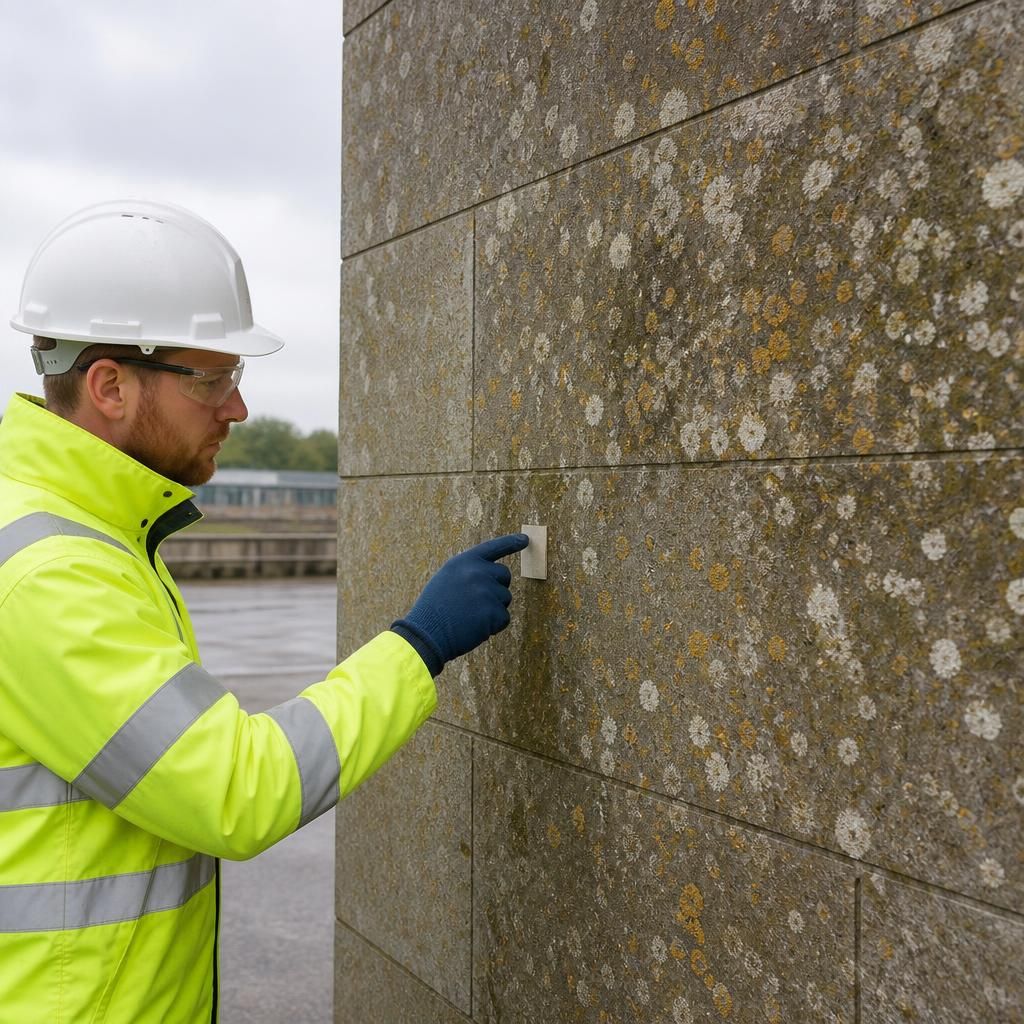
Surface compatibility is a key criterion when selecting a biocide for moss and lichen treatment. The product must suit the substrate, coatings and jointing materials without causing staining, softening, colour change or loss of protective finishes.
Before full application, inspect the surface and carry out a discreet test patch where compatibility is uncertain. Check the treated area after the specified dwell time for changes to appearance or texture, and confirm that the product can be applied and controlled safely around windows, vegetation, drainage points and adjoining materials.
Ask us to assess your moss and lichen biocide requirements
Ask us to assess your moss and lichen biocide requirements, including surface compatibility, growth severity, application conditions and runoff controls. We can recommend a suitable treatment approach for your commercial or industrial premises.