
What are the long-term benefits of regular biocide treatments in preventing moss and lichen growth on commercial properties?
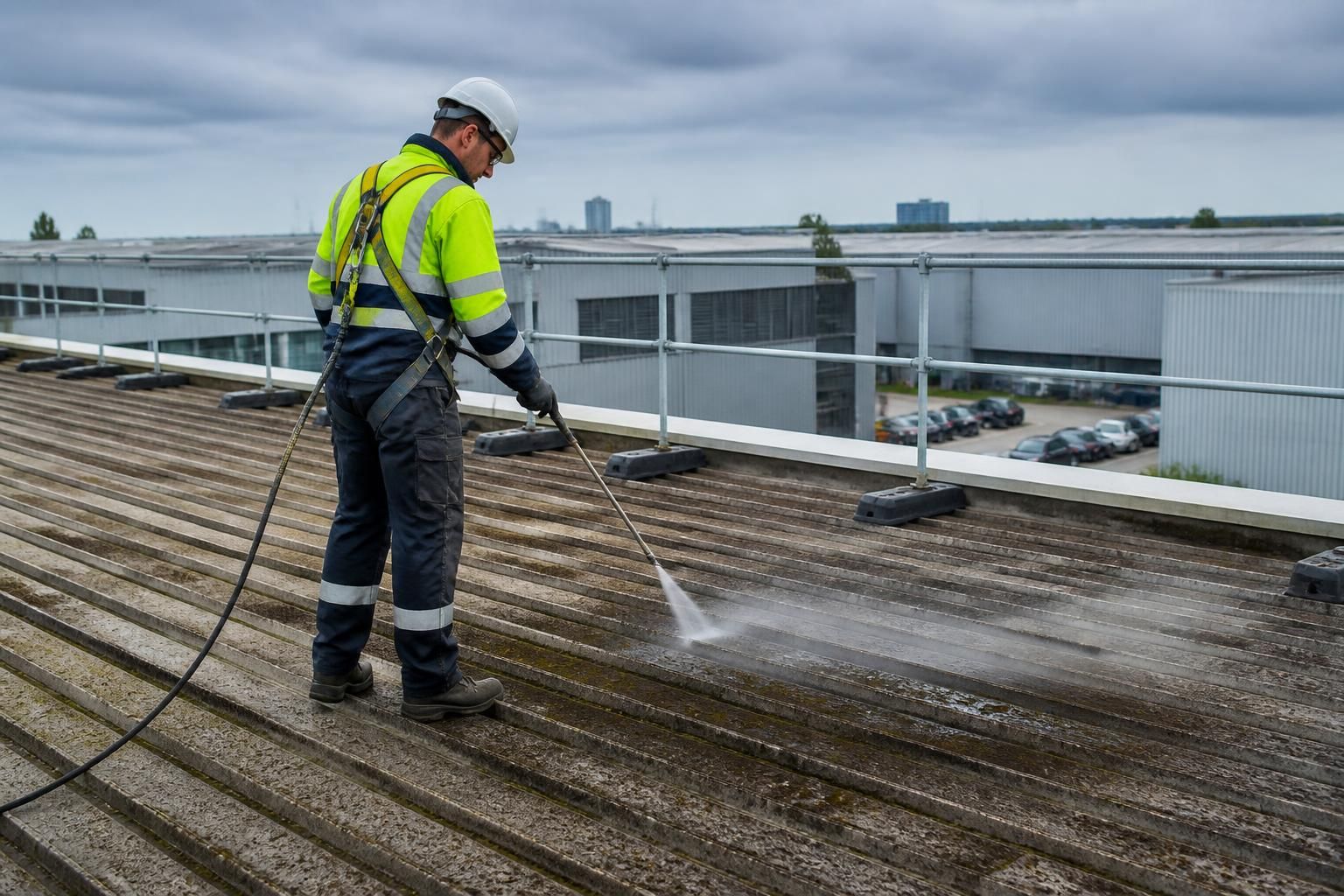
Regular biocide treatments help prevent moss and lichen from re-establishing on commercial roofs, façades, paving and other exterior surfaces. Over time, this protects materials from moisture-related deterioration, reduces slip and access risks, preserves the property’s appearance and can lower the need for intensive cleaning and repairs.
Regular biocide treatments are preventative applications that suppress moss, lichen and associated organic growth after a surface has been cleaned. On commercial properties, their long-term value is that they slow re-establishment between planned cleaning visits, helping roofs, façades, cladding, paving and other exterior areas remain safer, cleaner and easier to maintain.
Moss and lichen retain moisture against the surface. As growth develops, it can work into joints, pores, laps and surface irregularities, where repeated wetting and drying may contribute to staining, surface deterioration and blocked drainage routes. Lichen can also adhere firmly to hard surfaces, making later removal more time-consuming. Applying a suitable biocide as part of a planned maintenance programme helps control this biological activity before it becomes extensive.
The main long-term benefits for commercial properties include:
- Reduced re-growth: A correctly selected and applied treatment continues to control residual spores and organic growth after visible deposits have been removed. This does not prevent all future contamination, but it can extend the period between intensive cleaning operations.
- Protection of exterior materials: Limiting moisture-holding moss and lichen helps reduce the conditions that can contribute to deterioration of roof coverings, masonry, paving, render, cladding and surface coatings. Treatment is a maintenance measure, not a substitute for repairing defective materials or failed joints.
- Lower maintenance demands: When growth is controlled at an early stage, subsequent cleaning is generally less disruptive than removing thick, established deposits. This can reduce the need for aggressive mechanical methods, prolonged access arrangements and additional preparation.
- Improved slip and access management: Moss and organic residues can make paths, steps, ramps, yards and car parks slippery, particularly when wet. Ongoing control supports a wider site housekeeping and risk-management programme, although surfaces must still be inspected and cleaned when contamination is present.
- More consistent presentation: Regular treatment helps maintain a uniform appearance across customer-facing areas, building elevations, entrances and managed estates. This is particularly useful where several buildings or external areas need to meet the same maintenance standard.
- Potentially lower long-term costs: Preventative work can reduce the frequency of restorative cleaning and help identify drainage, weathering or surface defects before they become more extensive. The actual saving depends on the material, site conditions, access requirements and existing level of growth.
Biocide treatment works best when it is integrated with inspection and cleaning rather than used as a one-off response. The usual process is to assess the surface and surrounding environment, remove loose or established growth using an appropriate cleaning method, apply the selected treatment in accordance with its instructions, and monitor the area during future maintenance visits. Treatment timing should take account of the material, exposure, shade, moisture, nearby vegetation, rainfall and the rate at which growth returns.
Different surfaces require different approaches. Roofs and porous masonry may retain moisture and organic residue for longer than smooth, well-drained cladding. Shaded elevations, north-facing areas, tree-lined paths and locations close to water are also more likely to experience re-growth. A treatment programme should therefore be based on site observations rather than an automatic schedule applied identically to every property.
Regular applications do not make a surface permanently resistant to moss or lichen. New spores can arrive through wind, birds, vegetation and surrounding ground conditions, while persistent dampness can encourage re-establishment. For this reason, the most effective programmes combine biocide treatment with clearing gutters and drainage channels, managing overhanging vegetation where appropriate, correcting water-retention problems and repairing damaged surfaces.
Commercial sites also need proper control of application risks. The product must be suitable for the surface and used at the specified concentration and application rate. Operatives should manage access, protect people and property, control run-off and consider nearby drains, planting, watercourses and sensitive materials. Product labels, safety data and applicable regulations should always be followed. Where the property is occupied, the work should be planned to minimise disruption and keep treated areas controlled until they are safe for normal use.
To measure the long-term benefit, property managers should keep records of treated areas, visible growth, surface condition, weather-related issues and any follow-up cleaning or repairs. Comparing these observations over successive maintenance visits helps establish an appropriate treatment interval and highlights areas that need a different cleaning method or remedial work.
In practical terms, regular biocide treatments help commercial properties move from repeated reactive moss and lichen removal towards planned preventative maintenance. They support cleaner and safer external areas, help preserve the condition and appearance of building materials, and may reduce the disruption and expense associated with heavy re-growth. The results depend on correct product selection, competent application, suitable timing and continued inspection of the property.
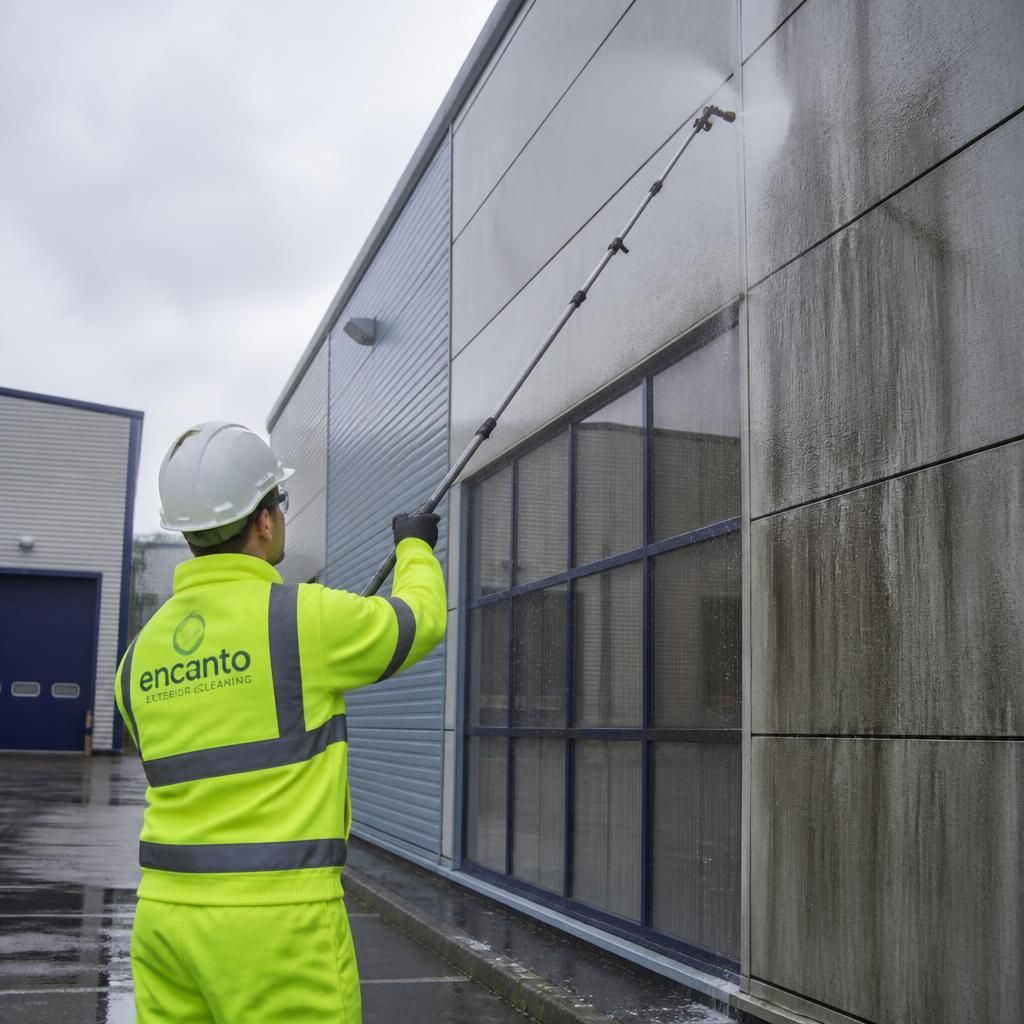
Regular biocide treatments help extend the period between intensive moss and lichen cleaning by controlling residual organic growth after the surface has been cleaned. This preventative approach can reduce the need for aggressive methods, prolonged access equipment and disruptive reactive work on commercial roofs, façades, paving and other exterior areas.
By limiting moisture-holding growth before it becomes established, treatment can also help protect porous materials, joints, coatings and drainage routes from conditions that contribute to staining and deterioration. It is not a substitute for repairs or routine inspections, but forms part of a planned maintenance programme that can make future cleaning more manageable and help control long-term maintenance costs.
Plan Your Regular Moss and Lichen Treatment
Speak to Encanto Exterior Cleaning about a regular moss and lichen treatment plan tailored to your commercial property, surface types and site conditions. We can assess existing growth, recommend suitable treatment intervals and coordinate the work with your wider cleaning and maintenance schedule.