
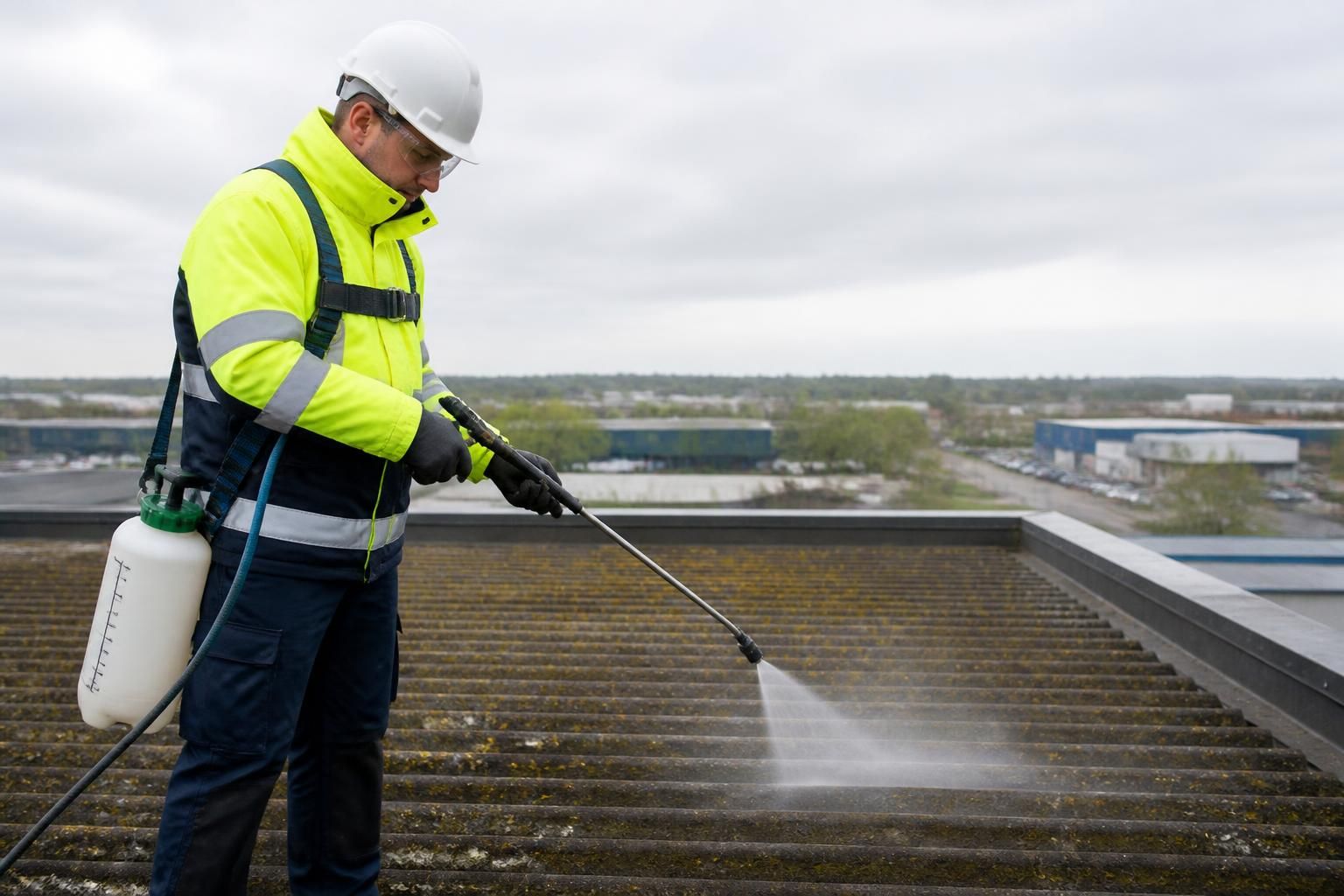
What are the environmental considerations and safety measures when using biocide treatments for moss and lichen removal?
Biocide treatments control moss and lichen by using chemicals that must be selected and applied according to the product label, surface, weather conditions and surrounding environment. Safe use requires trained operators, suitable protective equipment, controlled application, protection of drains, plants, people and animals, and responsible management of any run-off or residues.
Biocide treatments for moss and lichen removal must be selected and applied in a way that controls the growth without exposing people, animals, plants, drainage systems or watercourses to unnecessary chemical risk. The product label, safety data sheet, site risk assessment and relevant UK requirements should determine the treatment method, concentration, application conditions, personal protective equipment and disposal arrangements.
Environmental protection starts with choosing an authorised product that is suitable for the intended use and surface. Different formulations have different active ingredients, application rates, contact times and environmental hazards. A product should never be substituted, mixed or diluted outside the manufacturer’s instructions. The label is a legal source of instructions, while the safety data sheet provides further information about hazards, storage, spill response and first aid.
- Inspect the site before work starts, identifying drains, gullies, ponds, streams, watercourses, planted areas, wildlife habitats, neighbouring properties and public access routes.
- Prevent treatment spray, concentrated product and contaminated run-off from entering surface-water drainage or natural watercourses.
- Protect or temporarily isolate vulnerable plants, lawns, water features, tanks, animal areas and food-handling locations where appropriate.
- Apply only the amount needed for the affected surface and avoid unnecessary overspray, misting or treatment beyond the work area.
- Do not apply during conditions that could carry the product away from the surface, such as strong winds, heavy rain or when run-off cannot be controlled.
- Manage residues and wash water in accordance with the product instructions and site requirements rather than allowing them to flow into uncontrolled drainage.
Drainage requires particular care on commercial premises. Roofs, façades, yards and paved areas may drain directly to surface-water systems, which are not designed to receive chemical residues. Drains should be identified before application and protected where necessary. If run-off is likely, the method should be changed, containment arranged or the work postponed. Any spill must be contained promptly using suitable absorbent materials, with contaminated waste stored and disposed of through an appropriate route.
Operators should complete a site-specific risk assessment and COSHH assessment before using the treatment. This should consider the product’s hazards, the condition and height of the surface, access equipment, nearby occupants, weather, ventilation, drainage and the possibility of exposure during application or subsequent cleaning. Operators need suitable training in the product, equipment, emergency procedures and safe access arrangements, rather than relying on pressure-washing experience alone.
Personal protective equipment depends on the product and the task, but may include chemical-resistant gloves, protective footwear, coveralls, eye or face protection and respiratory protection where the assessment and product instructions require it. PPE should be compatible with the active ingredient, inspected before use and removed without contaminating skin or clothing. Eating, drinking and smoking should be prohibited in the treatment area, and hands and exposed skin should be washed after the work.
People, animals and other contractors should be kept away from the application area until the product label permits re-entry and the treated surface is safe. Barriers and warning signs are useful on accessible sites, but they do not replace supervision. Particular care is needed around schools, care facilities, public footways, loading areas and occupied commercial buildings. Windows, air intakes and ventilation systems may need to be closed or protected during application.
Weather and surface conditions affect both safety and environmental performance. A dry, calm period may be needed to prevent immediate dilution, spray drift and uncontrolled run-off, but the exact requirements depend on the product. Surfaces should be assessed for loose material, fragile coatings and concealed drainage paths before treatment. Biocide should not be used to compensate for defective roofing, failed pointing or blocked gutters, as these underlying issues can cause repeated growth and increase the risk of contaminated run-off.
Storage and transport are also part of safe use. Containers should remain clearly labelled, securely closed and stored upright in a suitable area away from food, animal feed, incompatible substances, heat and unauthorised access. Product should be transported in a way that prevents damage and leakage. Empty containers, unused solution and contaminated absorbents should be dealt with according to the label, the safety data sheet and applicable waste requirements; they should not be poured onto ground, into drains or into water.
After treatment, the site should be inspected for overspray, spills, damaged vegetation and signs of run-off. Equipment should be cleaned in a controlled manner, with washings managed as instructed rather than discharged indiscriminately. Keeping records of the product used, area treated, weather conditions, application method, risk controls and any incident provides useful evidence for the client’s site records and supports consistent future maintenance.
Biocide treatments are not automatically environmentally friendly simply because they reduce the need for aggressive mechanical cleaning. Their environmental impact depends on the active ingredient, dosage, application technique, exposure pathway and waste controls. Used selectively by trained personnel, with drainage protection and strict adherence to the product instructions, they can provide effective moss and lichen control while reducing avoidable risks to the surrounding site. Where the location is close to a watercourse, sensitive planting, wildlife or public activity, a more detailed assessment or an alternative cleaning method may be appropriate.
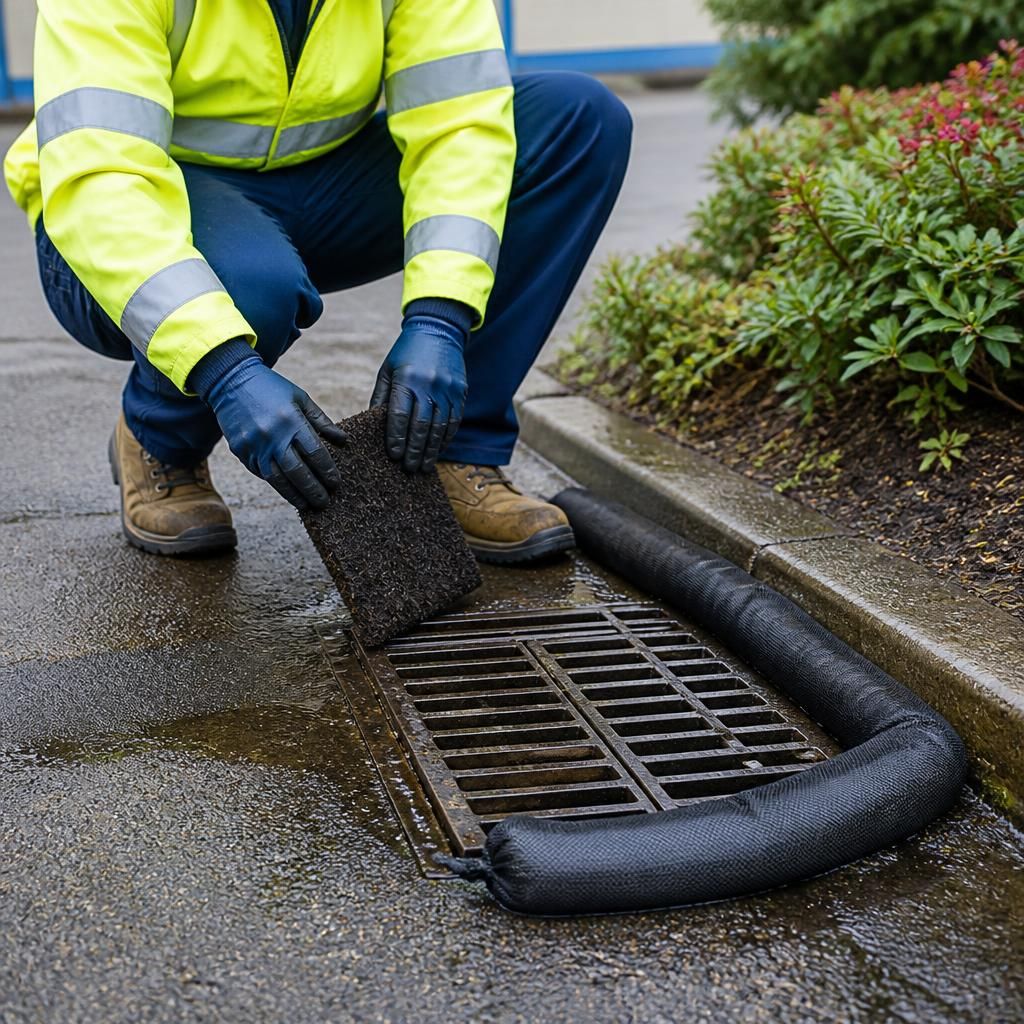
Protecting drainage is a central environmental consideration when applying biocides for moss and lichen removal. Surface-water drains can discharge directly to streams, rivers or other watercourses, so treatment product and contaminated run-off must not be allowed to enter them.
Before work begins, the treatment area should be surveyed for gullies, downpipes, open channels, ponds, planted areas and nearby watercourses. The application method may need to be adjusted, drains temporarily protected, and work postponed if rain or run-off cannot be controlled. Any spill or residue should be contained promptly and managed in line with the product label, safety data sheet and site procedures. These controls help prevent unnecessary harm to aquatic environments while allowing the treatment to be applied safely and selectively.