
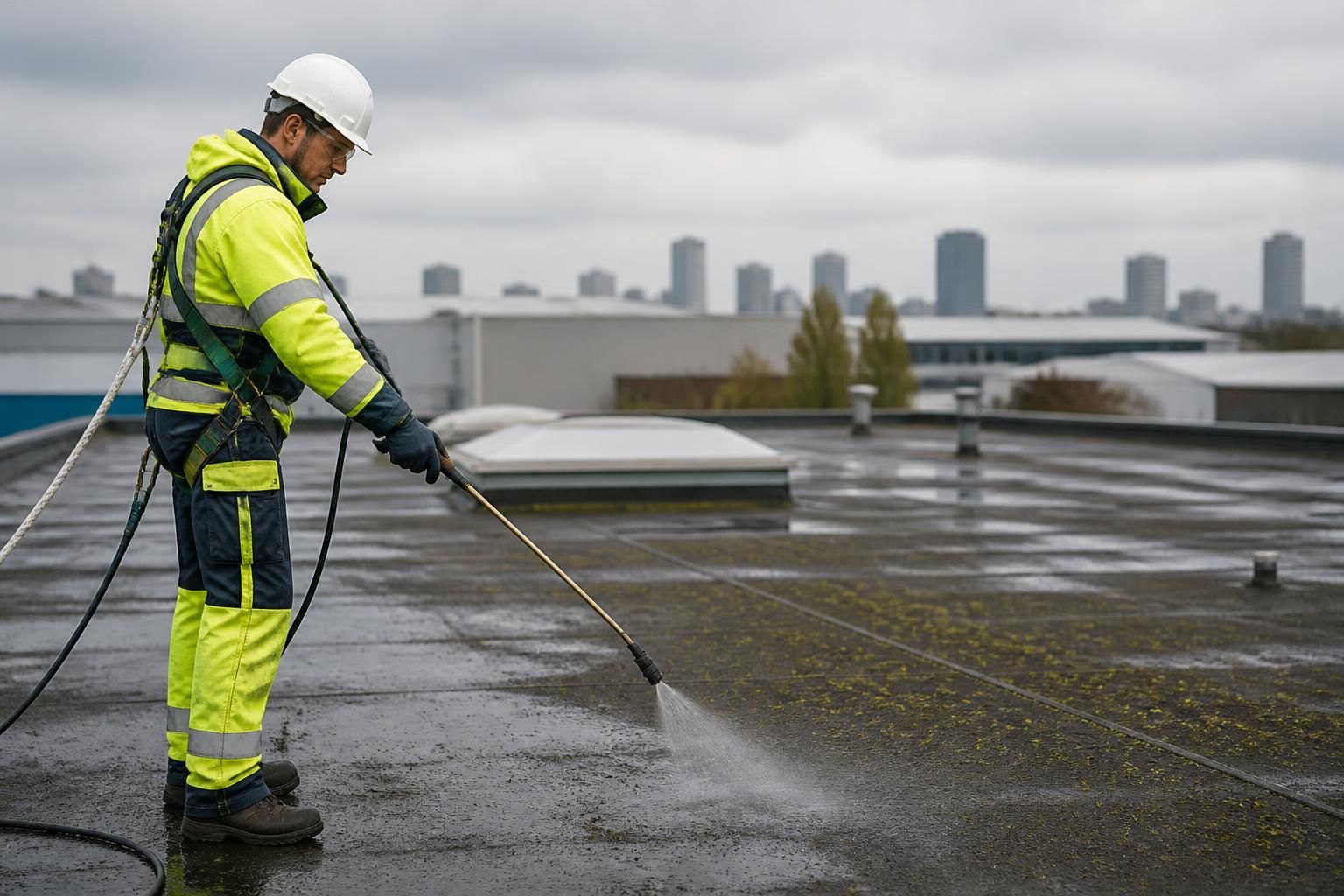
How often should moss and lichen biocide treatments be applied to maintain effective control?
Moss and lichen biocide treatments are usually applied as part of an annual maintenance programme, with the interval adjusted according to surface condition, shade, moisture, local climate and evidence of regrowth. Regular inspections are more reliable than a fixed schedule, allowing treatment before growth becomes established and reducing the need for intensive cleaning.
Moss and lichen biocide treatments are commonly included within an annual exterior maintenance programme, but the correct interval depends on the surface, local exposure and evidence of regrowth. A fixed timetable is less reliable than planned inspections: treatment should be repeated when growth begins to return and only in accordance with the product label, risk assessment and application requirements.
On commercial properties, the most practical approach is to inspect treated areas as part of routine roof, façade or external-surface maintenance. The inspection should assess whether moss or lichen is returning, whether spores and organic debris are accumulating, and whether damp conditions are allowing new growth to establish. Early treatment is generally more manageable than waiting until growth has formed a dense covering or penetrated joints and surface irregularities.
The main factors affecting treatment frequency include:
- Shade: North-facing elevations, areas beneath trees and permanently shaded roof sections usually remain damp for longer and may require closer monitoring.
- Moisture: Poor drainage, blocked gutters, leaking details, condensation and persistent surface dampness can encourage faster recolonisation.
- Surface type and condition: Porous masonry, aged roof coverings and textured cladding can retain moisture and organic matter. Smooth, well-maintained surfaces may remain clear for longer.
- Surrounding vegetation: Overhanging branches and nearby planting can deposit spores, debris and moisture onto roofs, façades and paved areas.
- Exposure and local climate: Rainfall, humidity, wind exposure and seasonal weather patterns affect how quickly treated areas become suitable for regrowth.
- Existing contamination: Heavy or established moss and lichen may need an initial removal or cleaning process before a biocide can provide effective ongoing control.
- Product requirements: Different formulations have different dilution rates, contact times, application conditions and reapplication instructions. The manufacturer’s instructions must take priority.
For many sites, an annual review and treatment when necessary provides a sensible baseline. Higher-risk areas should be inspected more frequently, particularly where regrowth could create a safety, drainage or appearance issue. A low-risk surface may not need treatment at every inspection if it remains clean and there is no evidence of active recolonisation. Applying biocide unnecessarily does not improve control and can increase chemical use, planning requirements and environmental risk.
Timing is also important. Treatments should be scheduled when the surface is suitable and the product can remain in contact with the growth for the required period. Applications are generally avoided during heavy rain, when runoff is likely, or when weather conditions will prevent the treatment from working as intended. Very hot, windy or freezing conditions may also affect application quality, depending on the product. The treatment plan should account for nearby drains, watercourses, planted areas, public access and the possibility of overspray or run-off.
Biocide treatment is not always a conventional instant-cleaning process. Some products gradually weaken or kill moss and lichen, after which dead material may weather away or be removed during a separate controlled cleaning operation. The treated surface should therefore be reviewed after the product’s specified reaction period rather than judged immediately after application. If substantial growth remains, the next step may be targeted removal followed by a further treatment, subject to the product instructions and the condition of the surface.
On roofs and other sensitive surfaces, unnecessary aggressive cleaning can cause damage, dislodge coverings or force contamination into drainage systems. A planned biocide-led maintenance approach can help reduce the need for repeated intensive cleaning, but it does not replace inspection of roof coverings, pointing, sealants, gutters or drainage details. Any underlying defect that keeps a surface wet should be corrected if possible; otherwise, regrowth is likely even when the biocide has been applied correctly.
For a commercial maintenance programme, records should be kept of the areas treated, product and dilution used, weather conditions, visible contamination, access arrangements and recommended review date. This creates a site-specific history and allows the frequency to be adjusted based on actual performance rather than assumption. It also supports compliance with the relevant risk assessment, COSHH controls, product label and environmental protection requirements.
In practical terms, the most effective cycle is to establish the condition of the surface, carry out an appropriate initial treatment, inspect for regrowth during scheduled maintenance and reapply only when there is a clear need and the product permits it. Encanto Exterior Cleaning can assess the exposure and surface condition across a commercial site and recommend a proportionate inspection and treatment programme rather than applying the same interval to every area.
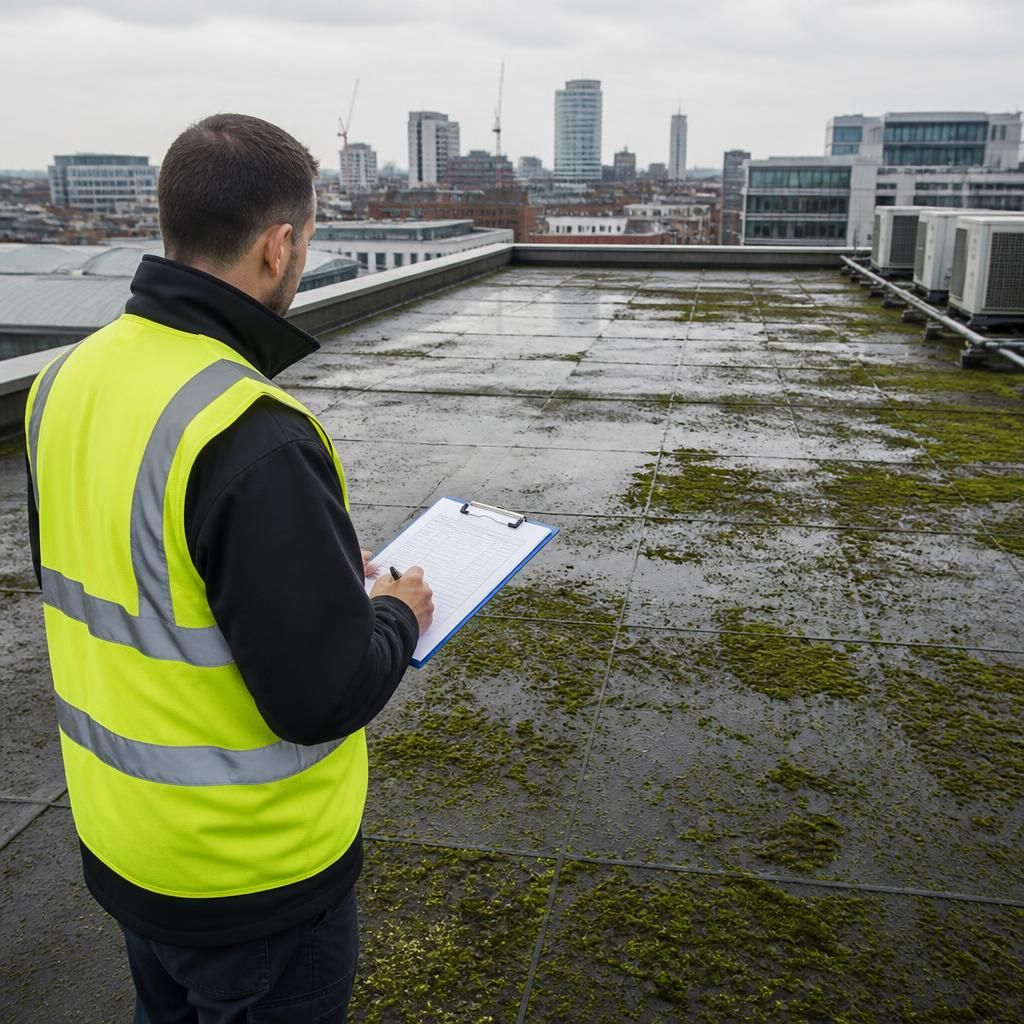
The interval between moss and lichen biocide treatments should be based on inspection findings rather than an automatic calendar date. Check treated roofs, façades and paved areas for returning growth, persistent dampness, organic debris and drainage problems. Shaded, porous or poorly drained surfaces generally need closer monitoring because they can support recolonisation more quickly.
For most commercial sites, an annual review is a sensible starting point, with treatment repeated only when regrowth is evident and the product label allows reapplication. Recording the treatment date, surface condition, weather and recommended review date helps establish a site-specific maintenance cycle. This avoids unnecessary chemical use while allowing active growth to be addressed before it becomes dense or difficult to remove.
Arrange a Moss and Lichen Treatment Assessment
Arrange a moss and lichen treatment assessment with Encanto Exterior Cleaning to review surface condition, regrowth risk and suitable treatment intervals across your site. We can help establish a practical inspection and maintenance programme based on the property’s exposure and drainage requirements.