
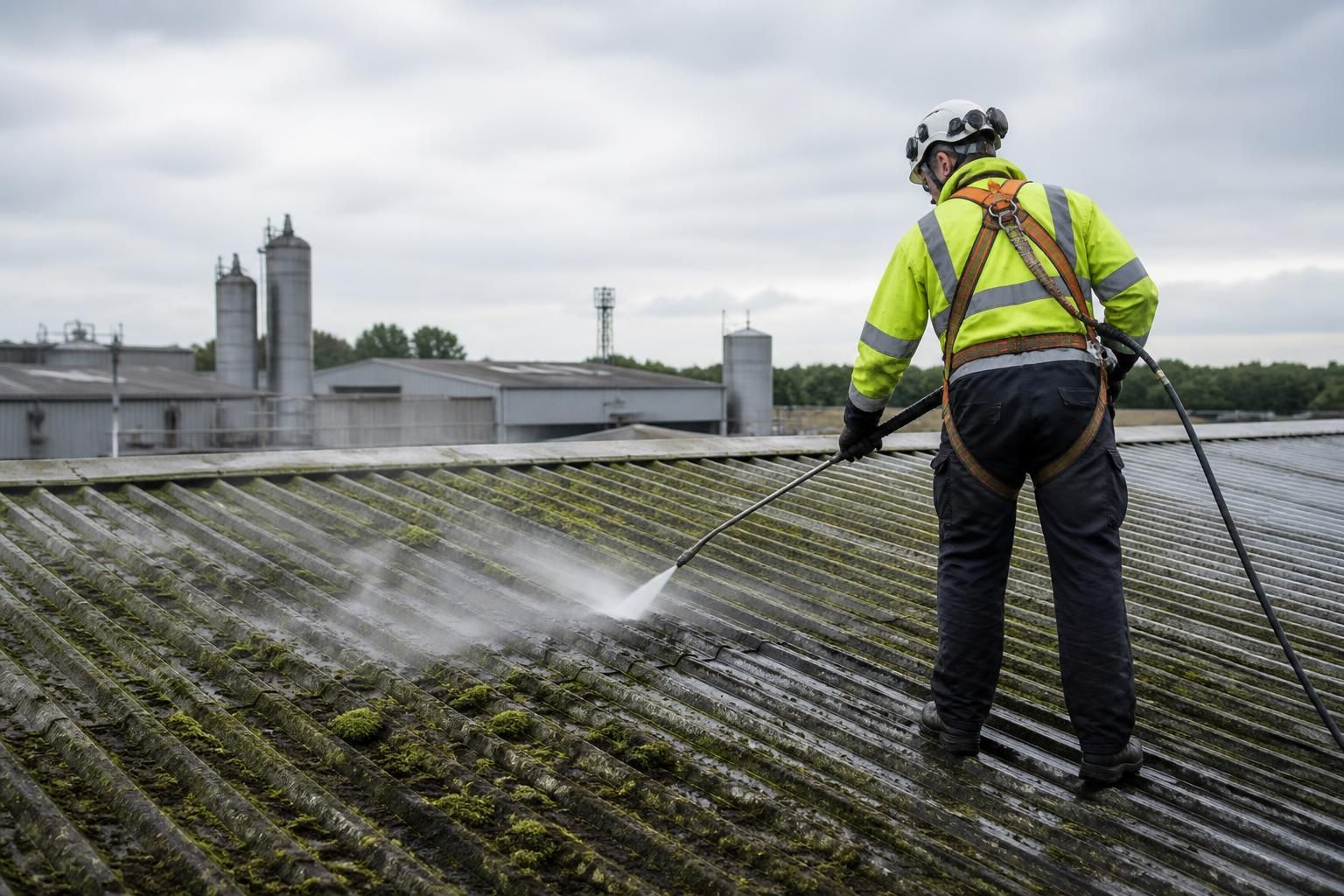
How long does it take for moss and lichen biocide treatments to show results?
Moss and lichen biocide treatments usually begin showing visible results within several days, although complete dieback and weathering can take a few weeks. The timescale depends on the product, growth density, surface condition and weather, with shaded, damp areas generally taking longer to dry and clear.
Moss and lichen biocide treatments usually begin to show visible effects within several days, but complete dieback and the natural weathering of dead growth can take several weeks. The exact timescale depends on the biocide used, the density and maturity of the moss or lichen, the condition of the surface and the weather after application.
A treatment does not normally remove all growth immediately. Biocide is applied to the affected surface and allowed to act on the moss or lichen. The growth may then darken, fade, dry out or become less firmly attached before it is removed by rainfall, brushing, low-pressure cleaning or a planned follow-up visit. Lichen can take longer than light moss coverage because it is tightly bonded to many surfaces and may have been established for a considerable period.
Initial signs that the treatment is working can include:
- loss of the moss or lichen’s normal green colour;
- drying, browning or greying of the growth;
- reduced spreading and new growth;
- growth becoming brittle or easier to remove; and
- gradual clearing as weathering and subsequent cleaning take place.
These changes should not be confused with instant surface restoration. Dark staining, organic residue and lichen marks can remain after the organisms have been controlled. On roofs, paving, façades and other exposed areas, rainfall and normal weathering may remove the dead material gradually. Where a cleaner finish is required, a separate, carefully selected cleaning stage may be recommended once the biocide has had sufficient contact time.
Weather is one of the main factors affecting treatment time. Dry conditions generally allow the product to remain on the surface and work as intended, provided the surface is not excessively hot or the product is not drying too quickly. Rain soon after application can dilute or wash away the treatment before it has had adequate contact time. Conversely, prolonged dampness, heavy shade, low temperatures and poor airflow can slow drying and delay visible improvement. Weather forecasts are therefore considered when planning commercial applications, but the product manufacturer’s instructions remain the controlling guidance.
The type and condition of the surface also influence the result. Porous masonry, rough concrete, textured cladding and aged roofing materials can retain organic matter in small recesses, making the area appear affected for longer. Smooth, sound surfaces may show a more rapid visual change. Heavy growth, layered moss, established lichen and areas beneath trees normally require more time, and may need mechanical removal or a repeat treatment as part of a wider maintenance plan.
Application method is equally important. The biocide must be applied at the correct concentration, coverage and contact time for the surface and target growth. Poor coverage, excessive dilution, unsuitable weather or premature rinsing can reduce its effectiveness. Encanto Exterior Cleaning assesses the material, growth type, access requirements and surrounding risks before selecting and applying a treatment. We follow the relevant product instructions rather than assuming that every biocide behaves in the same way.
Where a treated area appears unchanged immediately after application, this does not necessarily mean that the treatment has failed. Some products act internally before visible deterioration occurs, while the dead growth remains attached until it is weathered or removed. A follow-up assessment can distinguish between normal delayed weathering, remaining staining, areas that were not fully covered and growth that may require further work.
For planned commercial maintenance, the expected result should be agreed in advance. A biocide-only application may be intended to control active moss and lichen and reduce regrowth, whereas a combined treatment and cleaning programme may be specified where the objective is a visibly restored roof, façade, walkway or car park. The scope, surface type, access equipment, weather conditions and required finish all affect how quickly the completed result can be delivered.
Do not pressure wash or disturb a treated surface before the stated contact period has elapsed unless the treatment instructions specifically require it. Unplanned cleaning can reduce the time available for the biocide to work, spread contaminated run-off or damage a vulnerable surface. If results are slower than expected, or if active growth remains after the agreed weathering period, contact Encanto Exterior Cleaning for an inspection and appropriate next steps rather than applying another product independently.
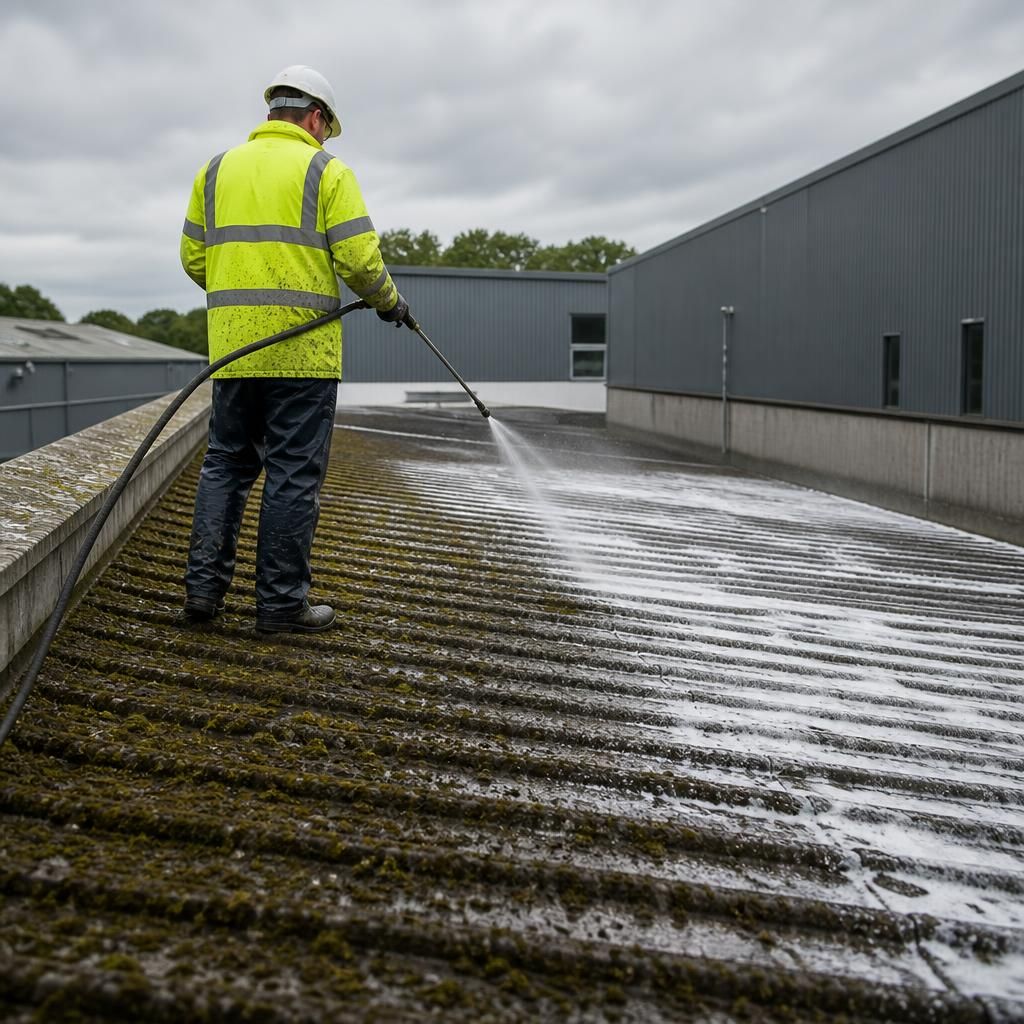
Moss and lichen biocide treatments do not usually produce an instant visual change. The product first needs sufficient contact time to affect the growth, after which it may darken, dry out or become brittle. Dead material can remain attached to porous roofing, masonry and textured surfaces until rainfall, natural weathering or a planned follow-up clean removes it.
Weather conditions are particularly important. Rain shortly after application can dilute or wash away the treatment, while shade, low temperatures and poor airflow can delay drying and make results appear slower. Avoid disturbing the treated surface before the specified contact period has elapsed, and allow the agreed weathering period before deciding whether further cleaning or treatment is needed.