
How do different types of biocides vary in their effectiveness and application methods for moss and lichen treatment?
Biocides for moss and lichen vary according to their active ingredients: slower-acting residual treatments can provide ongoing control, while oxidising formulations may work more quickly but require tighter control of application and runoff. They are typically applied as a low-pressure spray, with the required dwell time and follow-up rinsing or natural weathering determined by the product, surface condition, growth severity and manufacturer’s instructions.
Biocides for moss and lichen differ mainly in their active ingredients, speed of action, residual effect, surface compatibility and application requirements. Some formulations are designed to remain active on a surface and gradually control regrowth, while oxidising products can act more quickly but usually require stricter control of contact time, runoff and worker exposure. The correct choice depends on the organism present, the substrate, the level of growth and whether the surface can be safely rinsed.
Residual biocides are commonly selected for roofs, façades, paving and other porous exterior surfaces where gradual treatment and ongoing prevention are required. Many contain surface-active compounds that penetrate or remain within organic deposits after application. They may cause moss and lichen to die back over time rather than producing an immediate visual change. Weathering then loosens the dead growth, which can be removed through gentle brushing, low-pressure washing or natural rainfall, depending on the surface and the product instructions.
The main advantage of a residual treatment is that it can continue to suppress regrowth after the initial application. This is useful on textured tiles, masonry, cladding and areas where aggressive cleaning could damage coatings or force water beneath roof coverings. The limitation is that results are usually slower and depend on adequate coverage, suitable weather and sufficient contact time. Heavy deposits may also need mechanical removal before or after treatment, because a biocide is not necessarily a substitute for physical cleaning.
Oxidising formulations use reactive ingredients to break down organic matter more rapidly. They can be effective where moss, lichen, algae and staining need prompt treatment, but their performance is more dependent on accurate dilution, even coverage and controlled dwell time. Excessive strength or prolonged contact may affect sensitive coatings, metals, painted surfaces, sealants, vegetation and drainage systems. These products generally require careful management of runoff and may need rinsing in accordance with the product label.
Oxidising treatments are not automatically the best option for every heavily stained surface. A rapid colour change can indicate that organic material is being attacked, but it does not prove that all lichen structures or embedded contamination have been removed. Follow-up inspection and, where appropriate, a second controlled cleaning stage are important. Product compatibility should always be checked before applying an oxidising formulation to coated cladding, natural stone, render or roof materials.
Quaternary ammonium-based products and similar non-oxidising formulations are often used where a lower-pressure, more controlled treatment is preferred. They can provide useful residual activity and are suitable for many hard exterior surfaces when applied according to the label. Their action is usually less immediate than that of strong oxidising products, particularly where lichen has established a firm attachment or where the surface is heavily soiled. They are therefore often used as part of a planned treatment and maintenance process rather than as an instant stain remover.
Acidic or alkaline cleaning products may also be encountered in exterior cleaning, but their primary purpose is often stain, scale, oil or mortar removal rather than targeted moss and lichen control. Their effect on biological growth can be incidental, and they may present greater compatibility risks for masonry, concrete, metals, painted finishes and jointing materials. They should not be treated as interchangeable with a purpose-formulated biocide. The product label and technical data should confirm both the intended use and the surfaces on which it is authorised.
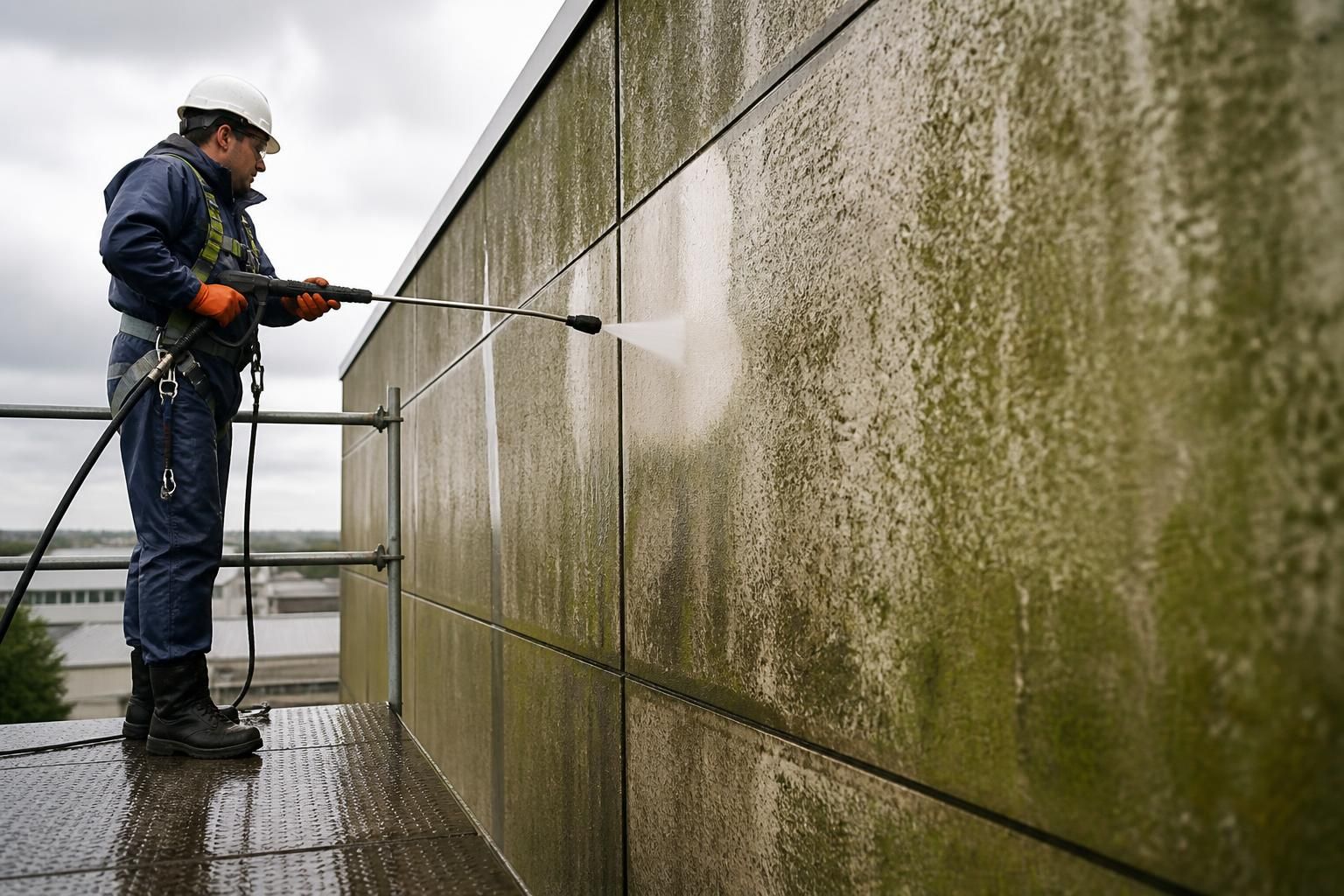
Application method affects effectiveness as much as the chemistry. For most commercial exterior work, biocides are applied using a controlled low-pressure spray to achieve complete, even wetting without driving water behind cladding, tiles, flashings or joints. Spraying from too far away can leave untreated patches, while excessive application can increase runoff without improving performance. On small or heavily affected areas, a brush or other approved method may help distribute the treatment into textured surfaces and lichen growth.
Before application, loose debris, leaves and excessive moss may need to be removed so that the biocide can reach the surface. Dense growth may be reduced mechanically, but vigorous scraping or high-pressure washing can damage fragile substrates and spread contaminated water. A treatment may instead be applied first to weaken the growth, followed by gentle removal once the product has had the specified dwell time.
The required dwell time varies considerably. Some products are intended to remain on the surface and weather naturally, whereas others require rinsing after a defined contact period. Rain soon after application can dilute or wash away the treatment before it has worked; hot, dry or windy conditions can cause premature drying and uneven results. Work should therefore be planned around the product instructions, substrate temperature, forecast conditions and the ability to control overspray and runoff.
Moss and lichen do not always respond in the same way. Moss is generally softer and may release more readily after treatment, while lichen can form a firmly attached crust and may need longer contact, repeat treatment or careful mechanical assistance. Algae and general organic staining may respond more quickly than mature lichen. The visible appearance immediately after application should not be used as the only measure of success; the treated surface should be inspected after the product has completed its action and the dead material has weathered or been removed.
Surface selection is essential. A treatment suitable for concrete or uncoated paving may not be suitable for leadwork, zinc, aluminium, painted cladding, glazed tiles, natural stone or delicate render. Porous materials can retain product and moisture, while non-porous finishes may allow runoff to spread rapidly. Test patches should be used where compatibility is uncertain, checking for colour change, etching, loss of sheen, corrosion, staining and damage to protective coatings.
On roofs, the application must also account for water ingress, fragile tiles, gutters, downpipes, rooflights and adjacent vegetation. On façades and cladding, the method should protect windows, seals, signage, entrances and pedestrian areas. Car parks and hardstandings require particular attention to drainage routes, oil separators and the containment or recovery of contaminated wash water. These site controls can determine whether a formulation is practical even when its laboratory performance appears suitable.
Professional selection should therefore consider:
- the type and maturity of the moss, lichen, algae or mixed organic growth;
- the porosity, age, condition and coating of the surface;
- whether the treatment can remain in contact with the surface for the required period;
- whether rinsing, recovery or controlled discharge is needed;
- the proximity of plants, watercourses, drainage systems, vehicles and occupied areas;
- the required speed of visual improvement and the acceptable level of mechanical cleaning; and
- the product label, safety data, approved uses and current UK regulatory requirements.
Higher concentration does not necessarily mean better treatment. Over-application can increase surface damage, environmental risk and clean-up requirements while leaving untreated areas if the spray pattern is poor. Correct dilution, thorough coverage and suitable contact time are normally more important than simply selecting the strongest available product.
Biocide treatments should be carried out under the relevant risk assessment and COSHH controls, using the required personal protective equipment and measures to prevent exposure, drift and uncontrolled runoff. Only products authorised for the intended use should be used, and the manufacturer’s instructions must take precedence over general practice. Where a surface, drainage arrangement or biological growth is unusual, a specialist assessment and test area provide a more reliable basis for selecting the formulation and application method.
In practical terms, a slower-acting residual product is often preferable where long-term control and minimal surface stress are the priorities. A carefully managed oxidising product may be appropriate where quicker breakdown of organic staining is required and the substrate and drainage controls permit its use. Neither category is universally superior: the most effective treatment is the one that matches the biology, surface, weather conditions, access arrangements and follow-up cleaning plan.
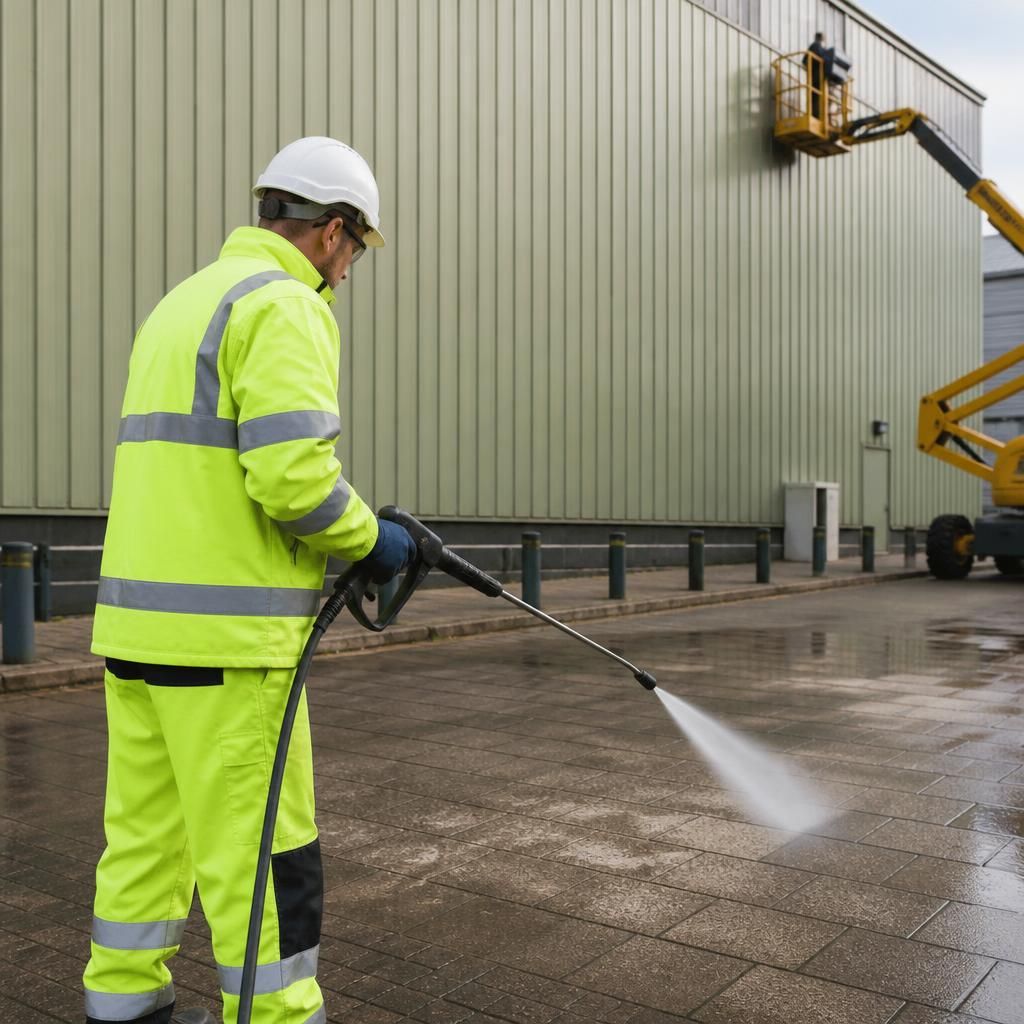
Biocide effectiveness depends on matching the formulation and application method to the growth and the surface. A residual, non-oxidising treatment is often suited to porous roofs, masonry and paving where gradual die-back and ongoing control are required. An oxidising formulation may produce a quicker visible change, but it demands more careful dilution, contact-time control and runoff management.
Application should normally provide even, low-pressure coverage without forcing water beneath tiles, cladding or joints. Dense moss may need light removal to expose the surface, while firmly attached lichen may require longer treatment, repeat application or gentle follow-up cleaning. The product label, a test patch and the condition of the substrate should determine whether the treatment is left to weather naturally or rinsed after the specified dwell time.