
Are moss and lichen biocide treatments environmentally friendly?
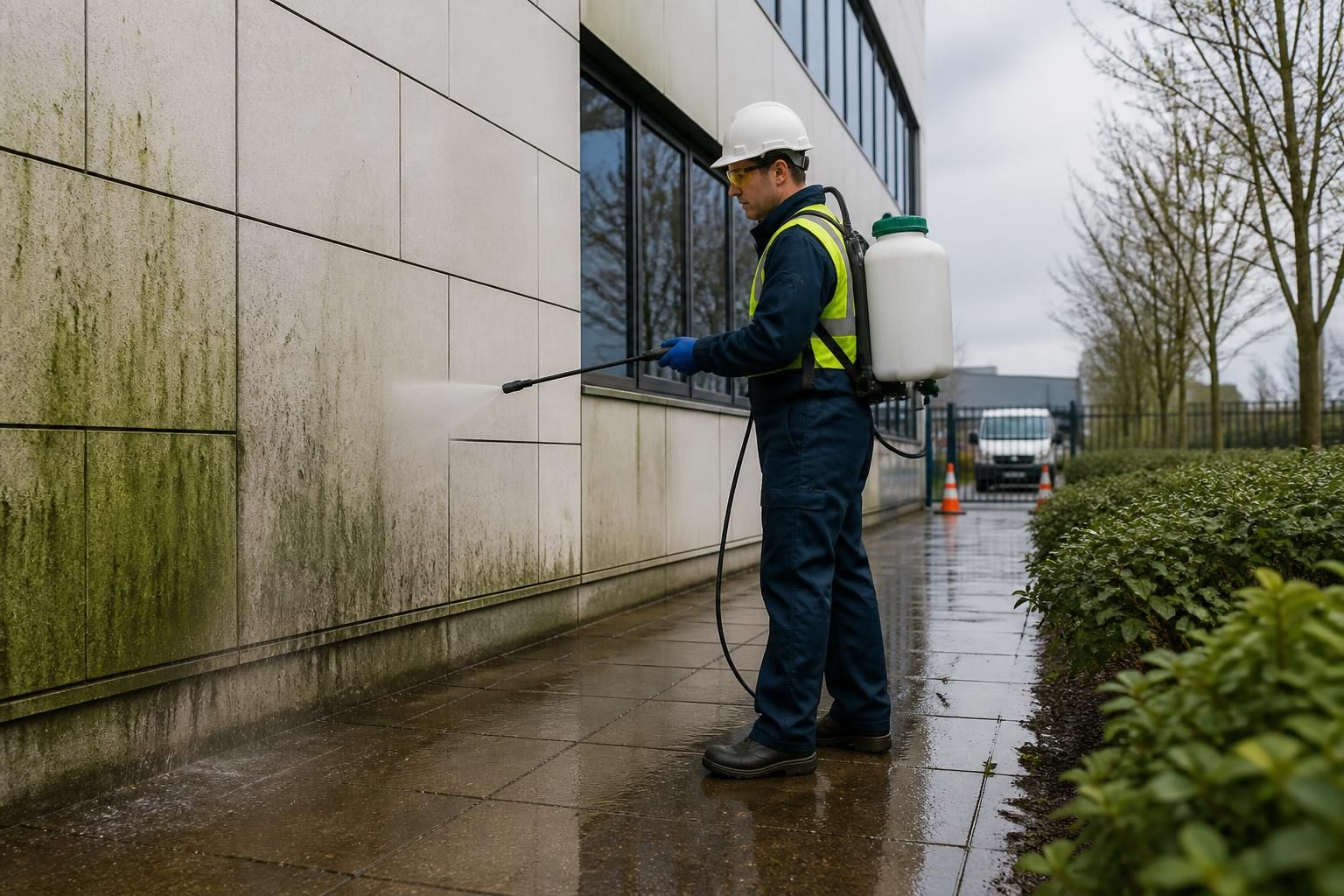
Moss and lichen biocide treatments can be environmentally responsible when the correct product is applied by trained professionals at the recommended concentration. Careful planning, targeted application and appropriate controls help limit chemical run-off and protect surrounding plants, soil, watercourses and wildlife while reducing regrowth on treated surfaces.
Moss and lichen biocide treatments can be environmentally responsible, but they are not automatically environmentally friendly. Their impact depends on the active ingredient, product approval, application rate, weather conditions, surface, surrounding environment and how run-off is controlled. A targeted treatment applied by trained professionals can reduce regrowth and the need for repeated intensive cleaning, while poor application can contaminate drains, soil and water.
Why biocide treatments can have environmental benefits
Moss and lichen hold moisture against roofs, façades, paving and other exterior surfaces. Over time, this can contribute to surface deterioration, blocked drainage, slippery paths and premature replacement of materials. Controlling the growth may extend the useful life of a surface and reduce the resources associated with frequent mechanical cleaning, repair or replacement.
A biocide treatment can also be less disruptive than aggressive pressure washing when used on vulnerable materials. Removing the biological growth and slowing its return may allow a lower-pressure cleaning method, reducing water consumption, surface erosion and the release of detached moss, lichen and dirt. These benefits only apply when the treatment is suitable for the surface and used as part of a controlled cleaning plan.
Why the product and application method matter
Biocides are designed to control living organisms, so some active substances can harm aquatic life, plants or soil organisms if they are misused. The environmental profile varies between products. We assess the product label, safety data, intended use and site conditions rather than treating all biocides as equivalent.
- Only products authorised for the relevant use should be selected, and label instructions must be followed.
- The recommended dilution and application rate should not be exceeded.
- Treatment should be confined to the affected surface, avoiding unnecessary overspray.
- Windy, rainy or freezing conditions may increase the risk of drift, run-off or ineffective treatment and should be considered before work begins.
- Surrounding plants, landscaped areas, watercourses, ponds, drains and sensitive building features should be identified during the site assessment.
More product does not mean better control. Excess application can increase environmental exposure without improving the result, whereas insufficient coverage may lead to repeat visits and additional chemical use. Professional preparation and accurate application help balance effective control with the lowest practical environmental burden.
Preventing contamination and run-off
Run-off is one of the main environmental concerns during exterior biocide work. On commercial premises, liquid can move from roofs, walls or hardstanding into surface-water drains, planted areas or neighbouring land. Before treatment, we consider drainage routes, fall, nearby water features, weather forecasts and the condition of the surface. Where appropriate, controls are used to prevent treated liquid entering sensitive areas.
Application should be planned so that the product remains on the intended surface for the required contact period. Operatives should avoid spraying directly towards drains, open water, vegetation or occupied areas, and should not carry out work when weather conditions are likely to wash the treatment away. Any collected residues, contaminated materials or waste water must be handled in line with the product instructions and applicable environmental requirements.
Protecting people, wildlife and surrounding areas
Environmental protection also includes protecting site users, staff, pets, birds, insects and nearby vegetation. The work area may need to be cordoned off, and access controls or warning notices may be appropriate until the treated surface is safe to use. Operatives should use the personal protective equipment and handling procedures specified by the product information and the site risk assessment.
Plants that could be affected by spray or splash should be protected or moved where practicable. This is particularly important around landscaped commercial sites, schools, healthcare premises, residential blocks and sites close to ponds or streams. Protection should be planned before application rather than relying on cleaning up unintended overspray afterwards.
Is biocide treatment better than pressure washing?
There is no single method that is environmentally preferable in every situation. Pressure washing can use substantial water and may dislodge contaminated material, damage fragile surfaces or send sediment towards drains. Biocide treatment can reduce mechanical cleaning and regrowth, but introduces a chemical risk that must be controlled. Steam cleaning, manual removal, low-pressure washing or a combined approach may be more suitable depending on the material, level of growth and drainage arrangements.
For this reason, we consider whether treatment is necessary and choose the least intensive effective method. A biocide should not be used simply because it is available, and it should not replace repairs to leaking gutters, defective pointing, poor drainage or persistent dampness. Correcting those underlying conditions can reduce the need for future chemical applications.
What responsible treatment involves
- Inspect the surface and identify the type and extent of moss or lichen growth.
- Check the material, surrounding vegetation, drainage routes, access requirements and nearby sensitive receptors.
- Select a suitable, authorised product and follow its label, safety data and application instructions.
- Plan the work around suitable weather and site conditions.
- Protect people, plants, drains and watercourses before application.
- Apply the correct amount only to the affected surface.
- Control run-off and manage residues and equipment washings responsibly.
- Review the result and recommend preventative maintenance where it can reduce repeat treatment.
In practical terms, a professional biocide treatment can be a lower-impact option when it extends surface life, limits abrasive cleaning and is carefully contained. It should never be described as harmless or risk-free. The most environmentally responsible approach is a site-specific decision based on product information, surface condition, weather, drainage and the sensitivity of the surrounding area.
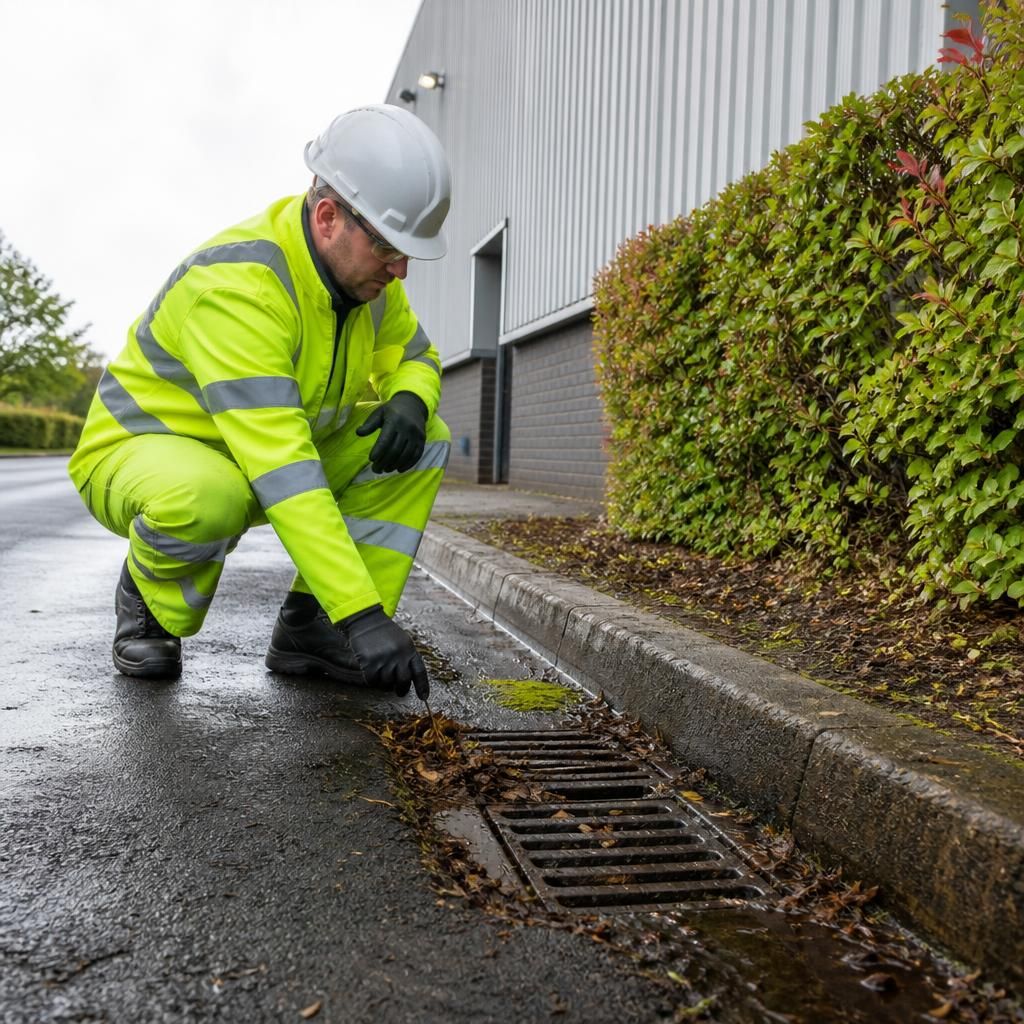
Moss and lichen biocide treatments are environmentally safer when chemical run-off is prevented from reaching drains, soil, plants and watercourses. Before application, the treatment area should be assessed for drainage routes, nearby vegetation, ponds and other sensitive areas.
Professional application keeps the product on the affected surface, uses the specified dilution and avoids unsuitable weather such as heavy rain or strong winds. Where necessary, access controls, drain protection and measures to shield surrounding plants are put in place before work starts.