
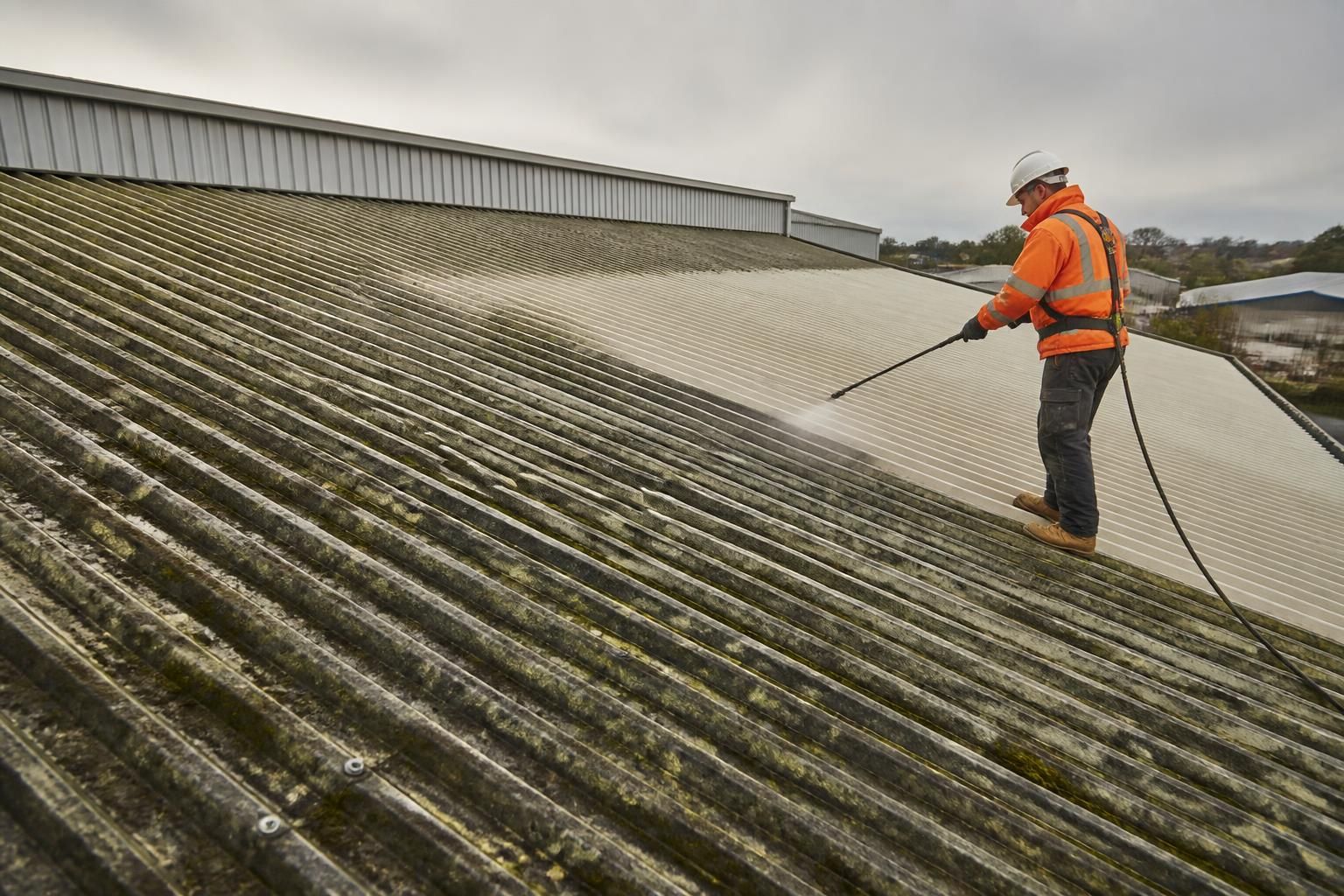
How long after applying a biocide treatment can results typically be observed on the roof?
Visible results from a roof biocide treatment are typically observed within several days, with moss, algae and lichen continuing to die back over the following weeks. The exact timescale depends on the growth present, weather conditions, roof material and product used; dead matter may remain in place until it is gradually removed by rainfall or a suitable follow-up clean.
Roof biocide treatments usually begin affecting moss, algae and lichen within several days, but visible improvement commonly develops over the following weeks. The precise timescale depends on the type and thickness of growth, the roof material, weather conditions, the product used and whether dead matter is removed afterwards. Biocide is not an instant cosmetic cleaner: it treats the biological growth first, while the remaining staining and debris may weather away gradually or require a carefully planned follow-up clean.
Algae and light surface growth may start to lose colour relatively quickly after treatment. Moss often becomes less vibrant, dries out and loosens over a longer period. Lichen can be more persistent because it attaches firmly to the surface and may need repeated treatment or gentle mechanical removal once the biocide has had sufficient contact time. A roof can therefore be biologically treated even when some visible growth remains immediately afterwards.
Weather has a significant influence on the result:
- Dry conditions after application generally allow the treatment to remain in contact with the growth and work as intended.
- Heavy rain soon after application can dilute or wash away the product before it has had adequate contact time. The product instructions and the application record should be checked to establish whether reapplication is appropriate.
- Moderate temperatures usually support a more predictable response than very cold conditions, when biological activity is reduced.
- Persistent dampness, heavy shade and slow drying can delay visible dieback, particularly on north-facing or sheltered roof areas.
The condition and construction of the roof also affect what can be seen. Porous tiles, aged concrete surfaces and heavily weathered areas may retain staining after the living growth has been treated. Slate, clay tiles, concrete tiles and coated metal roofing each require a suitable product and application method; a treatment should never be judged solely by how quickly the surface changes colour. The roof’s age, surface condition, drainage details and existing damage should be considered before any additional cleaning is arranged.
Where the treatment is intended as a standalone maintenance application, natural weathering may gradually remove dead material. This can take longer than the initial dieback, particularly where moss has formed thick mats or where debris is trapped around roof details, valleys, gutters and junctions. If a cleaner appearance is required sooner, a planned follow-up visit may be used to remove loosened material with a method suitable for the roof. Cleaning too soon can reduce the treatment’s effectiveness or disturb growth that has not yet died back.
Results should be assessed against the agreed treatment objective. For example, the aim may be to kill active moss and algae, reduce the risk of regrowth, improve the appearance of the roof or prepare the surface for a later clean. These outcomes do not necessarily occur at the same time. Initial biological activity can be evident within days, while a clearer visual result may only be apparent after rainfall, natural drying and the removal of dead residue.
After application, avoid disturbing the treated area unless the method statement or product instructions specifically allows it. Do not brush, pressure wash or apply another chemical without confirming that the roof, drainage system and surrounding surfaces can safely tolerate the proposed work. Run-off controls are also important, as treatment residues and dislodged organic matter must be managed to protect gutters, walls, planting, watercourses and occupied areas.
If there is little or no change after the expected treatment period, the cause should be investigated rather than assuming that a stronger application is required. Possible reasons include rain during the contact period, unsuitable weather, incorrect dilution, incomplete coverage, unusually dense lichen, contamination that is not biological growth or regrowth from untreated areas. The product label, site conditions and application records should be reviewed by a competent contractor before any further treatment is considered.
In practical terms, expect the treatment to start working within several days, allow the roof several weeks for the visible result to develop, and recognise that thick or firmly attached growth may require a separate follow-up clean. A professional assessment can confirm when the roof is ready for that next stage and help prevent unnecessary repeat applications or damage to the roofing materials.
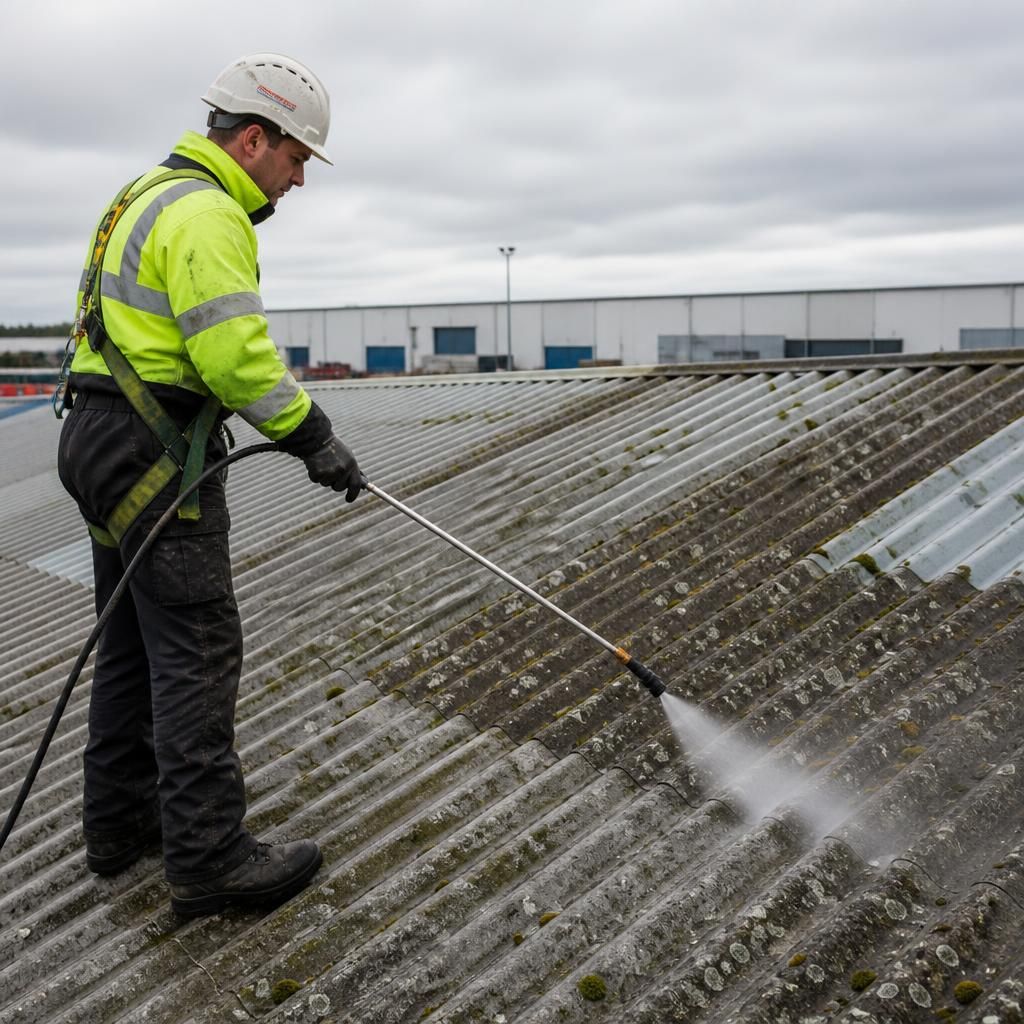
Roof biocide treatments usually begin affecting moss, algae and lichen within several days, although visible improvement may take several weeks. Dry conditions and moderate temperatures generally help the treatment remain in contact with the growth, while heavy rain soon after application can reduce its effectiveness.
Dead moss and lichen may remain attached after treatment and gradually loosen through weathering. Where a cleaner appearance is needed, a suitable follow-up clean should only be arranged once the treatment has had sufficient contact time and the roof is assessed as ready.