
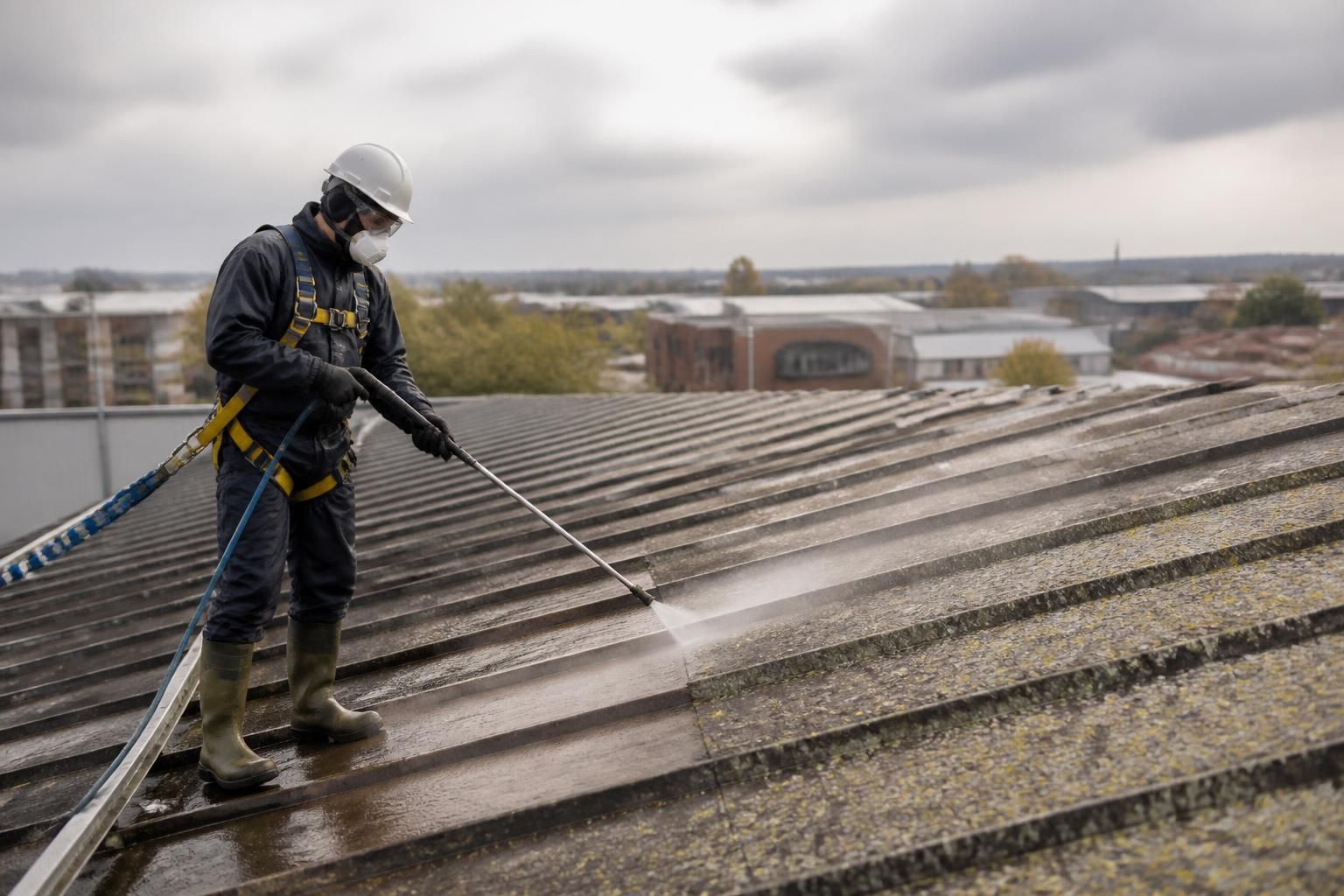
How do I safely apply a biocide treatment to avoid damage to the roof and surrounding environment?
Apply a roof biocide only after checking the product label, confirming compatibility with the roof material and controlling overspray, runoff and weather conditions. Protect gutters, plants, watercourses and surrounding surfaces, use the required PPE, and follow the specified dilution, application and rinsing instructions to prevent damage to the roof and nearby environment.
Apply a roof biocide only when the product is authorised for the intended use, suitable for the roof material and used exactly as stated on its label. Safe application depends on more than spraying the roof. The work must control contact with people, plants, gutters, drainage systems, watercourses and nearby surfaces, while also preventing excessive wetting, runoff and chemical incompatibility.
Before starting, identify the roof covering and assess its condition. Slate, clay and concrete tiles, metal cladding, coated surfaces, membranes and roofing felt can react differently to cleaning chemicals. A treatment suitable for one material may stain, corrode, soften or degrade another. Check the product label, safety data sheet and manufacturer’s technical guidance for material compatibility, required dilution, contact time, application method, rinsing instructions and restrictions on use. If the information is unclear, do not apply the product until its suitability has been confirmed.
Inspect the roof for cracked tiles, failed pointing, open laps, exposed membranes, damaged coatings, blocked gutters and fragile areas. A biocide will not repair defects, and liquid entering through damaged sections can cause internal damp or damage insulation and finishes. Record vulnerable areas and arrange repairs where necessary before treatment. A roof that cannot be safely accessed or that is structurally unsound should be assessed by a competent roofing or access professional before cleaning begins.
Prepare a site-specific risk assessment and method statement. This should consider work at height, fragile roof surfaces, access equipment, chemical exposure, weather, electrical services, public access and drainage. Anyone handling or supervising the treatment should understand the product instructions and the control measures. Where the product or task creates a hazardous-substance risk, follow the relevant Control of Substances Hazardous to Health requirements and retain the product safety information on site.
Keep people, pets and unprotected workers away from the work area. Establish an exclusion zone below the roof and prevent access to areas where spray, drips or contaminated water could land. Protect or temporarily remove items such as outdoor furniture, vehicles, signage, air-conditioning intakes and equipment. Notify occupants and neighbouring parties where overspray or access arrangements could affect them.
Use appropriate personal protective equipment. The product label and safety data sheet determine the required protection, which may include chemical-resistant gloves, suitable eye or face protection, protective clothing and footwear. Respiratory protection may be necessary for certain products or application conditions, but it must be correctly selected, fitted and maintained. PPE is a final control, not a substitute for preventing spray drift and avoiding unnecessary exposure. Do not eat, drink or smoke while handling the treatment, and wash exposed skin and equipment as instructed after the work.
Protect the surrounding environment before mixing or applying the product:
- Identify surface-water drains, soakaways, water butts, ponds, streams and other watercourses near the building.
- Prevent treatment and contaminated rinse water from entering drains or watercourses unless the disposal route is specifically permitted and controlled.
- Cover or isolate downpipes and use suitable collection or containment measures where the product instructions permit this.
- Shield plants, lawns, soil, planted areas and trees from spray, drips and runoff. Some vegetation can be damaged by very small amounts of treatment.
- Close windows, doors and ventilation intakes during application and until the product’s stated re-entry precautions have been met.
- Protect painted walls, glazing, natural stone, metalwork and other surfaces that are not approved for contact with the product.
Do not mix chemicals in an attempt to make the treatment stronger or faster. Combining a biocide with detergent, acid, bleach, solvent or another treatment can create hazardous reactions or damage the roof. Use clean equipment that has not retained residues from incompatible products. Measure the product accurately, use the specified water quality where relevant, and prepare only the quantity required for the planned work. Keep containers labelled, closed and secure, and never decant a product into an unmarked container.
Weather conditions are central to safe application. Avoid windy conditions that can carry spray onto plants, windows, vehicles or neighbouring property. Do not apply when rain is likely to wash the treatment into drainage systems before the required contact period has elapsed, unless the product instructions specifically allow it. Excessive heat and direct sun can cause rapid drying, uneven results or surface marking. Frost, very cold conditions and wet or icy roof surfaces also increase slip and access risks. Follow the product’s stated temperature, rainfall and drying restrictions rather than relying on a general rule.
Apply the treatment evenly using the equipment and pressure specified by the product manufacturer. A controlled low-pressure application is often preferable to generating a fine mist, because it reduces drift and limits the amount of liquid reaching adjacent surfaces. Do not over-apply to compensate for heavy moss or lichen growth. Excess product does not necessarily improve the result and increases the risk of runoff, staining and environmental contamination. Work in manageable sections and continually check gutters, edges, valleys and lower roof areas for pooling or uncontrolled flow.
Respect the specified dwell or contact time. Do not allow the treatment to dry on surfaces where the instructions require rinsing, and do not rinse prematurely if this would reduce its effectiveness. Some biocides are intended to remain on the roof and weather gradually, while others require controlled rinsing or removal of loosened growth. The label determines the correct approach. Avoid aggressive brushing or pressure washing on fragile coverings, and use a separate cleaning method only when it is compatible with both the roof and the treatment.
Runoff must be controlled throughout the process, not just at the end. Collect, contain or divert contaminated liquid in accordance with the product instructions and the site’s waste arrangements. Never discharge chemical residues into a surface-water drain, watercourse, garden or soil. Do not assume that dilution makes a discharge acceptable. If a spill occurs, stop the source if it is safe to do so, keep people away, prevent entry to drains and follow the product’s spill-response guidance. Significant releases should be reported through the appropriate environmental or emergency channels.
After application, inspect the roof edges, walls, gutters, downpipes, paved areas and planted areas for drips or overspray. Remove protective coverings carefully so that trapped liquid does not run onto vegetation or finished surfaces. Clean equipment in a controlled location and manage washings as chemical waste where required. Store or dispose of unused product and empty containers exactly as directed by the label and local waste requirements; do not burn, bury or place chemical residues in general waste unless the instructions expressly permit it.
Keep a record of the product used, batch or identifying information where available, roof material, application conditions, dilution, areas treated, weather, precautions and any incidents. This provides a useful maintenance history and helps avoid incompatible repeat treatments. Reinspect the roof after the treatment has had time to act, rather than repeatedly applying more product before the stated results period has passed.
Professional application is particularly appropriate on large commercial roofs, fragile coverings, steep or difficult-to-access areas and sites near sensitive drainage or planting. A competent contractor should be able to explain the chosen product, environmental controls, access arrangements, runoff plan and post-treatment procedure before work starts. If the roof material, product compatibility, weather conditions or disposal arrangements cannot be confirmed, postpone the treatment and obtain specialist advice rather than taking a risk.
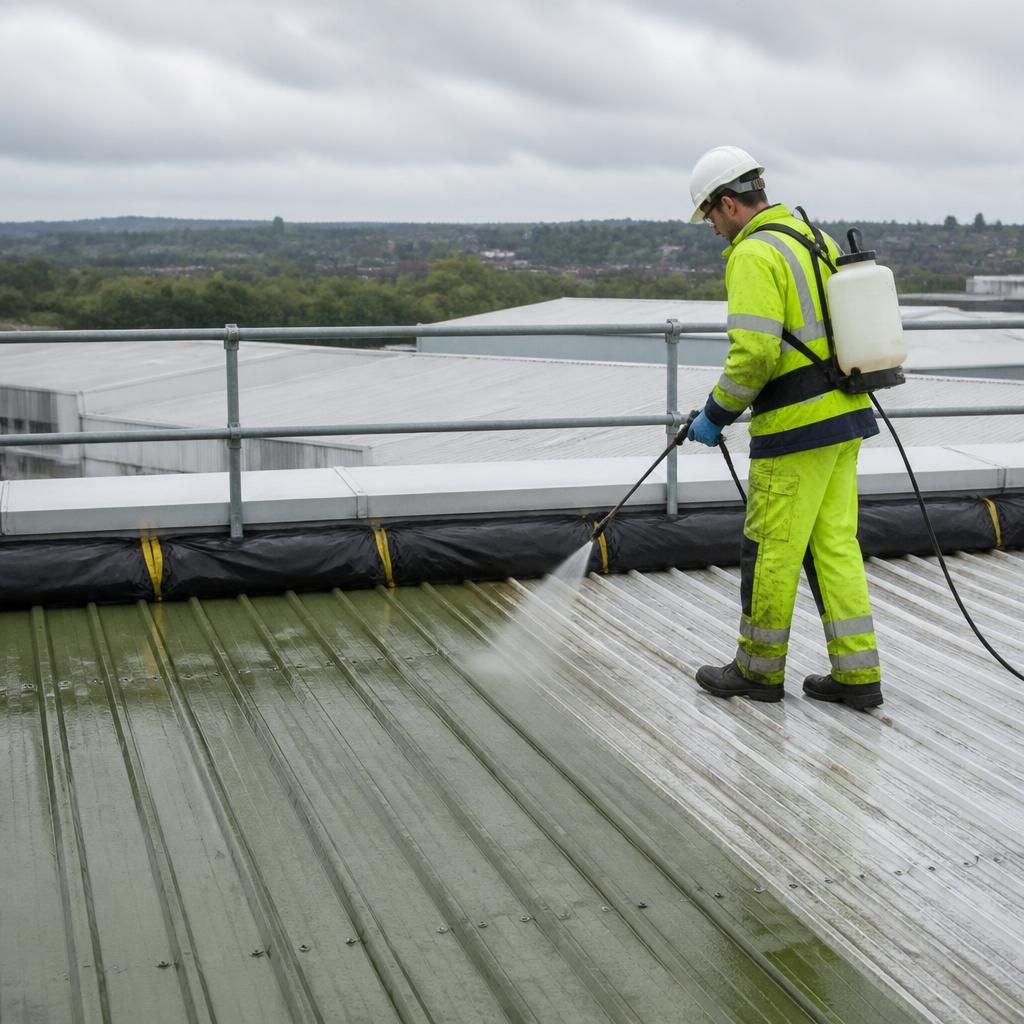
Controlling runoff is essential when applying a roof biocide. Treatment, overspray and contaminated rinse water must be kept away from gutters, surface-water drains, ponds, soil, plants and neighbouring property, as even small amounts can cause environmental harm or surface damage.
Before work begins, identify drainage routes and protect vulnerable areas. Use controlled, low-pressure application in suitable weather, prevent pooling at roof edges, and follow the product instructions for collecting or disposing of washings. Never assume that dilution makes chemical discharge safe, and do not rinse equipment where residues can enter a drain or watercourse.
Arrange a Safe Biocide Roof Treatment Assessment
Arrange a safe biocide roof treatment assessment with Encanto Exterior Cleaning to confirm roof compatibility, access requirements, weather conditions and runoff controls before work begins. Our team can recommend a suitable application method for your commercial or industrial premises.