
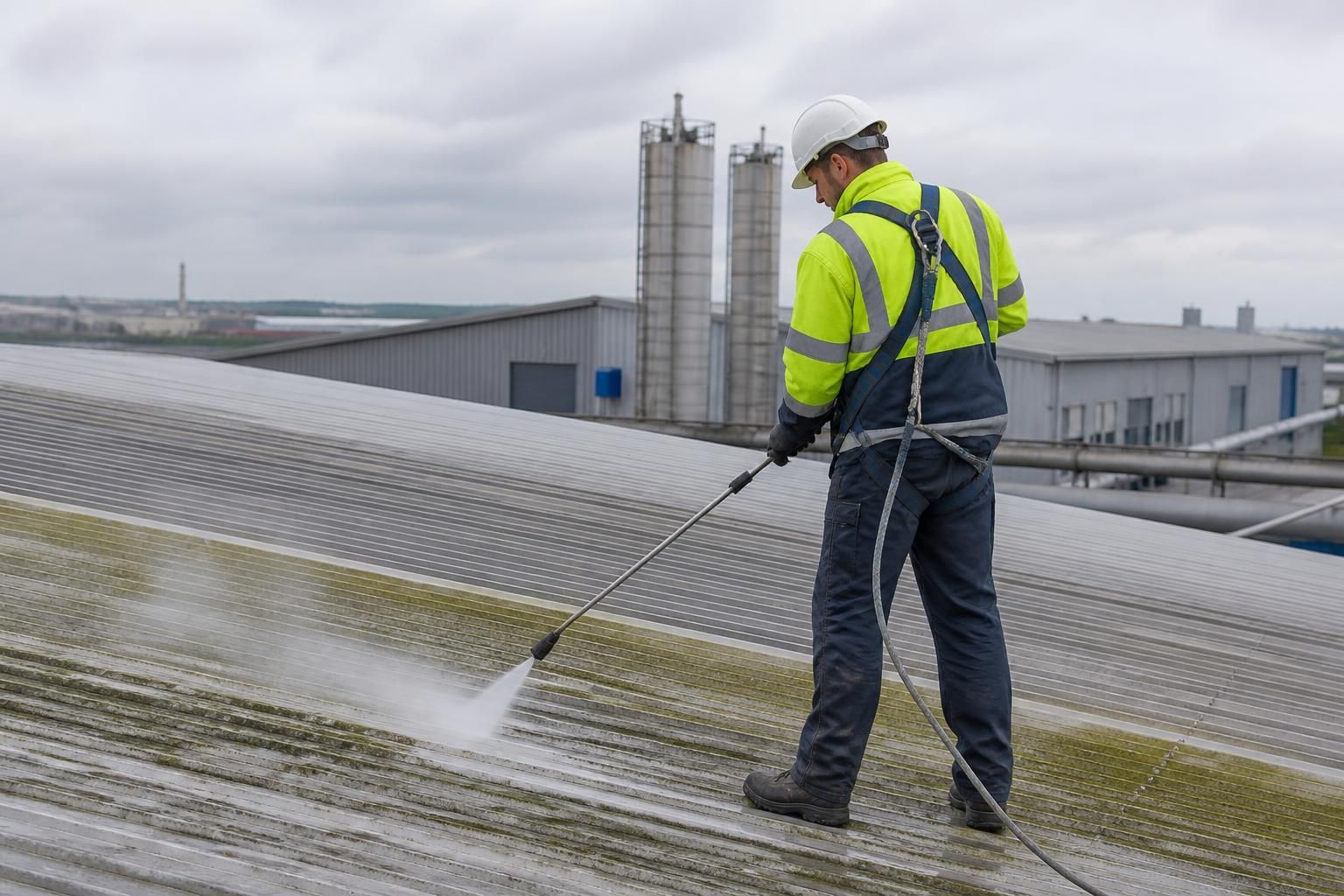
Can biocide treatments be used in combination with other roof cleaning methods?
Yes. Biocide treatments can be used alongside methods such as soft washing, low-pressure cleaning or steam cleaning, typically after physical cleaning to control remaining moss, algae and lichen and help reduce regrowth; the correct sequence depends on the roof material, contamination and product instructions.
Yes, biocide treatments can be used in combination with other roof cleaning methods. They are commonly applied as part of a planned cleaning system rather than as a replacement for physical cleaning. In most cases, moss, lichen, algae, dirt and loose growth are removed first, followed by a suitable biocide treatment to address remaining organic contamination and help limit regrowth. The correct combination depends on the roof material, the condition of the surface, the type of contamination and the product manufacturer’s instructions.
Physical cleaning and biocide treatment serve different purposes. Scraping or brushing removes established moss and lichen, while soft washing, low-pressure cleaning or steam cleaning can remove surface deposits without relying on high-pressure water. A biocide is then used to treat microscopic residues and organic growth that may remain in pores, joints and overlapping roof materials. It is not intended to compensate for inadequate preparation or to remove heavy deposits on its own.
A typical commercial roof-cleaning process may include:
- Inspecting the roof, drainage points, access arrangements and surrounding surfaces.
- Identifying the roof covering and checking for damaged, loose or degraded materials.
- Removing heavy moss, lichen, leaves and other loose contamination using a method suitable for the roof.
- Cleaning remaining surface deposits with a controlled soft-wash, low-pressure or steam-cleaning system where appropriate.
- Applying the selected biocide evenly at the manufacturer’s specified concentration and coverage rate.
- Allowing the treatment to work for the required period, without rinsing it off prematurely unless the product instructions require this.
- Monitoring the roof and removing dead growth safely when appropriate, particularly where decomposing material could obstruct gutters or outlets.
Soft washing is often compatible with biocide treatment because it combines low mechanical impact with a chemical treatment designed for organic growth. However, the cleaning solution and the biocide must not be mixed unless the product instructions specifically permit this. Applying products separately is usually easier to control and reduces the risk of an unsuitable chemical reaction, reduced effectiveness or unintended damage to the roof and adjacent materials.
Low-pressure cleaning can also be followed by biocide application. Pressure must remain controlled, particularly on older tiles, slate, coated metal, membranes, pointing and vulnerable roof details. Excessive pressure can force water beneath coverings, remove protective finishes, damage seals or loosen already weakened materials. A biocide should be selected only after confirming that it is suitable for the specific roof covering and any associated coatings.
Steam cleaning may be appropriate where the roof material and access arrangements allow it. Steam can help remove organic deposits with limited water use and without the impact associated with aggressive pressure washing. Heat and moisture still need to be managed carefully around flashings, sealants, rooflights, membranes, coatings and other heat-sensitive components. A post-cleaning biocide treatment may be considered where it is compatible with the surface and required to manage residual contamination.
Some roofs should not receive the same treatment sequence. Natural slate, for example, may be damaged by inappropriate scraping, concentrated pressure or unsuitable chemicals. Coated metal roofs, flat-roof membranes and painted surfaces can also react adversely to particular cleaning agents. Where the roof is fragile, heavily weathered or already showing defects, cleaning may need to be limited to gentle removal of loose contamination, with repairs or further assessment completed before treatment.
Application conditions are important. The roof should normally be dry enough for the product to adhere, and the weather should allow the treatment to remain on the surface for the required contact time. Rain shortly after application can dilute or wash away the product, while strong wind can cause drift onto vehicles, glazing, planted areas or neighbouring property. The treatment plan should also account for drainage routes and collection or diversion of contaminated run-off.
Biocide treatments should be handled in accordance with the product label, safety data sheet and applicable UK requirements. This includes using appropriate personal protective equipment, controlling access below the work area, protecting sensitive surfaces and vegetation, and preventing unintended discharge to watercourses or drainage systems. Commercial sites may also require a documented method statement, risk assessment and COSHH assessment before work begins.
The most effective combination is therefore not necessarily the most intensive one. A sound approach uses the least aggressive cleaning method capable of removing the existing contamination, followed by a compatible treatment where it provides a genuine maintenance benefit. The roof’s condition, material, access limitations, environmental controls and the expected maintenance cycle should all be considered before work starts. Where these factors are assessed correctly, combining cleaning with biocide treatment can provide a more complete and controlled roof-maintenance result than either method used in isolation.
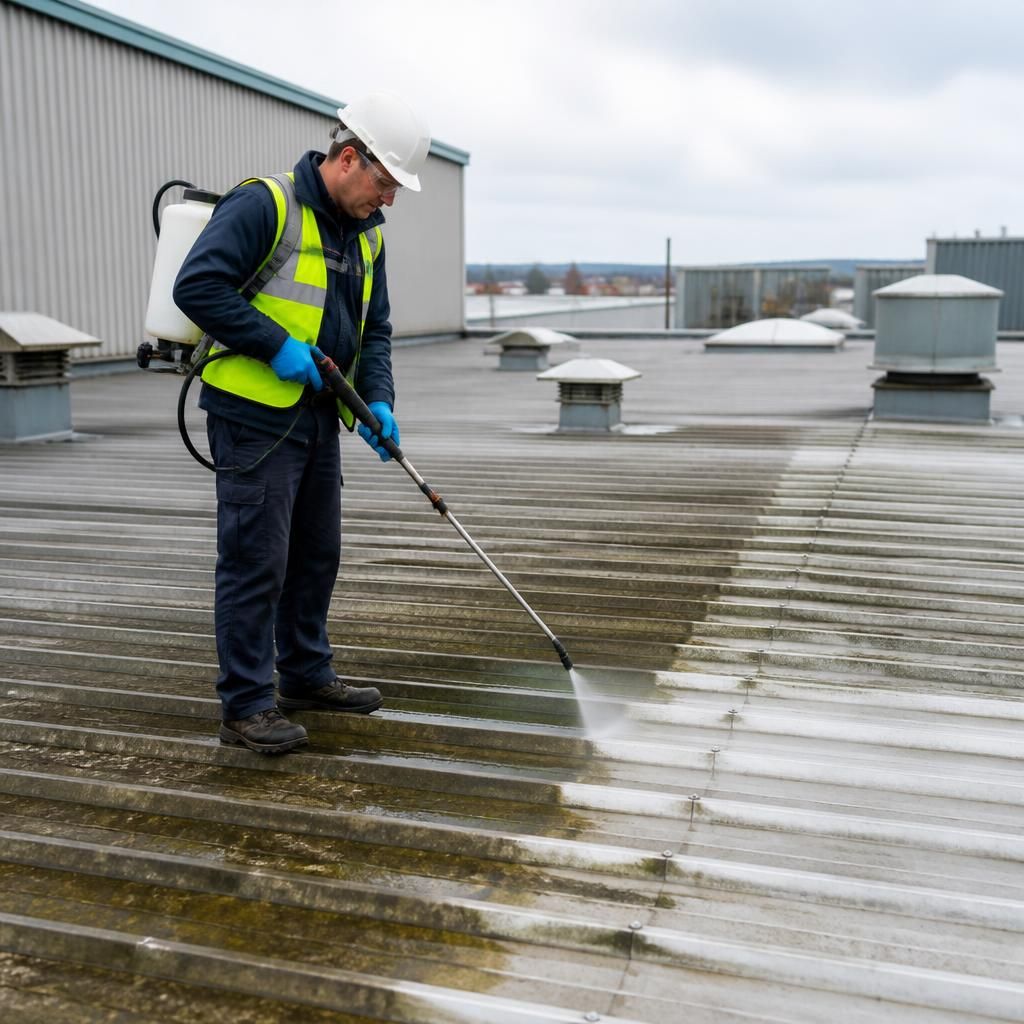
Biocide treatments are usually applied after physical roof cleaning, rather than mixed with the cleaning method. Removing moss, lichen, algae and loose deposits first allows the treatment to reach residual organic growth in joints, pores and overlapping materials, where it can help limit regrowth.
The cleaning method must suit the roof covering. Soft washing, controlled low-pressure cleaning or steam cleaning may be followed by a compatible biocide, but separate products should not be mixed unless the manufacturer expressly permits it. This helps prevent chemical reactions, reduced performance and damage to roofing materials, coatings or surrounding surfaces.