
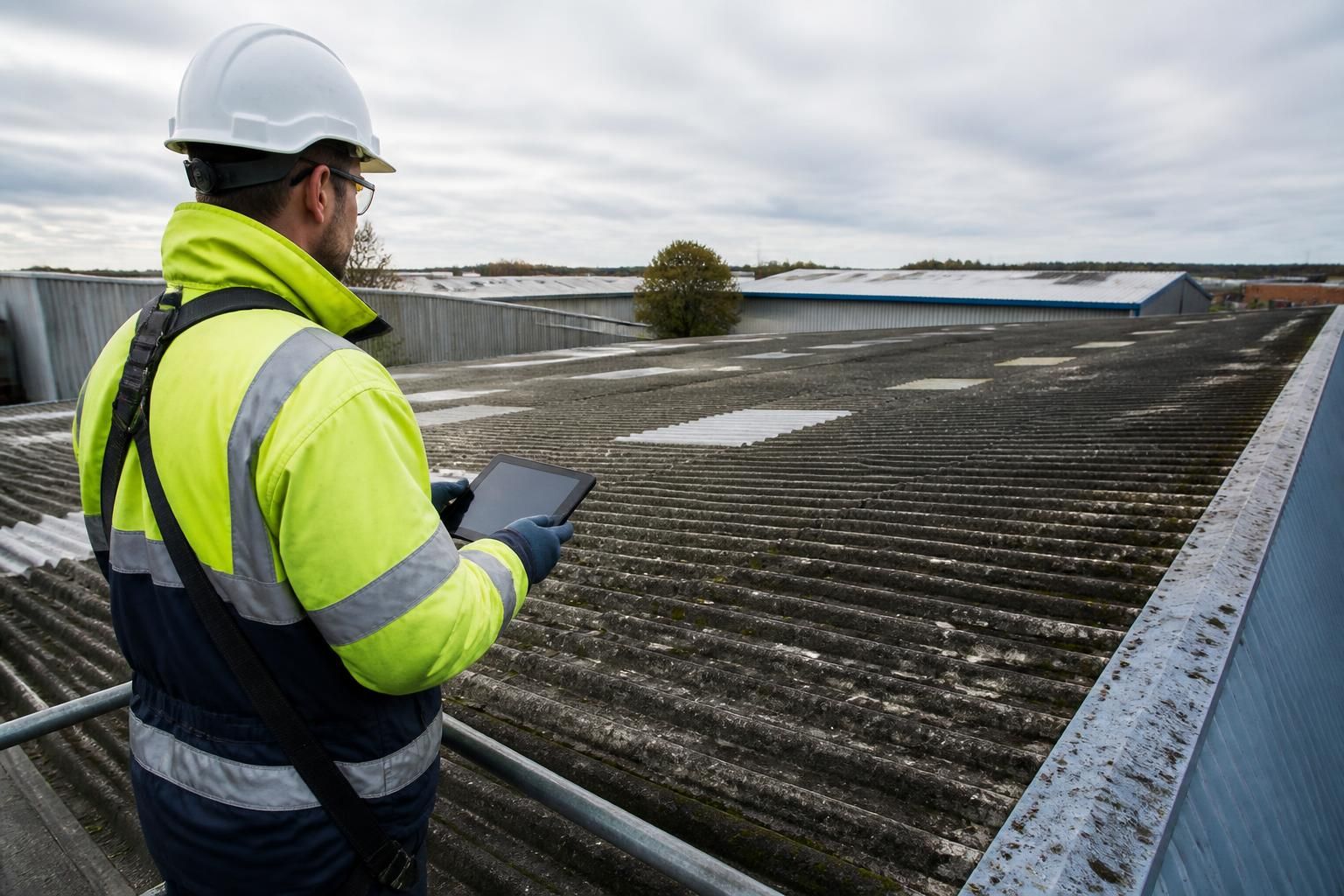
What factors should I consider when selecting a biocide roof treatment provider?
When selecting a biocide roof treatment provider, consider their experience with your roof type, understanding of appropriate biocides, application methods, health and safety procedures, environmental controls and insurance. A reliable provider should also give a clear written quotation explaining preparation, access, treatment, expected results, maintenance recommendations and any limitations.
The right biocide roof treatment provider should be able to demonstrate relevant experience, use a product and application method suited to the roof, and manage safety, access and environmental risks properly. Before appointing a contractor, assess their technical competence, written proposal, insurance, preparation methods, expected outcomes and aftercare arrangements rather than comparing price alone.
Experience with the roof type and site conditions
Roof materials respond differently to cleaning and biocidal treatment. A provider should understand the characteristics and limitations of the relevant surface, whether it is concrete or clay tile, slate, metal cladding, fibre cement, coated sheeting or another material. They should also consider the roof’s age, condition, previous coatings, areas of failed pointing, damaged tiles, blocked drainage and any existing leaks.
Experience with comparable commercial or industrial sites is particularly important where the roof is large, difficult to access or close to occupied buildings, vehicles, public areas and sensitive equipment. Ask whether the contractor will carry out a site survey before recommending treatment. A competent survey should identify fragile areas, rooflights, fall hazards, access restrictions, drainage routes and any repairs that may be needed before cleaning.
Knowledge of biocidal products and suitability
The provider should be able to explain what the treatment is intended to control, such as algae, moss, lichen or other organic growth, and why the selected product is appropriate for the surface. Products must be used in accordance with their label, safety data sheet and relevant UK requirements. The contractor should not make unsupported claims that a treatment will remove every stain immediately or prevent regrowth indefinitely.
Ask how the product will be mixed, applied and controlled on site. The answer should cover contact time, weather conditions, dilution where applicable and how run-off will be managed. A reputable provider will also explain any limitations, including staining that may fade gradually, organic growth that may require time to break down and areas where treatment cannot safely be applied.
Application method and preparation
Application should be selected according to the roof material, contamination, access arrangements and risk of overspray. Low-pressure application is often preferred where high pressure could drive water beneath tiles, remove surface finishes or damage vulnerable areas, but the correct method depends on the individual roof.
Clarify whether the quotation includes preparation such as removing loose moss, protecting adjacent surfaces, clearing or covering drainage outlets and collecting debris. Treatment alone may not be appropriate where heavy growth is obstructing gutters or creating a slip hazard. The contractor should distinguish between biocidal treatment, soft washing, pressure washing, steam cleaning and manual removal, explaining which elements are necessary and why.
Health, safety and access controls
Roof work requires a suitable plan for working at height, access, rescue arrangements and protection of people below. Check that the provider can explain how operatives will reach the roof and work safely, including the use of scaffold, roof ladders, access platforms, edge protection or other appropriate equipment. Fragile roof surfaces and rooflights should be identified and controlled rather than treated as ordinary walkable areas.
Biocides can present risks through contact, inhalation, spray drift and accidental ingestion. The contractor should have suitable COSHH assessments, product safety information, personal protective equipment and procedures for storing, transporting and handling chemicals. Where the premises remain operational, the method statement should address segregation, warning signs, pedestrian routes, vehicle movements and communication with site staff.
Environmental protection
Run-off and spray drift must be controlled so that treatment does not enter watercourses, drainage systems, soil, planted areas or neighbouring property. Ask how the provider will protect vegetation, ponds, waterways, façade finishes, vehicles and air-conditioning or ventilation intakes. They should be able to explain what happens to removed moss and contaminated residues and how accidental spills would be dealt with.
Good environmental controls are specific to the site. A contractor should not rely on a general statement that a product is environmentally friendly. Request details of the product, its approved use, application controls and the precautions that will be taken around wildlife, planted areas and surface water.
Insurance, competence and documentation
Check that the provider holds appropriate public liability insurance and, where relevant, employers’ liability cover and additional protection suited to specialist roof and access work. You can also ask for evidence of training, relevant industry qualifications, equipment inspection and experience with similar projects.
Before work starts, the contractor should provide suitable documentation for the site. Depending on the project, this may include a written quotation, risk assessment, method statement, COSHH assessment, product safety data sheet, insurance evidence, access plan and emergency arrangements. These documents should describe the actual roof and proposed work, not just provide generic wording.
Clarity of the quotation
A useful quotation should state what is included and excluded. It should identify the areas to be treated, preparation and cleaning requirements, access equipment, protection of surrounding surfaces, treatment application, waste handling and any gutter or downpipe work. It should also explain whether repairs, replacement tiles, sealants or follow-up visits are outside the quoted scope.
Be cautious of a low price that omits access, preparation or environmental controls. Compare quotations on the complete method and expected result, not simply on the cost of applying chemicals. The provider should explain whether the price may change if the survey identifies fragile surfaces, unsafe access or additional contamination.
Expected results and aftercare
Biocide treatments generally address biological growth rather than structural defects. A reliable provider will therefore separate cleaning results from repairs and explain how the treated roof is expected to change over time. Some organic staining may fade progressively rather than disappear during the visit, and regrowth can be affected by shade, moisture, nearby trees, roof orientation and drainage.
Ask for practical aftercare advice, including gutter maintenance, removal of overhanging vegetation where appropriate, inspection of damaged roof components and recommended review intervals. Any guarantee should be read carefully to establish what it covers, what conditions apply and whether it relates to the treatment, workmanship or a particular visual outcome.
Questions to ask before appointing a provider
- Have you treated this roof material and similar sites before?
- Will you complete a documented roof and access survey?
- Which product and application method do you propose, and why are they suitable?
- How will you protect people, drainage, vegetation, wildlife and neighbouring surfaces?
- What preparation, access equipment, waste handling and follow-up work are included?
- Can you provide insurance evidence, risk assessments and product safety information?
- What results should be expected, and what limitations or maintenance requirements apply?
Choosing a provider on these points helps ensure that the treatment is appropriate for the roof, carried out in a controlled manner and supported by clear documentation. For commercial premises, the contractor should also be able to coordinate with your site procedures and provide records that demonstrate how the work was planned and completed.
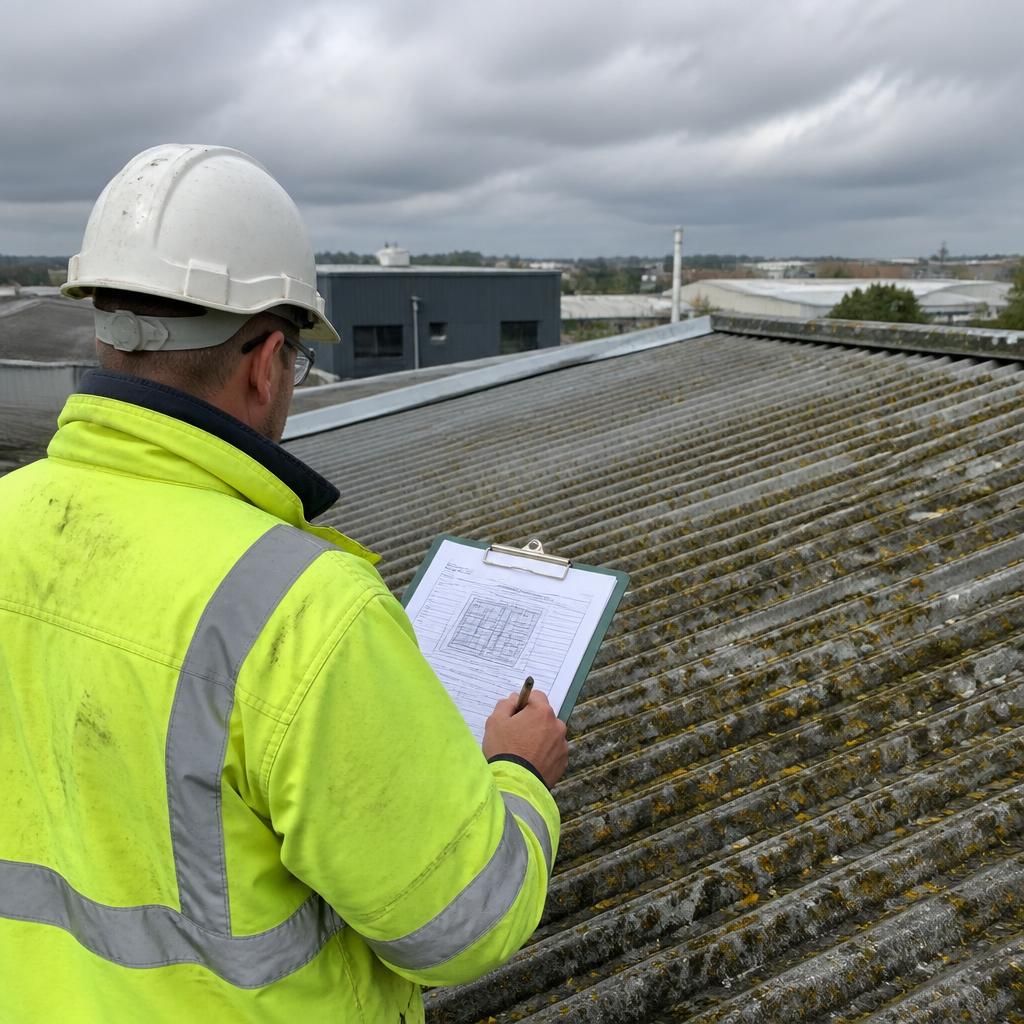
Selecting a biocide roof treatment provider should begin with a documented survey of the roof, access arrangements and surrounding areas. This allows the contractor to confirm that the proposed product and application method are suitable for the roof material, existing organic growth and site conditions.
The survey should identify fragile surfaces, rooflights, damaged tiles, drainage routes, occupied areas, vegetation and potential spray-drift risks. It should also inform the risk assessment, method statement and quotation, helping to prevent unexpected work, avoidable damage and poorly controlled run-off.