
What are the safety precautions and environmental considerations associated with biocide roof treatments?
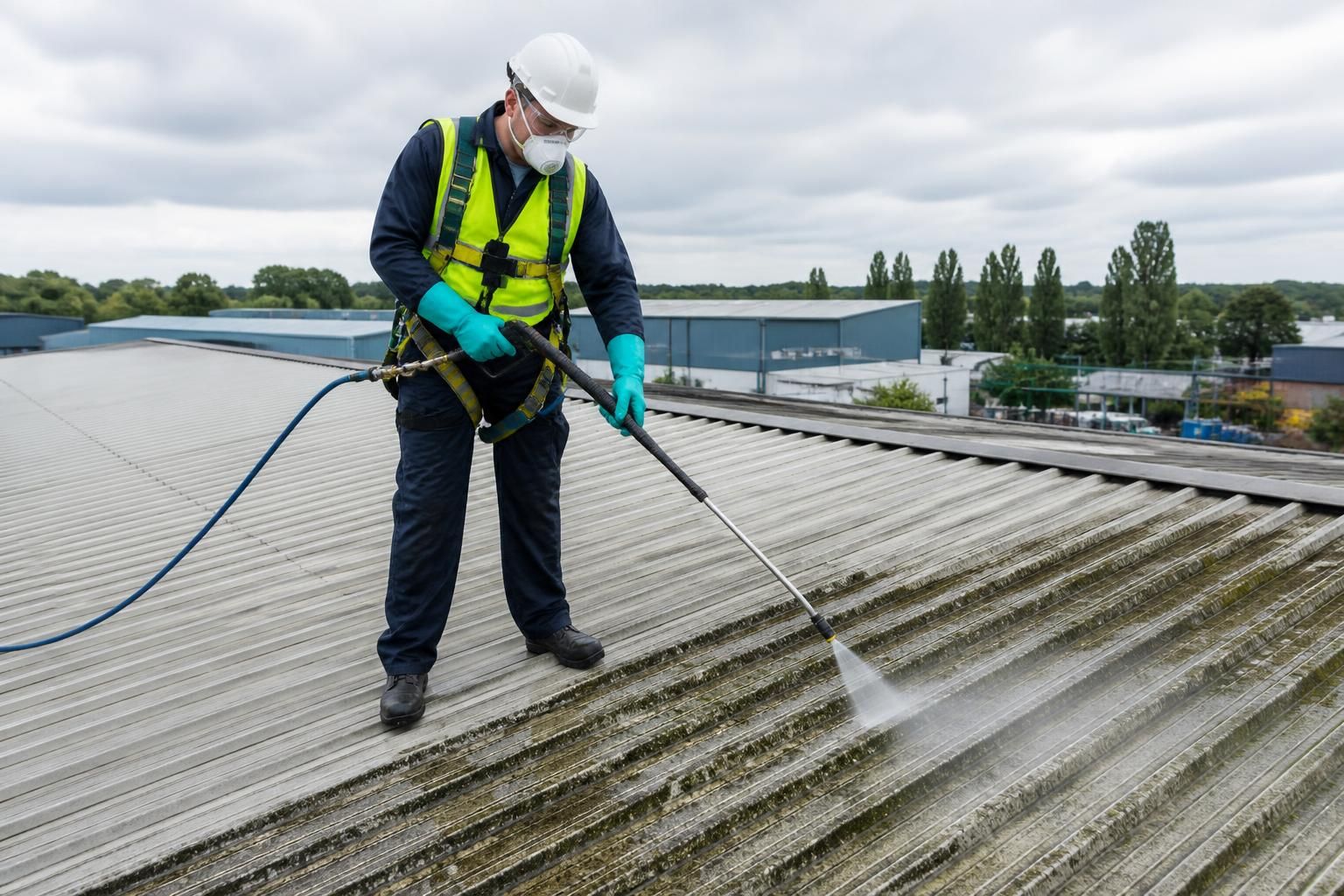
Biocide roof treatments should be applied by trained professionals using appropriate PPE, COSHH controls and measures to prevent spray drift, runoff and contact with people, animals, drainage systems and neighbouring surfaces. Environmental protection involves selecting a suitable product, checking weather and site conditions, controlling application carefully and protecting nearby vegetation and watercourses in line with the product label and current regulations.
Biocide roof treatments are safe and environmentally responsible when the product is authorised for the intended use, applied strictly in accordance with its label and safety data sheet, and controlled to prevent exposure, spray drift and contaminated runoff. The main precautions concern people, access equipment, roof materials, drainage, vegetation, wildlife and weather conditions.
Product selection and planning
- Use a biocidal product suitable for the roof material and the type of organic growth being treated. The product label must be followed for dilution, application, contact time, rinsing requirements, storage and disposal.
- Check the product’s safety data sheet and complete a site-specific risk assessment and method statement before work starts. COSHH controls should identify the hazards associated with the concentrate, diluted solution, vapour, spray and treated residues.
- Confirm that the product is authorised for the relevant use in the UK and that the proposed application complies with current label instructions and applicable regulations. A product should never be used for a purpose, on a surface or in a concentration that its instructions do not permit.
- Inspect the roof, gutters, downpipes, rooflights, fragile areas and adjacent surfaces before treatment. This helps identify access risks, weak materials and routes through which liquid could enter drainage systems or the building.
- Inform occupants and other contractors about the work area, the treatment being applied and any restrictions on access. Keep people away from the application zone until the product has been applied safely and any specified re-entry conditions have been met.
Personal and site safety
Operators should use appropriate personal protective equipment, which may include chemical-resistant gloves, protective clothing, suitable eye or face protection and safety footwear. Respiratory protective equipment is required only where the risk assessment identifies a need, and it must be correctly selected, fitted, maintained and used. PPE does not replace safe handling, controlled application or suitable ventilation.
- Store concentrates securely in their original, clearly labelled containers and keep them away from food, animal feed, children and unauthorised personnel.
- Do not eat, drink or smoke while handling or applying the product. Wash hands and exposed skin after the work and before breaks.
- Do not mix biocides with other cleaning chemicals unless the manufacturer expressly permits this. Incompatible products can create hazardous reactions, reduce effectiveness or increase damage to roof and drainage materials.
- Use suitable access equipment, edge protection and fall-arrest measures where required. Roof treatments must not encourage operatives to walk on fragile tiles, rooflights, asbestos-containing materials or unstable surfaces without an appropriate plan.
- Control hoses, cables and equipment at ground level to prevent trip hazards, and establish an exclusion zone below the work area where falling debris, droplets or equipment could present a risk.
Where a roof contains asbestos or another hazardous material, its condition and legal requirements must be assessed before cleaning or treatment. The work should be stopped if the roof is damaged, unstable or unsuitable for the proposed access and application method.
Controlling spray, drift and runoff
Biocide should be applied at the lowest practical pressure and in a controlled manner that limits misting and overspray. The applicator should avoid spraying during strong or gusty winds, when rain is likely to wash the product away, or when conditions could cause rapid evaporation or uncontrolled movement. The label may specify additional weather restrictions, which must be followed.
- Protect windows, doors, painted surfaces, vehicles, solar panels, air-conditioning equipment and other nearby materials from contact where the product could stain, mark or corrode them.
- Use sheeting, temporary covers, collection measures or other suitable controls where needed, ensuring that covers do not create additional hazards or trap product against vulnerable surfaces.
- Prevent solution from entering surface-water drains, ponds, streams, ditches and other watercourses. Do not assume that a drain is suitable for chemical discharge.
- Control gutter and downpipe runoff, particularly on buildings connected to rainwater harvesting systems, soakaways or environmentally sensitive drainage. Downpipes may need to be isolated or managed in accordance with the treatment plan and product instructions.
- Do not allow concentrated product, unused solution, contaminated absorbents or wash water to enter soil, drains or watercourses.
Any spill should be contained promptly using the procedure set out in the risk assessment and safety data sheet. Prevent it from spreading, keep people away, use compatible absorbent materials where appropriate, and arrange disposal of contaminated waste through a suitable route. Product should not be washed into a drain in an attempt to clear the area.
Protection of vegetation and wildlife
Nearby plants, lawns, hedges and trees can be affected by direct contact, drift or contaminated runoff, even where the roof itself is the intended treatment area. The treatment plan should identify sensitive planting and include suitable protection or a controlled application boundary. Covers must be removed carefully and promptly so that heat, trapped moisture or chemical residue does not damage vegetation.
- Check the surrounding area for ponds, watercourses, drainage channels, planted borders, vegetable beds, grazing animals, pets and other sensitive receptors before starting.
- Keep animals and the public away from the work area until there is no foreseeable risk from wet residue, treated debris or access equipment.
- Inspect roof spaces, eaves and nearby structures for evidence of nesting birds or other wildlife. Active nests and protected species must not be disturbed; work may need to be postponed and specialist advice obtained.
- Remove or manage moss and lichen debris responsibly rather than allowing it to accumulate in gutters or wash into the wider environment.
- Use only the amount of product required for the planned area. Accurate measurement reduces waste and limits the quantity that could be released accidentally.
Environmental protection is not achieved simply by choosing a product described as low impact. The quantity applied, the application method, local drainage, weather and the sensitivity of the surrounding site all affect the risk. A controlled low-pressure application may be more appropriate than an unrestricted spray, but the correct method depends on the product label and roof conditions.
After-treatment controls
Gutters, gullies, protective coverings and the surrounding ground should be checked after application. Any residue should be managed in line with the product instructions, and equipment should be cleaned without creating contaminated discharge. Empty containers and chemical waste should be handled, stored and disposed of as required by the label, safety data sheet and applicable waste controls.
Records should include the product used, application instructions, site assessment, weather and environmental controls, incidents or spillages, and any follow-up requirements. If people, animals, vegetation or drainage infrastructure may have been exposed unexpectedly, the relevant safety data sheet should be consulted immediately and appropriate professional or emergency advice obtained.
For customers, the most important practical point is to disclose any rainwater harvesting, sensitive landscaping, watercourses, occupied areas, fragile roof sections or known wildlife activity before treatment. This allows the method statement and controls to be adapted before application, rather than relying on corrective action afterwards.
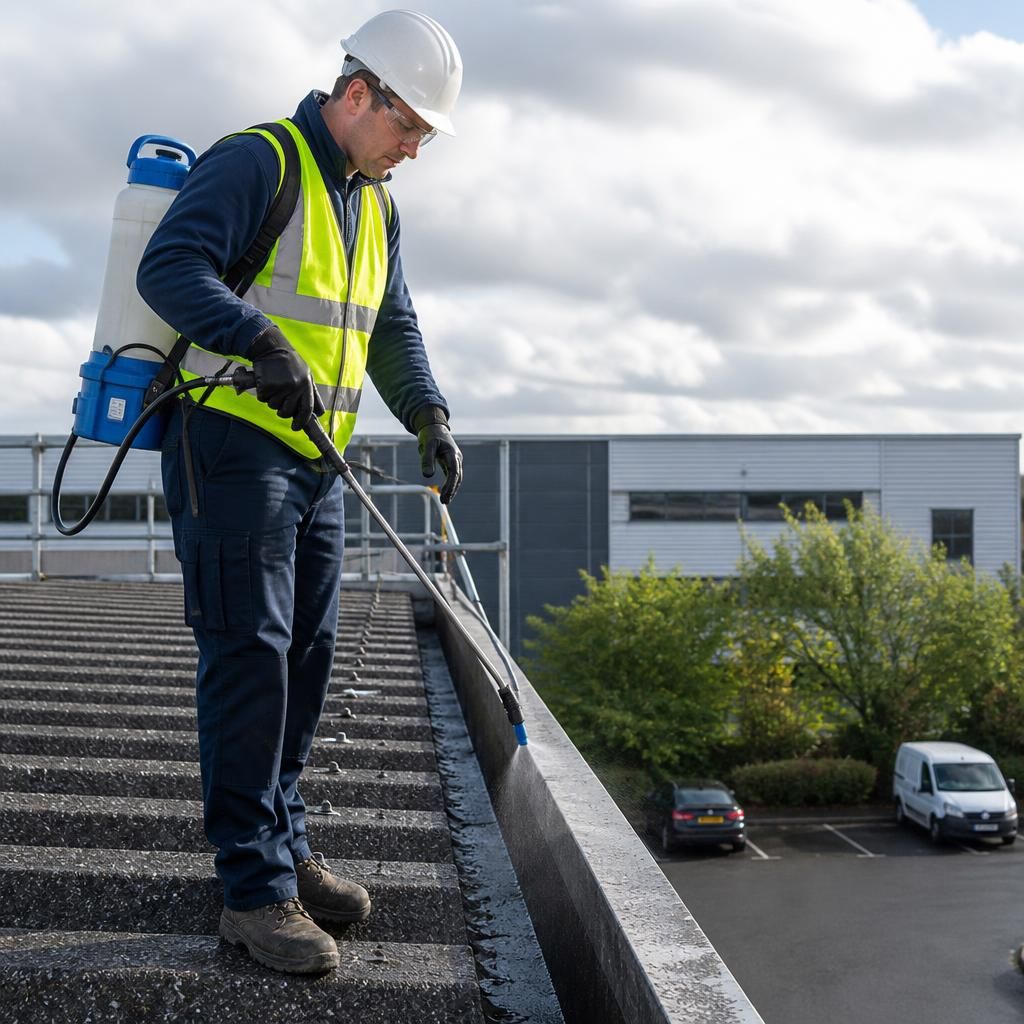
Preventing contaminated runoff is one of the most important environmental precautions during a biocide roof treatment. The treatment solution, loosened moss and residue must not be allowed to enter surface-water drains, ponds, streams, soil or neighbouring planting.
Before application, the gutters, downpipes and surrounding ground should be assessed so suitable controls can be put in place. These may include protecting sensitive surfaces, managing downpipe discharge and using controlled, low-pressure application to reduce spray drift and overspray. Work should be postponed if wind or rain could carry the product away from the roof.
After treatment, the area should be inspected for residue, debris or accidental exposure. Any spill or contaminated material must be contained and disposed of in accordance with the product label, safety data sheet and applicable waste requirements. Customers should advise us in advance about rainwater harvesting systems, watercourses, ponds, sensitive landscaping or nearby animals so the method can be adapted safely.