
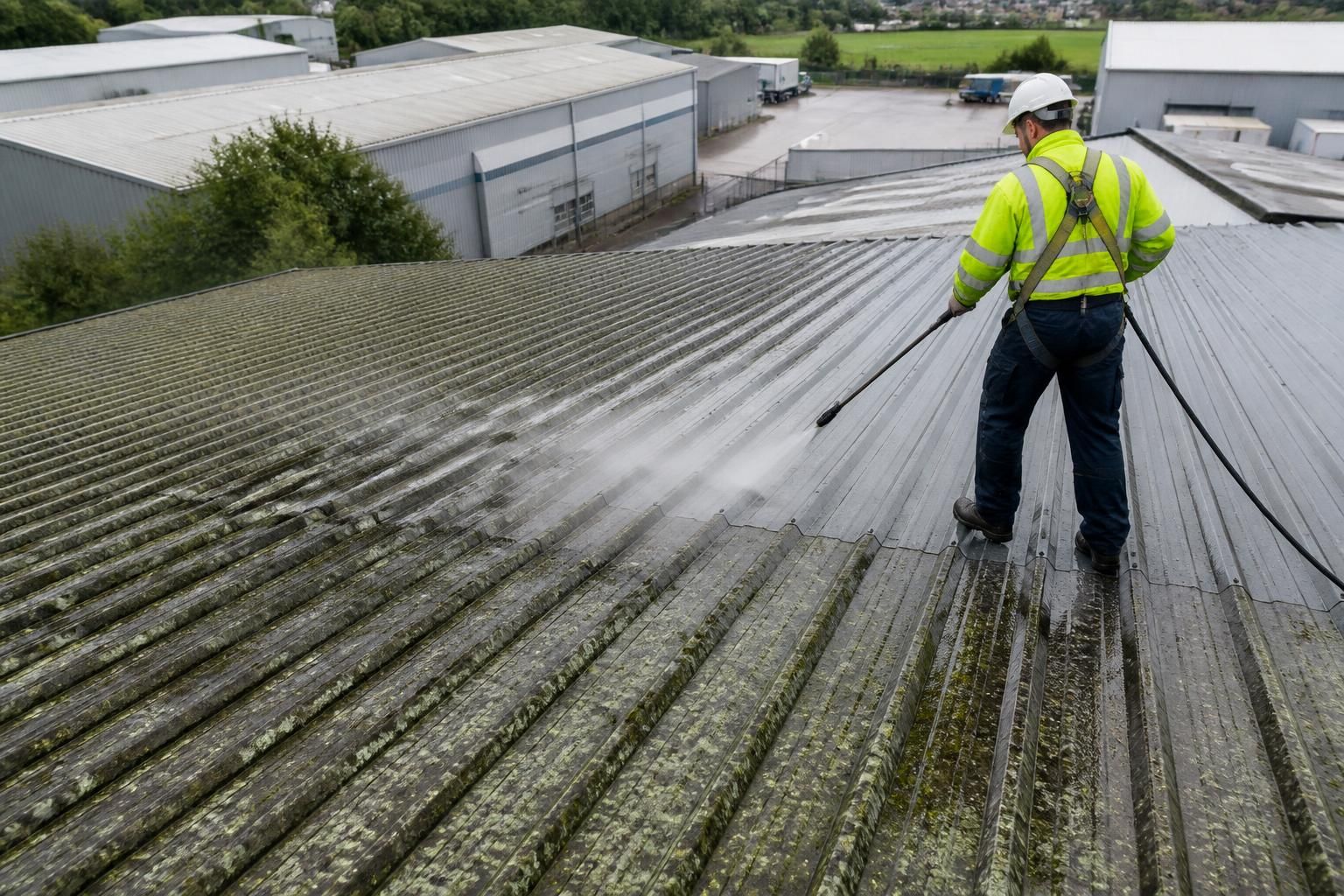
What are the long-term benefits of using biocide treatments compared to traditional cleaning methods for roofs?
Biocide roof treatments control moss, algae and lichen at their source, helping keep the roof cleaner for longer than traditional cleaning alone. By reducing regrowth and avoiding repeated aggressive pressure washing, they can help protect roof materials, reduce maintenance requirements and lower long-term repair costs.
Biocide roof treatments provide longer-term control of moss, algae and lichen than traditional cleaning methods used on their own. Rather than simply removing visible growth from the surface, a correctly selected and applied biocide helps treat the residual spores and organic contamination that can lead to regrowth. This can keep the roof cleaner for longer, reduce the need for repeat cleaning and help limit the wear associated with frequent aggressive cleaning.
Longer-lasting control of biological growth
Traditional pressure washing or manual scraping can produce an immediate visible improvement, but these methods mainly remove growth that is already present. They do not necessarily deal with the microscopic spores and biological residue left behind. Moss, algae and lichen may therefore return, particularly on shaded, damp or poorly ventilated roof areas.
A biocide treatment is designed to remain active for a period after application, allowing it to work on remaining organic contamination. Weather gradually removes the treated material, so results are not always immediate, but the reduction in regrowth can last significantly longer than surface cleaning alone when the treatment is suitable for the roof and applied correctly.
Less reliance on aggressive pressure washing
Repeated high-pressure cleaning can be unsuitable for some roof coverings. Excessive pressure may dislodge tiles, drive water beneath laps, damage surface finishes or remove protective coatings. It can also expose weak areas that were previously concealed by dirt and organic growth.
Using a biocide as part of a controlled treatment programme can reduce the frequency with which forceful mechanical cleaning is required. Where cleaning is necessary, a lower-pressure or more targeted approach may be appropriate, depending on the roof material, its condition and the level of contamination. This helps preserve the existing surface rather than repeatedly stressing it to achieve a short-term cosmetic result.
Better protection for roof materials
Moss and lichen can retain moisture against a roof surface. Their roots or attachment structures may also work into small imperfections, joints and overlapping areas. Over time, persistent organic growth can contribute to surface deterioration, blocked drainage routes and increased moisture exposure.
Biocide treatment does not repair cracked tiles, failed flashing, defective membranes or other underlying faults. However, by controlling biological growth, it can help reduce one source of ongoing moisture retention and contamination. This is particularly useful on larger commercial roofs where early identification of deterioration and planned maintenance are important.
Fewer maintenance interventions
A roof that repeatedly develops moss or algae may require regular visits for scraping, washing, waste removal and inspection. Each intervention can involve access equipment, site coordination and temporary disruption to occupants, vehicles or other contractors.
Longer-lasting biological control can make maintenance more predictable. Planned inspections can be combined with treatment reviews, allowing issues to be identified before they become urgent. This is often more practical for commercial and industrial properties, housing portfolios and managed sites than responding to visible regrowth each time it appears.
Potentially lower whole-life costs
The relevant comparison is not only the price of one treatment against the price of one cleaning visit. Whole-life cost also includes repeat access, labour, equipment, traffic or pedestrian management, waste handling, repairs and disruption to the site.
A biocide treatment may have a higher initial cost than a basic clean, but the longer interval between effective maintenance visits can reduce cumulative expenditure. Preventing persistent contamination from contributing to deterioration may also help avoid some avoidable repair work. The financial benefit depends on the roof size, material, access requirements, contamination level, exposure and the condition of the roof, so it should be assessed as part of a maintenance plan rather than assumed in every case.
Improved appearance between maintenance visits
For commercial premises, a roof that remains visibly free from heavy moss and algae supports a consistent standard of external presentation. This can be relevant to property managers, landlords, public buildings, retail sites and facilities subject to inspection or client expectations. Biocide treatments are not an instant cosmetic replacement for cleaning: treated growth may take time to weather away, and heavily contaminated surfaces may need initial removal before treatment. Their long-term value is in helping maintain the result.
Reduced risk of blocked drainage
Loose moss can wash into gutters, outlets and drainage channels, where it may contribute to blockages and overflow. Water running over blocked or poorly draining areas can affect façades, roof edges and surrounding surfaces. Controlling moss at roof level can reduce the amount of loose organic material entering the drainage system, although gutters and outlets should still be inspected and cleared as part of routine maintenance.
Why the result depends on correct application
Biocide treatments are not universally interchangeable. The product, dilution, application method and dwell time must be suitable for the roof covering and the level of growth. Weather conditions, surface porosity, shading and previous treatments can all affect performance. Applying too little product, rinsing it away too quickly or failing to remove excessive surface growth may reduce the result.
A competent contractor should inspect the roof before work, identify the material and its condition, assess drainage and nearby surfaces, and select a method that controls run-off. The treatment should be applied in accordance with the product instructions and relevant safety and environmental requirements. Surrounding vegetation, watercourses, occupants and site users must be protected during the work.
Biocide treatment is part of maintenance, not a cure-all
The long-term benefits are greatest when treatment is combined with sensible roof maintenance. Inspections should check for broken or displaced tiles, defective flashings, open joints, damaged coatings, blocked gutters and signs of water ingress. A biocide cannot correct these defects, and cleaning should not proceed without considering whether the roof can safely withstand the proposed method.
In practice, the most durable approach is usually to assess the roof, remove or manage existing growth using a suitable low-impact method, apply an appropriate biocide where required, and schedule follow-up inspections. Compared with traditional cleaning alone, this approach targets the cause of recurring biological contamination as well as its visible symptoms, helping protect the roof surface and control maintenance demands over the longer term.
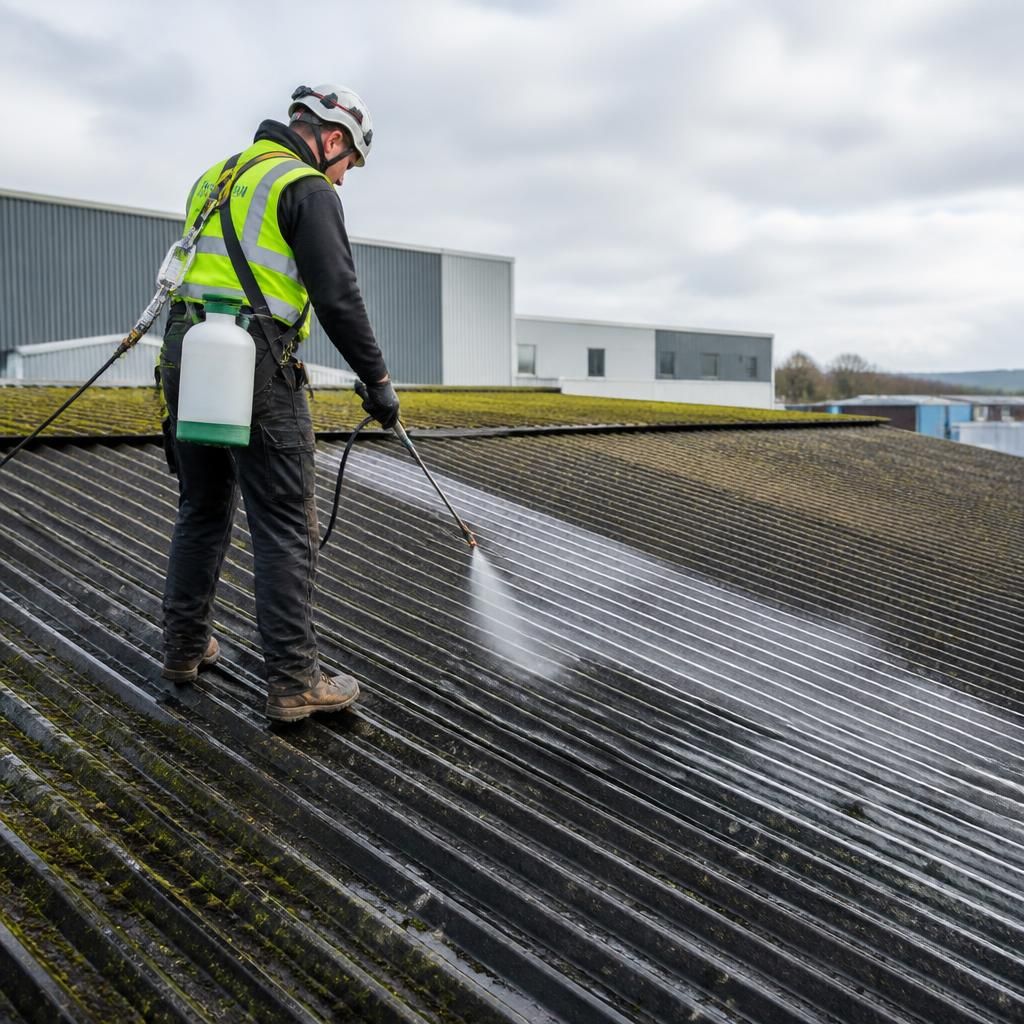
Biocide roof treatments offer longer-term control of moss, algae and lichen by treating organic contamination that traditional cleaning may leave behind. This can reduce rapid regrowth and help maintain a cleaner roof surface between planned maintenance visits.
By reducing the need for repeated scraping or high-pressure washing, a suitable treatment may also limit wear on roof coverings, reduce access and labour requirements, and help control whole-life maintenance costs. It does not repair defective tiles, flashing or membranes, so regular inspections remain essential.