
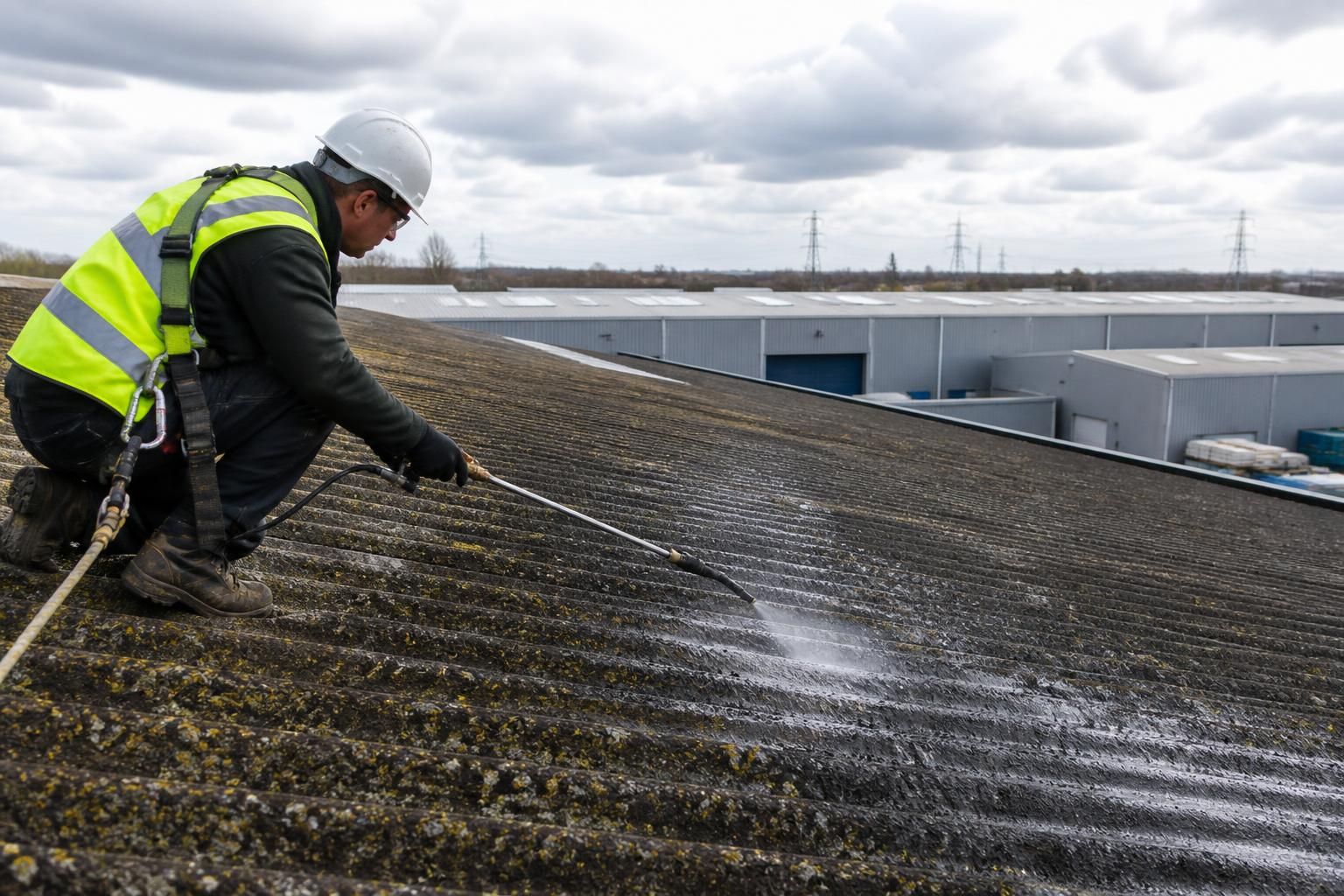
How long does a biocide roof treatment take to show results?
A biocide roof treatment usually works gradually rather than producing an immediate visual change: surface growth may begin to fade over the following weeks, with the full result developing over several months as weather removes dead moss, algae and lichen. The timescale depends on the level of contamination, roof material, weather conditions and application quality, so professional assessment is important when setting expectations.
A biocide roof treatment normally begins working soon after application, but the visible improvement develops gradually. Algae may start to lose colour over the following weeks, while moss and lichen usually take longer to die back and be removed naturally by rain and weathering. The full appearance of the roof may continue to improve over several months, depending on the amount of growth and the conditions around the building.
The treatment does not usually act like a pressure wash. Its purpose is to kill or suppress the biological growth at the surface and, where the product and roof allow, within the porous areas where spores and root-like structures have established. Once the growth is inactive, wind and rainfall gradually loosen and disperse it. This is why a roof can remain visibly marked shortly after treatment even though the biocide is already working.
Typical visual changes include:
- Algae and light surface staining may begin to fade as the treatment takes effect.
- Moss may lose its colour and become dry or brittle before it starts to detach.
- Lichen is often slower to change because it can be firmly attached to the roof surface.
- Heavy or established growth may remain visible for a considerable period while natural weathering removes it.
There is no single fixed timescale for every roof. A lightly affected roof in an exposed position may show a noticeable improvement relatively quickly, whereas a heavily colonised roof in a shaded, damp location can take much longer. Treatment is intended to deal with the biological contamination rather than create an instant cosmetic result.
The main factors affecting the result are:
- Type and severity of growth: Algae, moss and lichen respond differently. Dense moss and mature lichen generally require more time to die back and weather away than a thin film of algae.
- Roof material and condition: Concrete tiles, clay tiles, slate and other roofing materials vary in porosity, surface texture and susceptibility to biological growth. Existing weathering, damaged surfaces and blocked joints can also affect how evenly the treatment performs.
- Weather after application: Moderate weathering helps remove dead material over time. Persistent rain shortly after application may affect the product’s contact time, while cold, dry or unusually wet conditions can slow the visible process.
- Shade and moisture: Roofs beneath trees or close to tall buildings may stay damp for longer, making the growth slower to disappear and increasing the risk of future recolonisation.
- Application quality: Correct product selection, dilution, coverage and safe access are important. Missed areas, inadequate coverage or application to a surface that is unsuitable for the product can produce an uneven result.
A professional assessment helps set a realistic expectation before work starts. The condition of the roof, the type of contamination and the preferred finish should be considered together. In some cases, the most appropriate approach is a treatment-only service that allows natural weathering to complete the process. In others, a separate cleaning method or follow-up visit may be recommended where the roof has thick, compacted growth or where the client requires a quicker visual improvement. Any additional cleaning should be selected carefully to avoid unnecessary pressure, abrasion or damage to the roofing materials.
It is also important not to judge the treatment immediately after application. A roof may look much the same at first, and some dead growth can remain attached until it is loosened by weather. Photographs taken at the time of treatment and during a planned review can provide a more accurate comparison than a visual inspection carried out only a few days later.
If there is no sign of change after a reasonable weathering period, or if some areas appear unaffected while others have improved, the application should be reviewed rather than automatically repeated. Possible causes include uneven contamination, sheltered sections, rain affecting the initial treatment, unsuitable surface conditions or growth that needs a different cleaning approach. A professional can inspect the roof and advise whether further treatment, gentle removal or routine maintenance is appropriate.
Once the growth has been controlled, keeping gutters, valleys and nearby vegetation managed can help reduce the conditions that support regrowth. Regular inspections are particularly useful on shaded roofs and buildings surrounded by trees. Biocide treatment is therefore best viewed as a gradual roof maintenance process: it starts working after application, visible changes normally develop over the following weeks, and the most complete result may take several months to emerge.
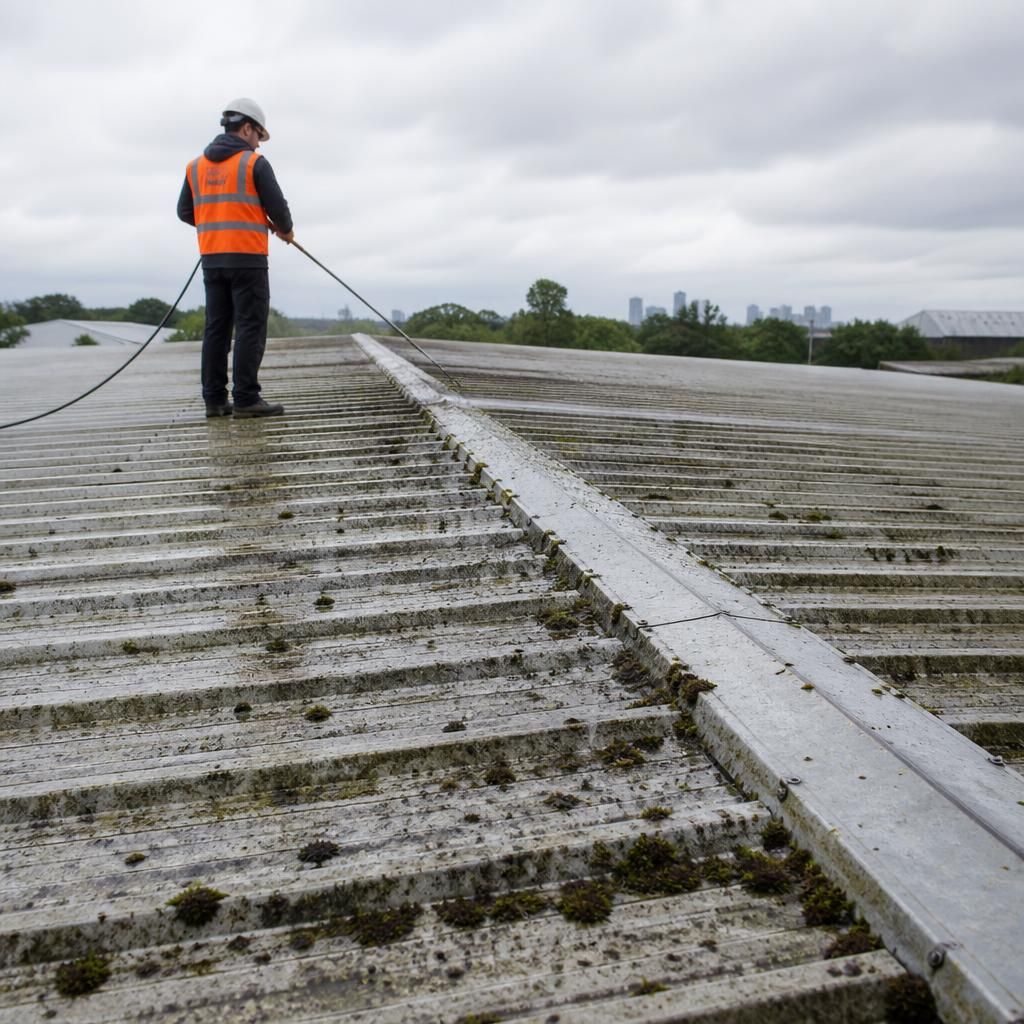
A biocide roof treatment works gradually rather than providing an immediate visual change. The product begins to control algae, moss and lichen after application, but dead growth can remain attached to the roof until rain, wind and natural weathering loosen it.
Algae may fade first, while thicker moss and established lichen usually take longer to disappear. Visible improvement commonly develops over the following weeks and may continue for several months. Avoid judging the result immediately after treatment; a later inspection provides a more accurate assessment of how effectively the growth has died back and weathered away.