
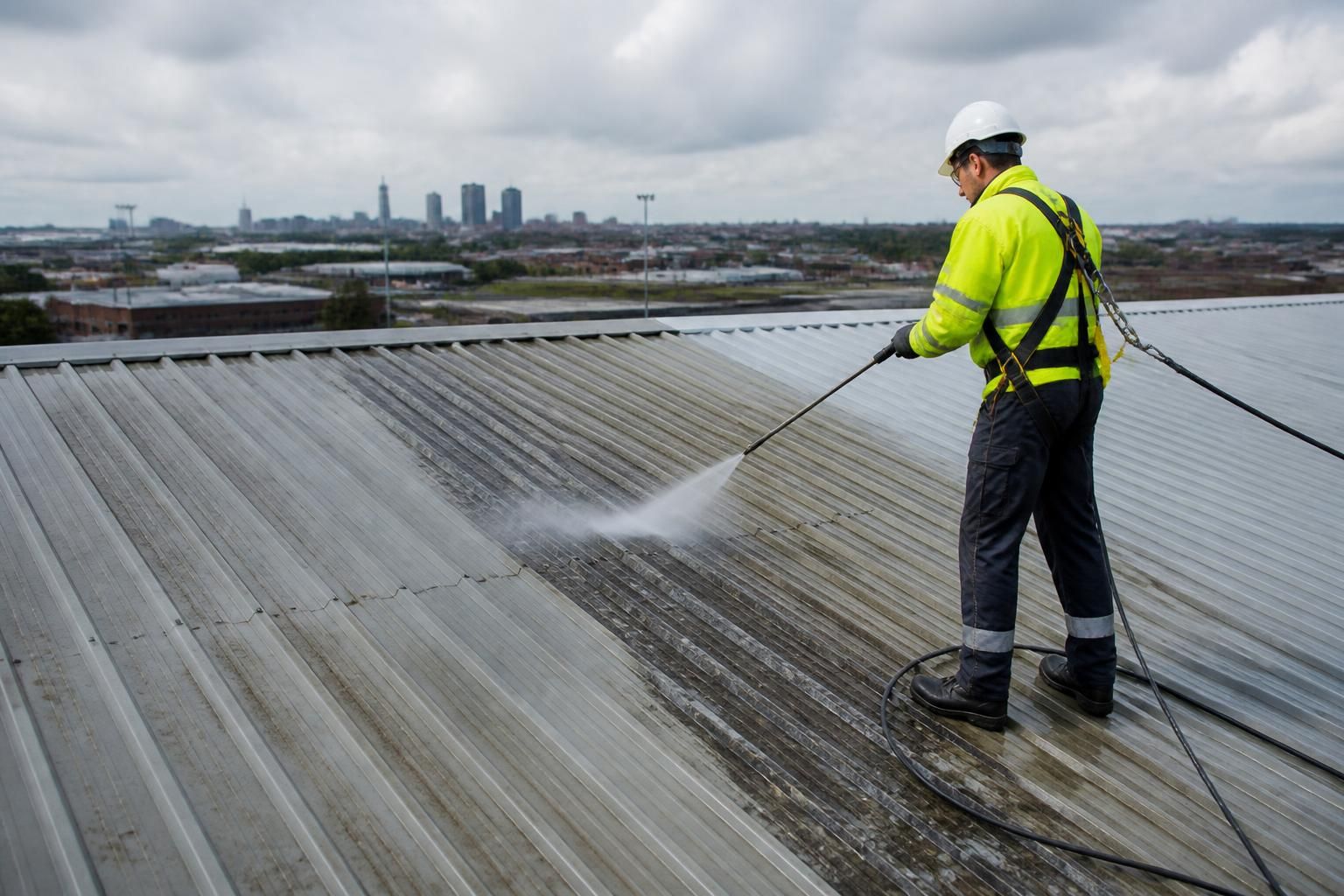
How do biocide roof treatments interact with different roof materials to ensure optimal results?
Biocide roof treatments interact differently with each material because porosity, surface finish and existing coatings affect how the solution spreads, penetrates and remains active. Tiles and slate may need controlled application to avoid excess absorption, while metal and coated surfaces require a compatible, non-abrasive treatment; selecting the correct product and dwell time helps remove organic growth without damaging the roof.
Biocide roof treatments achieve the best results when the product, concentration, application method and dwell time are matched to the roof material. Porosity, surface texture, existing coatings, age and condition all affect how the treatment spreads and how long it remains active against moss, algae, lichen and other organic growth.
A suitable treatment should control biological growth without weakening the roof covering, stripping protective finishes or increasing water ingress. Before application, the roof should be assessed for its material, condition, drainage arrangements and any previous coatings or cleaning treatments. A small test area is useful where the surface is weathered, stained or unfamiliar.
Concrete roof tiles
Concrete tiles are relatively porous, particularly where their original surface finish has weathered. This allows a biocide solution to reach organic growth and surface pores, but it also means the tile may absorb more product than a dense, coated surface. Application therefore needs to be controlled to avoid unnecessary saturation and concentrated run-off.
Loose moss is normally removed carefully before or during treatment, depending on the agreed cleaning approach and the condition of the tiles. The biocide is then applied evenly so it can remain in contact with algae, lichen spores and residual organic matter. Excessive pressure washing can erode the surface or force water beneath laps and joints, so a chemical treatment with controlled rinsing is often more appropriate than aggressive mechanical cleaning.
Clay tiles
Clay tiles are generally less absorbent than many concrete tiles, although their surface can become rough and weathered over time. Their profile, age and condition are important because older tiles may be brittle or more vulnerable to damage from foot traffic, impact and high-pressure water.
A compatible biocide should be applied at a pressure that limits disturbance of the tile surface and avoids forcing water beneath overlapping courses. The treatment must be allowed to work for the specified dwell period, but it should not be left to dry on the roof where the product instructions require rinsing. Care is also needed around ridge tiles, mortar joints and areas of previous repair, as these may react differently from the main roof covering.
Natural slate
Slate is usually less porous than aged concrete, but individual slates vary according to their geological source, finish and weathering. The main risks are physical rather than simply chemical: slate can delaminate, crack or break if exposed to excessive pressure, harsh abrasion or careless access.
Biocide application on slate should therefore be low impact and evenly distributed. Strong pressure washing is generally unsuitable, particularly on older roofs. The treatment should be selected for compatibility with the slate and any associated metalwork, flashings or sealants. Moss should not be pulled from beneath slates, since this can dislodge the covering and damage fixings. Where growth is extensive, gradual breakdown through treatment is safer than forcing it away mechanically.
Metal roofing
Metal roofs are often less porous, so the biocide remains primarily on the surface rather than soaking into the substrate. This can support even coverage, but it also makes run-off and contact time important. A product that is suitable for masonry or uncoated mineral surfaces may not be appropriate for galvanised steel, aluminium, zinc or other metals.
The treatment must not promote corrosion, attack protective coatings or leave residues that interfere with repainting or future repairs. Particular care is needed where the roof has exposed fasteners, damaged paint, rust, sealants or dissimilar metals. Application should be carried out without abrasive cleaning, and the surface should be rinsed in a way that prevents treated water collecting in gutters, joints or concealed areas.
Coated, painted and plastisol-finished surfaces
Factory-applied and site-applied coatings can be more sensitive than the underlying roof material. An unsuitable chemical, excessive dwell time or abrasive rinse may cause dulling, whitening, staining or loss of adhesion. The presence of a coating should be confirmed before selecting the treatment, and the product should be checked against the coating manufacturer’s guidance where available.
Testing an inconspicuous area helps establish whether the finish changes colour or texture. The test should be assessed after the treatment has been rinsed and the surface has dried, as some reactions are not immediately visible. Biocide treatment is not a substitute for repairing damaged coating, corrosion or exposed substrate.
Fibre-cement and older roofing sheets
Fibre-cement sheets may carry algae, lichen and moss, but older sheets can be fragile and may contain asbestos. The material should not be drilled, cut, abraded or subjected to methods that could release hazardous fibres. Where asbestos-containing material is suspected, its status must be established and the work planned in accordance with applicable UK safety requirements.
A compatible low-impact treatment may be appropriate for some fibre-cement roofs, but the decision depends on the sheet’s age, condition, composition and access arrangements. The treatment should not conceal cracks, failed fixings or other defects that require a separate inspection.
Bituminous and membrane-covered roofs
Flat roofs and low-slope roofs may use mineral-finished felt, modified bitumen, single-ply membranes or other flexible systems. These surfaces can be affected by solvents, strong oxidising chemicals, heat and abrasive cleaning. A treatment intended for rigid tiles should not automatically be used on a membrane or bituminous covering.
Compatibility checks should include the membrane, bonded seams, edge details, liquid-applied coatings and any insulation or waterproofing system beneath the surface. Application should avoid damaging the finish or directing water towards vulnerable laps and outlets. Drainage points must remain clear, and any ponding or failed waterproofing should be addressed independently of the biocide work.
How the treatment is adjusted
- Product selection: The formulation should be suitable for the roof material, existing finish and type of organic growth. It should also be used in accordance with the manufacturer’s instructions and relevant UK requirements for chemical handling and run-off.
- Application pressure: Low-pressure application is commonly preferred where the roof covering, coating, joints or fixings could be damaged by force. The aim is to wet the growth and surface evenly, not to drive liquid beneath the roof covering.
- Coverage and dwell time: Porous or heavily weathered surfaces may need careful, even coverage, while smooth surfaces require attention to run-off and retention. Dwell time must follow the product instructions and site conditions rather than being extended automatically.
- Rinsing: Some treatments are designed to continue working after application, while others require controlled rinsing. The correct approach depends on the formulation, roof material, weather and drainage. Uncontrolled discharge into rainwater systems, soil or watercourses should be prevented.
- Weather conditions: Rain soon after application can dilute or remove the treatment, while strong sun and drying winds can reduce contact time. Cold, damp or very windy conditions may also affect application and access safety.
- Post-treatment expectations: Dead or weakened growth may discolour, loosen or wash away gradually rather than disappear immediately. Any remaining deposits should be removed using a method appropriate to the roof covering.
Biocide treatment deals with biological contamination; it does not repair cracked tiles, slipped slates, failed mortar, corrosion, blocked gutters or defective waterproofing. A roof inspection should identify these issues before cleaning, because treating a roof in poor repair can make existing defects more apparent without resolving them.
The most reliable method is therefore material-specific: inspect the covering, confirm chemical compatibility, test where necessary, apply with controlled coverage, manage dwell time and protect drainage and surrounding surfaces. This approach allows concrete and clay tiles, slate, metal, coated sheets and specialist roof systems to receive effective biological treatment while reducing the risk of surface damage and unwanted environmental discharge.
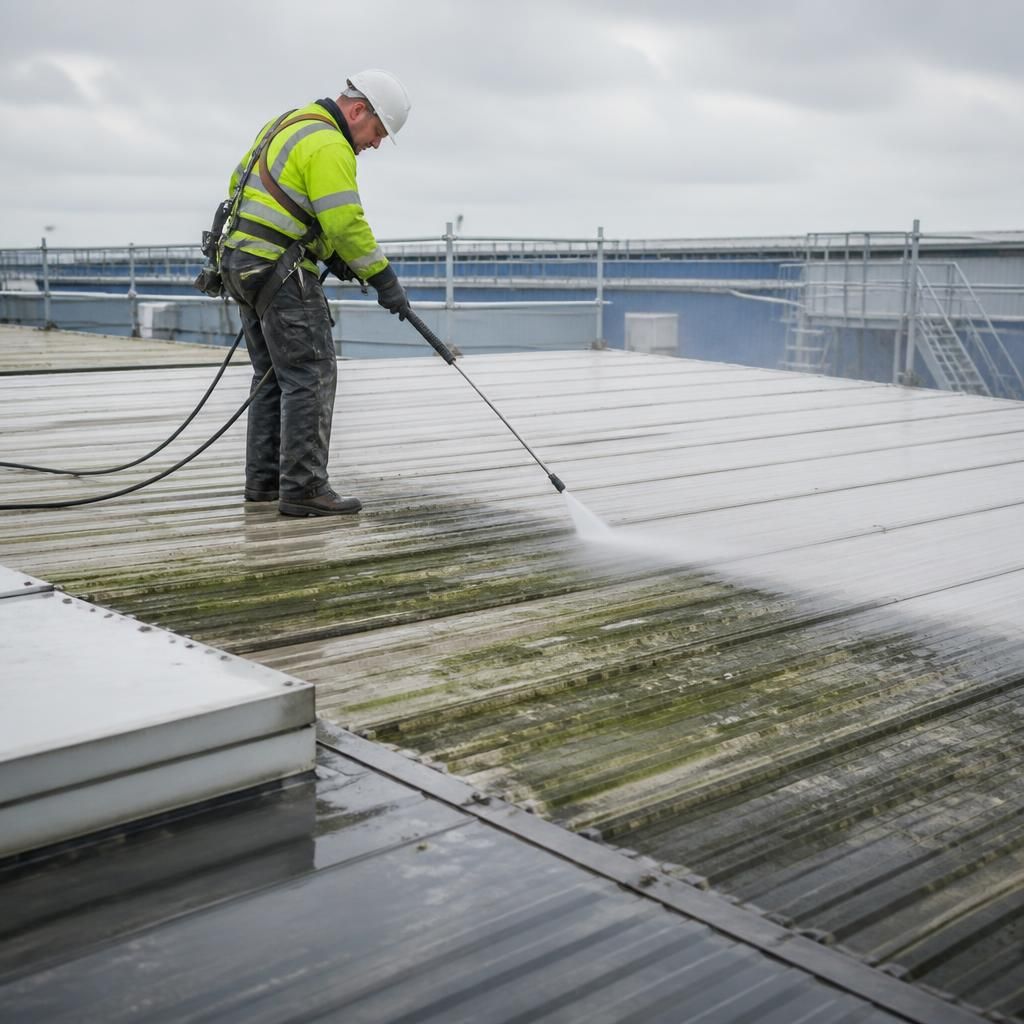
Biocide roof treatments must be matched to the roof material because porosity, coatings and surface condition affect how the solution behaves. A controlled test area can confirm that the treatment removes organic growth without causing staining, dulling, corrosion or damage to the surface.
Porous concrete tiles may require careful coverage to prevent excessive absorption, while slate, coated metal and membrane roofs generally need low-impact application and strict compatibility checks. Treatment should also be kept away from uncontrolled drainage, with dwell time and rinsing adjusted to the product instructions and the roof’s condition.