
Does biocide roof treatment affect surrounding vegetation and wildlife?
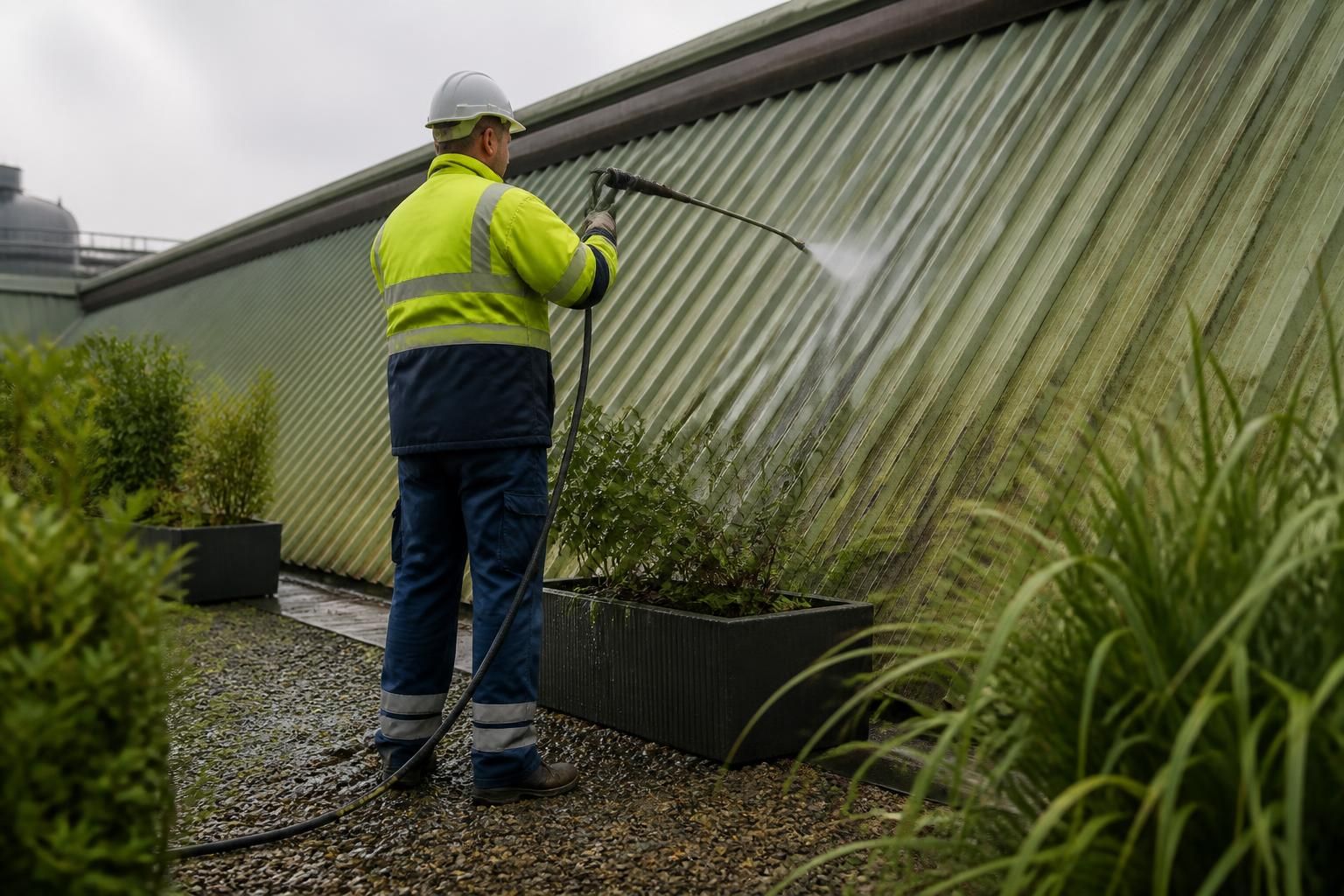
Biocide roof treatment can affect surrounding vegetation and wildlife if it is misapplied, allowed to drift, or carried into soil and drains by runoff. Professional application minimises these risks by following the product label, protecting nearby plants and watercourses, controlling overspray and managing rinse water appropriately.
Biocide roof treatment can affect surrounding vegetation and wildlife if it is misapplied, allowed to drift, or carried into soil, surface water and drainage systems by runoff. When a suitable, authorised product is applied by a competent contractor in accordance with its label and safety data, the risk can be controlled through careful planning, protection of nearby areas and responsible management of application and rinse water.
The main environmental risk does not usually come from the roof surface itself, but from unintended contact with the treatment. Plants may be damaged if spray lands directly on leaves, flowers, stems or roots. Sensitive species can be affected by relatively small amounts of some cleaning chemicals, particularly when they are already stressed by drought, frost, disease or recent planting. Contamination of soil can also harm planted areas or affect vegetation if the product is subsequently taken up by roots.
Wildlife can be exposed in several ways. Birds, insects and other small animals may come into contact with wet surfaces, treated vegetation or contaminated puddles. Aquatic organisms are particularly vulnerable to chemical contamination, so roof treatment must not be allowed to enter ponds, streams, ditches, water butts or surface-water drains. The potential impact depends on the active substance, its concentration, the volume applied, the weather and the sensitivity of the receiving environment.
Professional application reduces these risks through site-specific controls. Before work begins, the roof, surrounding grounds and drainage layout should be assessed. This includes identifying:
- planting beds, hanging baskets, trees, hedges and climbing plants close to the building;
- ponds, watercourses, gullies, soakaways and other routes by which runoff could travel;
- areas used by birds, pollinating insects, pets or other animals;
- adjacent properties, public walkways and vehicle areas that could be affected by spray or discharge; and
- weather conditions that could increase drift or accelerate runoff.
Vegetation close to the work area may need to be covered or temporarily moved where practical. Covers should be used carefully: they must not trap heat, remain in place unnecessarily or create a hazard. Plants may also be dampened with clean water before treatment where this is consistent with the product instructions, as this can reduce the amount retained on foliage. Protection should be removed or managed promptly after application so that plants are not left enclosed in contaminated moisture.
Application technique is important. Low-drift equipment, controlled pressure and accurate targeting help keep the solution on the roof rather than in the surrounding air. Operators should avoid spraying in strong or gusty winds, rain, conditions likely to cause rapid runoff, or weather that could carry droplets towards sensitive areas. The product label determines the permitted application conditions, dilution, contact time and any restrictions relating to people, animals, drains or water.
Runoff needs particular attention because a treatment can leave the roof and enter the ground even when there is little visible spray. Roof drainage may need to be isolated, diverted or protected during the relevant stage of the work. Any collection, containment or disposal of liquid should follow the product instructions and applicable environmental requirements. It should never be assumed that treatment water can be poured into a surface-water drain, onto soil or into a planted area.
Wildlife protection also involves controlling access. People, pets and animals should be kept away from the working area and any wet treated surfaces until the product instructions confirm that access is appropriate. Food, water bowls, nesting materials and movable animal housing should be removed or protected before work starts. Where a site contains active nests, valuable habitat or a pond, the work plan may need to be adapted or postponed.
Biocide treatments should be selected according to the roof material, the type of organic growth and the surrounding environment. More product is not safer or necessarily more effective. Over-application can increase residue, runoff and environmental exposure without improving the result. A competent contractor should be able to explain why the chosen treatment is appropriate, how it will be diluted and applied, and what controls will be used around plants, drains and watercourses.
Some discolouration or loss of heavily contaminated vegetation may not become apparent immediately if accidental contact occurs. If a plant, animal or watercourse may have been exposed, report it to the contractor promptly and keep people and animals away from the affected area. The product name, label and safety data should be available so that appropriate advice can be obtained. Do not attempt to neutralise or wash the chemical into a drain unless specifically instructed to do so.
For commercial and industrial premises, the environmental controls should be recorded as part of the method statement or risk assessment. This should cover product selection, application method, weather limitations, protection of vegetation, drainage controls, access restrictions, spill response and waste or wastewater arrangements. Additional advice may be needed where the building is near a watercourse, protected habitat, public space or extensive landscaped grounds.
In practical terms, biocide roof treatment is not automatically harmful to surrounding vegetation and wildlife, but it is not environmentally risk-free either. The outcome depends on the product, the application method and the controls used on the site. A carefully planned treatment keeps the solution on the intended roof surface, prevents avoidable drift and runoff, protects sensitive areas and follows the manufacturer’s instructions and relevant environmental requirements.
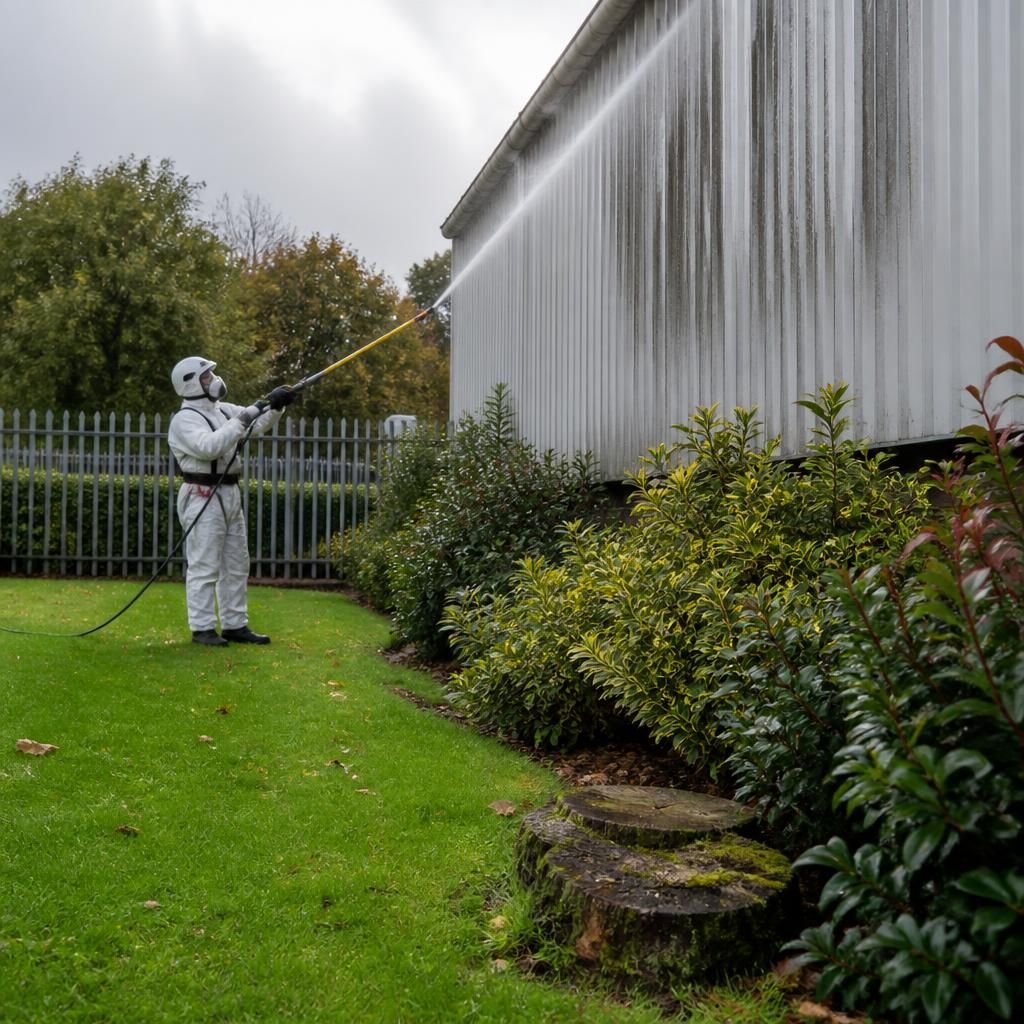
Biocide roof treatment affects vegetation and wildlife mainly when spray or contaminated runoff leaves the roof surface. Direct contact with plant foliage, soil, ponds, watercourses or surface-water drains can cause harm, so these areas should be identified and protected before work begins.
Professional application controls the risk by using suitable weather conditions, accurate low-drift application and appropriate protection for nearby planting. Roof drainage and rinse water must also be managed in line with the product label, preventing treatment liquid from being carried into landscaped areas or aquatic habitats.