
Can biocide roof treatment be combined with other cleaning methods for enhanced results?
Yes. Biocide roof treatment can be combined with carefully selected methods such as low-pressure washing or steam cleaning to remove established moss, algae and staining, followed by biocide application to control regrowth and provide longer-lasting results.
Yes. Biocide roof treatment can be combined with other cleaning methods to improve the overall result, particularly where a roof has established moss, algae, lichen or heavy surface staining. The usual approach is to remove the bulk of the contamination using a suitable low-impact method, then apply biocide to treat residual organic growth and help control regrowth.
Each method performs a different function. Physical cleaning gives an immediate visual improvement by removing loose moss, dirt and staining. Biocide works at a biological level, helping to break down remaining growth and reduce the likelihood of it returning. Using both methods can therefore be more effective than relying on either one alone, provided the combination is planned around the roof material and its condition.
A typical combined treatment may involve:
- Inspecting the roof: The roof covering, age, condition, pitch, drainage and surrounding areas should be assessed before any cleaning begins. This identifies fragile tiles, defective pointing, damaged membranes and areas where water or treatment solution could escape.
- Removing loose contamination: Moss and other heavy deposits may be carefully brushed, scraped or cleared using another controlled method. This reduces the organic material that could otherwise shield the surface from the biocide.
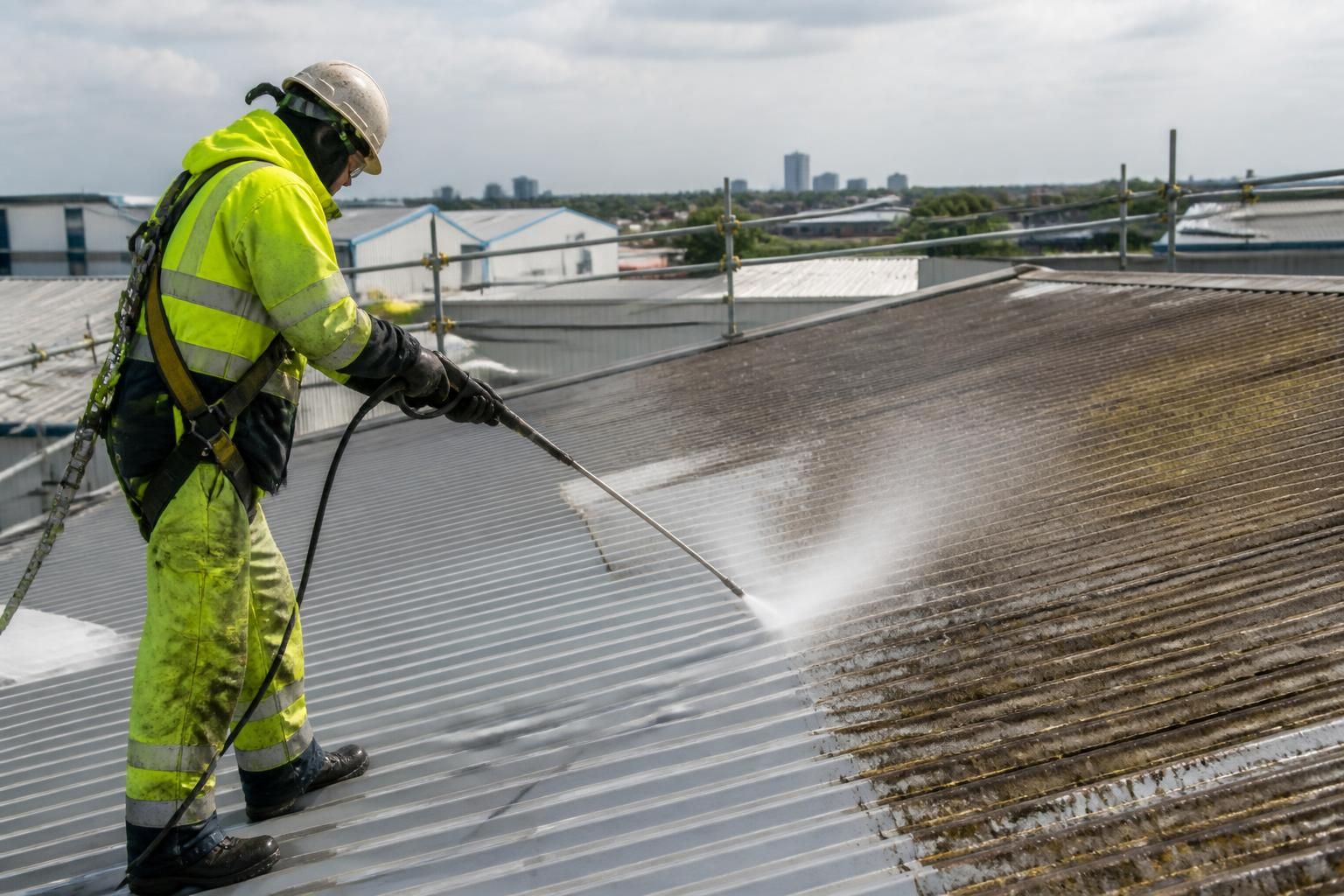
- Applying a compatible cleaning method: Low-pressure washing or steam cleaning may be appropriate for some roofs. The pressure, temperature, water volume and working direction must be controlled to avoid forcing water beneath tiles or damaging protective coatings.
- Applying the biocide: Once the surface has been prepared, the treatment is applied at the concentration and coverage rate specified for the product and roof material. It must be allowed sufficient contact time to work effectively.
- Managing the finished surface: Depending on the product and specification, the roof may be left for the treatment to act gradually or rinsed in a controlled manner. Gutters, downpipes and nearby surfaces should be checked and cleared as part of the work.
Low-pressure cleaning is often selected where the main requirement is to remove loose moss, algae and dirt without subjecting the roof to the force associated with conventional high-pressure washing. High pressure can dislodge tiles, damage joints, strip surface finishes and drive water into vulnerable areas. It should not be treated as a standard solution simply because it produces a fast visible result.
Steam cleaning can be useful where a more intensive clean is required and the roof covering can tolerate the selected temperature and moisture exposure. It may remove stubborn organic deposits and staining with less reliance on chemical action, but it still requires suitable equipment, access planning and control. Steam is not automatically suitable for every tile, membrane, coating or weathered surface.
Biocide should not normally be mixed with detergents, solvents or other treatment chemicals unless the product manufacturer specifically confirms that they are compatible. Combining products in the same container can reduce performance, create unwanted reactions or increase risks to workers, roof materials, drainage systems and surrounding vegetation. Separate stages are generally easier to control and verify.
The correct sequence depends on the roof. A relatively sound roof with light growth may only need a biocide application after basic preparation. A roof with thick moss may need careful removal first, while a delicate or heavily weathered covering may require a gentler treatment with minimal disturbance. The presence of solar panels, rooflights, plant equipment, rainwater harvesting systems or occupied areas below also affects the method statement.
Environmental controls are important when combining cleaning and biocide treatment. Runoff should be contained or directed appropriately, gutters and drainage points should be protected, and overspray should be avoided. Weather conditions, including wind and rainfall, affect application accuracy and dwell time. Any product used should be suitable for the intended application and handled in accordance with its label, safety data and relevant site requirements.
Combining methods does not mean that more aggressive cleaning is better. The objective is to achieve the required level of cleanliness while preserving the roof covering and limiting unnecessary water, chemical use and disturbance. A competent contractor should explain which method will be used first, why it is appropriate for the roof, how the biocide will be applied, and what result can reasonably be expected over time.
For commercial and industrial premises, the planned approach should also account for access equipment, pedestrian and vehicle movements, tenant operations, isolation requirements and protection of façades or hardstanding below. The completed work should be recorded, including the roof condition, products used, areas treated and any defects identified during the inspection. This provides a useful basis for future maintenance and helps distinguish normal gradual treatment results from a developing roof defect.
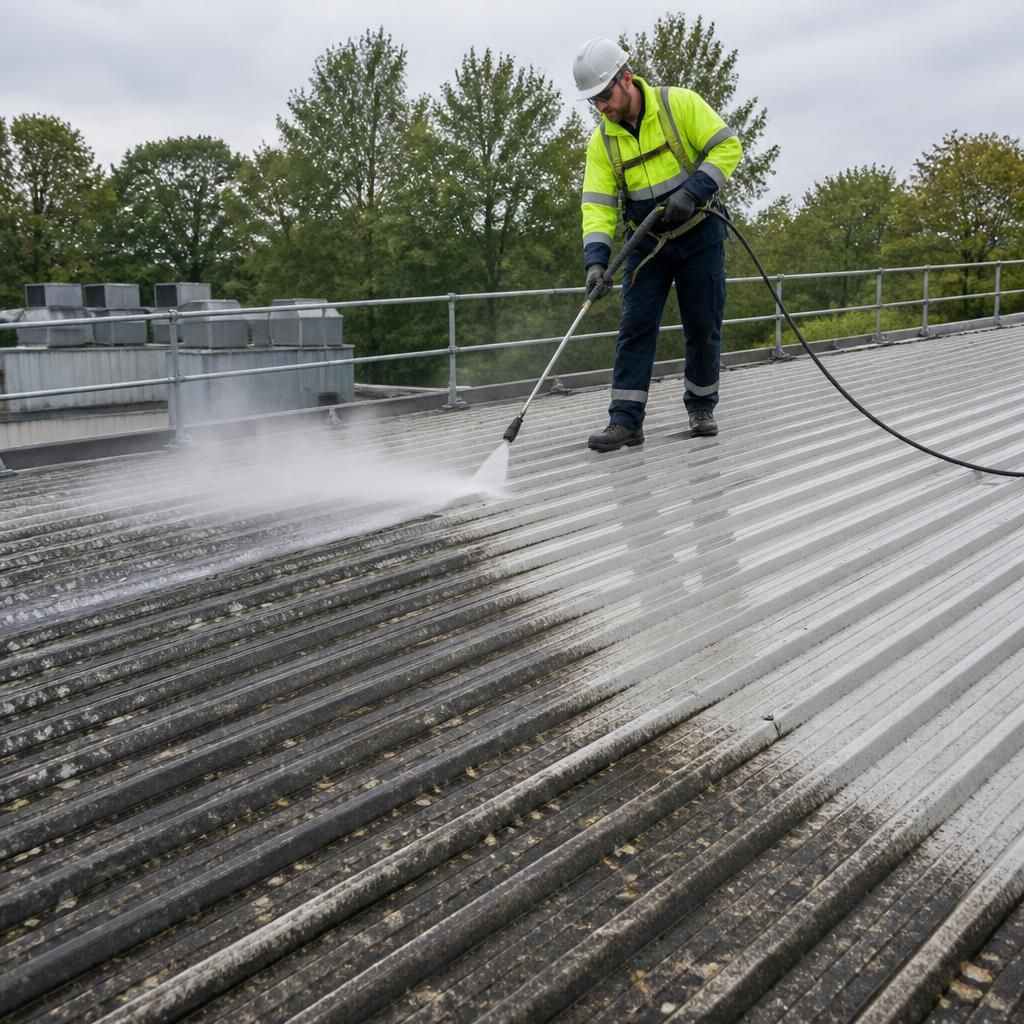
Combining biocide treatment with controlled roof cleaning can improve results by separating physical removal from biological control. Cleaning removes loose moss, algae, lichen and staining, while the biocide treats residual growth and helps limit regrowth.
The method must suit the roof covering and its condition. Loose deposits may be brushed or removed using low-pressure cleaning, while steam cleaning can be considered for compatible, more robust surfaces. High-pressure washing is not a routine substitute, as it can damage tiles, joints, coatings and vulnerable roof details.
Biocide should generally be applied as a separate stage rather than mixed with other chemicals. The roof should be inspected first, runoff controlled and the product applied in accordance with its instructions, allowing the required contact time. This staged approach provides a cleaner, more manageable result while reducing unnecessary stress on the roof and surrounding areas.