
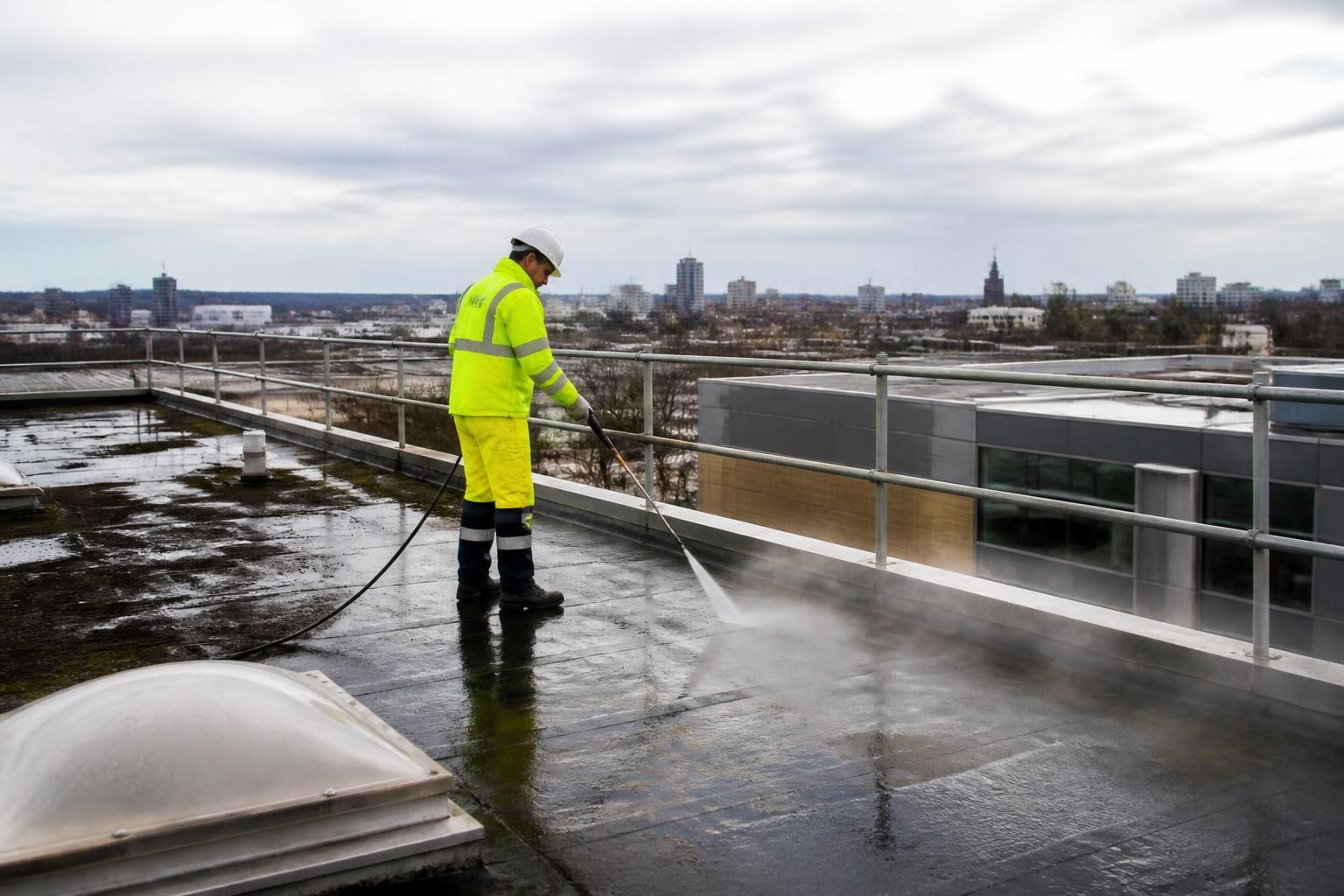
Are there specific times of year that are best for applying biocide treatments to roofs?
The best times to apply roof biocide treatments are usually spring or autumn, when conditions are mild, dry and relatively calm, with no frost or heavy rain forecast. Treatment timing should also follow the product instructions, as rainfall, surface temperature and the roof’s level of moss, algae or lichen can affect application and results.
Spring and autumn are generally the most suitable seasons for applying biocide treatments to commercial roofs. Mild temperatures, moderate drying conditions and lower risk of heat stress or frost can help the treatment remain on the surface for the required contact time. The product label and site-specific weather forecast should always take priority, because the correct application window depends on the biocide, roof material, level of biological growth and local conditions.
Spring application
Spring is often a practical time to treat roofs after the wettest and coldest part of winter has passed. Moss, algae and lichen may be particularly noticeable following prolonged damp conditions, so an early treatment can address growth before it becomes more established. It also allows roof maintenance to be planned before the wetter conditions that commonly return later in the year.
Spring weather can change quickly, however. Treatment should be scheduled for a dry period when there is no immediate risk of heavy rain washing the product from the roof. Frost can remain a concern, particularly in exposed areas, and surfaces may stay damp for longer during cool mornings. A suitable contractor will assess the roof and postpone application if the surface or access conditions are unsafe.
Autumn application
Autumn is also well suited to roof biocide work. Applying treatment after the warmer months can help control organic growth before winter brings extended periods of moisture and limited drying. The roof can then enter the wetter season with less moss, algae or lichen present, reducing the likelihood of blocked drainage channels and slippery build-up developing between maintenance visits.
Autumn scheduling requires attention to falling leaves, shorter daylight hours and increasingly unsettled weather. Organic debris should be removed where appropriate before treatment, and the roof should be checked for standing water, blocked outlets and areas that will not dry properly. Strong winds can affect spray control and increase the risk of drift, so work may need to be rearranged when conditions are not sufficiently calm.
Can treatment be applied during summer?
Summer can be suitable when temperatures are moderate and the weather is dry and calm, but very hot or bright conditions may not be ideal. Rapid evaporation can reduce the time available for the treatment to work, while hot roof surfaces can create additional risks for operatives and may affect certain products or roof materials. Early morning or later-day application may be considered where permitted by the product instructions, although dew and condensation must not leave the surface excessively wet.
Dry weather alone is not enough to confirm that summer is suitable. The expected drying period, surface temperature, wind speed and forecast rainfall should all be checked. A treatment should not be applied simply because the calendar suggests a favourable season.
Why winter is usually less suitable
Winter application is often restricted by frost, low surface temperatures, persistent rain, high winds and limited daylight. These conditions can prevent a biocide from remaining on the roof for the required period and can make access equipment, walkways and roof surfaces hazardous. Water may also freeze in roof details or drainage systems, increasing the risk of damage or unsafe working conditions.
Winter work may still be possible during a stable period, particularly on a suitable low-risk roof, but it should only proceed following a site assessment and confirmation that the product can be used under the prevailing conditions. If frost, heavy rain or unsuitable temperatures are forecast, postponing the work is normally the more responsible option.
Weather conditions to check before application
- Rainfall: avoid applying treatment when rain is expected to wash it away before the required contact time has passed.
- Surface condition: the roof should be assessed for excessive moisture, standing water, ice, loose contamination and debris.
- Temperature: check both the air and roof-surface temperature against the product instructions.
- Frost: allow sufficient time for frost to clear and avoid application when freezing conditions are likely during the treatment period.
- Wind: calm conditions help control application and reduce drift onto vehicles, façades, planting, watercourses and neighbouring property.
- Drying time: confirm that the forecast provides an appropriate period for the treatment to remain effective, without assuming that warm weather guarantees suitable drying.
Seasonal timing also depends on the roof and site
The best timing can vary between roof types and premises. A shaded north-facing roof may remain damp well into spring, while an exposed metal or membrane roof can heat rapidly in summer. Slate, tiles, concrete, coatings and sheet materials may have different compatibility requirements, so the treatment must be selected and applied in accordance with the manufacturer’s instructions.
Commercial sites also require practical planning. Plant, vehicles, pedestrian routes, ventilation intakes, rainwater systems and adjacent properties may need protection during application. Work should be coordinated around the building’s operations, access requirements and any planned roof repairs. Where moss or lichen is extensive, treatment may need to form part of a wider cleaning and maintenance programme rather than being applied as a standalone measure.
How to choose the application window
- Inspect the roof and identify the extent and type of biological growth.
- Confirm that the selected biocide is suitable for the roof material and intended use.
- Read the product instructions for application conditions, contact time, dilution and any restrictions.
- Review the local forecast for rain, frost, temperature, wind and drying conditions.
- Plan controls for runoff, overspray, access equipment, occupants, vehicles, planting and drainage.
- Apply only when the roof and surrounding area can be managed safely and the product can remain effective.
For most commercial and industrial premises, a planned spring or autumn treatment provides the most reliable starting point. It is not necessary to wait for a particular month if the roof requires attention, but unsuitable weather should not be overlooked. A site-specific assessment and accurate forecast review will determine whether the treatment should proceed, be brought forward or be rescheduled.
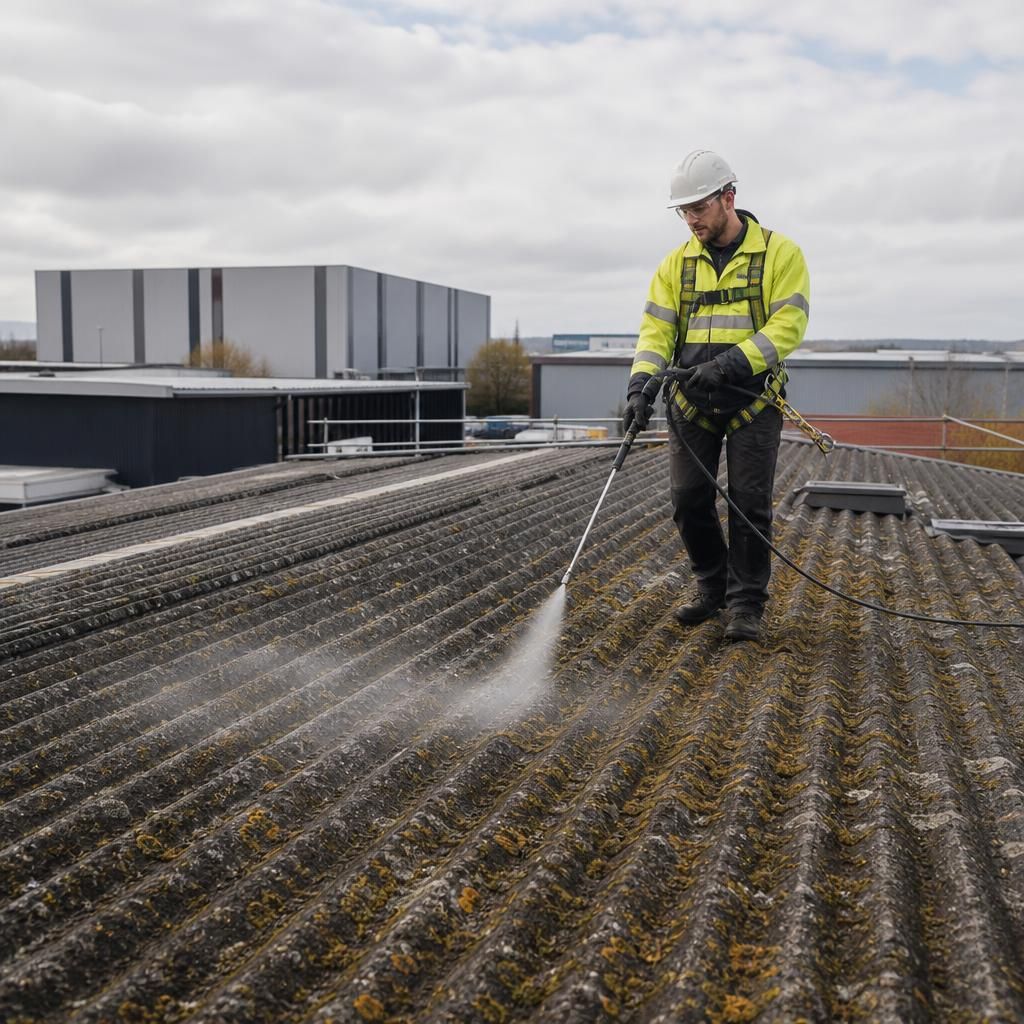
Spring and autumn are usually the most reliable seasons for roof biocide application because temperatures are generally moderate and conditions are less likely to cause rapid evaporation, frost or heat-related drying. Spring treatment can address moss, algae and lichen after winter moisture, while autumn treatment helps prepare the roof before prolonged wet weather.
Seasonal timing is only a starting point. The roof must be dry enough for application, with no heavy rain or frost expected during the product’s required contact period. Wind, surface temperature, standing water, roof shade and safe access should also be assessed, and the product instructions must take priority. If conditions are unsuitable, postponing the work is safer and more effective than applying treatment simply because it is the right season.