What safety measures are in place during exterior building cleaning?
Exterior building cleaning is carried out using documented risk assessments, method statements, trained operatives and suitable access equipment. Teams also control water, chemicals, pressure, falling-object and public-access risks while protecting the building, vehicles and surrounding areas.
Safety during exterior building cleaning is managed through a documented risk assessment, a site-specific method statement, competent operatives, suitable access equipment and controlled work areas. Before work starts, the team assesses the building, the cleaning method, access requirements, nearby people and vehicles, weather conditions, surface condition and any hazards created by water, chemicals, machinery or falling debris.
Site assessment and method statement
The site is assessed before cleaning begins so that risks can be controlled rather than dealt with during the work. The assessment considers the building’s height and design, fragile areas, roof edges, balconies, overhead services, glazing, occupied areas, vehicle routes, pedestrian access and the condition of the surfaces being cleaned. The method statement then sets out the planned sequence of work, equipment, controls and emergency arrangements.
Where conditions differ from the original assessment, work is paused and the method is reviewed. This is particularly important on construction sites, industrial premises and busy commercial properties, where access routes, stored materials or other contractors may change throughout the day. Site rules, permits and client-specific procedures are followed where they apply.
Competent and appropriately equipped operatives
Cleaning is carried out by operatives who are trained in the equipment and methods required for the job. This includes safe use of pressure washers, steam-cleaning equipment, chemical products, ladders, mobile access equipment and any specialist systems specified in the method statement. Operatives are also briefed on site hazards, exclusion zones, emergency procedures and the limits of the equipment being used.
Personal protective equipment is selected according to the identified risks. This may include protective footwear with suitable grip, gloves, eye or face protection, hearing protection, protective clothing, hard hats and respiratory protection where a substance assessment shows that it is necessary. PPE is used alongside other controls; it is not treated as a substitute for safe planning, suitable equipment or effective separation from hazards.
Safe access and work at height
Access equipment is chosen to suit the height, structure, reach and ground conditions. Depending on the site, this may include telescopic systems, water-fed poles, mobile elevated work platforms, scaffolding, towers, cradles or rope-access arrangements. Equipment is inspected before use and positioned on suitable ground, with stabilisation and edge protection used where required.
Work-at-height controls include preventing falls, securing equipment, maintaining safe distances from edges and avoiding reliance on unsuitable ladders for prolonged or demanding work. Where harnesses or other fall-arrest systems are required, they must be used with suitable anchor arrangements and a rescue plan. Access routes are kept clear, and equipment is not used beyond its intended operating limits or in conditions that make it unstable.
Exclusion zones and falling-object controls
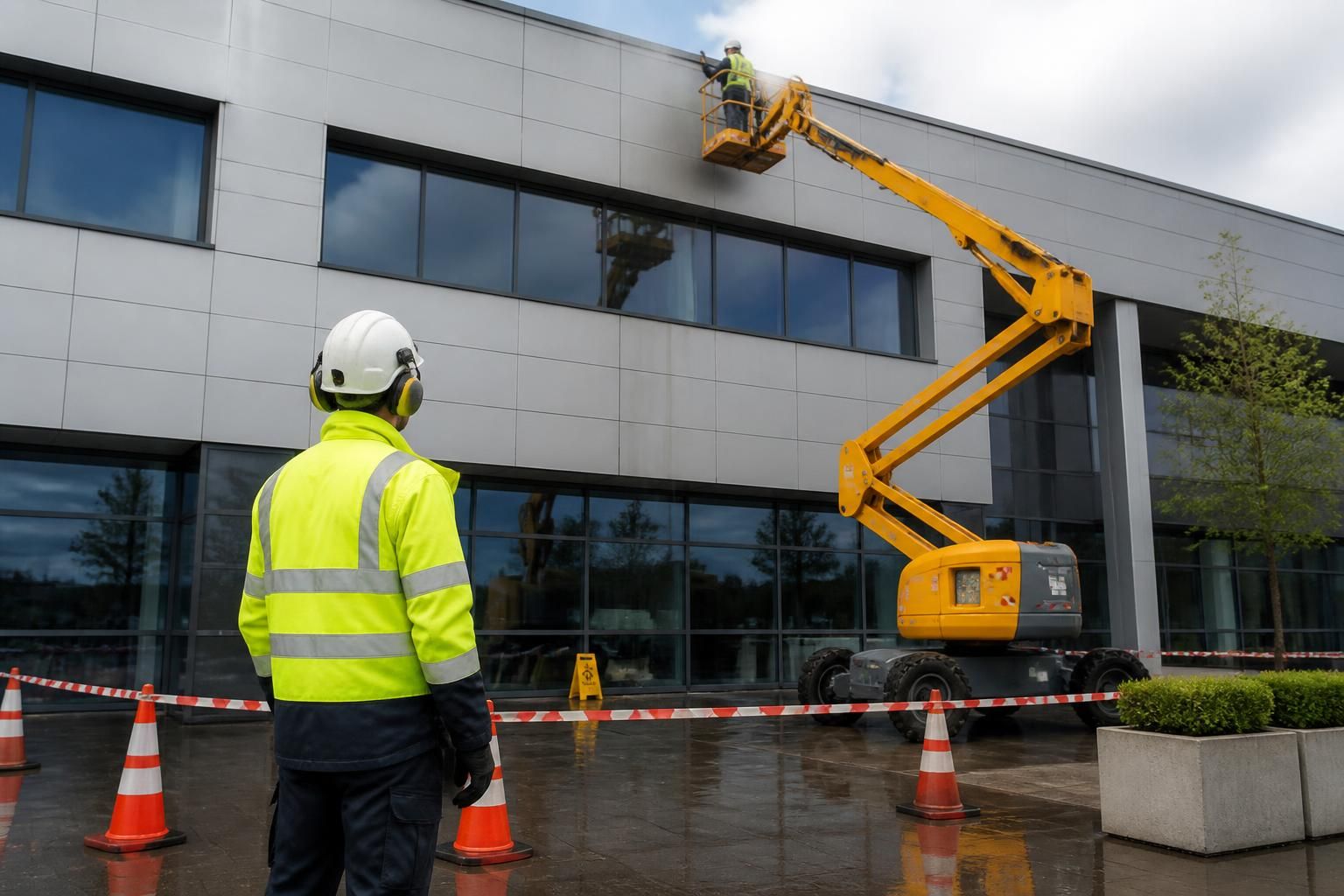
Areas below or around the work location may be cordoned off with barriers, cones, signage or other controls. The size and position of the exclusion zone depend on the height of the work, the equipment used, the potential for loosened material and the movement of people or vehicles around the building.
Tools, hoses and accessories are secured where there is a risk of them falling. Loose render, masonry, paint, signage or other debris is identified before cleaning, since pressure or steam can dislodge unsound material. Operatives do not continue with a method that could create an uncontrolled falling-object risk; the affected area is made safe and the client is informed where further repair or specialist inspection is needed.
Control of pressure, steam and water
Pressure is selected according to the material and its condition. Excessive pressure can damage mortar joints, coatings, render, timber, seals, pointing and vulnerable stone, as well as forcing water behind cladding or into the building. Operators control the distance, angle, temperature, flow and dwell time of the cleaning system, and test a discreet area where the surface response is uncertain.
Steam and hot-water equipment present burn, hose and slip hazards. Hoses are routed to reduce trip risks, protected from vehicle movements and checked for damage. Water run-off is managed so that it does not enter occupied areas, electrical installations, drainage systems without approval or neighbouring premises. Wet surfaces are marked or isolated until they are safe to use.
Chemical handling and COSHH controls
Cleaning products are selected for the surface and the type of contamination. Before use, the relevant safety information is reviewed and a COSHH assessment is completed where required. This identifies the hazards, safe dilution and application method, required PPE, storage arrangements, ventilation needs, first-aid measures and spill response.
Products are kept in suitable labelled containers and are never mixed unless the manufacturer’s instructions specifically permit it. Operatives avoid unnecessary overspray and protect glazing, seals, vegetation, vehicles and adjacent materials. Chemical residues are rinsed or collected in accordance with the method statement, and spills are contained promptly. Where there is a risk to occupants or the public, the area is isolated until the product has been removed or the required re-entry conditions have been met.
Protection of the building and surrounding property
Before cleaning, the team identifies vulnerable features such as electrical fittings, vents, sensors, air-conditioning units, door thresholds, window seals, painted finishes and delicate architectural details. These areas may be covered, isolated or cleaned using a lower-impact method. Doors and windows are kept closed where necessary, and water is prevented from entering through gaps or damaged seals.
Vehicles, stock, plant, external furniture and landscaping are moved or protected where practicable. Drainage routes and run-off are considered before work begins, particularly where dirt, oil, paint residue, biocides or other contaminants could be washed into surface water systems. The cleaning process is adjusted if the building or surrounding area cannot be adequately protected using the planned controls.
Public, occupant and traffic safety
Cleaning areas are separated from employees, visitors, residents and members of the public. Signage and barriers identify temporary hazards, while banksmen or other traffic controls may be used where vehicles, delivery movements or access equipment create an interface with pedestrians. Work is coordinated with the client so that entrances, fire exits, loading areas and emergency routes remain available or are clearly diverted.
Noise, spray and access restrictions are also considered on occupied sites. Where possible, disruptive activities are planned for agreed periods, and the work area is left in a condition that does not create an ongoing slip, trip, chemical or obstruction hazard.
Equipment inspections and maintenance
Pressure washers, steam cleaners, hoses, electrical leads, access equipment and lifting accessories are checked before use. Defective or damaged equipment is removed from service. Electrical equipment is protected from water, connected through appropriate controls and used in line with the site’s electrical arrangements.
Where applicable, lifting equipment and accessories are examined under the relevant inspection requirements, and work equipment is operated in accordance with manufacturer guidance. Fuel, batteries, cables and hoses are positioned to reduce fire, trip, leak and mechanical risks. Equipment is shut down safely before adjustments, clearing blockages or maintenance.
Weather and changing site conditions
Wind, rain, ice, heat, poor visibility and lightning can affect access equipment, chemical performance, surface drying and operator safety. Work at height, spraying and vehicle movements are reviewed when weather conditions change. Equipment is not used when wind or other conditions exceed its safe operating limits, and wet or icy ground is addressed before access equipment is positioned.
Cleaning may also be stopped if visibility deteriorates, water cannot be controlled, surfaces become unexpectedly unstable or members of the public cannot be kept outside the exclusion zone. Rescheduling work is safer than proceeding when the agreed controls are no longer effective.
Emergency arrangements and completion checks
The method statement includes arrangements for incidents such as falls, chemical contact, equipment failure, damage to the building, uncontrolled water ingress, spills and public access into the work area. Operatives know how to raise the alarm, contact the responsible site person, provide initial assistance and obtain emergency support. Rescue arrangements are particularly important where work at height or restricted access is involved.
After cleaning, the team checks that barriers, hoses, equipment and protective coverings have been removed safely, surfaces are not creating an avoidable slip hazard, drainage has been left clear and the building has not been affected by water or cleaning products. Any defects, fragile materials or conditions requiring repair are reported to the client rather than concealed by the cleaning process. These controls provide a structured way to protect operatives, occupants, the public, the property and the surrounding environment throughout the work.
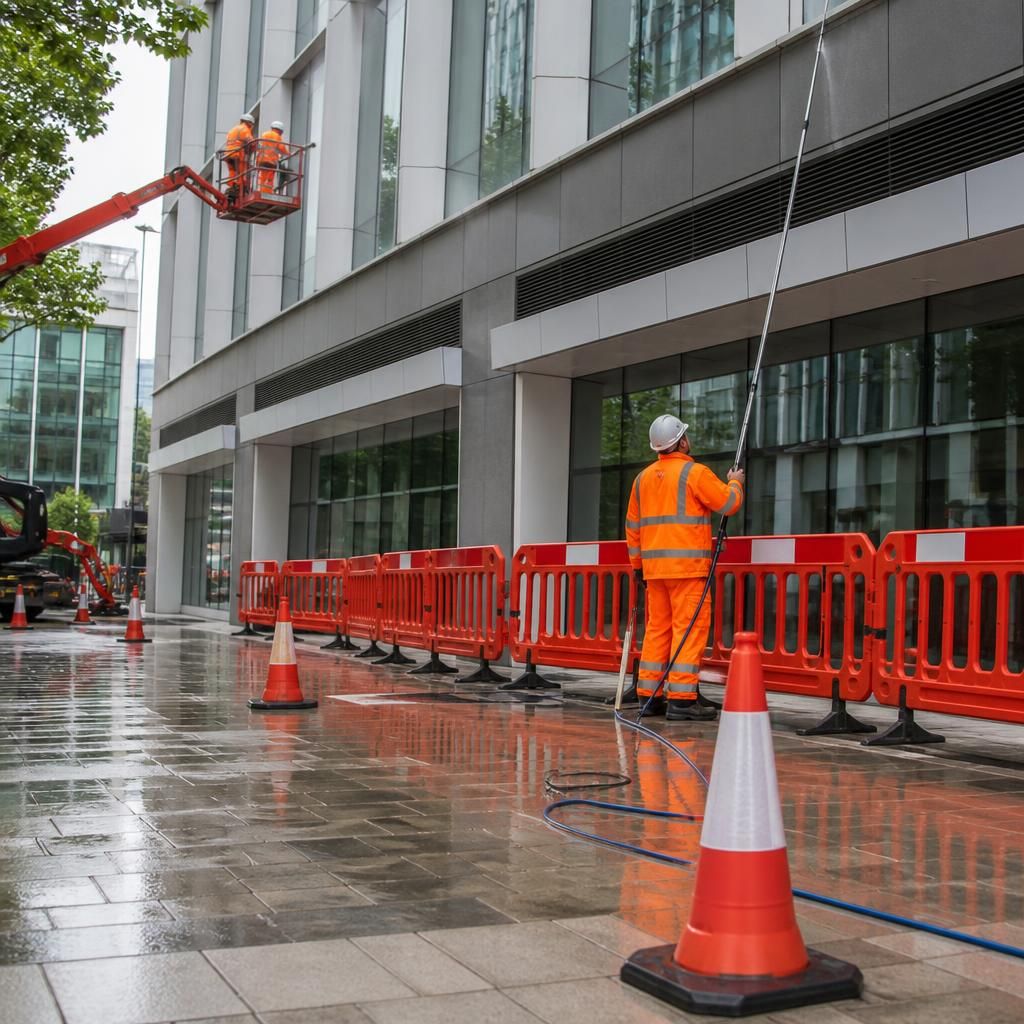
Exclusion zones separate exterior cleaning activities from people, vehicles and property below. Barriers, cones and warning signs are positioned according to the height of the work, access equipment in use and the risk of falling tools, water or loosened material.
Before cleaning, operatives check for unstable render, masonry, paint, signage and other debris that pressure or steam could dislodge. Hoses, tools and accessories are secured, while entrances, walkways and vehicle routes are diverted or managed where necessary. If the area cannot be kept safely clear, work is paused until suitable controls are in place.
Arrange Your Exterior Cleaning Assessment
Arrange your exterior cleaning assessment to review site hazards, access requirements, surface conditions and the controls needed for safe, effective work.

For a free quote & consultation
Contact usAccreditations