Exterior building cleaning costs are determined by the amount of surface to be cleaned, its material and condition, the cleaning method required, access arrangements, site risks and the resources needed to complete the work safely. A reliable quotation also considers preparation, protection, traffic management, waste handling, travel and whether the work is a one-off project or part of a planned maintenance programme.
Surface area and the scope of work are usually the starting points. Larger façades, roofs, cladding systems, car parks and paved areas require more labour, water, equipment and working time. However, cost does not always increase in direct proportion to the visible area. A relatively small building with difficult access, extensive staining or several different surface materials may require more planning and specialist equipment than a larger, straightforward site.
The quotation may cover the whole exterior or selected elements, such as:
- Brick, stone, concrete, render or painted façades
- Metal, composite or coated cladding
- Roofs, rooflights, gutters and rainwater goods
- Entrances, steps, walkways and hard landscaping
- Car parks, loading areas and forecourts
- Graffiti, staining, algae, moss, oil deposits or construction residue
Clearly defining the required areas helps avoid an inaccurate comparison between quotations. A price for washing a façade alone may not include windows, canopies, gutters, surrounding paving, stain treatment or the removal of contaminated wash water.
The type and condition of the surface affect both the method and the time required. Materials differ in their tolerance of pressure, heat, moisture and chemical treatments. Brickwork, natural stone, render, painted surfaces and cladding may each need a different approach to prevent marking, erosion, discolouration or damage to coatings.
Clean surfaces with light, loose soiling are generally more straightforward to treat than surfaces affected by embedded pollution, biological growth, rust, efflorescence, paint, oil or construction materials. Long-standing contamination may require pre-treatment, dwell time, agitation, repeated rinsing or more than one cleaning visit. Fragile or weathered materials may also need a slower, lower-pressure process, which can increase labour time even where the cleaning equipment itself is less intensive.
The cleaning method is selected according to the surface, the type of contamination and the required finish. Pressure washing can be efficient for suitable hard-wearing surfaces, while soft washing, steam cleaning, hot water or specialist chemical treatment may be more appropriate for delicate materials or particular stains. Some projects require a combination of methods rather than one process across the entire building.
Method-related cost considerations include equipment requirements, water consumption, cleaning agents, pre-treatment and post-treatment. Chemical products must be selected and controlled carefully, particularly near planting, watercourses, drainage systems, occupied premises and food-related environments. Where wash water cannot be discharged directly, additional collection, filtration or disposal arrangements may be necessary.
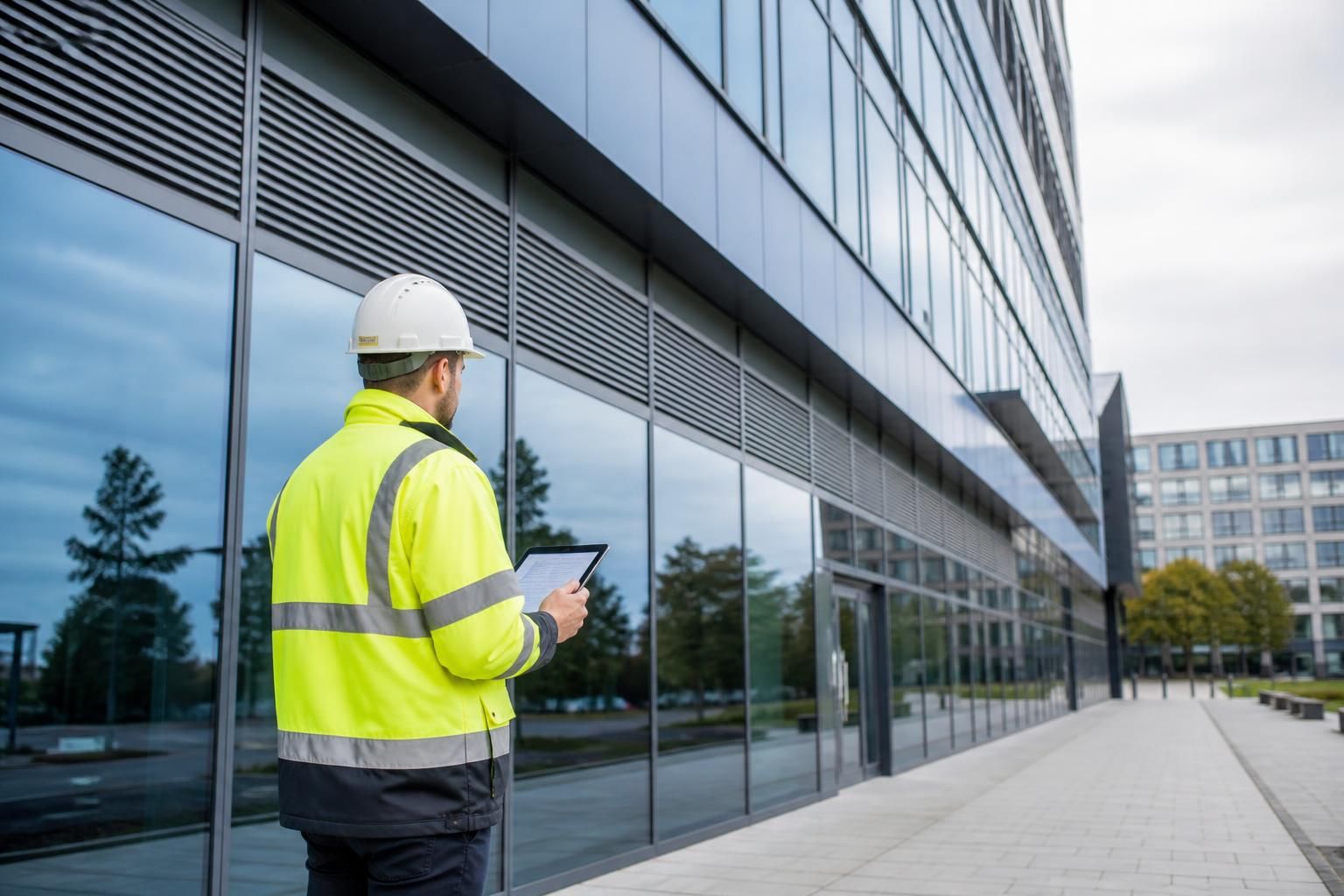
Access and working height are significant factors for commercial and industrial buildings. Ground-level areas may be accessible using standard equipment, whereas upper façades, roof edges, atria and recessed elevations can require mobile elevated work platforms, scaffold, towers, abseiling systems or long-reach equipment. The choice depends on the building, ground conditions, reach required, duration of the work and the need to keep entrances, roads or operational areas available.
Access equipment brings additional considerations, including delivery, setup, trained operators, ground protection, exclusion zones and possible permits. If equipment cannot be positioned close to the building, extra handling and setup time may be required. Restricted access, narrow service yards, overhead obstructions and uneven ground can all affect the working method and quotation.
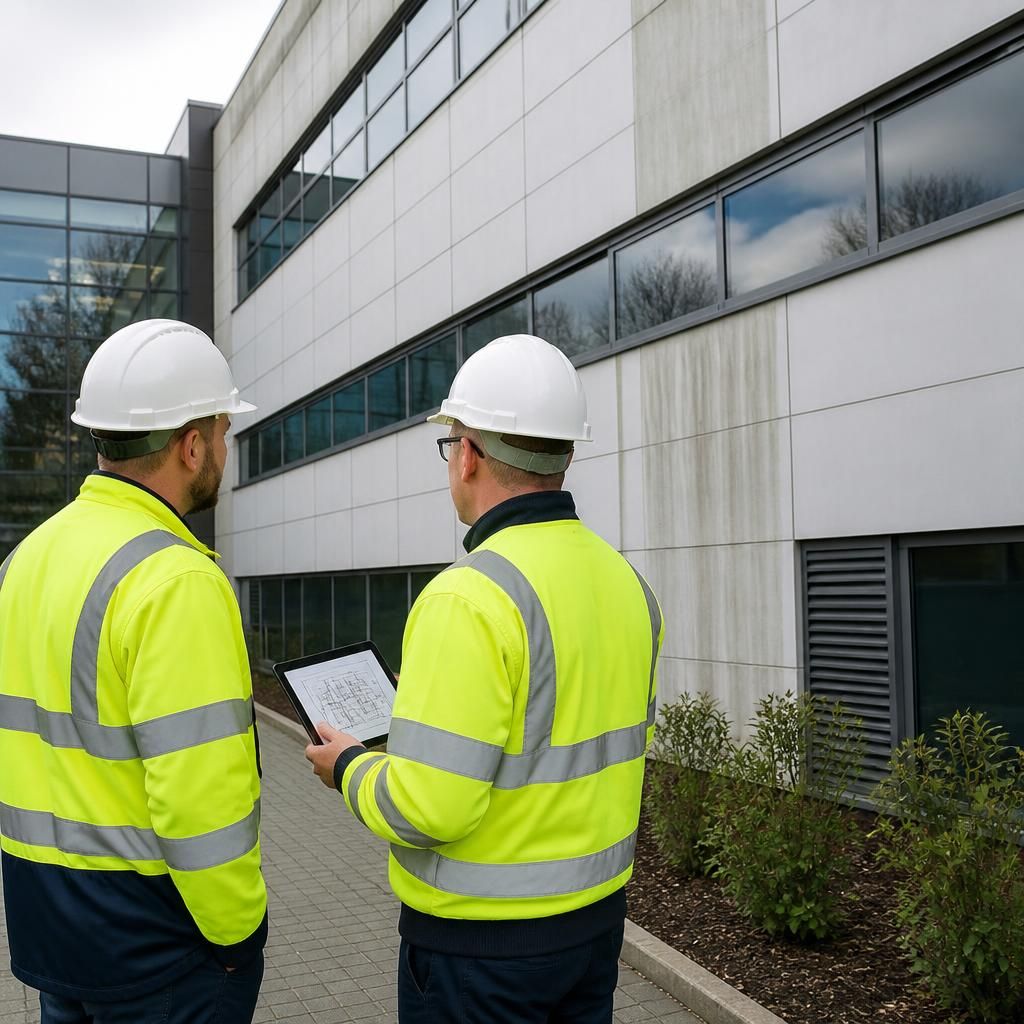
Health, safety and site risk are included in professional pricing because exterior cleaning often involves height, water, machinery, chemicals, electrical installations, moving vehicles and members of the public. A suitable plan may require a site survey, risk assessment, method statement, personal protective equipment, barriers, signage, banksmen or traffic management.
Occupied premises, busy retail areas, schools, hospitals, transport locations and industrial sites may require work outside normal operating hours or in carefully controlled stages. These arrangements can increase labour and supervision requirements, but they reduce disruption and help protect people, vehicles and property.
Preparation and protection can affect the cost even when they are not part of the visible cleaning. Contractors may need to protect doors, vents, windows, lighting, signage, vehicles, planted areas and sensitive equipment. Loose debris, furniture, temporary fixtures or stored materials may need to be moved before work begins. Some surfaces also require testing in an inconspicuous area to confirm that the proposed method is suitable.
Pre-cleaning inspections are particularly important where the building has unknown coatings, previous repairs, damaged sealants or areas of suspected asbestos-containing material. Cleaning should not proceed over unsafe or unsuitable substrates until the relevant issue has been assessed and controlled.
Site location and operating conditions influence the resources needed to deliver the work. Travel distance, parking restrictions, congestion, restricted delivery times and the availability of water or electrical supplies may affect planning. Sites without suitable welfare, storage or wash-down facilities may require additional arrangements. Where cleaning must be completed in phases to maintain access, the extra mobilisation and setup time may be reflected in the price.
Wastewater, debris and environmental controls are another potential cost. Removed dirt, coatings, oil, chemical residue and contaminated water must be managed in accordance with the site requirements and applicable environmental controls. The quotation may need to include drain protection, wastewater recovery, filtration, collection, transfer and lawful disposal rather than allowing dirty water to enter surface water drainage.
Frequency and contract arrangement can also affect the overall cost. A one-off deep clean usually involves more heavily accumulated dirt and may require intensive preparation. Planned maintenance can help keep surfaces within a more manageable condition and may allow equipment, access and labour to be scheduled efficiently. A recurring programme can also coordinate façade, roof, gutter, car park and graffiti work, reducing duplicated setup and disruption.
When reviewing a quotation, check what is included and whether the price covers access equipment, traffic management, surface protection, cleaning agents, wastewater handling, waste disposal, remedial treatment and final inspection. It is also useful to confirm the expected finish, any exclusions, working hours, weather limitations and the process for dealing with previously hidden damage.
The most accurate exterior building cleaning quotation follows a site assessment rather than relying solely on photographs or floor area. A survey allows the cleaning contractor to identify materials, contamination, access restrictions, drainage arrangements and operational risks, then specify a suitable method and realistic programme. Providing plans, access information, photographs and details of previous treatments can help the assessment and make the final price more dependable.