What are the benefits of professional exterior building cleaning over DIY methods?
Professional exterior building cleaning provides safer, more consistent results than DIY methods by combining suitable equipment, material-specific techniques and trained access procedures. It also helps protect façades, roofs, cladding and other surfaces from avoidable damage while reducing disruption and the need for repeat cleaning.
Professional exterior building cleaning is generally safer, more controlled and more effective than DIY cleaning because it combines trained operatives, suitable equipment, material-specific methods and planned access procedures. For commercial and industrial premises, this reduces the risk of surface damage, accidents, incomplete cleaning and disruption while helping protect the building’s appearance and condition over the longer term.
Improved safety and risk control
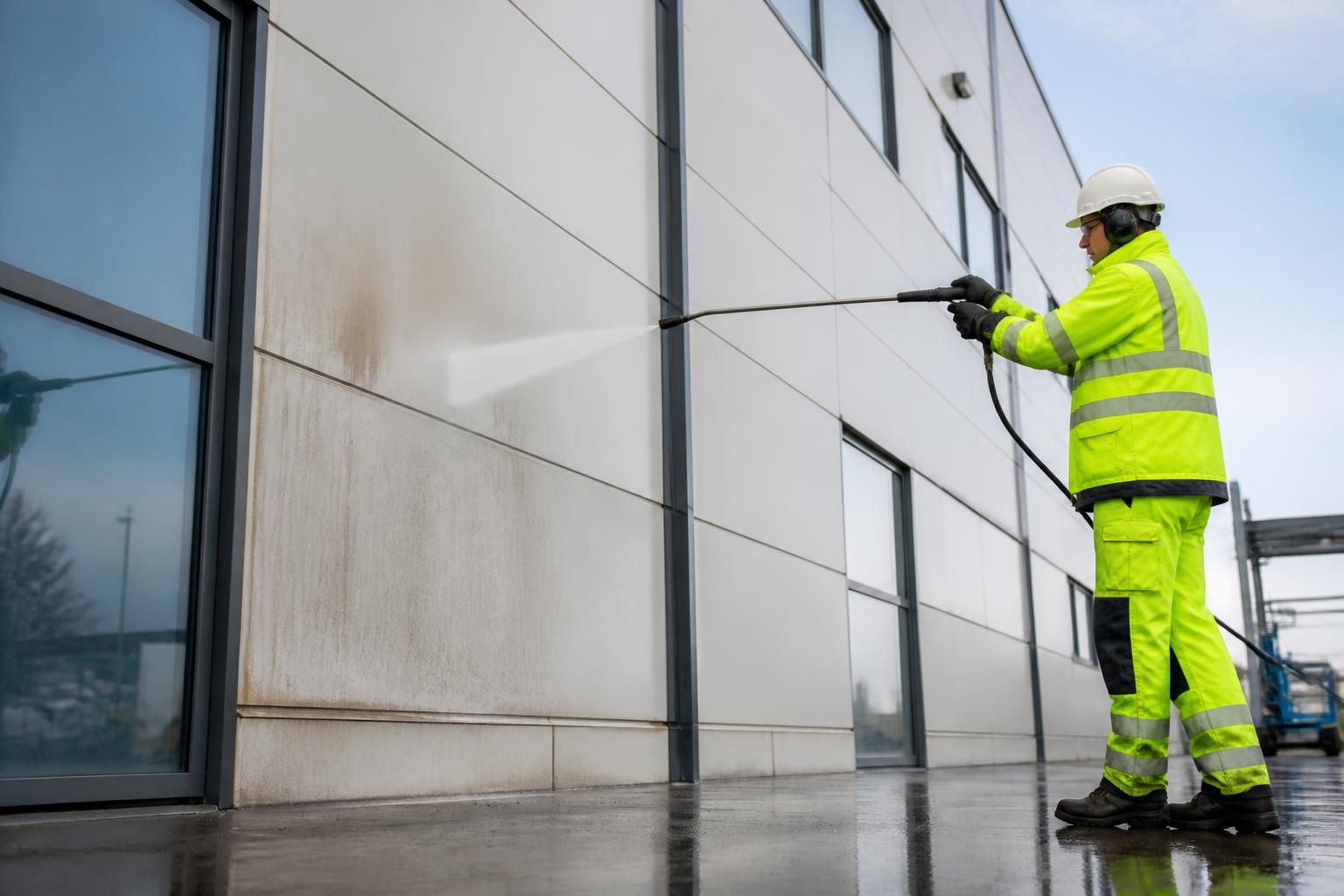
Exterior cleaning can involve working at height, wet surfaces, pressurised water, steam, cleaning chemicals, traffic movement and difficult access. These risks are not always obvious when viewed from ground level. Professional contractors assess the building, surrounding area and proposed cleaning method before work starts. They can plan exclusion zones, safe access, equipment positioning, pedestrian management and emergency procedures appropriate to the site.
Trained operatives also understand how to use pressure washing equipment, steam systems, chemical treatments, water-fed tools and access equipment safely. This is particularly important around roof edges, canopies, loading areas, car parks and active construction or industrial sites. A DIY approach may expose staff, visitors, members of the public or the person carrying out the work to avoidable risks.
More suitable methods for each surface
Different building materials respond differently to water pressure, temperature, dwell time and cleaning products. Brick, natural stone, render, painted surfaces, metal cladding, roof coverings, concrete and paving all require appropriate treatment. A method that removes dirt quickly from concrete may mark render, strip a coating from metalwork or damage softer stone.
Professional cleaning starts with identifying the surface and the type of contamination. Organic growth, atmospheric soiling, oil, cement residue, rust staining, chewing gum and graffiti may each require a different approach. Operatives can adjust pressure, temperature, nozzle selection and cleaning agents, and carry out a small test area where there is a risk of discolouration or surface damage. This controlled approach is more reliable than applying the same pressure or product across the entire building.
Reduced risk of damage
DIY pressure washing can force water behind cladding, through defective joints or beneath roof coverings. Excessive pressure can erode mortar, open existing cracks, remove protective coatings and damage pointing. Incorrect chemicals can bleach surfaces, corrode metalwork, affect sealants or leave residues that attract further dirt.
Professional contractors look for vulnerable areas before cleaning, including failed sealants, loose coatings, damaged pointing, open joints, fragile finishes and defective drainage. Where a defect could be made worse by water or pressure, the cleaning plan can be adapted and the issue reported. This helps distinguish cleaning work from repairs and prevents avoidable deterioration.
More consistent and complete results
Large façades, roofs, car parks and cladding systems often show uneven weathering. DIY cleaning may leave visible bands, missed areas, streaks or differences in colour because the operator cannot maintain consistent pressure, distance, coverage and rinse procedures. Professional teams use a defined method so that surfaces are treated systematically and checked as work progresses.
They can also deal with areas that are difficult to reach from ground level, such as high-level façades, roof details, signage zones, parapets and sheltered elevations. Removing contamination from these areas is important because isolated patches of dirt or biological growth can make the whole building appear poorly maintained.
Access to commercial-grade equipment and access systems
Professional contractors have access to equipment selected for the building and the site rather than relying on a domestic pressure washer. Depending on the requirements, this may include pressure washing systems, steam cleaning equipment, soft-washing tools, specialist detergents, surface cleaners and water recovery measures.
They can also plan suitable access arrangements, such as towers, mobile access equipment, telescopic systems or other controlled methods where appropriate. Access equipment must be selected and operated according to the height, ground conditions, obstacles and work area. Improvised ladders or working from unstable surfaces create unnecessary risks and rarely provide the coverage or control needed for commercial cleaning.
Less disruption to the working site
Cleaning a commercial property affects staff, visitors, residents, tenants, vehicles and neighbouring premises. A professional programme can be organised around operating hours, delivery schedules and access requirements. The work area can be managed to reduce slip hazards, overspray, noise, water run-off and interference with entrances or traffic routes.
Professional planning is particularly valuable at retail premises, offices, industrial units, construction sites, communal developments and public buildings. The cleaning team can agree the sequence of work, identify sensitive areas and coordinate with the person responsible for the site before starting.
Better control of run-off and cleaning products
Exterior cleaning can produce contaminated water containing oil, silt, detergents, paint residue, biological matter or other debris. Allowing this water to enter surface drains or neighbouring land may create environmental and compliance problems. Professional operatives can assess drainage, contain or redirect run-off where needed and use cleaning products in a controlled manner.
This is also relevant when removing graffiti, oil deposits or construction residue. The appropriate method should remove the contamination without spreading it across adjoining surfaces or creating a larger disposal problem.
Protection of the building’s long-term condition
Regular removal of dirt, algae, moss, pollutants and other deposits helps surfaces remain serviceable and makes emerging defects easier to identify. Organic growth can retain moisture, while accumulated pollutants may discolour finishes and contribute to surface deterioration. Cleaning does not replace repairs, waterproofing or planned maintenance, but it forms an important part of a wider building-care programme.
A professional visit can also highlight blocked gutters, damaged roof coverings, failing sealants, loose render, cracked paving or areas where water is not draining correctly. Identifying these issues early allows the responsible property manager to arrange appropriate remedial work before cleaning or weather exposure causes further problems.
When DIY cleaning may be appropriate
Small, low-level tasks may be suitable for a competent person where the surface is robust, the area is isolated and there are no access, drainage or chemical hazards. Even then, the equipment instructions should be followed, suitable personal protective equipment should be used and a discreet test area is sensible.
Professional cleaning is the safer option where work involves height, large or occupied premises, fragile or coated materials, roofs, extensive cladding, significant staining, graffiti, oil contamination, public access or complex drainage. It is also preferable when a consistent finish is required across multiple elevations or sites.
For commercial and industrial buildings, the main benefit is not simply a cleaner appearance. Professional exterior cleaning provides controlled risk management, appropriate surface treatment, efficient access, responsible run-off handling and a clearer basis for ongoing maintenance. These factors make it more suitable than DIY methods for protecting the building, limiting disruption and achieving dependable results.
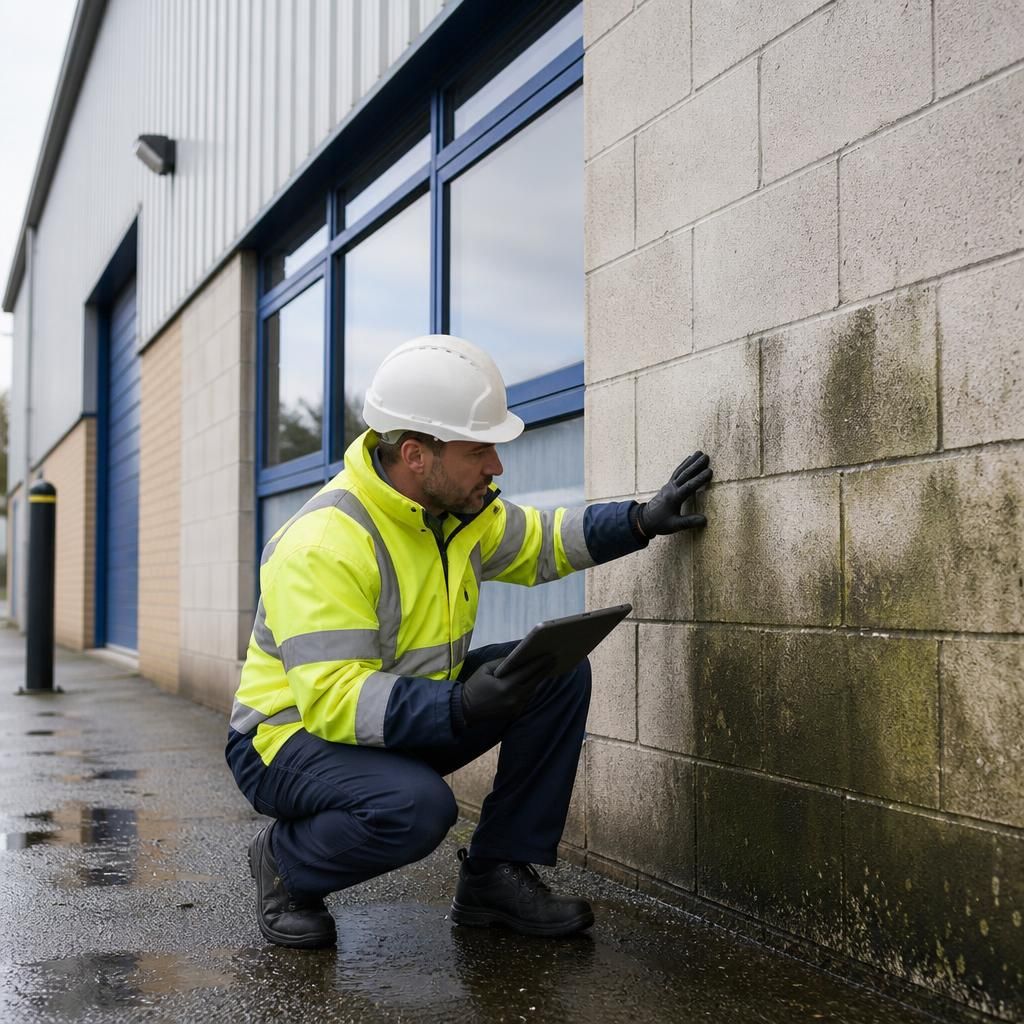
Professional exterior cleaning reduces the risk of damage by matching the cleaning method to the building material and type of contamination. Brick, render, natural stone, roof coverings and metal cladding can each react differently to pressure, heat and cleaning chemicals, so using the same approach across every surface is rarely appropriate.
Before work begins, the surface should be assessed for fragile finishes, loose pointing, failed sealants, open joints and existing defects. A controlled test area can confirm whether the selected pressure, temperature and cleaning solution are suitable. This helps prevent problems such as eroded mortar, stripped coatings, water penetration, discolouration or corrosion that may result from unsuitable DIY equipment or products.
Discuss Your Exterior Building Cleaning Requirements
Discuss your exterior building cleaning requirements with Encanto Exterior Cleaning to agree a suitable method, access plan and schedule for your premises. Contact our team to arrange a site assessment and tailored cleaning proposal.
For a free quote & consultation
Contact usAccreditations