
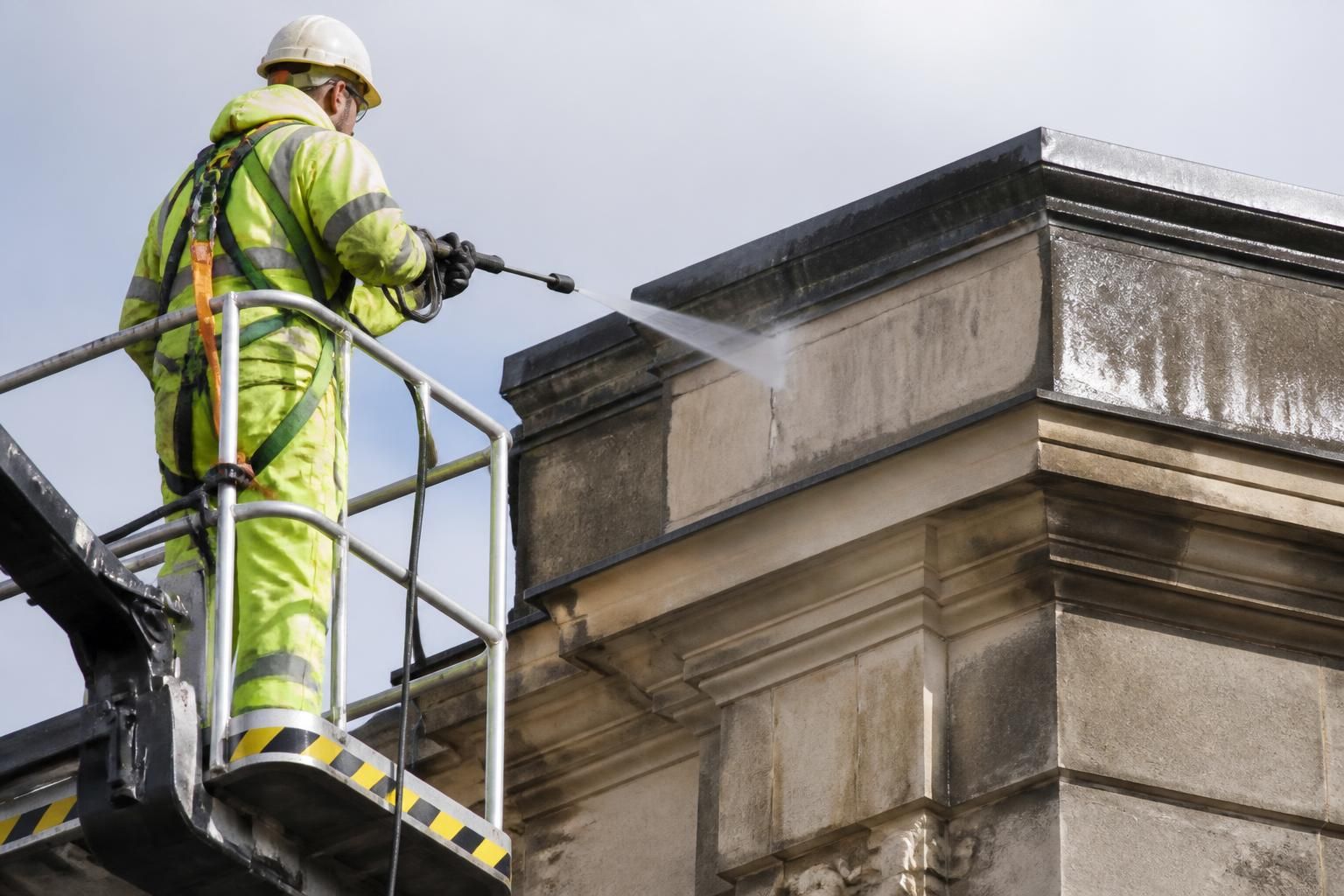
What specific cleaning methods are best suited for the materials used in your building's roof, stone surfaces, and gutters?
The best method depends on the material and its condition: low-pressure soft washing or steam cleaning is generally suited to roof tiles, pressure washing may be appropriate for robust concrete and some stone surfaces, and controlled low-pressure cleaning is safest for gutters. Delicate or weathered stone often requires specialist steam cleaning, biocide treatment or gentle abrasive methods, selected after assessing the surface, coatings, joints and drainage.
The most suitable cleaning method is determined by the roof, stone or gutter material, its condition, the type of contamination and the risk to nearby finishes. In general, low-pressure soft washing or steam cleaning is appropriate for many roof coverings, controlled pressure washing can suit robust concrete and some sound stone, and low-pressure rinsing or manual cleaning is usually safest for gutters. Delicate, porous or weathered surfaces should be assessed individually rather than cleaned with a standard pressure-washing setting.
Roof tiles and slates
Roof coverings can vary considerably, even within the same building. Concrete tiles are generally more tolerant of controlled pressure washing than older clay tiles, natural slate or heavily weathered surfaces. However, excessive pressure can strip surface finishes, force water beneath laps, damage pointing and dislodge tiles. The cleaning method should therefore be selected after checking the tile profile, condition, fixing arrangement, coatings and roof pitch.
- Concrete tiles: Low to moderate pressure washing may be suitable where the tiles are sound and the drainage arrangements allow safe capture of contaminated water. A soft wash or steam clean may be preferable where algae, moss and lichen are present but the surface is aged or coated.
- Clay tiles: These can be more vulnerable to surface erosion, cracking and damage around edges. Gentle pressure, steam or a controlled biocide treatment is normally safer than aggressive jetting.
- Natural slate: Slate should be treated cautiously because pressure can damage the surface, loosen fragile pieces or affect fixings and flashings. Gentle steam cleaning, soft washing or carefully applied biocide treatment may be more appropriate, subject to a condition survey.
- Fibre cement and coated roof sheets: Cleaning should avoid damaging the coating or releasing hazardous dust from older materials. Low-pressure methods and suitable cleaning solutions are preferred, with the material identified before work begins.
- Metal roofing and cladding: Low-pressure washing or steam cleaning can remove dirt and organic growth, but the process must protect coatings, sealants, fixings and vulnerable joints. Chemical compatibility is particularly important on painted or galvanised surfaces.
Where moss has established a thick layer, mechanical removal may be needed before washing or treatment. This should be done without levering against tiles or disturbing the roof covering. A biocide treatment can help control remaining algae, moss and lichen, but it is not a substitute for correcting damaged tiles, defective flashings or poor drainage.
Stone, masonry and sandstone
Stone cleaning requires a balance between removing contamination and preserving the surface’s natural weathered layer. The key considerations are porosity, hardness, mineral composition, previous repairs, pointing, coatings and the condition of the stone. Sandstone, limestone and older masonry can absorb water and may be damaged by high pressure, harsh chemicals or unsuitable abrasive media.
- Sound, dense stone: Carefully controlled pressure washing may be suitable for robust surfaces where the stone, joints and repairs are in good condition. Pressure should be kept as low as practical and increased only after a test area has confirmed that the surface is not being eroded.
- Sandstone and other porous stone: Low-pressure steam cleaning, gentle soft washing or a specialist biological treatment is often more appropriate. These methods can reduce surface damage and help avoid driving water and contaminants deeper into the stone.
- Delicate, historic or weathered masonry: Steam cleaning or a low-impact specialist cleaning system is generally preferable to aggressive jetting. Loose material, friable faces and weak pointing should be identified before cleaning.
- Painted, sealed or previously treated stone: The existing coating must be checked for adhesion and chemical compatibility. Cleaning may reveal uneven weathering or remove a failing coating, so the intended finish should be agreed before work starts.
- Graffiti and localised staining: The removal method should be matched to both the graffiti medium and the substrate. A suitable poultice, low-pressure cleaning solution, steam or controlled abrasive method may be used, but abrasive cleaning must not be treated as a default option on soft stone.
Steam cleaning is useful where heat can loosen organic growth, atmospheric grime, grease or biological staining without the impact associated with high-pressure water. It still requires control: heat can affect some coatings, sealants and repairs, while moisture can enter open joints or cracks. A small test area should be cleaned first and inspected after drying.
Cryogenic or other specialist abrasive systems may be considered for particular stone-cleaning problems, especially where minimal water use is important or deposits are strongly bonded. The abrasive medium, operating pressure and collection arrangements must be selected for the stone. On soft or friable surfaces, an apparently effective method can remove the surface itself along with the dirt.
Gutters, hoppers and downpipes
Gutters are usually best cleaned through a combination of manual removal, controlled rinsing and inspection. The objective is not only to remove leaves and silt but also to confirm that outlets, joints and downpipes are functioning correctly.
- Metal gutters: Manual cleaning followed by low-pressure rinsing is generally suitable. Care is needed around joints, brackets, coatings and corrosion, as forceful jetting can open seams or remove protective finishes.
- Plastic gutters: These can be cleaned manually and rinsed at low pressure, but aged plastic may be brittle and vulnerable to cracking or movement at joints.
- Box gutters and concealed drainage: These require particular care because blockages may be hidden and standing water can add load to the roof structure. Access, outlet condition and the route of the downpipe should be checked rather than relying only on surface washing.
- Downpipes: Water-flow testing or suitable rodding may be required where blockages are suspected. High-pressure water should not be used without understanding where the blockage is located and where the discharge will go.
Gutter cleaning should also account for fragile roof edges, skylights, electrical equipment, fragile cladding and the risk of falling debris. Access equipment should be selected for the building and working area rather than relying on unsafe roof access. Where contaminated water could enter drains, landscaping or neighbouring property, suitable collection and disposal controls are needed.
How the method is selected
A professional assessment should establish the substrate, contamination and likely consequences of cleaning before equipment or chemicals are chosen. The process normally includes:
- Identifying the roof covering, stone type, gutter material, coatings and previous repairs.
- Checking for cracks, loose tiles, open joints, failed sealants, corrosion, blocked outlets and areas of structural weakness.
- Determining whether the contamination is organic growth, atmospheric dirt, oil, soot, efflorescence, paint or another deposit.
- Testing the least aggressive practical method on an inconspicuous area and reviewing the result after the surface has dried.
- Adjusting pressure, temperature, dwell time, nozzle selection and cleaning solution to avoid unnecessary impact.
- Protecting windows, vents, landscaping, vehicles, drainage systems and adjacent materials during the work.
- Inspecting the finished surface and drainage, while recording defects that cleaning has exposed rather than attempting to disguise them.
Pressure washing is therefore a tool, not a universal solution. It can be efficient on sound, robust materials but is unsuitable when the pressure would erode stone, lift coatings, disturb roof coverings or force water into the building fabric. Steam cleaning provides a lower-impact alternative for many delicate or biologically contaminated surfaces, while soft washing and biocide treatments can address organic growth with limited mechanical force. Manual cleaning remains the most appropriate starting point for many gutters.
If the material or its condition is uncertain, the safest approach is to begin with a survey and test clean. This prevents a method designed for concrete or modern finishes being applied to porous sandstone, natural slate, aged clay tiles or deteriorating guttering, where the cost of rectifying avoidable damage can exceed the original cleaning requirement.
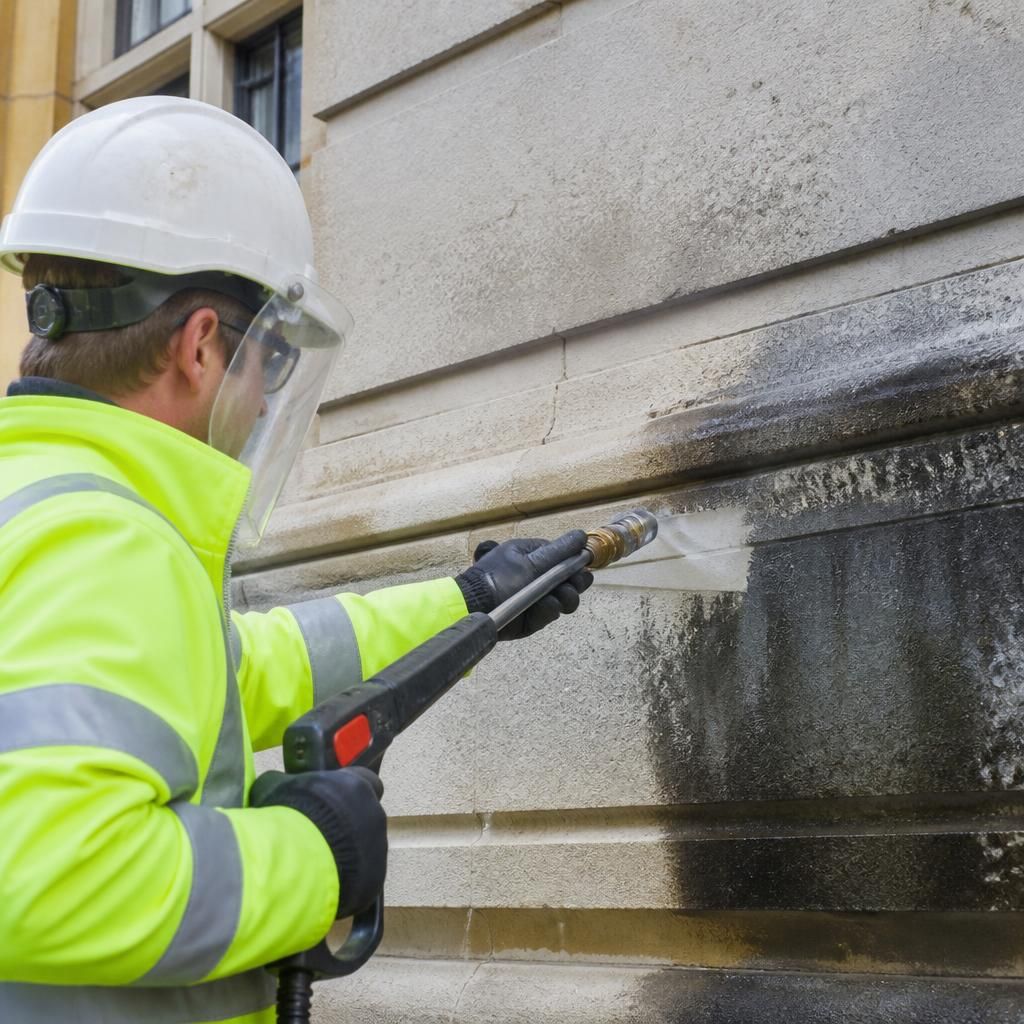
The safest cleaning method is established by testing the least aggressive suitable process on a small, inconspicuous area first. This helps confirm how the roof covering, stone or gutter material responds before wider work begins.
The test should assess more than immediate appearance. After the area has dried, it should be checked for surface erosion, colour change, coating failure, loosened joints, water penetration or damage to pointing and sealants. Pressure, temperature, nozzle selection, dwell time and cleaning solution can then be adjusted to suit the material. This approach is particularly important for porous sandstone, natural slate, aged clay tiles, coated metal and brittle guttering, where a standard pressure-washing setting may cause avoidable damage.
Arrange Your Roof, Stone & Gutter Cleaning Assessment
Arrange a roof, stone and gutter cleaning assessment so we can identify the materials, contamination and condition before recommending the safest effective method. We will advise whether pressure washing, steam cleaning, soft washing, biocide treatment or manual cleaning is appropriate for your building.