
What precautions should be taken when cleaning gutters to ensure safety and effectiveness?
Safe, effective gutter cleaning requires a site risk assessment, suitable access equipment, stable working positions and personal protective equipment, while protecting people, vehicles and the building below. Gutters should also be inspected for damage and cleaned using methods that remove debris without loosening joints, damaging roof coverings or allowing contaminated water to enter drains.
Safe and effective gutter cleaning starts with a documented site risk assessment, suitable access equipment, controlled exclusion zones and the correct personal protective equipment (PPE). The work should remove debris and restore free drainage without destabilising the operative, damaging the roof or gutter system, exposing people to contaminated material, or allowing dirty water to affect vehicles, entrances and surface-water drains.
Assess the building and work area first. Before access equipment is positioned, inspect the roof, gutters, downpipes, façades and surrounding ground conditions. Identify fragile roof coverings, loose slates, damaged gutter brackets, unstable fascias, overhead cables, glazing, skylights, plant, traffic routes and areas used by pedestrians. Consider the building’s construction and whether older materials could contain asbestos or other hazardous substances. Suspect materials should not be disturbed; specialist advice and appropriate controls may be required.
The assessment should also consider weather, wind exposure, rain, ice, poor visibility and the risk of water entering the building. Work at height should be avoided or postponed when conditions make access, footing or handling equipment unsafe. A suitable method statement should explain how operatives will reach the gutters, protect the area below, deal with waste and respond to foreseeable emergencies.
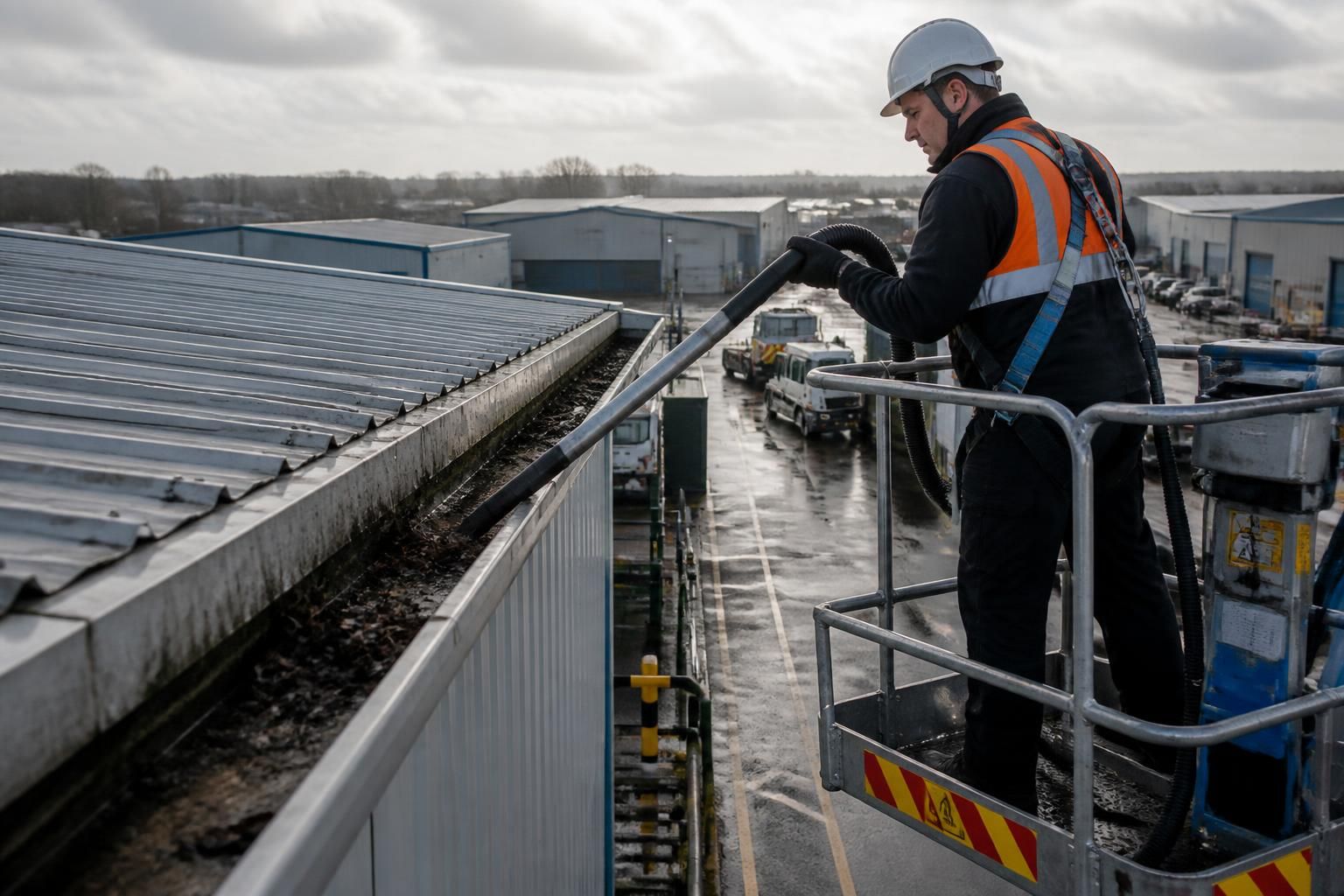
Use the safest practical access method. Select access equipment according to the height, length and layout of the gutter run, the condition of the building and the duration of the work. Depending on the site, this may include ground-based vacuum equipment, a properly positioned ladder for short-duration low-risk tasks, a mobile access tower, scaffold or a powered access platform. Equipment must be inspected before use, positioned on firm level ground and used by people who are trained and authorised to operate it.
Ladders should never be treated as a general-purpose work platform where prolonged work, heavy handling or significant sideways reach is involved. Operatives should maintain a stable working position and avoid overreaching, climbing onto fragile roof areas or transferring between levels without suitable protection. Where a fall could occur, collective protection or an appropriate fall-restraint system should be considered before relying on personal fall protection alone. Access routes and emergency arrangements must be clear to everyone on site.
Control risks to people, vehicles and property below. Establish an exclusion zone beneath the work area and use barriers, warning signs or a banksman where members of the public, tenants, staff or vehicles could pass nearby. Do not leave tools, hoses, vacuum pipes or access equipment where they create trip hazards. Protect entrances, windows, cladding, parked vehicles, sensitive landscaping and external equipment from falling debris and dirty water.
Where work takes place at a commercial or industrial premises, coordinate the activity with the building manager and account for delivery movements, contractors, vulnerable occupants, emergency exits and operational areas. Work should not obstruct fire routes or access for emergency services. If the cleaning method produces spray or airborne material, additional controls may be needed around ventilation intakes, open windows, food-handling areas and occupied spaces.
Wear task-appropriate PPE. Typical controls may include protective footwear with suitable grip, gloves, eye protection and protective clothing. Head protection may be required where there is a risk of falling debris. Respiratory protection should only be selected following an assessment of the substance and exposure risk, with suitable face-fit testing where applicable. PPE is a final layer of protection and does not replace safe access, good housekeeping or controls on dust, splashing and falling materials.
Gloves should be suitable for the debris and cleaning products being handled. Gutter waste can contain decomposing vegetation, animal droppings, sharp fragments, insects and other contaminants, so operatives should avoid hand contact with their face and wash thoroughly after the work. Cuts and damaged skin should be protected, and contaminated clothing should be handled and cleaned appropriately.
Check the gutter system before applying force or water. Remove loose material carefully and inspect the gutter channel, joints, outlets, brackets, fascia boards and downpipe connections as the work progresses. Do not lean ladders against unsupported gutters or use the gutter as a handhold. Damaged or corroded sections should be reported rather than pulled, levered or loaded with equipment.
Cleaning methods should match the condition and construction of the system. Manual removal and low-pressure vacuum cleaning can reduce the risk of dislodging joints and fittings. Water may be used where appropriate, but excessive pressure can force water behind fascias, loosen seals, damage coatings or drive debris into outlets. High-pressure cleaning is not automatically suitable for gutters, particularly where components are aged, brittle or poorly fixed.
Manage water, chemicals and waste responsibly. Keep debris out of surface-water drains unless the site’s drainage arrangements and environmental controls permit it. Collect gutter waste in suitable containers rather than allowing it to fall onto paved areas or wash into drainage channels. Where the material may be contaminated, it should be handled, contained and disposed of in accordance with the site’s waste procedures and applicable UK requirements.
If detergents, biocides or other treatments are needed around gutters, follow the product label and the relevant COSHH assessment. Use the lowest effective concentration, prevent unnecessary overspray and protect people, plants, watercourses, sensitive surfaces and drainage systems. Never mix cleaning chemicals unless the manufacturer specifically permits it. Product data, emergency measures and rinsing requirements should be available to the operative.
Inspect and test the system after cleaning. Confirm that each gutter run is clear, outlets are open and downpipes discharge correctly. A controlled flow test can identify blockages, leaks, poor falls and overflowing joints, but water should be introduced gradually and directed away from vulnerable areas. Check that no debris has been left on the roof, behind fascias or around the base of downpipes.
Record defects such as cracked channels, open joints, missing brackets, sagging runs, blocked underground connections or water entering the building. Cleaning does not repair these problems, and forcing water through a damaged system may make them worse. Photographs and a clear maintenance report help the responsible person arrange repairs and compare the condition at future visits.
Use competent operatives and stop when conditions change. Commercial and industrial gutter cleaning involves work at height, access equipment, waste handling and, in some cases, chemical exposure. It should be carried out by people with suitable training, experience and supervision, using equipment that is maintained and inspected. The job should stop if access becomes unstable, weather deteriorates, an unknown hazardous material is found, the building condition differs from the assessment or members of the public cannot be kept out of the work area.
For large, high or complex premises, a specialist contractor can plan the access strategy, protect the occupied site and provide records of defects and completed work. This approach reduces avoidable risk while ensuring the guttering is cleaned in a way that supports reliable drainage and protects the building fabric.
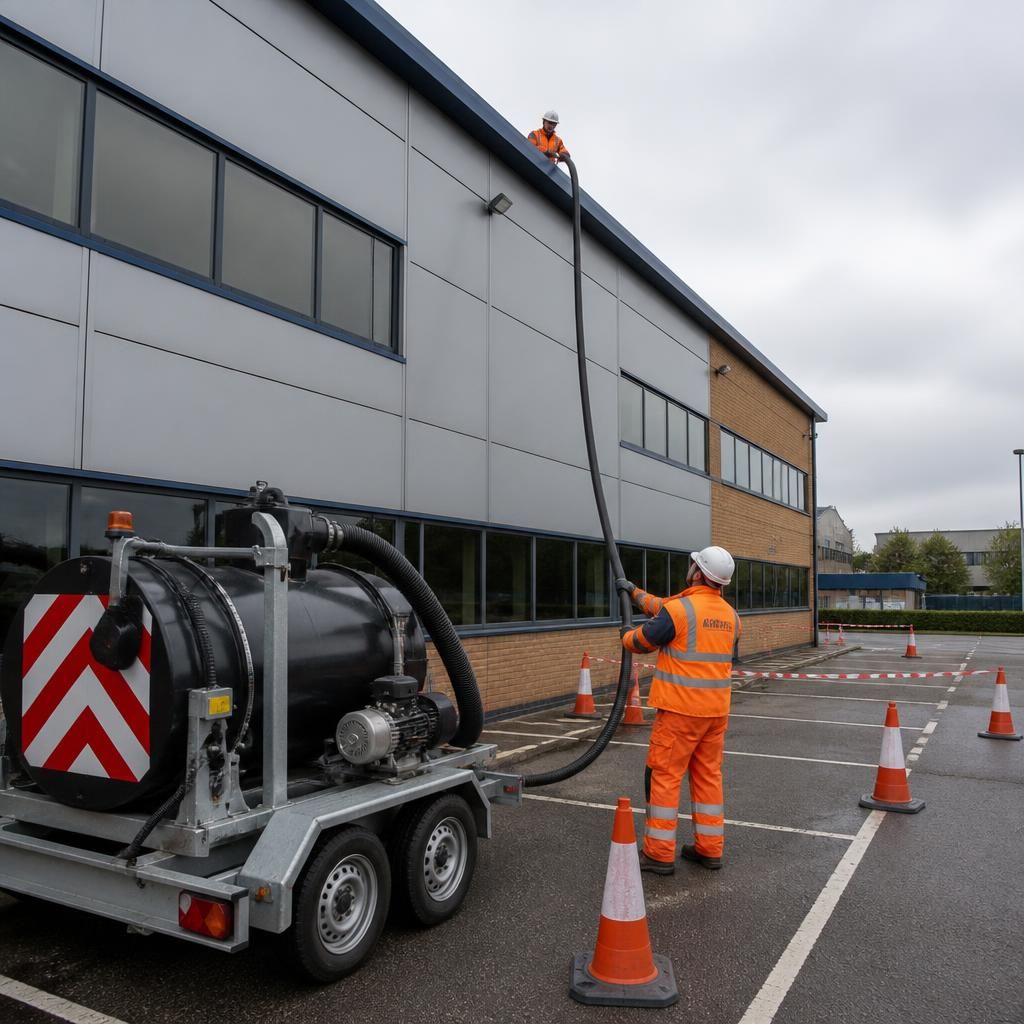
Safe gutter cleaning depends on choosing suitable access equipment and controlling the area beneath the work. Before starting, assess the gutter height and layout, roof condition, ground stability, weather and the presence of pedestrians, vehicles, glazing or overhead obstructions.
Use ground-based vacuum equipment where it provides a safer alternative. If access at height is necessary, ladders should be limited to suitable short-duration, low-risk tasks; they must be stable, correctly positioned and never used for prolonged work, heavy handling or excessive sideways reach. Towers, scaffolds or powered access platforms may be more appropriate for larger or complex buildings.
- Inspect access equipment before use and position it on firm, level ground.
- Establish a controlled exclusion zone with barriers and warning signs where debris, tools or dirty water could fall.
- Keep entrances, emergency routes, delivery areas and vehicle movements clear.
- Postpone the work if wind, rain, ice or poor visibility makes access or footing unsafe.
Arrange a Safe, Effective Gutter Cleaning Service
Arrange a safe, effective gutter cleaning service with a site assessment, suitable access equipment and clear reporting on any defects identified. Contact Encanto Exterior Cleaning to plan gutter maintenance for your commercial or industrial premises.