
What factors should be considered when choosing between pressure washing, steam cleaning, and cryogenic blasting for roof, stone, and gutter maintenance?
Choosing between pressure washing, steam cleaning and cryogenic blasting for roof, stone and gutter maintenance depends on the surface material, condition, type of contamination, required cleaning strength, access and risk of water or chemical damage. Pressure washing suits robust surfaces and heavy soiling, steam cleaning provides controlled low-water cleaning for sensitive areas and organic growth, while cryogenic blasting can remove coatings and deposits without introducing water, provided the substrate can withstand the process.
The choice between pressure washing, steam cleaning and cryogenic blasting should be based on the substrate, the type and depth of contamination, the condition of the roof, stone or guttering, and the risks created by water, heat, pressure or dislodged material. Pressure washing is generally suited to robust surfaces and heavy deposits; steam cleaning offers more controlled, low-water cleaning for sensitive materials and organic growth; and cryogenic blasting removes certain coatings and contaminants without leaving process water, provided the substrate and surrounding area are suitable.
A professional assessment should take place before selecting equipment. This should consider the material being cleaned, previous repairs or coatings, surface porosity, access requirements, drainage, nearby occupants and the method needed to collect or control wastewater and debris. A small test area is also important, particularly on historic stone, aged roofing materials, painted surfaces and substrates with uncertain construction.
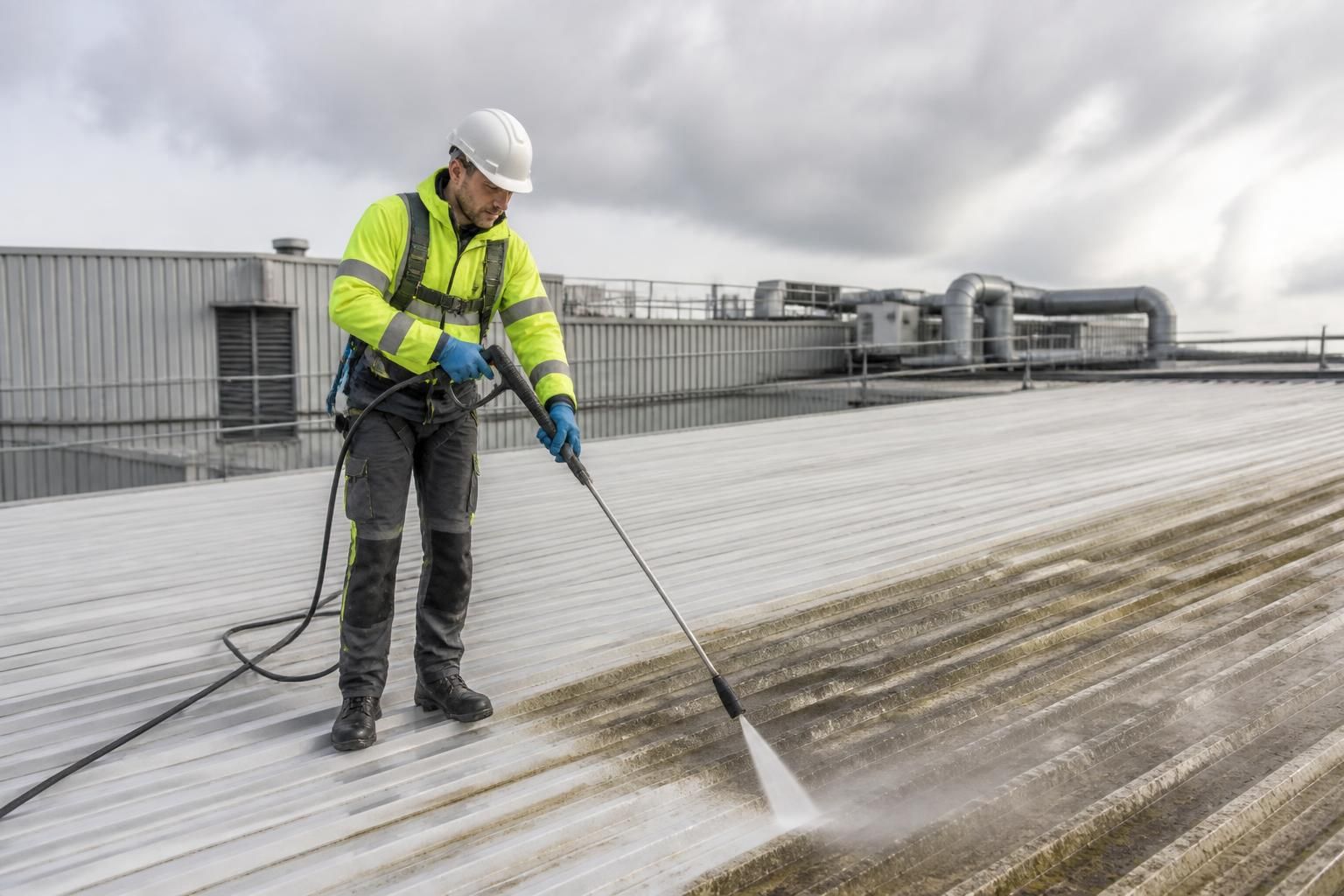
Pressure washing: Pressure washing uses a directed water jet to break the bond between the surface and contaminants such as mud, loose moss, bird deposits, traffic film and some biological growth. It is effective on sound concrete, robust masonry, many hard stone surfaces and suitable metal or plastic guttering when the pressure and nozzle are correctly selected.
- It can remove heavy soiling quickly and may be appropriate for large roofs, paved areas, concrete details and durable façades.
- Pressure, flow rate, nozzle type and working distance must be adjusted to the substrate. The highest available pressure is not automatically the safest or most effective setting.
- Water can enter defective roof coverings, joints, vents and cracks. It can also drive contamination beneath tiles, into wall cavities or behind cladding.
- Porous or friable stone may suffer surface erosion, pitting, delamination or loss of softer detail if cleaned too aggressively.
- Run-off may contain silt, organic matter, paint fragments or cleaning residues, so it must be controlled and disposed of in accordance with site and environmental requirements.
On roofs, pressure washing should only be considered where the covering is structurally sound and the cleaning method will not damage tiles, slates, membranes, pointing, flashings or protective finishes. It is often more suitable for hardstanding, robust roof surfaces and accessible gutters than for fragile or historic roof materials.
Steam cleaning: Steam cleaning uses heated water, usually with lower water consumption and more controlled pressure than conventional power washing. Heat helps soften grime, oils, atmospheric deposits and some biological contamination, making it useful where aggressive mechanical action or large volumes of water would create unnecessary risk.
- It can be suitable for many stone and masonry surfaces when the temperature, pressure and working distance are carefully controlled.
- It is useful for removing algae, moss residues, mould staining and dirt from areas where chemical use needs to be limited or tightly controlled.
- The lower water volume can make run-off management easier, although wastewater and loosened contamination still need to be contained.
- Steam may help clean detailed stonework, façades and gutter components without the same level of mechanical abrasion associated with high-pressure water.
- Heat must be used cautiously around sealants, coatings, painted finishes, leadwork, membranes, plastic components and materials that could distort or suffer thermal shock.
Steam is not automatically safe simply because it uses less water. Excessive temperature or prolonged application can affect coatings, joints and vulnerable stone. The operator should work progressively, observe the surface response and avoid concentrating heat on one area.
Cryogenic blasting: Cryogenic blasting propels solid carbon dioxide pellets or particles at the surface. The impact and rapid expansion help release deposits, coatings and some contaminants, while the carbon dioxide changes directly from a solid to a gas. This means the process does not introduce conventional wash water, although the removed material still remains and must be collected.
- It can be valuable where water could penetrate the building fabric, affect electrical equipment or create difficult drying and run-off problems.
- It may remove certain paint residues, grease, soot, adhesive deposits and surface contamination from suitable stone, masonry, metal and industrial components.
- It can reduce secondary water damage and may be appropriate for detailed areas or equipment that must not be saturated.
- It is not a universal substitute for washing. The impact can damage weak, friable, delaminating or poorly bonded surfaces.
- The process produces airborne dust and displaced debris, and carbon dioxide can accumulate in poorly ventilated areas. Suitable exclusion zones, ventilation and respiratory protection are essential.
Cryogenic blasting requires particular care on historic stone, soft sandstone, weathered mortar, thin coatings and surfaces with hidden defects. It should not be selected solely because it is described as a dry process. The condition of the substrate, the hardness and size of the blasting media, the operating pressure and the nature of the contamination all affect the result.
Factors specific to roof maintenance
Roof coverings vary considerably, from concrete and clay tiles to natural slate, metal, coated systems and membranes. The cleaning method should account for the roof’s age, weathering, pitch, fixings, flashings, pointing, existing treatments and any evidence of water ingress. A fragile or defective roof may require gentle treatment, localised cleaning or repair before any full-scale operation.
Organic growth should also be assessed rather than removed by force alone. Moss may have roots or holdfasts within joints, while algae and mould can leave staining after the visible growth has been removed. A suitable biocide or roof treatment may form part of the maintenance plan, but its compatibility with the roof material, surrounding vegetation, drainage system and discharge requirements must be checked.
Factors specific to stone and masonry
Stone should be identified before cleaning because limestone, sandstone, granite and engineered or reconstructed materials respond differently to pressure, heat and impact. Porosity, previous repointing, surface crusts, salts and historic finishes can all alter the safest method. The objective should be to remove harmful or unsightly deposits while retaining the sound surface and natural detail.
For sensitive or historic masonry, a controlled steam-cleaning approach or another low-impact method may be preferable to high-pressure washing. Cryogenic blasting may be considered for particular coatings or deposits where water is unsuitable, but only after testing confirms that the stone and its finish will tolerate the process.
Factors specific to gutters
Gutter maintenance usually begins with the safe removal of leaves, silt, moss and other debris rather than with a choice of blasting method. Gutters, joints, outlets, downpipes, brackets and seals should be checked for blockages, corrosion, splits and poor falls. Pressure or steam may assist with staining and residual deposits, but excessive force can separate joints, damage coatings or force debris into downpipes.
Where gutters are connected to rainwater harvesting, soakaways or sensitive drainage systems, the effect of cleaning residues and run-off should be considered in advance. Access equipment must be selected for the building and ground conditions, and operatives should not rely on unsafe roof access or unsupported ladders.
Other selection considerations
- Contamination: Identify whether the problem is loose dirt, oil, moss, algae, mould, paint, mortar, rust, soot or a combination. Different deposits respond to different levels of heat, water, agitation and treatment.
- Surface condition: Existing cracks, hollow areas, flaking coatings, open joints and previous damage may make a normally suitable method unsafe.
- Water sensitivity: Consider the risk to insulation, internal finishes, electrical systems, building cavities and neighbouring properties.
- Environmental controls: Plan for water use, chemical selection, wastewater, airborne dust, noise and the protection of drains, planting and public areas.
- Access and safety: Work at height, fragile roofs, confined spaces, high-level façades and public areas require suitable access equipment, exclusion zones and task-specific risk controls.
- Required finish: Removing visible dirt is not the same as removing staining, biological contamination or an old coating. The desired result should be agreed before work begins.
- Future maintenance: A gentle, repeatable method may be more appropriate for scheduled cleaning than a highly aggressive method used to correct years of accumulated contamination.
In practical terms, pressure washing is most appropriate for sound, water-tolerant surfaces with substantial deposits; steam cleaning is often preferred where controlled heat and reduced water use can clean the surface with less mechanical force; and cryogenic blasting is considered where water must be avoided or where particular coatings and deposits require a dry process. These are general starting points, not fixed rules.
The safest specification combines a site survey, material identification, contamination assessment, test cleaning and a documented method statement. It should define the equipment settings, protection of adjacent areas, access arrangements, wastewater or debris controls, and the inspection required after cleaning. When the condition of the substrate is uncertain, the least aggressive effective method should normally be tested first.
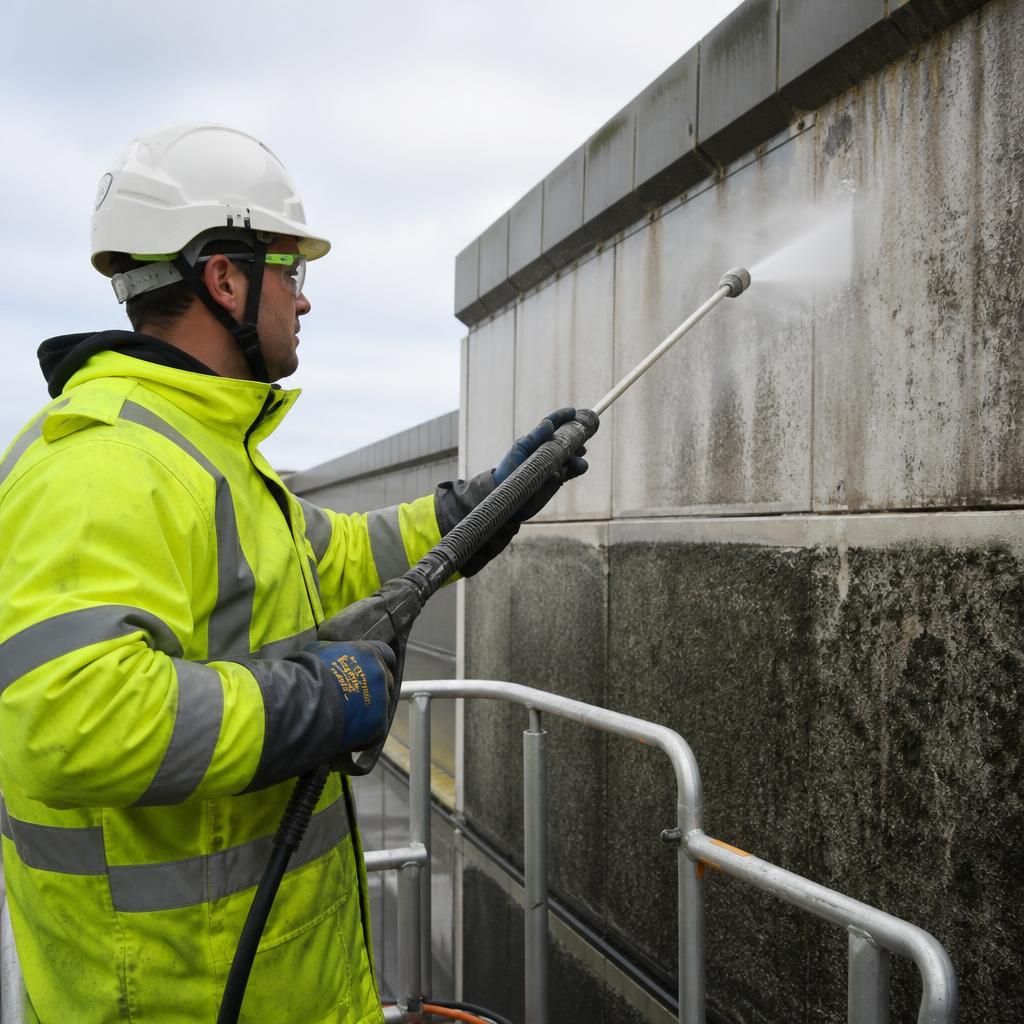
The safest choice between pressure washing, steam cleaning and cryogenic blasting is determined by the roof, stone or gutter material, the contamination present and the risk of water, heat or impact damage. A small test area should be cleaned first so the operator can assess how the surface responds before specifying the method for the wider area.
Pressure washing can suit sound, water-tolerant surfaces with heavy deposits, while steam cleaning provides more controlled cleaning with less water and mechanical force. Cryogenic blasting may be appropriate where water must be avoided or coatings need to be removed, but it can still damage weak or friable materials and creates airborne debris. The test should check for surface erosion, colour change, coating failure, water penetration and damage to joints or details.
For roof, stone and gutter maintenance, the preferred method is therefore the least aggressive option that achieves the required result. The assessment should also confirm access arrangements, protection of adjacent areas, wastewater or debris controls and any follow-up treatment needed for moss, algae or mould.
Book a Roof, Stone and Gutter Cleaning Assessment
Book a roof, stone and gutter cleaning assessment to identify the safest effective method for your materials, contamination and site conditions. We will review access, surface risks and wastewater or debris controls before recommending pressure washing, steam cleaning or cryogenic blasting.