
What are the potential risks of using incorrect cleaning techniques for roof, stone, and gutter maintenance, and how can these be avoided?
Incorrect cleaning techniques can damage roof coverings, stone surfaces and gutters through abrasion, excessive pressure, chemical staining, water penetration or dislodged components. These risks are avoided by identifying the material and condition first, selecting a compatible pressure, steam or treatment method, protecting surrounding areas and using trained operatives with suitable access and safety controls.
Incorrect cleaning techniques can cause avoidable damage to roof coverings, masonry and gutters. Excessive pressure may strip protective finishes, open joints, dislodge tiles or drive water beneath the roof covering; unsuitable chemicals can stain or weaken stone, damage vegetation and contaminate drainage systems; and poorly controlled access can create safety risks or break fragile surfaces. These problems are avoided by identifying the material and its condition before work begins, selecting a compatible cleaning method, controlling pressure and moisture, protecting surrounding areas, and carrying out appropriate checks afterwards.
Risks associated with roof cleaning
Roof coverings vary considerably in strength, surface finish and resistance to water and chemicals. Clay and concrete tiles, natural slate, coated metal, fibre cement and membrane systems should not be treated as interchangeable. A method suitable for a robust concrete surface may be unsuitable for aged slate, brittle tiles or a roof with deteriorated pointing.
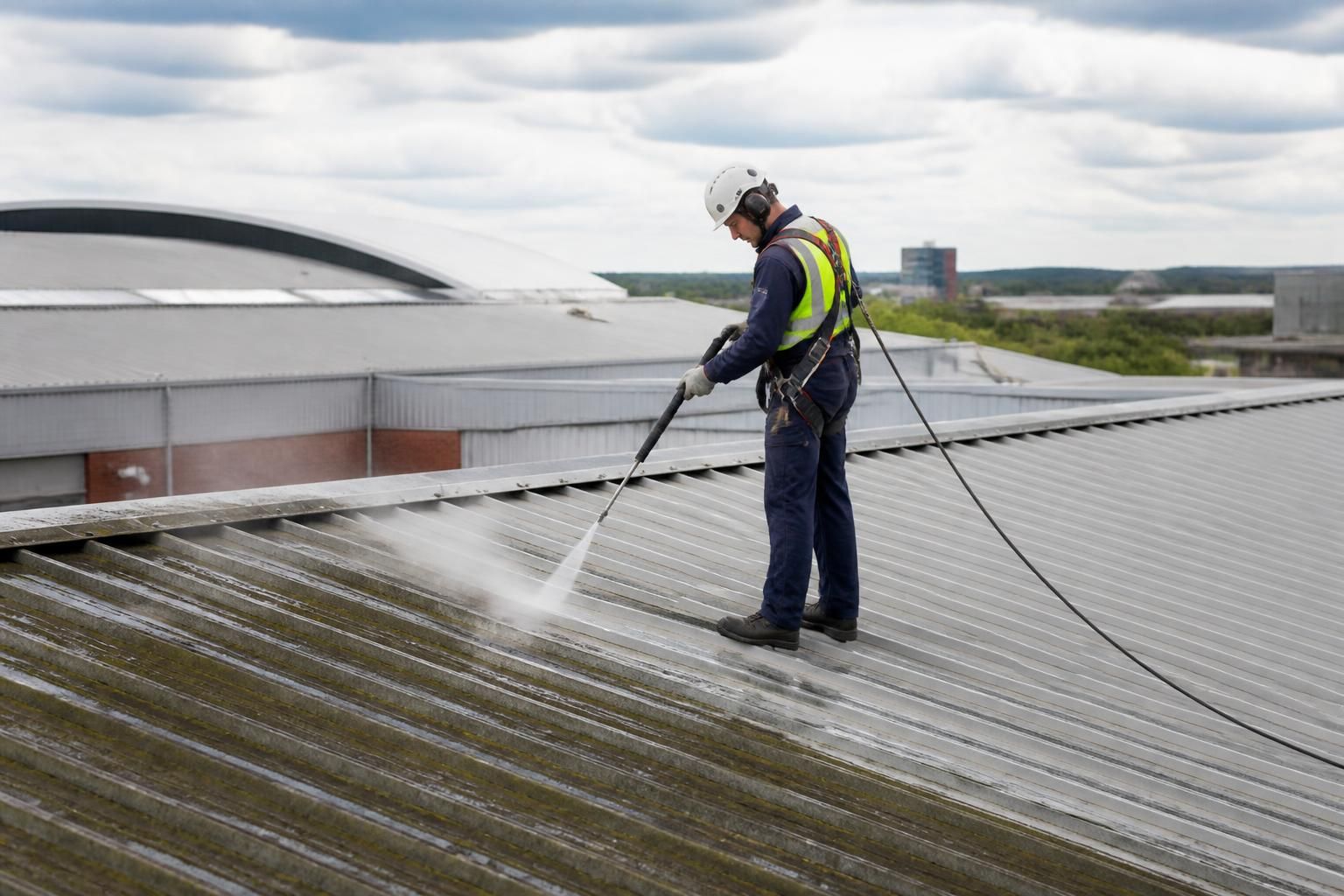
- Excessive pressure: High-pressure washing can erode tile surfaces, remove coatings, force water beneath laps and damage weatherproof seals. It may also loosen ridge tiles, pointing, flashings and fixing details.
- Abrasion: Aggressive brushing or unsuitable blasting media can scratch glazed, coated or weathered surfaces. Abrasion may leave a roof more vulnerable to moisture retention and further deterioration.
- Water penetration: Directing water towards laps, vents, flashings or damaged areas can allow moisture into the roof build-up. This is particularly concerning where insulation, timbers or internal finishes could be affected.
- Biological regrowth and staining: Removing visible algae or moss without addressing the underlying contamination can result in rapid return. Some growth also retains moisture against the surface and can obscure defects that need repair.
- Chemical damage: Incorrectly selected or over-concentrated treatments can discolour tiles, affect protective coatings, corrode metalwork or harm nearby plants. Residues may also enter rainwater systems if they are not controlled and rinsed appropriately.
Roof cleaning should therefore begin with a visual inspection from safe positions, including checks for loose or cracked tiles, open joints, failed flashings, blocked outlets, fragile areas and signs of internal water ingress. Where a roof is unsuitable for washing, a lower-impact approach such as controlled soft cleaning, steam cleaning or a compatible biocide treatment may be more appropriate. A treatment should not be used to conceal defects that require roofing repairs.
Risks associated with stone and masonry cleaning
Stone is affected by its mineral composition, porosity, finish, age and previous repairs. Sandstone, limestone, granite, brick and rendered surfaces can respond differently to pressure, heat and cleaning agents. Historic or heavily weathered masonry is especially vulnerable because its surface may already be friable or weakened by salts, frost and previous cleaning.
- Surface erosion: Excessive pressure or abrasive media can remove the weathered outer layer of stone, soften carved details and expose a more porous substrate.
- Etching and discolouration: Acidic or alkaline products may react with minerals, alter the colour of the stone or create patchy staining. A treatment that removes biological growth may still be unsuitable for the underlying masonry.
- Salt movement: Excessive water or unsuitable chemicals can mobilise salts within masonry. As the water evaporates, salts may crystallise at or beneath the surface, causing powdering, flaking or persistent staining.
- Damage to joints and repairs: Strong washing can erode mortar joints, expose gaps and disturb incompatible repair materials. Water may then enter the wall more easily.
- Heat-related defects: Poorly controlled steam or hot-water cleaning can affect coatings, sealants, resin repairs and sensitive stone finishes. Sudden temperature changes may also stress fragile surfaces.
The safest approach is to establish the stone type and assess its condition before choosing a process. A small, inconspicuous test area can help confirm whether pressure, steam, a cleaning solution or a biological treatment produces an acceptable result without altering the surface. The test should be reviewed after cleaning and drying, because some staining, salts or chemical reactions are not immediately visible.
For delicate or historic stone, the aim should be to remove the contaminant while retaining as much of the original surface as possible. Lower-pressure washing, controlled steam, soft agitation or a carefully selected biocide may be preferable to aggressive mechanical cleaning. Cleaning solutions should be compatible with the stone, used at the correct dilution and prevented from drying on the surface. Surrounding metal, glass, painted areas, plants and drainage points should be protected from spray and run-off.
Risks associated with gutter cleaning
Gutters and downpipes are often connected to roofs, façades, drainage outlets and delicate building components, so incorrect cleaning can create both maintenance and safety problems. Simply removing visible debris does not confirm that water can flow freely through the entire system.
- Damage to gutters and brackets: Leaning ladders against gutters, pulling out compacted debris forcefully or using unsuitable tools can deform channels, loosen brackets and separate joints.
- Blocked downpipes: Dislodged moss, silt or nesting material can be pushed into outlets and create a concealed blockage. Water may then overflow against the façade or enter vulnerable roof and wall junctions.
- Leaks and failed joints: Excessive water pressure can expose or worsen defects at unions, outlets and end caps. A system that appears clean may still leak when subjected to rainfall.
- Contaminated run-off: Sludge, chemical residue and biological material can enter surface-water drainage. Run-off should be contained and handled in accordance with the site’s drainage arrangements and environmental requirements.
- Falls and access incidents: Wet roofs, unstable ladders, fragile roof edges and overhead obstructions create significant risks. Gutters should not be treated as a handhold or used to support access equipment.
Effective gutter maintenance includes clearing debris without placing loads on the guttering, checking brackets and joints, confirming that outlets and downpipes are open, and testing flow in a controlled manner where appropriate. Any split, sagging section, corrosion or failed seal should be recorded rather than concealed by cleaning. Where access is difficult or the building is high, suitable access equipment and exclusion controls are essential.
How the risks are avoided
- Inspect before selecting a method. Identify the roof, stone or gutter material, assess contamination, locate fragile or damaged areas, and check for previous coatings, repairs and drainage constraints.
- Match the cleaning process to the substrate. Use the least aggressive method capable of achieving the required result. Pressure washing, steam cleaning, soft cleaning, biocide treatments and specialist blasting each have different applications and limitations.
- Control pressure, temperature and dwell time. Equipment settings should be adjusted to the surface rather than applied as a standard setting. Cleaning products should not be left to dry and hot or pressurised water should not be directed into joints, laps or openings.
- Test sensitive surfaces. Trial an inconspicuous area and assess the appearance, texture and condition after drying. Stop if the surface powders, changes colour, becomes roughened or shows signs of water ingress.
- Protect adjacent areas and control run-off. Cover or shield windows, vents, lighting, painted surfaces, vehicles and planting. Prevent concentrated chemical or sediment-laden water from entering unsuitable drains.
- Use safe access and work controls. Plan access around fragile roofs, edges, overhead services and public areas. Use suitable platforms, edge protection, exclusion zones and personal protective equipment, with trained operatives following the site’s risk assessment and method statement.
- Inspect after cleaning. Check for displaced tiles, open joints, damaged coatings, leaks, remaining blockages and areas requiring repair. Confirm that gutters and downpipes are functioning and leave the site free from harmful residue or loose debris.
Professional cleaning should be regarded as part of planned building maintenance rather than a substitute for roofing, masonry or rainwater-goods repairs. If a surface is already failing, cleaning may reveal the extent of the problem and should be followed by appropriate remedial work. Records of the material assessment, test areas, products, method, access arrangements and post-cleaning findings also help inform future maintenance and prevent an unsuitable technique being repeated.
For commercial and industrial premises, the correct method is determined by the building’s materials, contamination, access conditions, drainage arrangements and required finish. A controlled assessment before work provides the best protection against surface damage, water ingress, chemical exposure, blocked drainage and avoidable safety incidents.
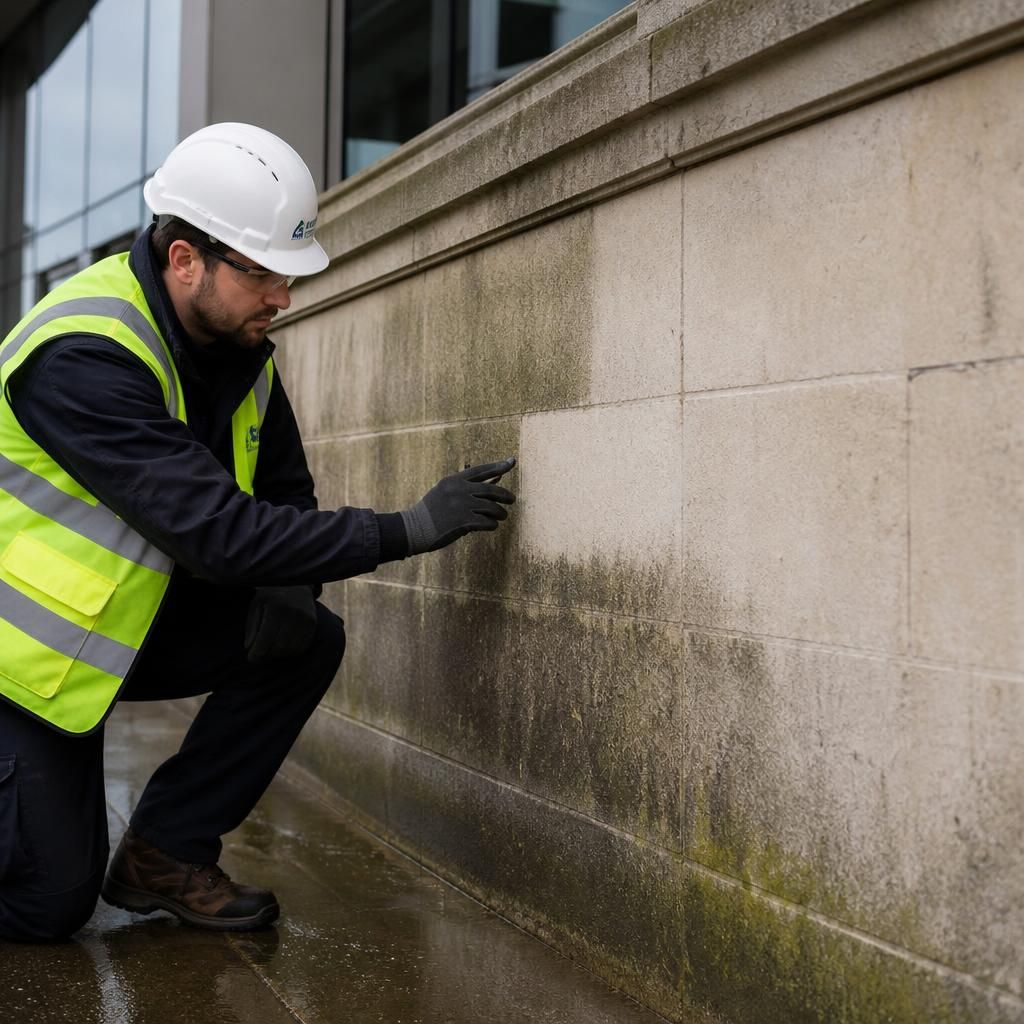
Testing a small, inconspicuous area before full cleaning is one of the most effective ways to prevent damage to roof coverings and stone surfaces. It confirms whether the selected pressure, steam setting, brush, blasting media or cleaning solution is compatible with the material.
The test area should be checked both immediately and after it has dried. Stop and reassess if the surface shows discolouration, etching, powdering, roughening, coating loss or signs of water penetration. This controlled approach helps ensure the cleaning method removes contamination without weakening the substrate, disturbing joints or altering the intended appearance.