
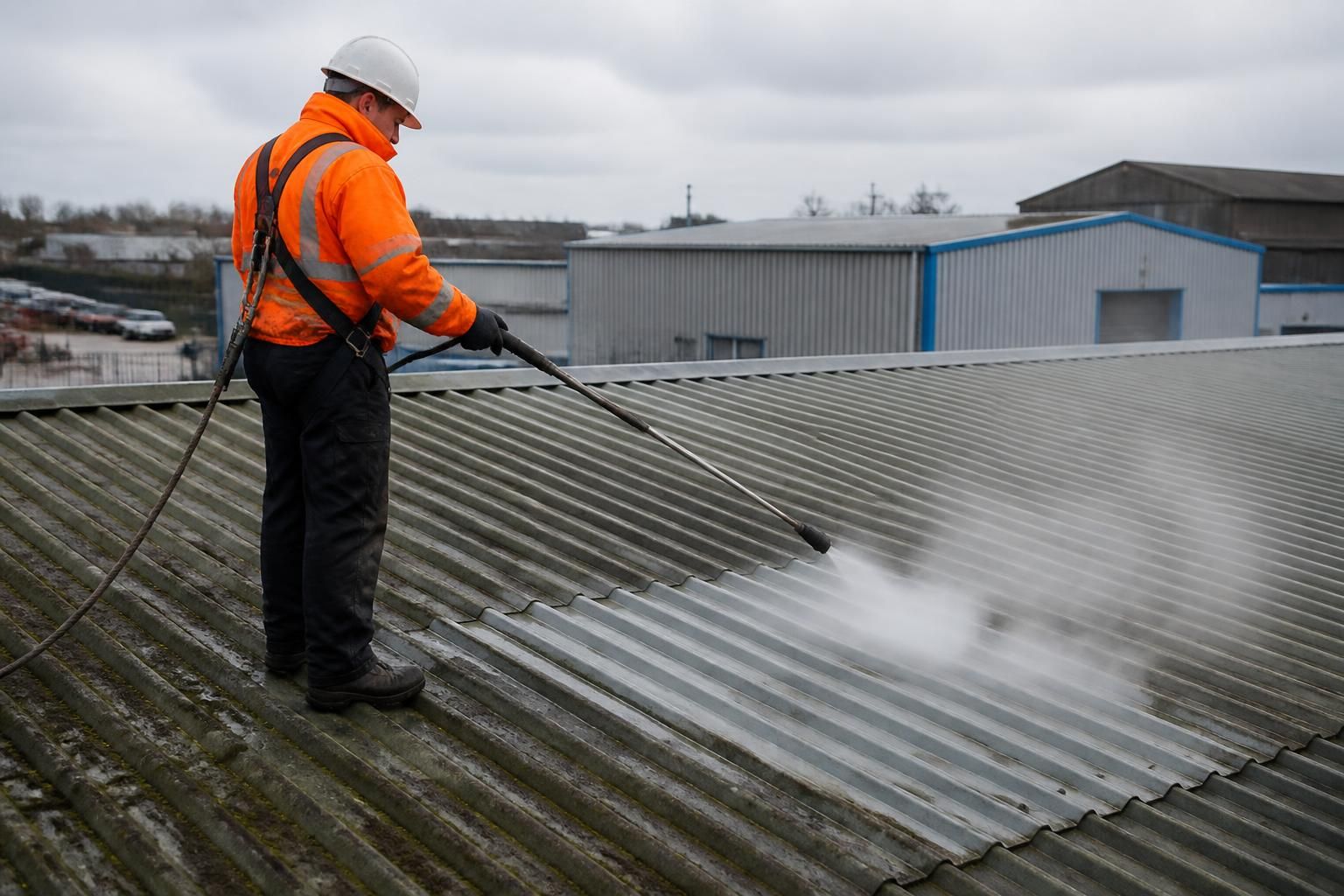
What are the most effective methods for removing algae and mould from roofs?
The most effective methods for removing algae and mould from roofs are low-pressure soft washing with a suitable biocide, followed where necessary by gentle steam cleaning. The correct approach depends on the roofing material and condition; high-pressure washing is often avoided because it can dislodge tiles, damage protective finishes and drive moisture beneath the roof covering.
The most effective method for removing algae and mould from a roof is usually low-pressure soft washing with a material-appropriate biocidal treatment, followed by gentle rinsing or steam cleaning where required. This combination removes visible growth and treats the spores and organic contamination that can cause it to return. The correct method depends on the roof covering, its condition, the extent of the growth and the surrounding environment.
Algae and mould are more than cosmetic problems. They can retain moisture against the roof surface, encourage moss growth, restrict drainage and make tiles or access areas slippery. On commercial premises, untreated organic growth can also affect the appearance of the building and increase the risk of blocked gutters and downpipes. Cleaning should therefore remove the contamination without damaging tiles, membranes, coatings, pointing or flashings.
Soft washing with biocide
Soft washing is generally the preferred approach for most sound tiled and profiled roof coverings. A suitable cleaning solution is applied at low pressure to loosen algae, mould, lichen and other organic deposits. The treatment is then allowed to work for an appropriate dwell time before the surface is rinsed carefully or left to weather naturally, depending on the material and the agreed specification.
The biocide is important because water alone may remove surface staining without treating the underlying organic growth. A correctly selected treatment penetrates the contamination and helps destroy the organisms responsible for the staining. It should be compatible with the roof material and applied in a controlled manner, rather than allowed to run unchecked into soil, watercourses or sensitive planting.
Low-pressure application also reduces the risk associated with aggressive cleaning. High-pressure water can force moisture beneath tiles, remove surface finishes, loosen bedding and pointing, damage fragile coverings and spread contaminated water across façades or paved areas. It may make a roof look cleaner immediately while leaving damage that becomes apparent later.
Steam cleaning
Gentle steam cleaning is useful where a roof requires more targeted removal of stubborn algae, mould, lichen or embedded staining. Steam uses heated water at controlled pressure, allowing contamination to be lifted without relying on the force of a conventional pressure washer. It can be particularly helpful on sensitive surfaces, detailed areas and locations where chemical use needs to be limited.
Steam cleaning is not suitable for every roof. The operator must assess the covering, fixings, seals, coatings and condition of the roof before work begins. Excessive heat, prolonged application or poorly controlled water can damage some materials and may drive moisture into vulnerable areas. Steam is therefore best used selectively and by trained operatives with suitable access equipment and runoff controls.
Manual removal and targeted treatment
Loose moss and heavy deposits may need to be removed manually before a chemical treatment is applied. Soft brushes, scrapers and other non-abrasive tools can be used where appropriate, especially around fragile tiles, ridges, valleys and roof details. Mechanical removal should be controlled: aggressive scraping can chip tiles, disturb mortar and spread spores across clean sections of the roof.
After the visible growth has been removed, a biocide treatment can deal with residual spores and staining. This staged approach is often more effective than trying to remove heavy contamination with water pressure alone. It also makes it easier to identify defective tiles, blocked valleys, damaged flashings or failing pointing that may need separate attention.
Why high-pressure washing is often avoided
Conventional high-pressure washing can be unsuitable for roofs because the force of the water may dislodge tiles, strip protective coatings and damage older or weathered surfaces. It can also drive water beneath laps and around flashing details, creating a risk of leaks. On roofs with delicate coatings, ageing materials or previous repairs, the potential damage may outweigh the short-term visual benefit.
There are situations where controlled pressure may be appropriate, but this should only follow a survey and a test clean. Pressure, nozzle selection, working distance and water volume must be adjusted to the roof covering. A method that is safe for robust concrete tiles may be unsuitable for slate, coated metal, fibre cement or older clay tiles.
The cleaning process
- Survey the roof and surrounding areas. Check the roof covering, access requirements, pitch, drainage, existing damage, fragile details and nearby surfaces. Identify skylights, solar equipment, vents, cables and areas that require additional protection.
- Identify the contamination. Algae, mould, moss and lichen may require different combinations of mechanical removal, cleaning and biocidal treatment. Staining may also be caused by rust, pollution or failing coatings, which will not respond to a standard biological treatment.
- Carry out a test area. A small, inconspicuous section helps confirm that the chosen method will remove the contamination without affecting colour, texture or coating adhesion.
- Protect adjacent surfaces. Windows, façades, vehicles, plant beds, entrances and drainage points should be protected as far as practical. Runoff and removed debris must be managed so that contamination and cleaning solution do not spread unnecessarily.
- Remove loose growth carefully. Where required, deposits are brushed or scraped away using tools suitable for the material, with debris collected and removed from roof channels and gutters.
- Apply the treatment in a controlled way. The solution should be applied evenly, with attention to shaded areas, north-facing slopes, roof edges and locations where organic growth is most established.
- Rinse or complete the specified after-treatment. Some systems require controlled rinsing, while others are designed to continue working as the treated growth weathers away. The procedure should follow the product requirements and the roof manufacturer’s guidance where available.
- Inspect the finished work. Check the roof, gutters, downpipes, valleys and adjacent areas for remaining debris, displaced components or defects that were hidden by the growth.
Choosing the right method for different roof materials
- Concrete tiles: Often suitable for low-pressure cleaning and biocide, provided the tiles and surface coating are in sound condition. Older or weathered tiles require a gentler approach.
- Clay tiles: Can be brittle or porous, so pressure and mechanical abrasion should be limited. Soft washing and carefully controlled manual work are commonly more appropriate.
- Slate: Requires particular care because slate can split, delaminate or become dislodged. Operatives should avoid unnecessary foot traffic and aggressive pressure.
- Coated metal roofing: Cleaning must preserve the coating and avoid forcing water beneath laps, joints and fixings. A compatible low-pressure treatment is usually preferable to abrasive methods.
- Fibre cement and other older coverings: Their condition must be assessed before cleaning. Some older materials may require specialist handling, particularly where there is a risk of releasing hazardous fibres or damaging a deteriorating surface.
- Flat roofs and membrane systems: Cleaning should protect the membrane, seams, outlets and edge details. Standing water, blocked outlets and organic growth around drainage points need specific attention.
Safety and environmental controls
Roof cleaning should be planned as work at height, not treated as a routine ground-level wash. Suitable access equipment, edge protection, fall prevention, safe walkways and weather controls are essential. Operatives should avoid walking directly on fragile or unsupported areas and should not rely on roof tiles as a substitute for proper access arrangements.
Cleaning solutions must be selected and handled in accordance with their safety information and the requirements of the site. Plants, water features, drainage systems, vehicles and building occupants may need protection. Chemical runoff should be contained or controlled where necessary, and waste should be collected and disposed of responsibly. The treatment should never be allowed to enter surface water without appropriate controls.
How to reduce recurring algae and mould
Organic growth is more likely to return where a roof remains damp and shaded or where leaves and debris collect. Keeping gutters, valleys and outlets clear improves drainage and reduces moisture retention. Overhanging vegetation can be managed where it causes persistent shade or deposits debris onto the roof. Regular inspections also help identify damaged tiles, failed pointing, leaks and areas where water is not draining correctly.
A maintenance schedule should reflect the building’s location, roof material, surrounding trees, exposure and the level of contamination. Commercial and industrial properties may benefit from planned inspections and cleaning rather than waiting until growth becomes heavy. Follow-up biocide treatment can be considered where the roof is prone to recurring biological contamination, but it should be reviewed against the material, drainage arrangements and environmental requirements.
The key principle is to remove algae and mould thoroughly while preserving the roof beneath it. A site assessment, test clean, low-pressure application and suitable after-treatment normally provide a safer and more durable result than indiscriminate high-pressure washing.
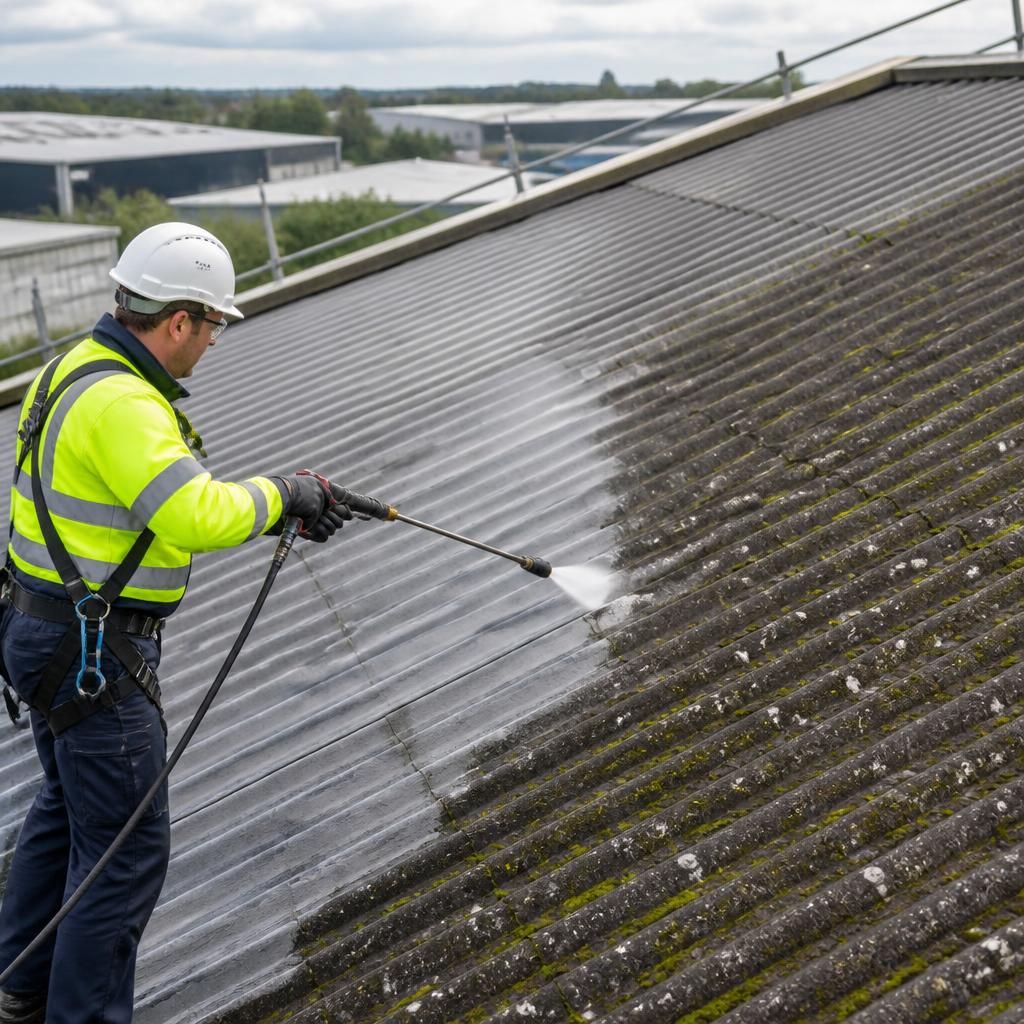
Low-pressure soft washing with a suitable biocide is usually the most effective method for removing algae and mould from roof coverings. The solution loosens visible growth and treats residual spores, while controlled application reduces the risk of dislodging tiles, damaging coatings or forcing water beneath laps and flashings.
The treatment should be selected for the specific roofing material and tested on an inconspicuous area first. Where staining or deposits remain, careful manual removal or targeted steam cleaning can provide additional cleaning without relying on aggressive pressure.
Arrange a professional roof cleaning assessment
Arrange a professional roof cleaning assessment so we can identify the cause and extent of algae or mould and recommend a safe method for your roof covering. Contact Encanto Exterior Cleaning to discuss the required access, treatment and maintenance plan.