
What are the key benefits of using biocide treatments on roofs?
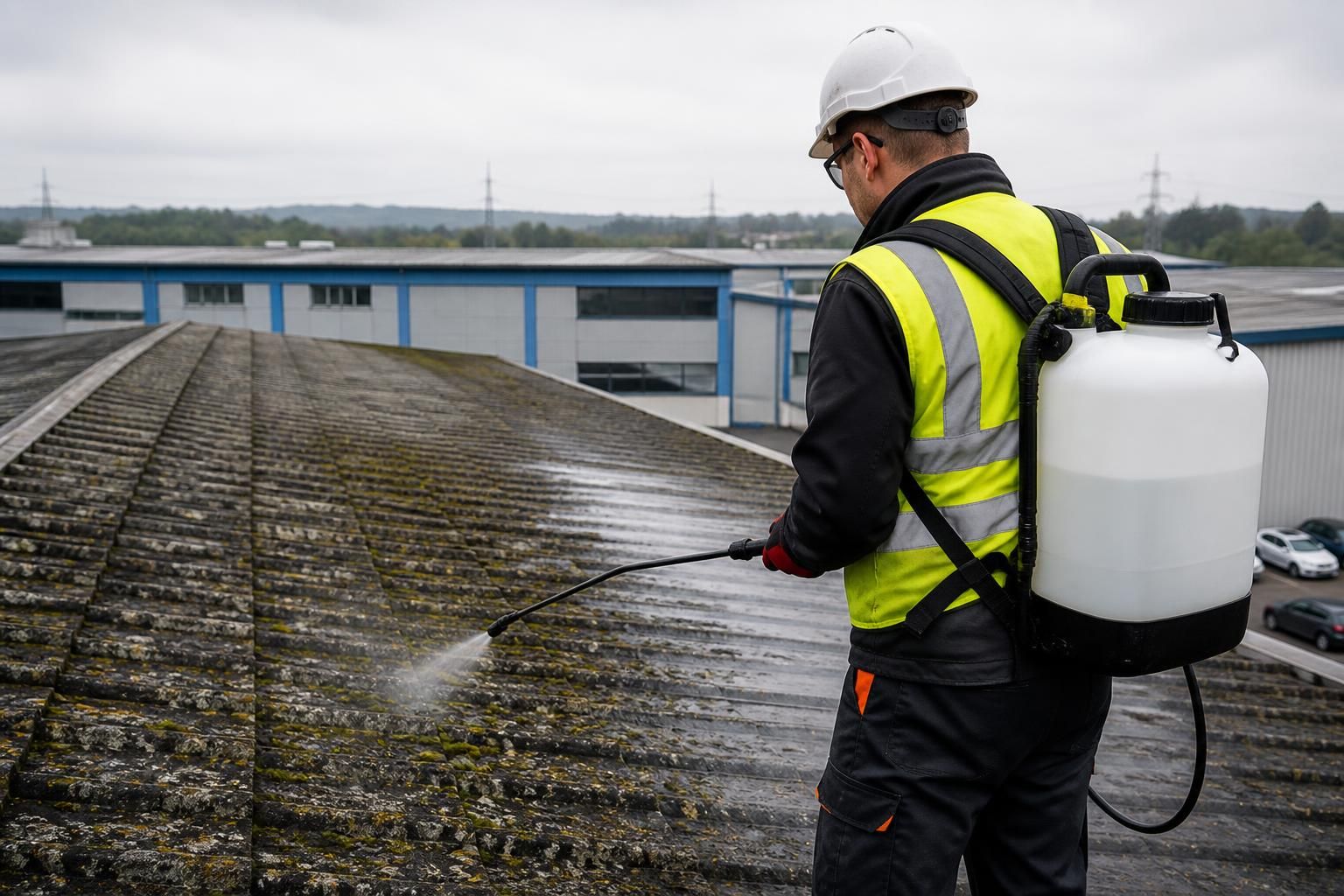
Biocide treatments help remove and control algae, moss, lichen and other organic growth on roof surfaces. By reducing regrowth after cleaning, they can improve roof appearance, limit moisture retention and help protect roofing materials from premature deterioration.
Biocide treatments help control algae, moss, lichen and other organic growth on roofs after or alongside appropriate cleaning. Their main benefits are reducing regrowth, limiting moisture retention, improving roof appearance and helping to protect roofing materials from deterioration caused by persistent biological contamination.
Organic growth is more than a cosmetic issue. Moss and lichen can hold moisture against the roof surface, while algae can spread across tiles, slates and other roofing materials as dark staining. Moss may also work into laps, joints and surface irregularities. A correctly selected biocide penetrates or remains active on contaminated areas, helping to break down biological growth that may not be fully removed by mechanical cleaning alone.
Key benefits of using a biocide treatment include:
- Reduced regrowth: Cleaning removes existing contamination, but spores and microscopic residue can remain on the surface. A biocide treatment helps control this residual growth, extending the time before algae, moss or lichen becomes prominent again.
- Better moisture management: By reducing moss and other organic deposits, treatment can limit the amount of moisture held against the roof. This is particularly useful on shaded or damp elevations where surfaces dry slowly.
- Protection against premature deterioration: Persistent biological growth can contribute to surface wear, blocked drainage routes and deterioration around joints or overlaps. Controlling the growth helps reduce these pressures and supports the serviceable life of the roof.
- Improved appearance: Biocides help tackle green growth, black algae staining and lichen marks, producing a cleaner and more uniform finish. Some treatments work progressively, so improvement may continue after the initial application rather than occurring immediately.
- Less aggressive cleaning may be required: Where a treatment is allowed to work effectively, it can reduce reliance on forceful mechanical methods. This can be important for older, weathered or more delicate roof materials that could be damaged by excessive pressure or abrasion.
- Support for planned maintenance: Treatment can form part of a wider roof and gutter maintenance programme, helping keep surfaces and drainage systems clearer between scheduled inspections and cleaning visits.
Biocide treatment is often most effective when used as part of a suitable cleaning system rather than as a replacement for all cleaning. The roof is assessed first to identify its material, condition, pitch, access requirements and type of contamination. Loose moss and heavy deposits may need to be removed carefully before treatment. Depending on the product and roof surface, the biocide may be applied after cleaning or used as a controlled softwash treatment to loosen and kill organic growth over time.
The treatment must be matched to the roof material and applied at the correct concentration and dwell time. Concrete tiles, clay tiles, natural slate, coated metal and other roof coverings do not all respond in the same way to cleaning chemicals or pressure. Run-off must also be controlled so that treatment does not enter watercourses, planted areas, drainage systems or neighbouring property. Professional application includes protecting vulnerable surfaces, managing access safely and following the product manufacturer’s instructions.
Biocides do not repair cracked tiles, failed pointing, defective flashings, damaged membranes or structural problems. They also cannot prevent all future contamination, particularly where trees, poor ventilation, persistent shade or blocked gutters create damp conditions. For this reason, a post-treatment inspection should identify any separate defects, and gutters, valleys and drainage outlets should be checked as part of the maintenance visit.
For commercial and industrial properties, the main practical advantage is controlled, repeatable maintenance. A properly specified treatment can help preserve the appearance and performance of roof areas while reducing the need for frequent heavy cleaning. The best results come from combining biocide treatment with suitable cleaning methods, safe access procedures, gutter maintenance and periodic inspections based on the building’s environment and roof condition.
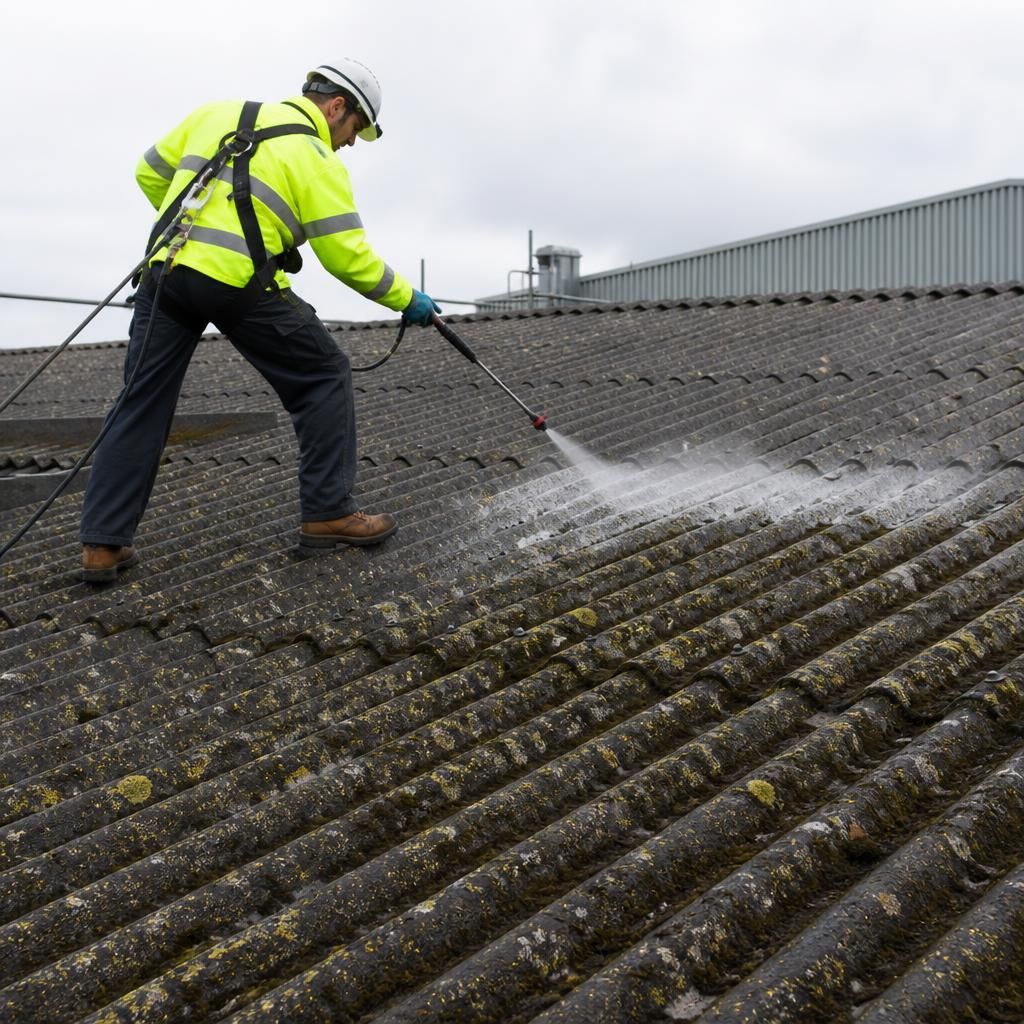
One key benefit of a roof biocide treatment is that it helps control residual algae, moss and lichen after visible growth has been removed. Microscopic spores and organic deposits can remain on tiles or slates following cleaning, particularly in shaded, damp areas. A correctly selected treatment continues to act on this contamination, helping delay regrowth and reducing the need for frequent heavy cleaning.
This can be especially valuable on older or weathered roofs where excessive pressure or abrasion may damage the surface. Biocide treatment does not repair defective roofing materials or prevent all future growth, but when applied at the correct concentration and with appropriate run-off controls, it supports a gentler, planned roof maintenance programme.