
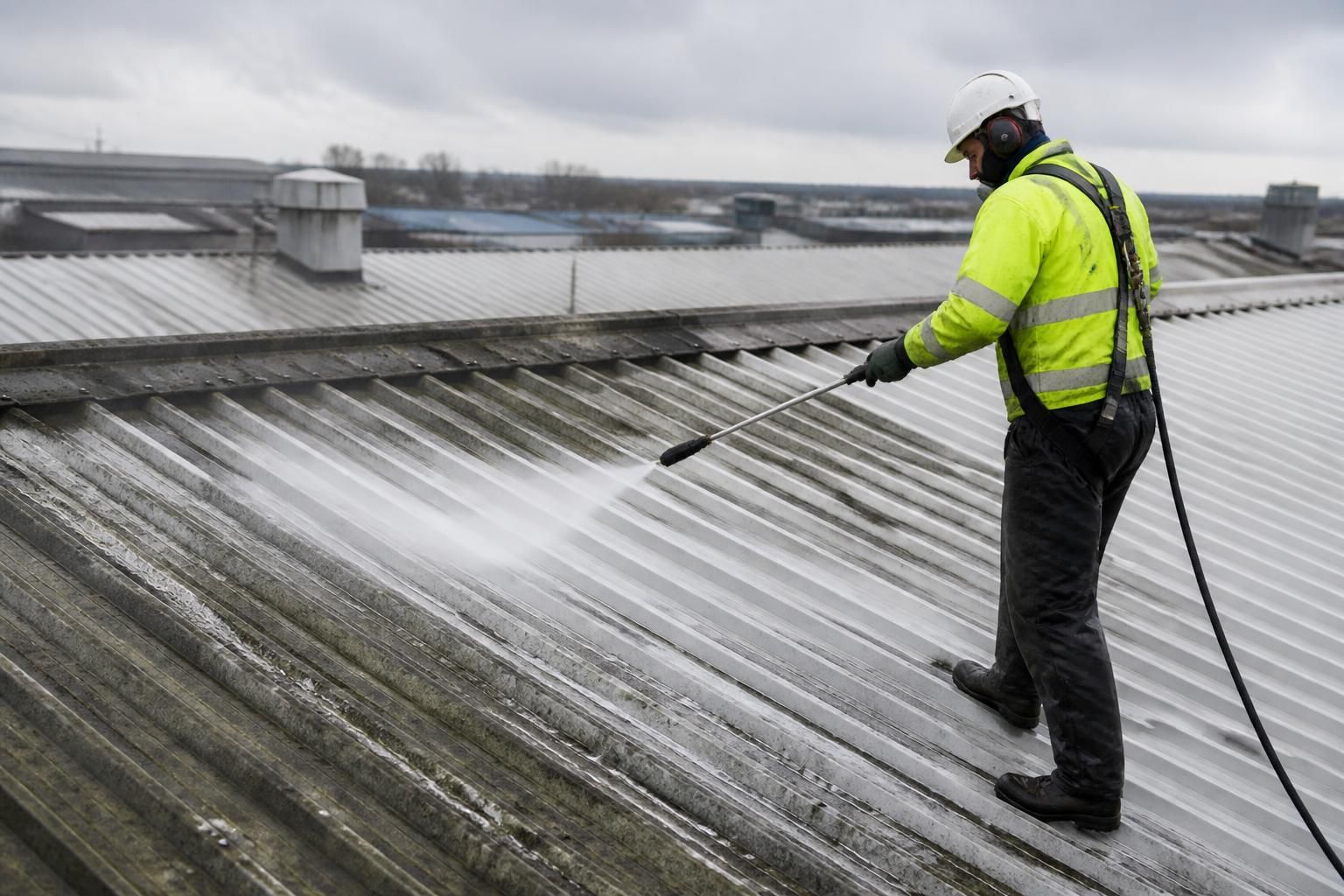
Why is soft washing recommended for roof cleaning?
Soft washing is recommended for roof cleaning because it uses low-pressure water with suitable cleaning treatments to remove algae, moss, lichen and grime without the force that can damage tiles, coatings, pointing or roofing membranes. Applied correctly, it cleans the roof surface thoroughly while helping to protect its condition and extend its serviceable life.
Soft washing is recommended for roof cleaning because it combines low-pressure water with carefully selected cleaning treatments to remove organic growth, dirt and atmospheric grime without relying on force. This is important because high-pressure cleaning can dislodge roof tiles, strip protective coatings, damage pointing, drive water beneath laps and seals, or mark more delicate roofing materials. When planned and applied correctly, soft washing cleans the roof while reducing the risk of avoidable surface damage.
Roofs commonly accumulate algae, moss, lichen, bird fouling, soot and general airborne contamination. These deposits are not only cosmetic. Moss can retain moisture against the roof surface, spread beneath tile edges and obstruct drainage channels. Algae and lichen can leave staining and establish themselves on porous materials. Contamination may also wash into gutters and downpipes, contributing to blockages. Soft washing addresses the growth at its source rather than attempting to remove it solely through mechanical pressure.
The process normally involves an initial inspection, removal of loose debris where appropriate, application of a suitable cleaning solution and a controlled rinse. The treatment is selected according to the roof material, the type of contamination and the condition of the surface. In many cases, the cleaning solution breaks down organic growth so it can be removed with minimal agitation. This reduces the need for aggressive brushing or pressure washing, particularly on older or weathered roofs.
Low pressure protects the roof structure. Roof tiles, slates, coatings and membranes are designed to resist normal weather, but they are not necessarily designed to withstand concentrated high-pressure water. Excessive pressure can:
- fracture or loosen aged tiles and slates;
- remove surface granules or protective finishes;
- damage mortar pointing, ridge bedding and flashing details;
- force water beneath tiles, around seals or into roof voids;
- disturb fragile coatings on metal or fibre-cement roofing; and
- spread contamination or debris onto adjacent façades, windows and paving.
Soft washing is also better suited to roofs with uneven profiles, delicate finishes or areas that are difficult to clean safely with direct pressure. A professional assessment should identify cracked tiles, loose slates, failed pointing, exposed membranes, fragile coatings and areas of water ingress before any treatment begins. Cleaning cannot correct these defects, and applying water or chemicals to a roof in poor condition may make an existing problem more apparent.
The cleaning treatment must be controlled, not simply applied indiscriminately. A suitable contractor will consider the roofing material, weather conditions, surrounding vegetation and drainage arrangements before work starts. The solution should be applied evenly and allowed to work for the appropriate period. It should not be allowed to dry on sensitive surfaces or run uncontrolled onto walls, windows, landscaping or watercourses. Nearby surfaces and plants may require protection, and runoff should be managed responsibly.
Different roof materials require different precautions. Concrete and clay tiles may tolerate a carefully managed treatment, but their age, porosity and existing condition still matter. Natural slate, coated metal, fibre cement, roof membranes and painted surfaces may require alternative products, lower application rates or a different cleaning method altogether. A test area can help confirm that the treatment is compatible with the surface and produces the expected result before wider application.
Soft washing does not mean that every roof is cleaned without any physical removal. Thick moss, loose lichen or accumulated debris may need to be removed carefully by hand or with suitable tools before treatment. The key distinction is that the cleaning process does not depend on high-pressure water to scour the roof. Physical work is kept controlled and proportionate to the condition of the roof, with particular care taken not to break tiles or disturb overlapping sections.
It can also help extend the period between more intensive cleaning. Removing organic growth and treating the remaining contamination helps reduce the conditions in which moss and algae re-establish. However, no cleaning method prevents future growth permanently. Shaded roofs, damp locations and surfaces beneath overhanging trees are more likely to become contaminated again. Ongoing inspections and planned maintenance are therefore often more effective than waiting until growth has become extensive.
After cleaning, the roof and associated drainage should be checked for remaining debris, damaged components and signs of blocked gutters or downpipes. Gutters should be cleared where required so that loosened material does not remain in the drainage system. Any defects identified during the work should be reported rather than concealed by the cleaning result. Roof cleaning contractors should not undertake repairs outside their competence, but they can usually record areas that need attention from an appropriate roofing professional.
Soft washing is not automatically the right option for every roof. A roof may be unsuitable for treatment if its materials are severely deteriorated, its waterproofing is compromised or the contamination cannot be safely contained. In some cases, steam cleaning, gentle manual methods or a combination of techniques may be more appropriate. The correct method is determined by the roof specification and condition, not by the cleaning equipment alone.
For commercial and industrial premises, the method should also be considered alongside access, public safety, working-at-height controls and site operations. A proper service plan should explain how operatives will access the roof, protect occupants and surrounding areas, control runoff, handle chemical products and leave the site clean. Where the building is occupied or located in a busy area, scheduling and exclusion zones may be needed to reduce disruption and protect staff, visitors and members of the public.
In summary, soft washing is recommended because it uses treatment rather than excessive pressure to remove roof contamination. It is generally less aggressive towards tiles, slates, coatings, pointing and membranes, while still addressing moss, algae, lichen and grime effectively when the roof is assessed and the process is carried out correctly. The most suitable approach should always be confirmed through a site inspection, with the roof material, condition, access requirements and surrounding environment taken into account.
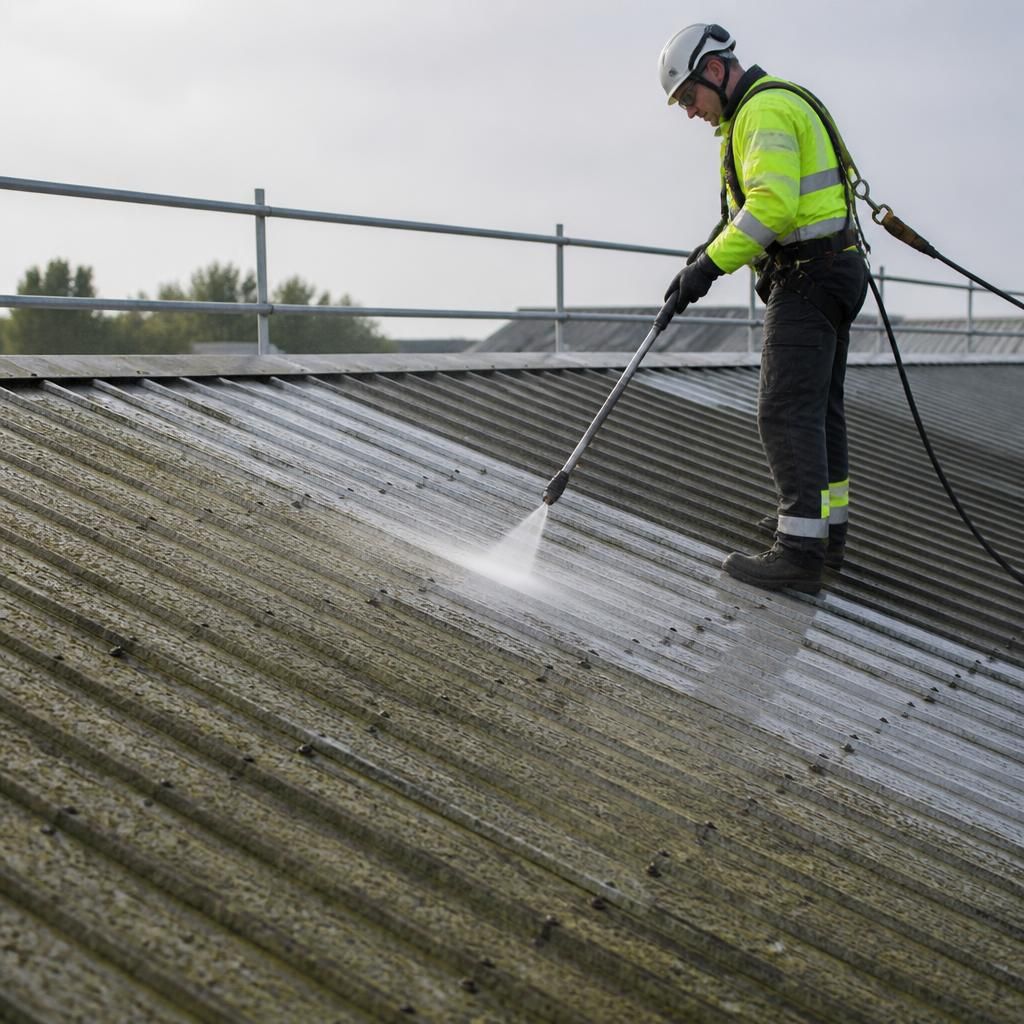
Soft washing protects roof surfaces by using low-pressure water and a suitable cleaning treatment instead of forceful water jets. The treatment breaks down algae, moss, lichen and grime, allowing contamination to be removed with less risk of loosening tiles, stripping coatings, damaging pointing or forcing water beneath laps and seals. The solution must still be selected and applied according to the roof material and condition, with surrounding surfaces, plants and drainage protected from runoff.