
What should be included in a professional roof and gutter washing service proposal?
A professional roof and gutter washing service proposal should clearly set out the cleaning scope, access and safety arrangements, methods, expected timescales, itemised pricing and any exclusions. It should also explain the proposed equipment, environmental controls, photographic reporting, aftercare recommendations and terms covering guarantees, payment and any follow-up work.
A professional roof and gutter washing service proposal is a written plan that defines exactly what will be cleaned, how the work will be carried out, what access and safety measures are required, when the work will take place and how the price has been calculated. It should provide enough detail for a property manager, facilities team or other responsible person to approve the work with a clear understanding of the intended results, limitations and responsibilities.
Defined cleaning scope
The proposal should identify the buildings, roof areas and gutter runs included in the service. It should distinguish between roof surfaces, gutters, downpipes, fascias, soffits, rooflights, cladding and other associated elements rather than describing the work simply as a general roof clean.
- The site or individual buildings covered by the proposal.
- The roof coverings and elevations to be cleaned.
- Gutters, valleys, outlets, downpipes and hopper heads included in the work.
- Whether moss, algae, lichen, dirt, staining, leaf debris and surface deposits will be removed.
- Whether loose debris will be collected from the ground and removed from site.
- Any areas that will be inspected but not cleaned.
Where a roof has several coverings or different levels of contamination, the proposal should describe the relevant treatment for each area. It should also state whether cleaning is intended to improve appearance, restore water flow, prepare the surface for further treatment or support planned maintenance. Cleaning will not correct defective tiles, failed pointing, damaged membranes, blocked underground drainage or other building defects, so these limitations should be made clear.
Findings from the site survey
A reliable proposal should be based on a site assessment, supported where appropriate by photographs or inspection notes. The survey should record the condition of the roof and drainage system, the nature of the deposits, fragile or damaged areas, nearby surfaces at risk of runoff and any operational constraints.
Important observations may include loose or cracked tiles, deteriorated coatings, fragile rooflights, restricted access, weak ground, overhead services, planted areas, water-sensitive equipment and signs of blocked or defective drainage. If some roof sections cannot be inspected safely before work starts, the proposal should say so and explain how those areas will be assessed once suitable access is available.
Proposed cleaning methods and equipment
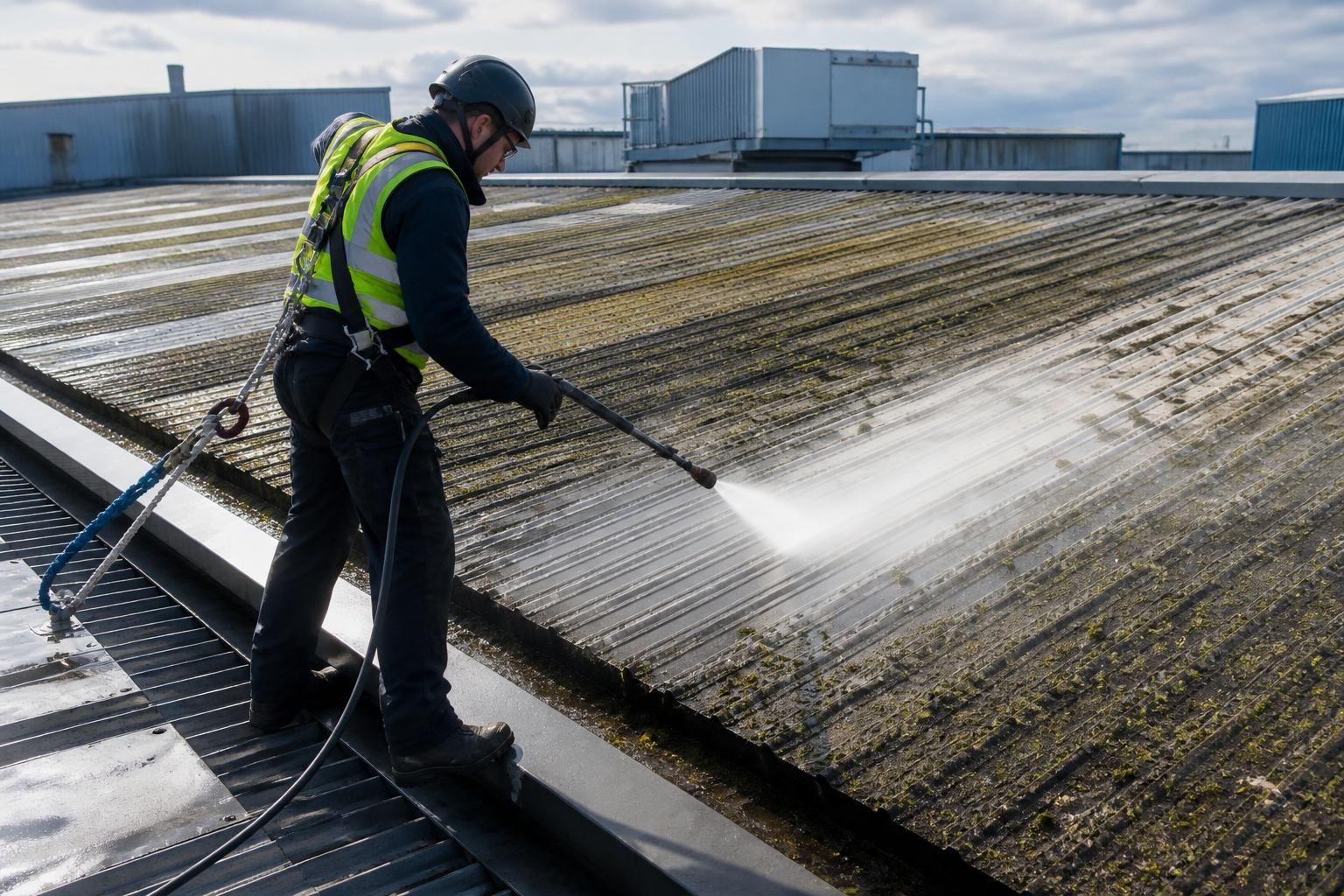
The document should explain why the selected method is suitable for the roof covering and level of soiling. This may include controlled pressure washing, low-pressure rinsing, steam cleaning, manual removal, soft washing or a combination of methods. A professional proposal should not imply that the highest pressure will always produce the best result. Excessive pressure can dislodge roof coverings, drive water beneath laps and damage coatings or sealants.
Where a biocidal or other specialist treatment is proposed, the proposal should identify its purpose, application method and any required dwell time or follow-up. It should also explain that some biological staining may fade progressively after treatment rather than disappear immediately. The contractor should confirm that products will be used in accordance with their instructions and applicable environmental requirements.
Equipment should be matched to the site. This may include water-fed systems, pressure-washing equipment, steam-cleaning equipment, vacuum gutter systems, water recovery equipment, access towers, mobile elevated work platforms or other suitable access equipment. The proposal should explain any requirements for water, electricity, parking, plant positioning and safe working space.
Access arrangements and protection of the building
Roof cleaning proposals should set out how operatives will reach each work area. Depending on the building, this may involve edge protection, scaffolding, access platforms, roof ladders, tower systems or ground-based gutter vacuum equipment. The method should reflect the roof pitch, height, condition and surrounding obstacles.
The proposal should also describe measures to protect the property during cleaning. These can include covering or isolating vulnerable equipment, protecting entrances and glazing, controlling overspray, managing runoff and preventing debris from entering drainage systems. Any requirement to move vehicles, close entrances or restrict access to part of the site should be identified before the work is scheduled.
Health and safety arrangements
Work at height, wet surfaces, powered equipment, chemical products and falling debris all require specific controls. A suitable proposal should summarise the planned risk assessment and method statement, including arrangements for:
- Safe access, work positioning and edge protection.
- Exclusion zones and control of pedestrians, vehicles and building users.
- Protection from falling tools, debris and contaminated water.
- Use of personal protective equipment and suitable operator training.
- Emergency procedures, first aid and rescue arrangements where relevant.
- Safe storage and handling of cleaning products.
- Stopping or rearranging work if weather or site conditions become unsafe.
For occupied commercial premises, the proposal should explain how the cleaning team will coordinate with the client’s site rules, permit systems and appointed contact. It should identify any information the client must provide before work starts, such as asbestos information, roof loading restrictions or details of sensitive operations.
Environmental controls
Roof and gutter washing can release silt, organic matter, cleaning residues and contaminated water. The proposal should therefore explain how runoff will be controlled, collected, filtered or disposed of, where necessary. It should state how drain protection will be used and how the team will prevent debris or treatment products from entering surface-water systems, planted areas or neighbouring property.
It should also clarify whether wastewater, moss and other waste will be removed from site, and whether the client must provide access to a foul drainage connection or another approved disposal point. These arrangements are particularly important on industrial sites, near watercourses and where rainwater drainage is separate from foul drainage.
Programme and working arrangements
A clear proposal should give an expected start period, working days or operational window, subject to weather, access and site readiness. It should indicate whether the work will be completed in one visit or in stages, and identify activities that may need to occur before or after the main wash.
The programme should address noise, water use, access restrictions and any need for out-of-hours working. It should also explain how weather delays will be handled. Rain, high winds, freezing conditions and extreme temperatures can affect roof safety, chemical application, drying and the quality of the finished work. A revised date should be agreed rather than proceeding when conditions are unsuitable.
Itemised pricing
Pricing should be sufficiently detailed to show what is included. It may be based on the roof area, gutter length, building elevations, access requirements, contamination level or a combination of these factors. The proposal should separate the main cleaning works from optional or conditional items, such as:
- Additional access equipment or traffic management.
- Downpipe flushing or repairs identified during cleaning.
- Biocidal treatment or a protective coating.
- Removal of unusually heavy moss or accumulated waste.
- Out-of-hours working or phased attendance.
- Additional cleaning caused by access restrictions or changed site conditions.
The quotation should state whether waste removal, water, equipment, labour, travel, preparation, reinstatement and applicable taxes are included. Any provisional sums or work subject to inspection should be clearly identified, with a requirement for client approval before additional charges are incurred.
Exclusions and condition-related limitations
Exclusions prevent misunderstandings and are particularly important where cleaning may reveal underlying defects. A proposal may exclude roof repairs, replacement tiles, sealant work, gutter repairs, painting, waterproofing, asbestos-related work and access to areas that cannot be reached safely. It should also explain whether heavily weathered staining, permanent oxidation, embedded lichen marks or existing surface damage may remain after cleaning.
The contractor should not present cleaning as a guarantee against future moss or algae growth. The rate at which deposits return depends on shade, moisture, surrounding vegetation, roof condition and local exposure. If an aftercare treatment or maintenance visit is recommended, its purpose and expected limitations should be described separately.
Quality checks and completion records
The proposal should explain how the work will be inspected on completion. This may include checking that gutters and outlets are clear, confirming that accessible downpipes discharge correctly, reviewing cleaned elevations and removing loose debris from agreed areas. Before-and-after photographs are useful for larger or high-level buildings because they provide a record of areas that are difficult for the client to view directly.
A completion report may include photographs, areas treated, products used, access equipment deployed, waste arrangements, defects observed and recommendations for repairs or future maintenance. Any defect should be reported as an observation rather than treated as part of the cleaning service unless repair work has been separately authorised.
Guarantees, aftercare and maintenance
Any guarantee should state precisely what it covers and for how long. It should distinguish between workmanship issues, missed areas, drainage performance and the natural return of biological growth. A guarantee should not promise that a roof will remain free from moss or algae indefinitely, particularly where the underlying causes remain.
Useful aftercare advice may cover keeping gutters clear of leaves, checking outlets after heavy weather, trimming overhanging vegetation, reporting leaks promptly and arranging periodic inspections. For commercial properties, the proposal can also recommend a planned maintenance interval based on the building’s condition and exposure rather than relying solely on an assumed annual visit.
Commercial terms and client responsibilities
Finally, the proposal should include the quotation validity period, payment terms, cancellation arrangements, insurance details, relevant qualifications and the process for approving variations. It should name the client contact, clarify who will provide site access and confirm any requirements for inductions, permits, welfare facilities or isolation of equipment.
Before accepting the proposal, check that the scope, exclusions, access method, environmental controls, timescale and total price reflect the site survey. A detailed document reduces the risk of unexpected charges, unsafe assumptions or disagreement about the expected finish, while giving the cleaning team the information needed to complete the work safely and efficiently.
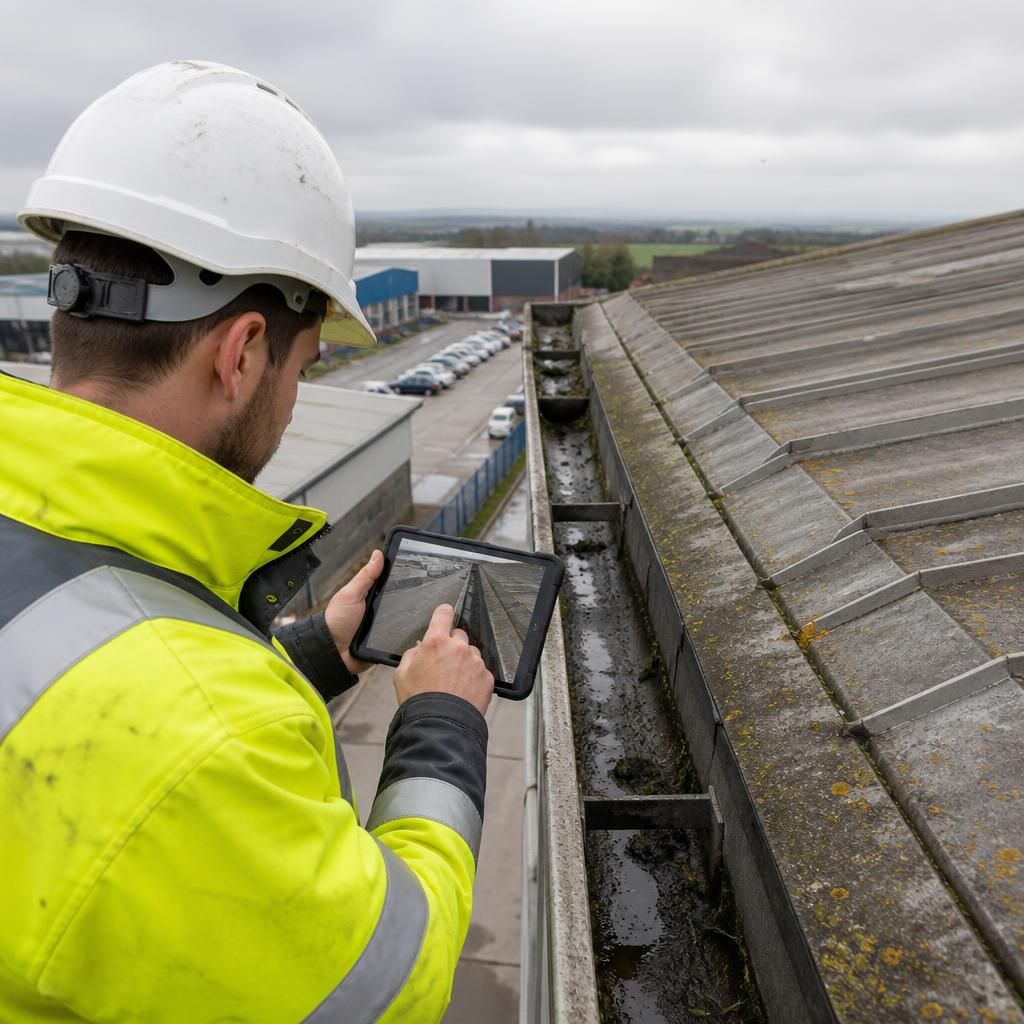
A professional roof and gutter washing proposal should be based on a documented site survey, because the roof covering, access conditions and contamination level determine the safest cleaning method and the likely cost. A reliable assessment should identify fragile rooflights, damaged tiles, restricted access, nearby vehicles or equipment, planted areas and drainage arrangements before work is scheduled.
The proposal should then connect these findings to practical controls and a defined scope. It should explain which roof sections, gutter runs, outlets and downpipes are included, how runoff and debris will be managed, and whether access equipment or traffic controls are required. Photographs and inspection notes are particularly useful for high-level or difficult-to-view areas, giving the client a clear record of existing defects and the surfaces covered by the quotation.