
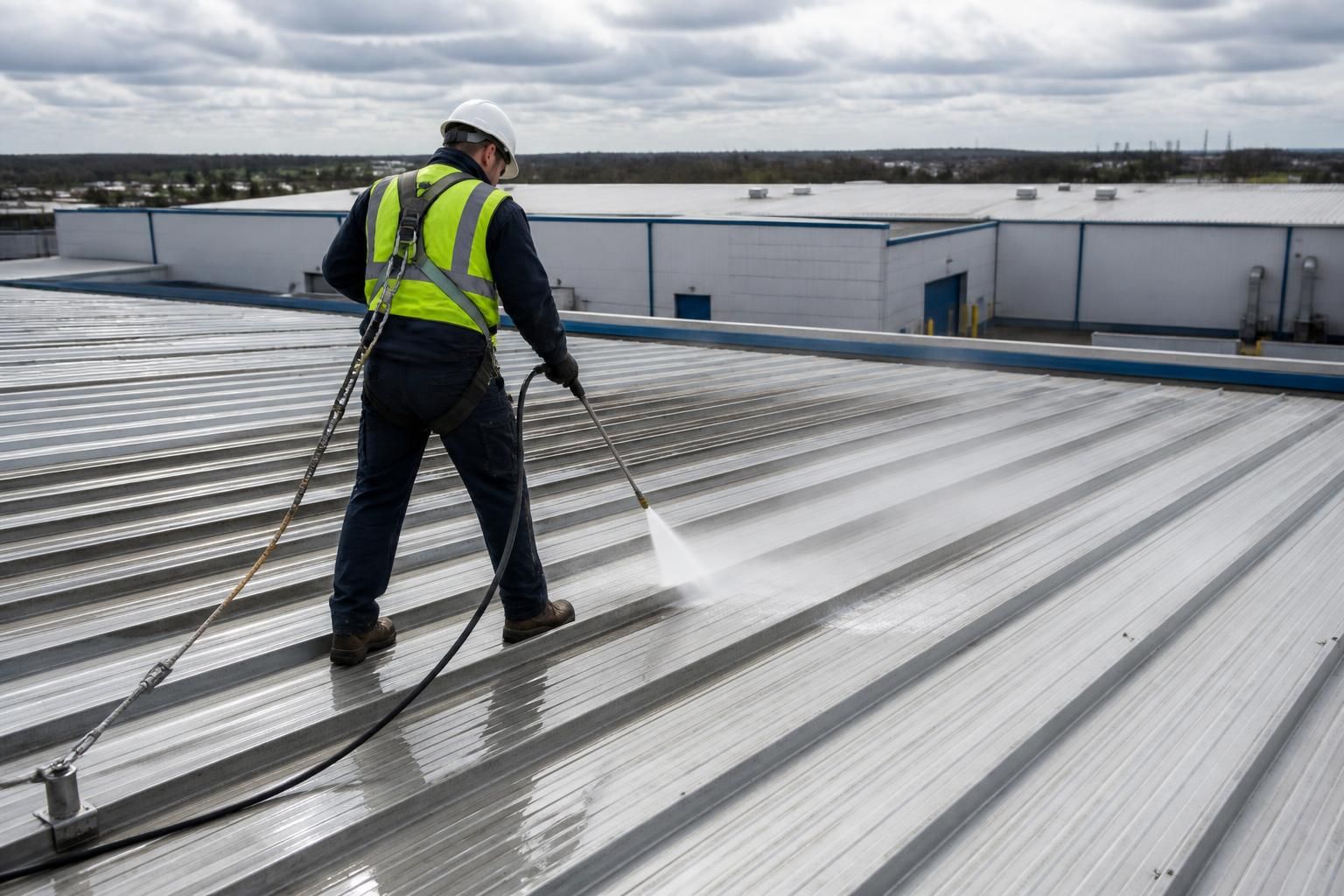
What is the best method for cleaning metal roofs and gutters?
The best method for cleaning metal roofs and gutters is a controlled, low-pressure clean using suitable detergents, soft-washing techniques and manual gutter clearing where necessary. The approach should be adapted to the roof coating, corrosion risk and level of contamination, as excessive pressure can damage finishes, force water beneath panels or loosen seals.
The best method for cleaning metal roofs and gutters is a controlled, low-pressure clean combined with suitable detergents, soft-washing techniques and manual gutter clearing where required. The process should be adapted to the metal, protective coating, age of the roof and type of contamination. Excessive pressure can damage finishes, drive water beneath overlapping panels, loosen seals and accelerate corrosion around fixings and joints.
Metal roof cleaning is not simply a matter of applying a pressure washer across the surface. A professional method starts with an inspection to identify the roof material, coating condition, drainage layout and areas of existing damage. Galvanised steel, plastisol-coated steel, aluminium and other metal systems can react differently to pressure, cleaning chemicals and prolonged moisture. Any exposed metal, flaking coating, rust staining, failed sealant or loose flashing should be recorded before cleaning begins.
Why low pressure is usually the safest approach
Low-pressure washing provides enough flow to remove loosened dirt without subjecting panels and joints to the force associated with aggressive pressure washing. This helps protect painted and coated surfaces while reducing the risk of water entering beneath laps, ridge details, roof lights or damaged seals. It is particularly important on older commercial roofs, where protective finishes may already be weakened by weathering.
Pressure should never be selected by machine capability alone. The operator should use the lowest effective pressure, maintain a suitable distance from the surface and avoid directing water towards overlaps, flashings, vents and penetrations. Rotary surface cleaners and high-pressure lance work may be appropriate for some robust, uncoated areas, but they require careful control and are not a universal solution for metal roofing.
Use a compatible detergent or soft-washing treatment
Detergent can break down traffic film, atmospheric dirt, organic growth and oily deposits before rinsing. Soft-washing solutions are applied at low pressure and allowed to work for an appropriate dwell time, rather than relying on force to remove contamination. This is generally more effective and less abrasive than repeatedly increasing water pressure.
The cleaning solution must be compatible with the roof coating and surrounding materials. Strongly alkaline or acidic products can mark painted finishes, attack galvanised surfaces, damage sealants or increase the risk of corrosion if they are left on the roof. Chemicals should be diluted and applied according to the product requirements, with controlled run-off and thorough rinsing. A small test area is advisable where the coating type or its condition is uncertain.
Algae, moss and lichen may need additional treatment rather than aggressive mechanical removal. Moss should be loosened carefully so that roots are not pulled through deteriorated coatings or seals. Where organic growth has established around gutters, laps or fixings, manual removal followed by a suitable treatment can provide a more controlled result than intensive pressure washing.
Clean gutters manually and flush the drainage system
Gutters should normally be cleared by hand or with purpose-designed gutter-cleaning equipment before they are washed through. This removes leaves, moss, silt and compacted debris without forcing blockages into outlets or downpipes. Waste should be collected and disposed of responsibly rather than being allowed to enter the drainage system or fall onto customer areas.
After the main debris has been removed, gutters and outlets should be flushed with controlled water flow. This confirms that water is passing through the system and helps identify blockages, poor falls, leaking joints or damaged outlets. Downpipes may require separate clearing if water backs up or does not discharge freely. A gutter that looks clean but remains obstructed will not protect the building during heavy rainfall.
Protect vulnerable areas during the work
Before applying water or chemicals, the surrounding area should be assessed and protected. This can include vehicles, loading bays, stock, air-conditioning equipment, electrical installations, pedestrian routes, windows, external wall finishes and planted areas. Run-off should be controlled so that cleaning residues do not enter surface-water drains where this is not permitted.
Metal roofs can become slippery when wet or treated with detergent. Safe access therefore requires suitable edge protection, access equipment and fall-prevention procedures. Operatives should avoid walking on fragile roof lights, unsupported sheets and areas showing corrosion or deformation. Where the roof cannot be safely accessed, cleaning should be completed from suitable powered access equipment or by another controlled method rather than by taking unnecessary risks.
Rinse thoroughly and inspect the finished surface
Once contamination has been removed, the roof should be rinsed thoroughly using controlled pressure and clean water. Residual detergent can attract dirt, affect coatings and contribute to staining if it dries on the surface. Rinsing should work from higher sections towards the drainage points while avoiding the introduction of debris into clean gutters.
A final inspection should check the roof surface, laps, fixings, flashings, outlets and downpipes. It should also identify conditions that cleaning cannot repair, such as corrosion, cracked sealant, loose sheets, damaged coating or defective gutter joints. Cleaning can expose these defects more clearly, allowing maintenance work to be planned before water ingress or further deterioration occurs.
Methods to avoid or use with caution
- Uncontrolled high-pressure washing can strip coatings, leave visible cleaning marks and force water beneath panels.
- Wire brushing and abrasive pads can remove protective finishes and expose bare metal.
- Harsh acids, chlorine-heavy products or untested solvents can damage coatings, seals and adjacent building materials.
- Pressure washing blocked gutters can compact debris in downpipes or discharge waste across façades and walkways.
- Cleaning over active corrosion without reporting it may make the roof look better temporarily while the underlying defect continues.
For commercial and industrial premises, the most reliable specification is usually a planned inspection, compatible soft-wash or low-pressure treatment, controlled rinsing, manual gutter clearance, downpipe checks and a documented condition report. The exact balance between chemical treatment, manual work and water pressure depends on the roof system and contamination. A method statement should account for access, fall protection, chemical handling, run-off control and the need to keep business operations safe during the work.
Regular professional cleaning helps prevent organic growth and accumulated debris from retaining moisture against metal surfaces and obstructing drainage. It does not replace repairs or coating renewal, but it makes defects easier to identify and reduces avoidable stress on the roof and gutter system. Where corrosion or coating failure is already present, cleaning should be coordinated with remedial work so that the surface is not damaged further.
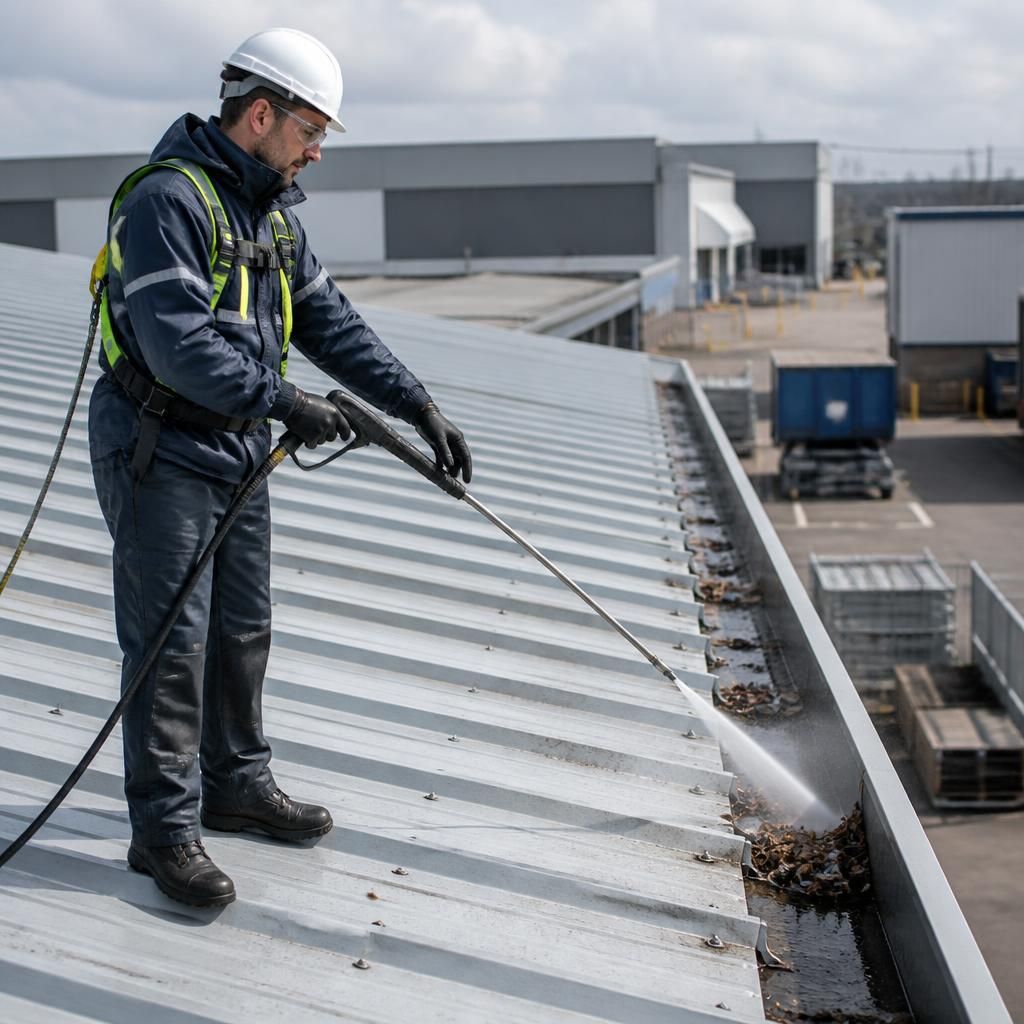
The safest method for cleaning metal roofs is controlled low-pressure washing with a compatible detergent, followed by thorough rinsing and a separate manual clearance of the gutters. This removes dirt and organic growth without stripping protective coatings, driving water beneath roof laps or damaging seals and fixings.
Gutters should then be flushed to confirm that outlets and downpipes are clear. A professional inspection should also record corrosion, failed sealant, loose sheets and damaged coatings, as cleaning will not repair these defects.
Arrange a professional metal roof and gutter cleaning assessment
Arrange a professional metal roof and gutter cleaning assessment so the roof coating, contamination, access requirements and drainage can be reviewed before work begins. You will receive a cleaning approach suited to the condition and construction of your building.