
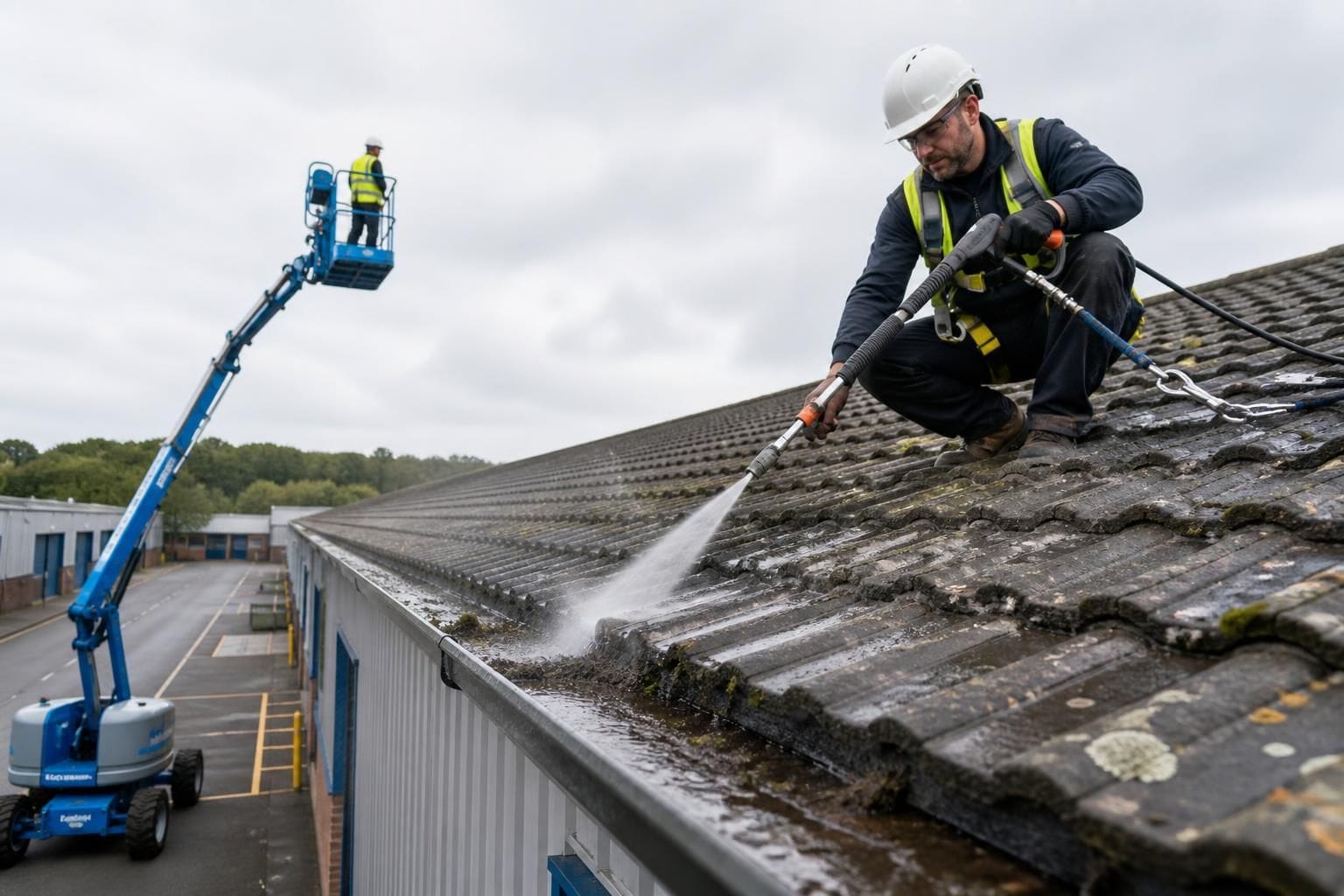
What factors should be considered when selecting a professional roof and gutter washing service?
When selecting a professional roof and gutter washing service, assess the contractor’s experience with your roof type and building, risk-assessment and safety procedures, cleaning methods, equipment, insurance and relevant compliance. Also compare the proposed scope of work, access arrangements, environmental controls, reporting and overall value rather than choosing on price alone.
Select a professional roof and gutter washing service by comparing its experience, risk controls, cleaning methods, equipment, insurance, environmental practices and proposed scope of work. The contractor should be able to demonstrate that its approach is suitable for the roof materials, gutter system, building use and access conditions, rather than applying the same process to every property.
Experience with the building and roof type
Ask whether the contractor has completed comparable commercial or industrial work. Roof coverings and gutter systems can include concrete or clay tiles, slate, metal, membrane systems, coated cladding and fragile or aged materials. Each requires different pressure levels, detergents, access methods and precautions. Experience should also extend to the type of premises being cleaned, such as offices, warehouses, retail units, apartment blocks, public buildings or construction sites.
A competent contractor will inspect the roof and surrounding areas before work begins. This inspection should identify damaged coverings, loose flashings, blocked outlets, failed seals, fragile surfaces, roof lights and areas that should not be walked on. Cleaning should not conceal defects or create the impression that damaged components have been repaired.
Cleaning method and its suitability
The proposed method should reflect the condition and construction of the roof and gutters. Depending on the surface, the work may involve low-pressure washing, soft washing, steam cleaning, controlled pressure washing, manual removal or a combination of methods. High pressure is not automatically the most effective option. Excessive pressure can dislodge tiles, drive water beneath coverings, damage coatings and force debris into joints or drainage components.
For many roof surfaces, soft washing uses a carefully selected treatment to break down organic growth before it is rinsed or removed using controlled pressure. This can be appropriate for algae, moss and lichen, but the contractor should explain the treatment, dwell time, rinsing process and precautions for nearby surfaces. Metal roofs and coated systems need particular care because abrasive methods or unsuitable chemicals may mark the finish or accelerate corrosion.
Gutter cleaning should include removal of silt, leaves, moss and other debris from channels, outlets and downpipes where accessible. Simply clearing visible material from the top of a gutter may not resolve restricted flow. The service should state whether downpipes will be checked, flushed or tested and whether any inaccessible sections require a separate method.
Survey, risk assessment and safe access
Roof and gutter cleaning is work at height and may involve fragile surfaces, sloping roofs, wet conditions, traffic, members of the public and building occupants. Before accepting a quotation, confirm that the contractor prepares a site-specific risk assessment and method statement and has a clear plan for safe access, exclusion zones, edge protection and emergency procedures.
Access equipment should be selected for the building and ground conditions. Depending on the site, this may include mobile elevated work platforms, towers, scaffold, roof ladders, gutter vacuum systems or other specialist equipment. The contractor should consider overhead services, restricted access, unstable ground, loading areas, parked vehicles and the need to keep entrances or pedestrian routes open.
Ask how the work will be controlled in changing weather. Wind, rain, frost and excessive heat can affect access equipment, chemical application, visibility and the quality of the finished work. A responsible service will explain when operations may need to pause and how the site will be left safe.
Competence, insurance and compliance
Check that the business has suitable public liability insurance and, where relevant, employers’ liability cover, plant and equipment insurance and professional arrangements appropriate to the work being undertaken. Insurance should be current and sufficient for a commercial site, and evidence should be available on request.
Also consider the competence of the operatives using pressure-washing systems, chemicals and access equipment. Relevant training, equipment inspection records and an established approach to work at height are important indicators of a properly managed service. Where lifting equipment is used, the contractor should be able to demonstrate appropriate examination and inspection arrangements. Site rules, induction requirements and permit systems should be discussed before work starts.
Protection of people, property and drainage
Roof and gutter washing can produce runoff containing dirt, organic matter and cleaning agents. The contractor should explain how runoff will be contained, diverted or collected and how drains, watercourses, planted areas, vehicles, façades and neighbouring property will be protected. Chemicals should be selected and used in accordance with their instructions, with suitable controls for occupants, pedestrians and animals.
Confirm how windows, doors, vents, electrical equipment, lighting, signage and vulnerable finishes will be protected. On an occupied or publicly accessible site, the work plan should address noise, overspray, falling debris, temporary barriers and communication with the building manager. A clean-up procedure should cover the ground, access routes, gullies and any affected external areas.
Clarity of the quotation and scope
A useful proposal should describe the areas to be cleaned, the method for each surface, the access equipment required, preparation and protection measures, waste handling, exclusions and any reinstatement or follow-up treatment. It should make clear whether the price includes:
- an initial survey and condition report;
- removal of moss, algae, leaves and other debris;
- cleaning of gutters, outlets and downpipes;
- treatment of remaining organic growth;
- protection of façades, glazing, landscaping and vehicles;
- collection and disposal of removed material;
- testing or photographic evidence of completed drainage work; and
- final inspection, reporting and recommendations for remedial work.
Do not assume that an item is included because it appears to be part of roof cleaning. For example, gutter repairs, replacement components, roof tile repairs, fascia cleaning, bird fouling removal and stain treatment may be separate services. A written scope reduces disputes and allows quotations to be compared fairly.
Inspection findings and reporting
For commercial premises, reporting is particularly useful where the roof forms part of a planned maintenance programme. The contractor should be able to record areas cleaned, defects observed, restricted access, drainage issues and any recommendations that require attention. Before-and-after photographs can help verify the work, although they should support rather than replace a proper site inspection.
Clarify who will receive the report, when it will be issued and whether urgent defects will be reported immediately. A cleaning contractor should not present itself as a roofing specialist unless it is qualified and contracted to carry out the relevant repair work. Clear separation between cleaning observations and repair recommendations helps the client make informed decisions.
Environmental and operational controls
Consider the contractor’s approach to water use, chemical selection, wastewater and waste disposal. The best method is not necessarily the one using the greatest pressure or the most water. Controlled application, targeted rinsing and appropriate recovery or diversion measures can reduce unnecessary runoff while still achieving a satisfactory result.
For an occupied commercial site, the contractor should also provide a practical programme that accounts for trading hours, deliveries, tenant access, security requirements and other contractors. Confirm whether work can be phased, what areas will be unavailable during cleaning and how the site will be handed back at the end of each visit.
Price, warranty and ongoing maintenance
Compare the total value of each proposal rather than selecting the lowest headline price. A low quotation may exclude access equipment, downpipe work, protection, wastewater controls or the removal of heavy growth. It may also allow less time for preparation and inspection, increasing the risk of damage or an incomplete result.
Ask what standard of completion is being offered and whether any warranty or return visit applies. A cleaning service cannot guarantee that organic growth will never return, particularly where shade, moisture and nearby vegetation remain. However, the contractor should explain the expected outcome, any optional preventative treatment and a sensible maintenance interval based on the building and its surroundings.
Questions to ask before appointing a contractor
- Have you cleaned this roof material and a building of comparable size and use?
- What defects or fragile areas were identified during the survey?
- Why is the proposed cleaning method suitable for this surface?
- How will you protect people, property, landscaping and drainage?
- What access equipment will be used, and how will it be positioned safely?
- Does the quotation include downpipes, waste removal, treatment and final reporting?
- What insurance, training and equipment inspection evidence can you provide?
- How will the work fit around occupants, deliveries and site restrictions?
- What happens if damaged roof or gutter components are found?
Warning signs include a quotation issued without a site assessment, a promise to use high pressure on every surface, vague descriptions of the work, no explanation of runoff controls, pressure to proceed before access and safety arrangements are agreed, or a price that excludes essential elements without stating so. The most suitable contractor is one that can explain its decisions, document the work and adapt the method to the property’s actual condition.

A suitable roof and gutter washing service should select its cleaning method after inspecting the roof material, condition and access requirements. Low-pressure washing, soft washing, steam cleaning and manual removal each have different applications; using excessive pressure or unsuitable chemicals can damage tiles, coatings, seals and drainage components.
Before work begins, the contractor should identify fragile areas, roof lights, loose coverings, blocked outlets and nearby surfaces that need protection. The proposal should explain how runoff, debris, access equipment and occupied areas will be managed, so the cleaning process is safe, controlled and appropriate for the building rather than based on a standard method.